Red Sea Diving Rules 2026: New Egypt Regulations, Fees & Entry Changes

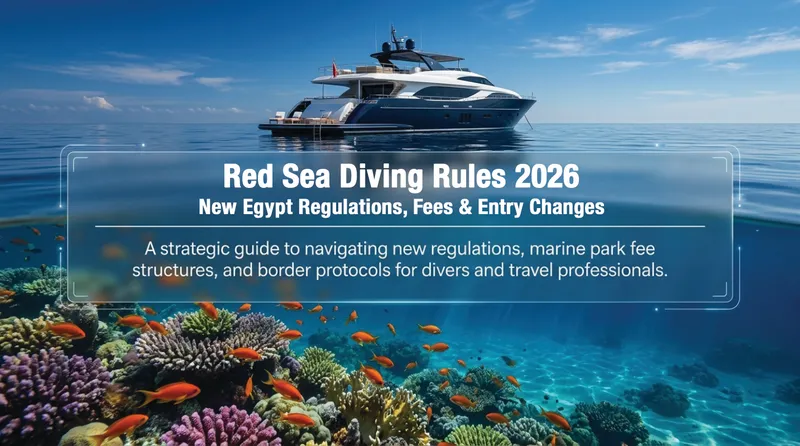
The Red Sea has long been a sanctuary for the global diving community, defined by its vibrant coral gardens and world-class blue water encounters. However, as we navigate through 2026, the experience of diving in Egypt - from the bustling hubs of Hurghada and Sharm El Sheikh to the laid-back shores of Dahab and Marsa Alam - is undergoing a profound modernization. While the reefs remain timeless, the framework surrounding them is shifting.
For the modern traveler, 2026 represents a pivotal moment. The region is moving away from a high-volume "service provider" model toward a more regulated, environmentally conscious industry where divers are viewed as environmental stakeholders. Whether you are returning for your tenth liveaboard or planning your first trip to the Deep South, understanding these five key takeaways is essential for navigating the Red Sea’s new era of ecological load management and price transparency.
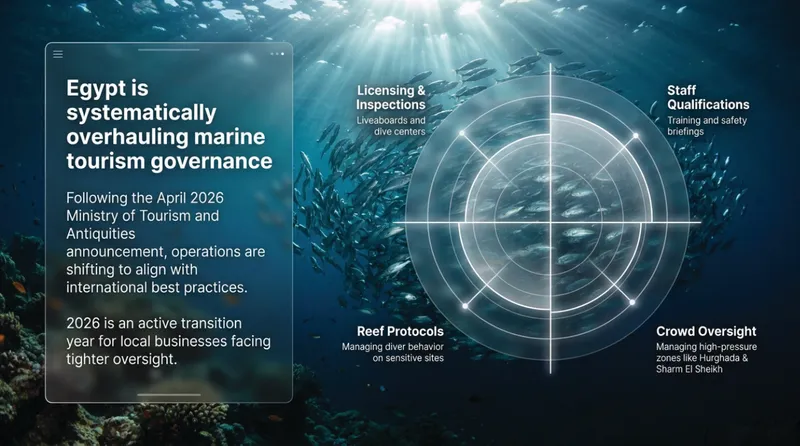
The "Transition Year" Governance Overhaul
In April 2026, the Egyptian Ministry of Tourism and Antiquities, under Minister Sherif Fathy, announced a comprehensive modernization of the regulatory framework for all diving and marine tourism. The goal is to align Egypt’s oversight with international best practices, focusing on safety and environmental protection.
Industry specialists view 2026 as a "transition year" because, while the policy direction is firm, the ministry has not yet released a complete public list of new penalties or operational articles. This leaves operators in a state of adjustment, moving toward tighter governance and stricter reef-protection protocols.
Analysis: This shift toward tighter oversight is expected to improve the long-term quality of the dive experience. By treating dive centers as stakeholders rather than just vendors, the ministry is prioritizing the preservation of the very assets that draw tourists. For the diver, this means more rigorous safety briefings and a higher standard of professionalism across the board.
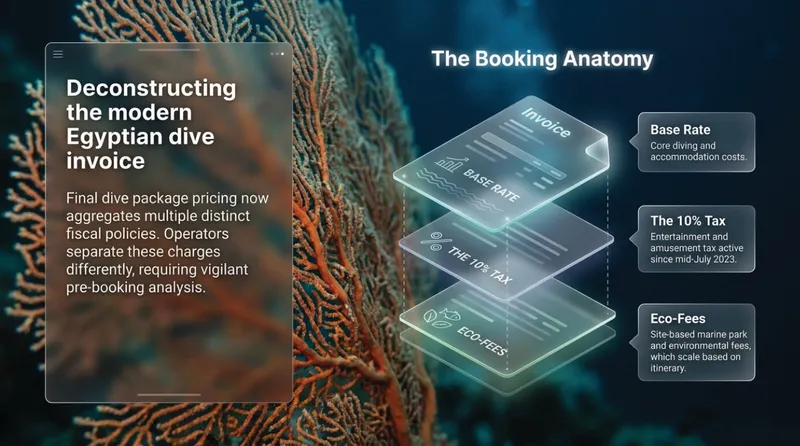
The Hidden Math of the 10% “Entertainment Tax”
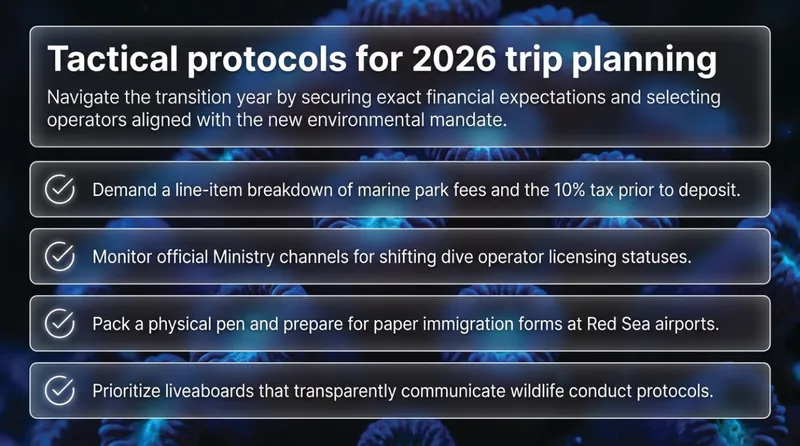
Since July 2023, a 10% “entertainment and amusement” tax has been applied to diving services in Egypt. In 2026, this tax remains a significant factor in final pricing. Because operators vary in how they bundle these costs, "base prices" are often misleading, making it difficult to compare packages at face value.
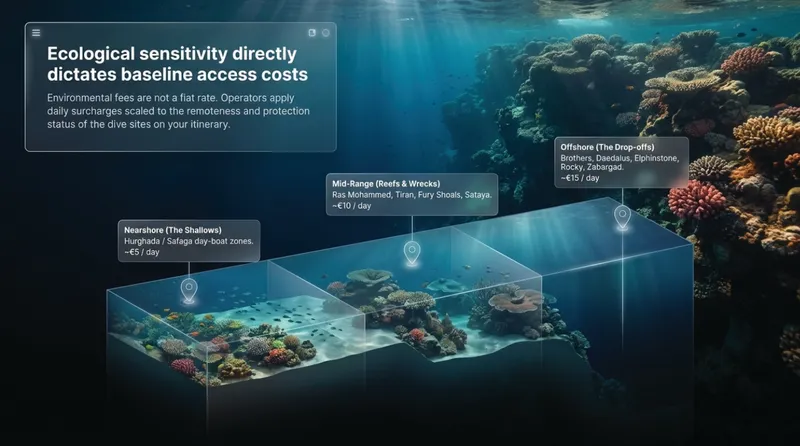
Divers should expect a tiered system of daily fees based on site sensitivity and location:
- Local Areas (€5/day): Standard day-boat zones in areas like Hurghada or Safaga.
- Premium Sites (€10/day): High-profile northern entries like Ras Mohammed, Tiran, or major wreck zones.
- Southern Reefs (€10/day): Remote systems such as Fury Shoals or Sataya.
- Offshore Marine Parks (€15/day): The "signature" destinations including the Brothers, Daedalus, Elphinstone, Rocky, and Zabargad.
Before booking, you must ask two specific questions to ensure pricing transparency:
- Are marine park or environmental fees included in the quote, and if so, which ones?
- Is the 10% entertainment tax already included in the advertised price, or will it be added to the final bill?
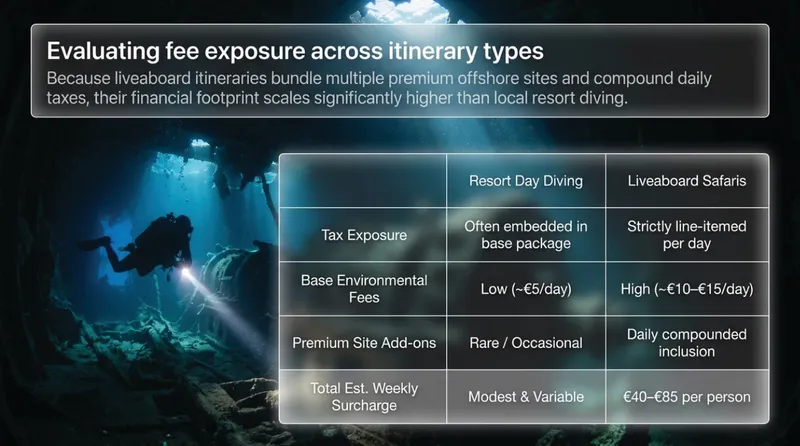
The Liveaboard Pricing Reality Check
For those choosing liveaboards, the impact of these regulations and marina-based surcharges is significantly higher. Because a typical one-week itinerary often navigates multiple paid marine park areas and involves tax-loaded service pricing, the additional costs have become a major line item.
In 2026, it is standard to see €40 to €85 per person per week in combined park fees and taxes listed as distinct booking lines. While this transparency may initially cause "sticker shock," it is a vital move away from the surprise bills often encountered at the end of a trip. This distinct billing allows for more accurate budgeting and reflects the true cost of accessing Egypt’s most remote pelagic ecosystems.
A Decisive Shift in Shark Ethics
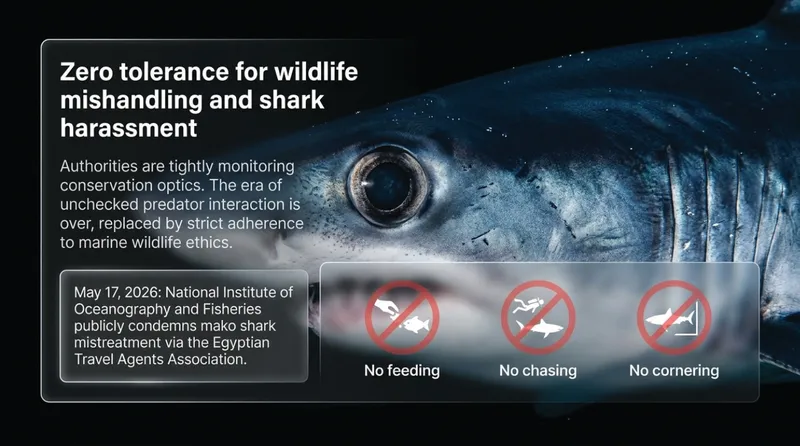
The Red Sea's reputation for world-class shark sightings is being matched in 2026 by a much stronger official stance on marine life protection. On May 17, 2026, the Egyptian Travel Agents Association (ETAA) news page highlighted a case where the National Institute of Oceanography and Fisheries (NIOF) publicly condemned the mistreatment of a mako shark.
This reflects a broader trend where authorities are now monitoring both swimmer safety and wildlife treatment with increased scrutiny. The official language has shifted to view charismatic predators as vital components of the pelagic ecosystem rather than just tourist attractions.
"Mishandling sharks is increasingly out of step with both conservation expectations and the public image Egypt wants for Red Sea tourism."
Analysis: This shift is vital for the long-term health of the Red Sea. For the diver, it means that "wildlife ethics" are being strictly enforced. Practices such as feeding, chasing, or cornering sharks are now actively discouraged by both the NIOF and local operators, ensuring these species remain a sustainable draw for the future.
The Digital-to-Paper Airport Gap
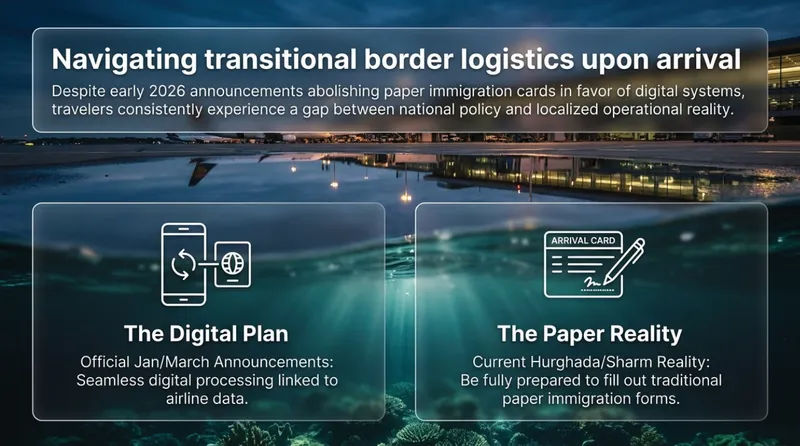
Egypt has made significant strides in modernizing its airport entry systems. Following reports in January and March 2026, the country announced a transition away from traditional paper immigration cards toward a digital process linked to passport data.
However, travelers - particularly those arriving at high-volume hubs like Hurghada - continue to report a "paper reality" gap. The digital transition is underway, but it is not yet universal.
Reflection: Travelers should prepare for a "mixed digital-and-paper experience." While the official policy is moving toward a paperless arrival, do not be surprised if you are still handed a physical card upon landing. Staying patient and carrying a pen remains the best strategy for a smooth arrival during this modernization phase.
More Structure, More Scrutiny, Better Diving?
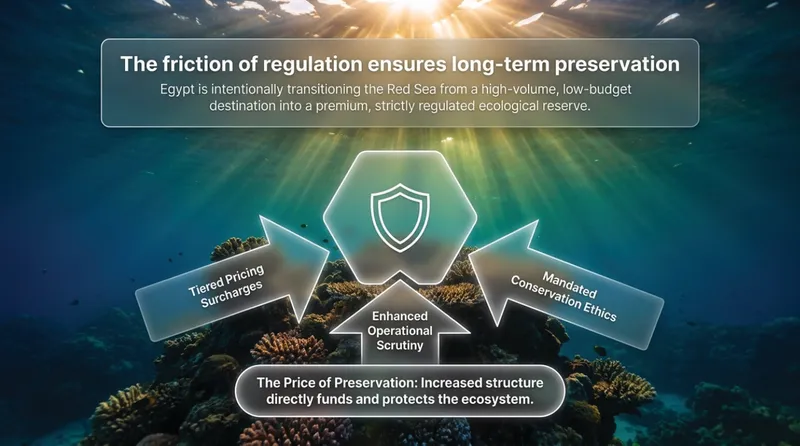
The landscape of Red Sea diving in 2026 is undeniably more structured and fee-sensitive than in years past. However, this increased scrutiny serves a crucial purpose. The combination of modernized governance, pricing transparency, and a renewed focus on shark conservation suggests that Egypt is finally prioritizing the health of its underwater assets over sheer tourist volume.
While the "premium for protection" may increase the cost of your 2026 expedition, it is a necessary investment in the reefs' longevity. As we look to the future, a final question remains for the global diving community: Are you willing to pay a little more today to ensure these extraordinary pelagic ecosystems remain for the next generation?
PADI Divemaster and underwater storyteller with over 7 years of hands-on Red Sea diving experience, documenting marine life, mapping dive sites, and promoting responsible ocean conservation.