The Tide is Turning: 5 Massive Wins Proving We Can Still Save Our Oceans

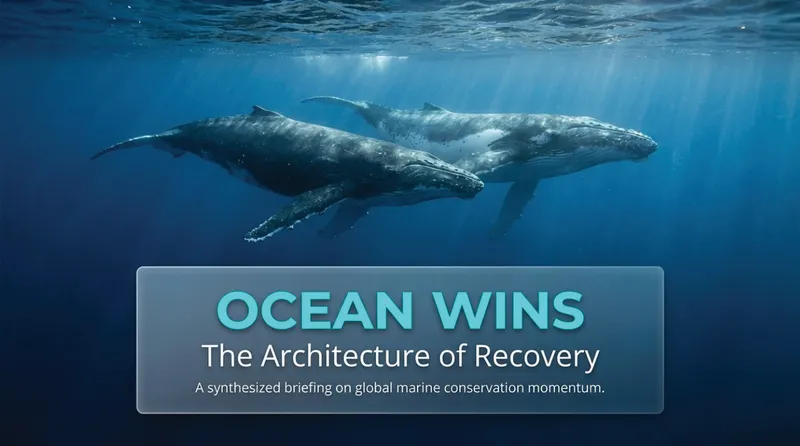
For too long, the story of our seas has been written in shades of grey - warming waters, plastic pollution, and fading reefs. It is easy to feel overwhelmed by the "doom and gloom" narrative that often dominates environmental news. However, look beneath the surface and you will see that a powerful sea change is underway.
The heartbeat of the ocean is growing stronger as nature reclaims its territory. We are witnessing a series of unprecedented "Ocean Wins" that prove the tide is finally turning. Through bold policy and global cooperation, we are moving from a state of crisis to a new era of restoration. These milestones are not just distant hopes; they are tangible victories happening right now.
The Legal Blueprint for the Open Ocean
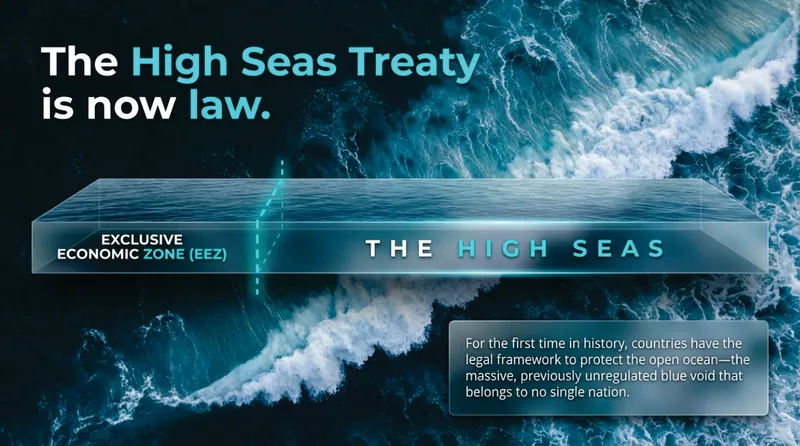
For decades, the high seas - the vast expanses of water beyond national borders - were essentially a "wild west." These areas account for nearly two-thirds of the ocean, yet they lacked a comprehensive legal framework to prevent over-exploitation. The arrival of the High Seas Treaty marks a historic shift in international law, transforming the open ocean from a lawless frontier into a protected sanctuary.
This treaty provides the first real blueprint for global cooperation in deep waters. It allows the international community to establish large-scale marine protected areas in the middle of the ocean for the first time in history. By creating these safeguards, we are finally recognizing that the health of the open sea is vital to the survival of the entire planet.
The High Seas Treaty is now law, and for the first time, countries can protect the open ocean.
Chile’s Massive Scale of Protection
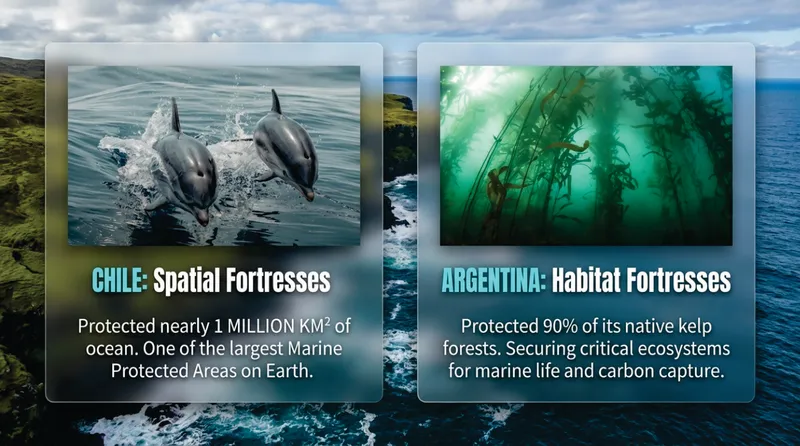
While international treaties provide the framework, individual nations are demonstrating what true leadership looks like on a local level. Chile has recently set a gold standard for marine conservation by establishing protections on a truly monumental scale. By safeguarding nearly 1 million km² of its ocean territory, the nation has created one of the largest Marine Protected Areas (MPAs) on Earth.
This move creates a massive refuge for biodiversity, allowing entire ecosystems to flourish without the threat of industrial extraction. Chile’s commitment serves as a powerful signal to the rest of the world that protecting our blue assets is a matter of national priority. It positions the country as a primary architect in the global effort to safeguard the biodiversity of the Pacific.
Chile just protected nearly 1 million km² of ocean, one of the largest Marine Protected Areas on Earth.
Argentina’s Secret Weapon Against Climate Change
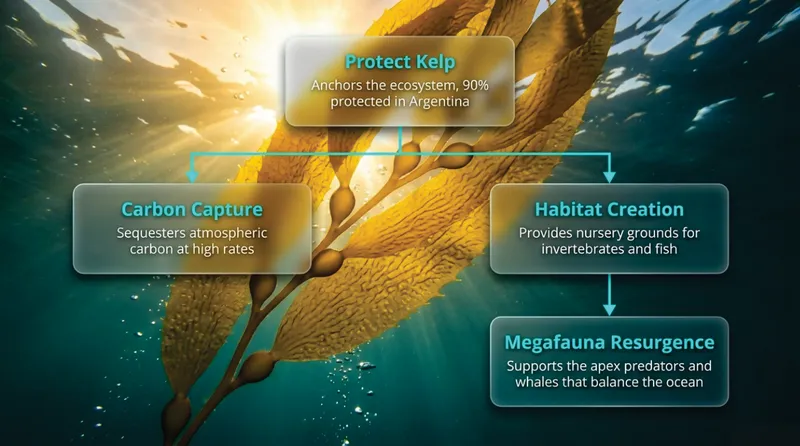
Argentina has unlocked a "secret weapon" in the fight against global warming by protecting 90% of its kelp forests. Often called the "rainforests of the sea," these kelp ecosystems are among the most productive on the planet. Kelp can grow up to two feet a day, allowing it to sequester carbon with a speed and efficiency that puts many terrestrial forests to shame.
Protecting 90% of this ecosystem is a staggering achievement because kelp forests provide the foundation for marine life and coastal resilience. When we safeguard these underwater groves, we aren't just protecting a habitat; we are securing a massive carbon sink. This conservation win proves that coastal nations hold the keys to natural climate solutions that are vital for our shared future.
Argentina protected 90% of its kelp forests, some of the most important ecosystems for marine life and carbon capture.
A Modern Milestone for Whale Recovery
The resilience of the ocean’s giants is a living testament to what happens when we give nature a reprieve from human pressure. After centuries of industrial whaling pushed many species to the brink, we are finally seeing a mounting trend of recovery. This resurgence shows that when we stop the harm, nature is incredibly efficient at reclaiming its place in the world.
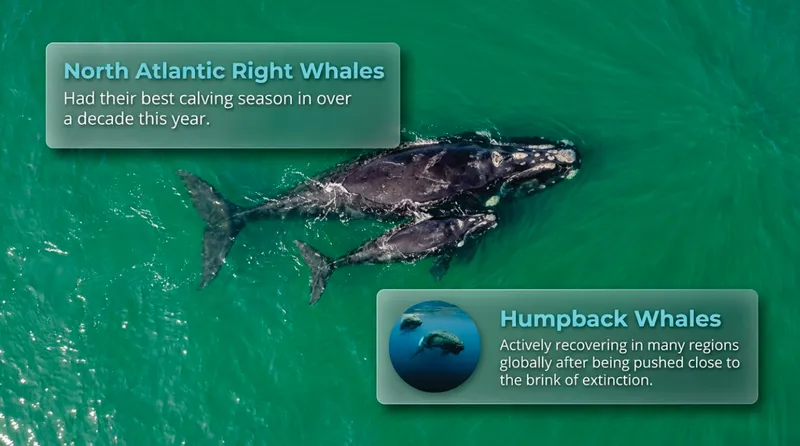
- North Atlantic Right Whales: This critically endangered species just experienced its most successful calving season in more than ten years, signaling a vital boost for their future survival.
- Humpback Whales: Populations are rebounding across multiple ocean basins, showing incredible resilience as they return to ancestral migratory routes.
North Atlantic Right Whales had their best calving season in over a decade
Humpback whales are recovering in many regions after being pushed close to extinction.
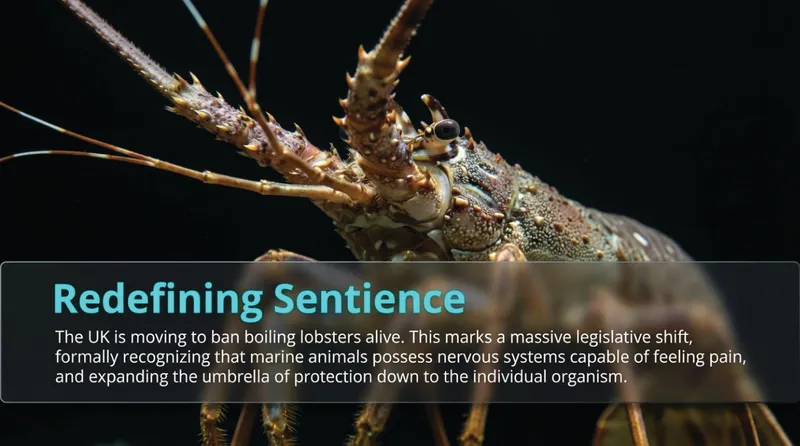
Redefining Marine Sentience in the UK
Our relationship with the ocean is also undergoing a profound ethical evolution. The UK is currently leading a shift in how we perceive marine life, moving away from seeing animals as mere commodities or "resources." By advancing legislation to ban the practice of boiling lobsters alive, the government is officially recognizing that these complex creatures are capable of feeling pain.
This represents a fundamental change in our moral relationship with the sea. Acknowledging the sentience of marine invertebrates suggests a maturing of our environmental ethics. It forces us to reconsider how we interact with all marine life, moving toward a future defined by empathy and scientific understanding rather than exploitation.
The UK is moving to ban boiling lobsters alive, recognizing that marine animals can feel pain.
The Horizon of Hope
The collective victories of the past year - from the legal triumph of the High Seas Treaty to the record-breaking births of right whales - prove that conservation works. These are not isolated events, but part of a larger trend where policy, science, and public will are aligning to heal the blue heart of our planet. While the challenges ahead are significant, we now have the proof that restoration is possible.
These shifts reflect a deeper change in our human values and our understanding of our place in the natural world. As we look toward the horizon, we must ask ourselves: what will the next great "Ocean Win" be, and how can we collectively ensure that the heartbeat of our seas continues to grow louder?
PADI Divemaster and underwater storyteller with over 7 years of hands-on Red Sea diving experience, documenting marine life, mapping dive sites, and promoting responsible ocean conservation.