Why Coral Bleaching Happens: A Diver's Guide to Heat Stress, UV Exposure, and Local Pollution

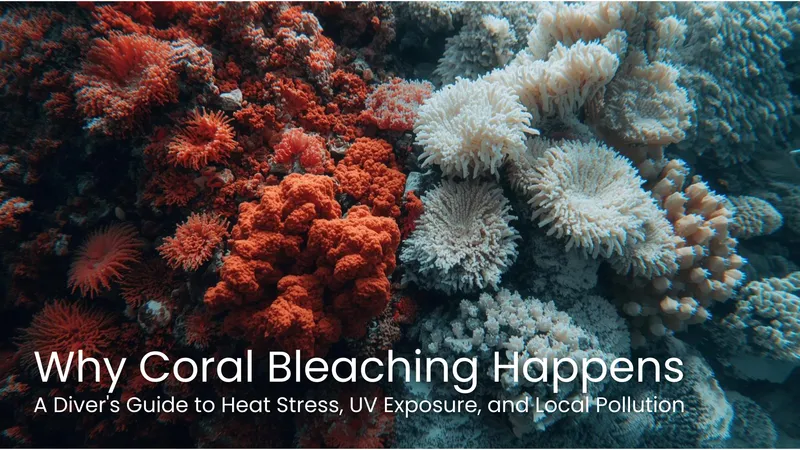
Coral bleaching happens when corals under environmental stress expel the tiny photosynthetic algae (zooxanthellae) that give them color and most of their energy, leaving the coral tissues transparent and the white skeleton visible [4].
What bleaching looks like and why divers should care
Bleached coral appears pale or stark white, but bleaching is a sign of physiological breakdown rather than immediate death - corals can recover if stressors ease, but prolonged stress raises risks of starvation, disease, and mortality [1][6].
For divers, scientists and photographers, bleaching matters because it signals loss of reef function: fewer fish, reduced structural habitat, and diminished reef resilience and beauty [2].

Main causes explained
- Heat stress (elevated sea temperatures): The primary driver of mass bleaching is sustained increases in seawater temperature; even about 1°C above the usual summer maximum for several weeks can trigger bleaching and large-scale marine heatwaves produce mass events with high mortality [1][6].
- High solar / ultraviolet (UV) exposure: Strong sunlight and UV combined with elevated temperatures amplify damage to the coral - algae partnership by increasing oxidative stress in the algae, which contributes to their expulsion [5][4].
- Local pollution and water-quality stressors: Runoff carrying sediments, nutrients (fertilizers), and contaminants reduces water clarity, fuels algal overgrowth, and lowers coral tolerance to temperature stress - polluted reefs bleach more readily and recover more slowly [3][2].
- Other environmental stressors: Rapid salinity changes, extreme low tides, disease outbreaks, and even cold-water anomalies can cause bleaching under specific circumstances [1][6].
How heat and light interact at the cellular level (a concise view for divers and biologists)
Corals host symbiotic algae (family Symbiodiniaceae) inside their tissues; these algae perform photosynthesis and supply most of the coral’s energy while receiving shelter and nutrients from the host [4].
When seawater is warmer than the coral’s normal range, photosynthesis in the algae becomes dysfunctional and generates toxic reactive oxygen species; excess light (including UV) worsens that oxidative damage, prompting the coral to expel the algae to limit harm - the expelled algae leave the coral pale or white [5][4].
Why local pollution matters as much as global warming
Climate-driven warming sets the stage for bleaching, but local stressors determine how severe and frequent bleaching will be at a given reef; poor water quality and overfishing can reduce reef resilience by weakening corals and altering ecological balances that otherwise help recovery [3][2].p>
Practical guidance for scuba divers and underwater photographers
- Before you dive: Check local bleaching reports and water temperatures so you know whether a reef is currently stressed [1][6].
- In the water: Maintain neutral buoyancy and avoid touching corals - physical contact adds stress and spreads disease on already-weakened colonies [5].
- Photography tips: Bleached corals can be high-contrast subjects; use manual white balance, consider off-camera strobes to restore color, and avoid repeated close-up lighting that may heat fragile tissue [2].
- Citizen science: Contribute observations and photos to reef-monitoring programs - time-stamped dive photos and simple bleaching scores are valuable for tracking events and recovery [2][1].
What scientists and managers watch for
Researchers monitor sea-surface temperatures, degree heating weeks (a measure of accumulated thermal stress), and in situ reef conditions to forecast and map bleaching risk; reefs that experience repeated or prolonged thermal anomalies show reduced recovery capacity [1][3].
Restoration and management efforts focus on reducing local stress (pollution control, fisheries management, marine protected areas) while global action targets greenhouse gas reductions to limit long-term warming and frequency of marine heatwaves [2][3].
What recovery looks like and why hope matters
Some corals recover when temperatures return to normal and water quality is good; algae can recolonize and corals can regain color and growth, but repeated events and compounding local stresses make recovery slower and less likely [4][5].
Protecting water quality, reducing local impacts, and participating in monitoring and reef-friendly tourism help give reefs a fighting chance as the climate challenge continues [2][3].
Further reading and credible sources
For more technical details on bleaching mechanisms, regional assessments, and ways divers can help, consult resources from the Great Barrier Reef Foundation, NOAA, Woods Hole Oceanographic Institution, Reef Resilience Network, and conservation organizations tracking global bleaching events [1][6][4][5][2].
References
PADI Divemaster and underwater storyteller with over 7 years of hands-on Red Sea diving experience, documenting marine life, mapping dive sites, and promoting responsible ocean conservation.