10 New Species of Sharks & Rays

Meet ten little-known - and in some cases newly described - cartilaginous fishes and rays that are rewriting what we know about the ocean’s diversity. From graceful mantas to tiny deep-sea lanternsharks, the creatures below are a reminder that even now the sea keeps surprises in its sleeves. I’ll walk you through each species with a mix of natural history, ID tips, and a few quirky facts you can share at your next beach bonfire.
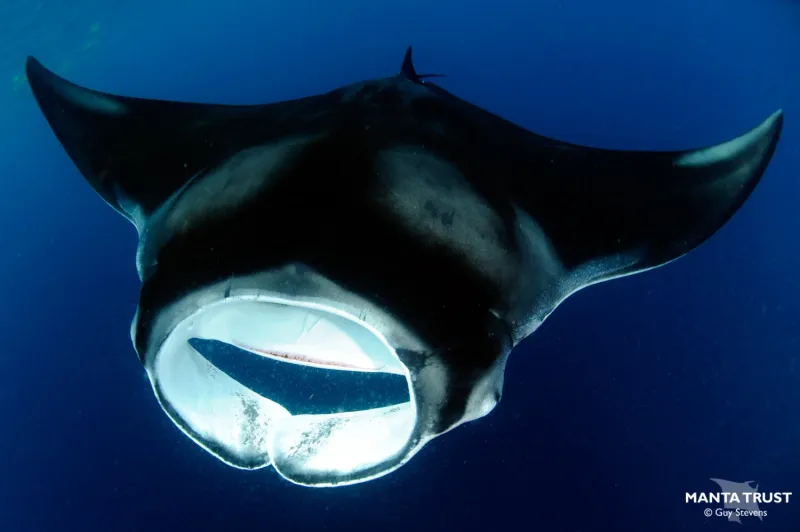
1. Mobula yarae - the Atlantic manta ray
If you picture a manta, think of a flying carpet of the sea - and Mobula yarae is the Atlantic’s newly confirmed member of that club. This species was formally described only recently and occupies tropical to subtropical waters from the eastern United States down to Brazil, including the Gulf of Mexico and the Caribbean Sea.
How to spot one: look for the distinctive shoulder patches - some individuals show a V-shaped white marking - and lighter facial coloration around the mouth and eyes compared with other giant mantas. They can reach several meters across and often show unique belly-spot patterns that researchers use like fingerprints to identify individuals. These gentle giants sometimes form mobile “ecosystems,” hosting schools of small fishes and other organisms as they travel.
- Size: commonly several meters in wingspan; among the largest rays.
- Habitat: coastal and open-ocean tropical/subtropical Atlantic waters.
- Why it matters: recent formal recognition of M. yarae highlights how much there is to learn even about large, charismatic species.
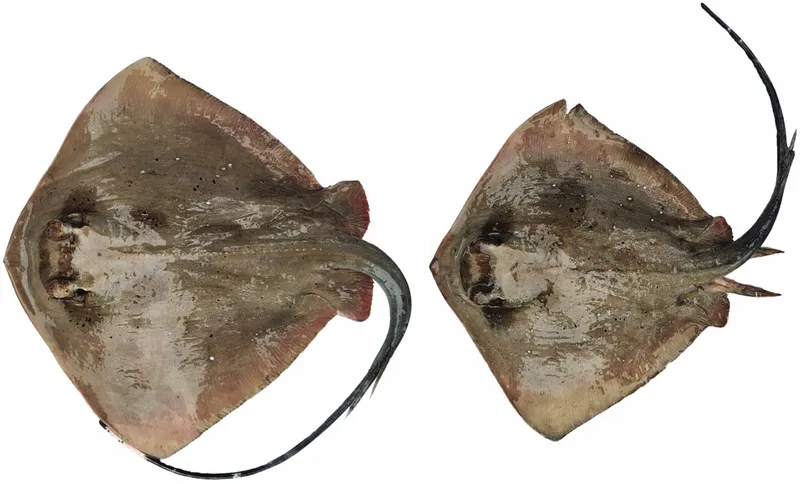
2. Neotrygon romeoi - Fiji’s newly described blue-spotted maskray
Neotrygon romeoi is a recently described member of the blue‑spotted maskray complex, known from the waters around Fiji and distinguished from closely related species by a suite of anatomical, colour and genetic characters; it is currently treated as the 17th recognized Neotrygon species and is commonly referred to as the Fiji maskray.
Adults are relatively large for maskrays, with a broadly angled, flattened snout and - as noted in the species description - long claspers in mature males and a median row of small thornlets running from the nape toward the tail base; these features help separate N. romeoi from congeners during morphological comparisons.
The dorsal colouration of fresh specimens is typically brownish with a distinctive dark, mask‑like marking across and between the eyes (occasionally faint), two prominent brown to black blotches behind the spiracles, and numerous small black “pepper” spots concentrated in the masked region and branchial blotches; some individuals also show small pale blue to whitish spots edged in dark pigment, while ocellated spots in the midline belt are usually absent - an overall pattern that functions as camouflage on sandy and rubble habitats where the ray spends much of its time half‑buried.
Molecular evidence from partial mitochondrial COI gene sequences supports N. romeoi as genetically distinct from other Neotrygon species, corroborating the morphological diagnosis and justifying its recognition as a separate species endemic to Fiji’s archipelago; because it appears to have a limited known range, the authors of the description suggest consideration of its conservation status in Fijian protection frameworks.
The species epithet honours Romeo Glaus and the formal description and diagnosis were published by Glaus, White, O’Neill, Thurnheer & Appleyard in 2025, with the new name now listed in major taxonomic registries and regional reports on Fiji’s marine biodiversity.
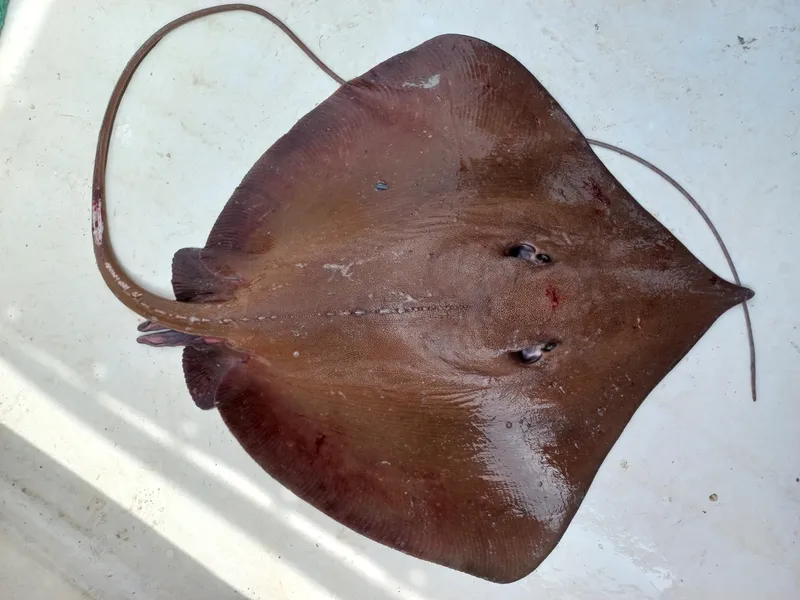
3. Hypanus rubioi - a hidden tropical skate
Hypanus is a genus of stingrays in the family Dasyatidae, found in warmer parts of the East Pacific and Atlantic, including the Caribbean and Gulf of Mexico.Hypanus rubioi, described in 2025 by Mejía-Falla, Navia, Cardeñosa & Tavera, is a newly recognized species from the eastern tropical Pacific Ocean. This longnose Pacific stingray is distinguished from sympatric eastern Pacific species like H. longus and H. dipterurus by its notably long, pointed rostrum measuring 29 to 32% of disc width. Like other Hypanus members, it inhabits coastal and continental-shelf habitats as a flattened bottom-feeder, likely equipped with a tail bearing defensive spines.
Skates and rays in this group play important ecological roles by stirring sediments and controlling invertebrate populations. Inhabiting shallow coastal zones of the eastern tropical Pacific, they face vulnerabilities from fishing pressure and habitat alterations, underscoring the value of documenting species like H. rubioi - known from limited specimens including holotype CIRUV 021336 - for effective conservation strategies.
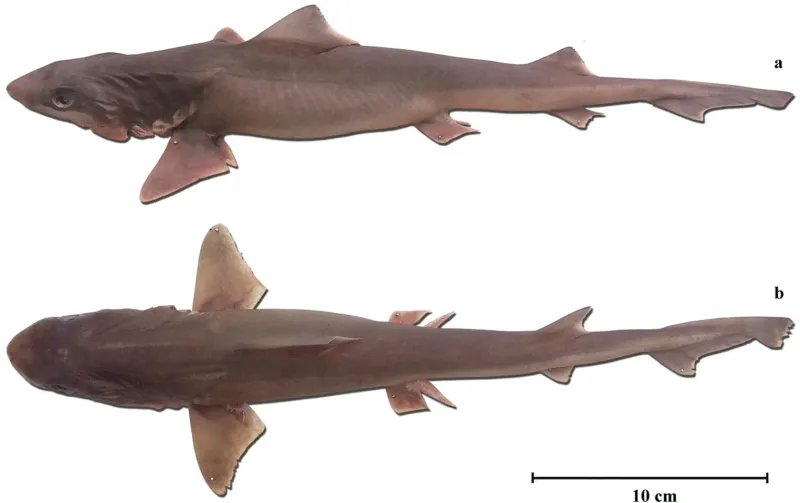
4. Iago gopalakrishnani - a small requiem shark with a big name
Iago gopalakrishnani is a recently described houndshark from the deep eastern Arabian Sea, notable for its compact body, low dorsal fins and unusually dark, chocolate-brown to nearly black coloration when fresh.
Adults are small to medium-sized (holotype and paratypes reported near 440 - 880 mm total length) and show distinct morphological measurements - short pre‑oral length, relatively low first dorsal height and a specific suite of vertebral counts - that separate it from other Iago species. Males and females display some color and morphological differences, and males possess clasper morphology diagnostic for the species.
Molecular analysis of the mitochondrial COI gene places I. gopalakrishnani in its own clade, with a genetic distance of roughly 4.5 - 5.2% from congeners, supporting its status as a distinct species.
Ecologically, this houndshark inhabits continental-shelf to upper slope deep waters and likely feeds on small demersal fishes and invertebrates like other Iago species; its modest size and depth distribution make it vulnerable to bycatch in trawls and gillnets and suggest it could be an indicator of shelf ecosystem health.
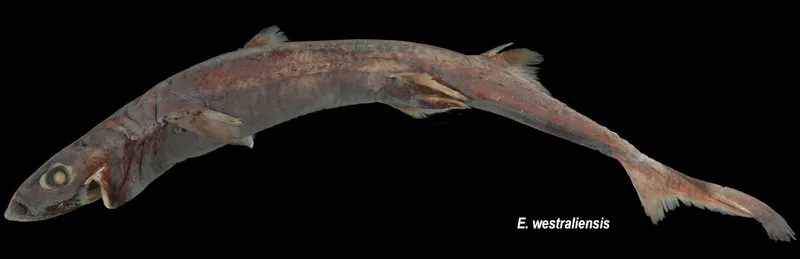
5. Etmopterus westraliensis - the West Australian lanternshark
Etmopterus westraliensis is a recently described lanternshark from the deep waters off Western Australia, assigned to the Etmopterus lucifer species group and known from a small number of specimens collected during 2022 surveys in the Gascoyne Marine Park area.
Small and slender, the largest known specimen reaches roughly 39 - 40.7 cm in length and was recovered from depths around 600 - 610 m, where low light and high pressure have shaped its anatomy - notably large eyes, two small dorsal fins each bearing a sharp spine, and a streamlined body suited to life on steep slopes and seamounts.
Like other lanternsharks, E. westraliensis is bioluminescent: dense fields of photophores on the belly and flanks produce light used for counterillumination (matching downwelling light to hide from predators below) and likely for intraspecific signaling in the dim deep-sea environment.
Taxonomically it is distinguished from close relatives (for example E. brachyurus and E. samadiae) by a combination of characters: hooked dermal denticles, a naked area on the underside of the snout, denticles on dorsal fins of mature individuals, specific shapes and placements of flank and caudal-fin base markings (including a relatively long caudal-fin base marking whose ventral portion is much longer than wide), and measurable genetic differences in the mitochondrial NADH2 gene.
Field notes from the describing team emphasize its localized occurrence (Western Australia), modest maximum size, and specialized deep-sea adaptations - traits that underscore both the diversity still being uncovered in deep marine habitats and the importance of continued survey work to document and conserve these cryptic species.
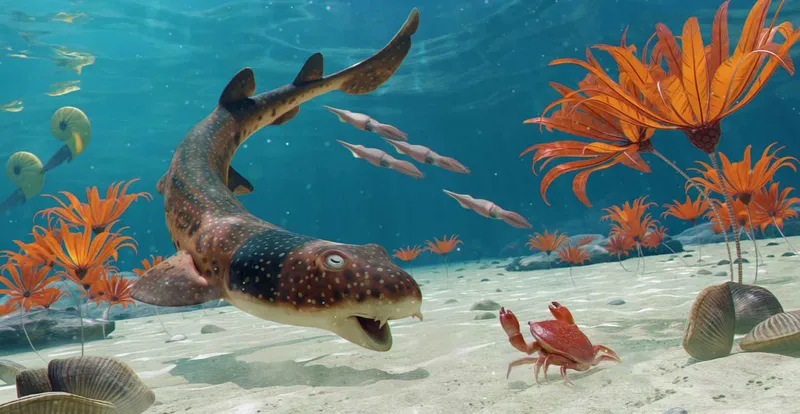
6. Pararhincodon torquis - the odd collared carpet shark ancestor
Pararhincodon torquis, newly described in 2025 from three-dimensional fossils found in southern England, lived over 70 million years ago off the UK coast and represents a stem-group parascylliid shark closely related to modern collared carpet sharks.
This ancient species, known from articulated skeletons at the Natural History Museum (holotype NHMUK PV P 73821 a), featured very small, strongly asymmetrical teeth with a triangular cusp bent lingually and distally, a lateral cusplet on the distal edge, parallel folds at the cusp base, and a flat root with mesial and distal lobes and a deep nutrient groove - distinct from its relatives.
Unlike today's collared carpet sharks, which have two dorsal fins and inhabit shallow western Pacific waters, P. torquis had three dorsal fin bases, highlighting greater evolutionary diversity in this group of small-bodied orectolobiforms that fed on small fish and invertebrates.
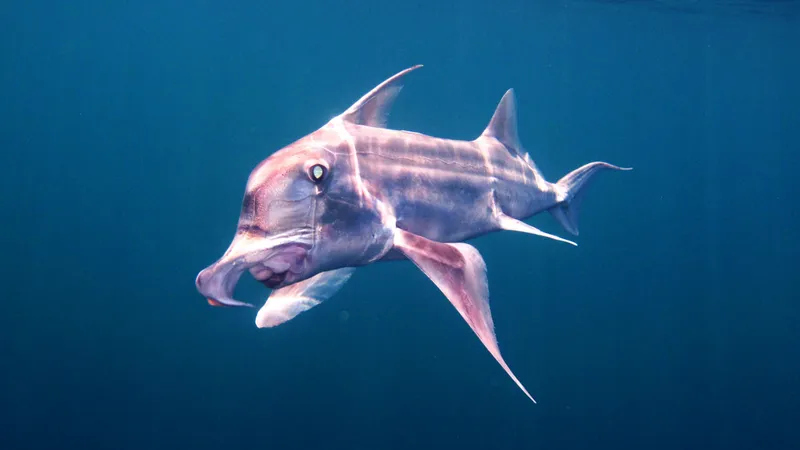
7. Callorhinchus orientalis - the eastern plownose chimaera
Callorhinchus orientalis is a plownose chimaera (family Callorhinchidae) distinguished by its elongated, flexible snout, heavy tooth plates and compact, tapering body adapted for bottom-feeding in temperate marine environments.
Adults use the flattened tooth plates to crush hard-shelled prey such as mollusks, crustaceans and benthic invertebrates, while the sensitive snout helps detect buried organisms in soft sediment; their cartilaginous skeleton and single gill opening per side are typical of chimaeroids rather than bony fishes.
Although records for C. orientalis are primarily from fossil deposits in Hokkaido, Japan (the species name orientalis denotes an eastern/oriental association), members of the genus Callorhinchus more broadly occupy coastal temperate waters in the Southern and Northern Hemispheres and show regional endemism in their distributions.
Life-history traits of Callorhinchus species include relatively slow growth, low fecundity and internal fertilization with egg cases, making them vulnerable to overexploitation and bycatch; conservation concerns for plownose chimaeras generally stem from limited ranges and fisheries interactions rather than large, wide-ranging populations.
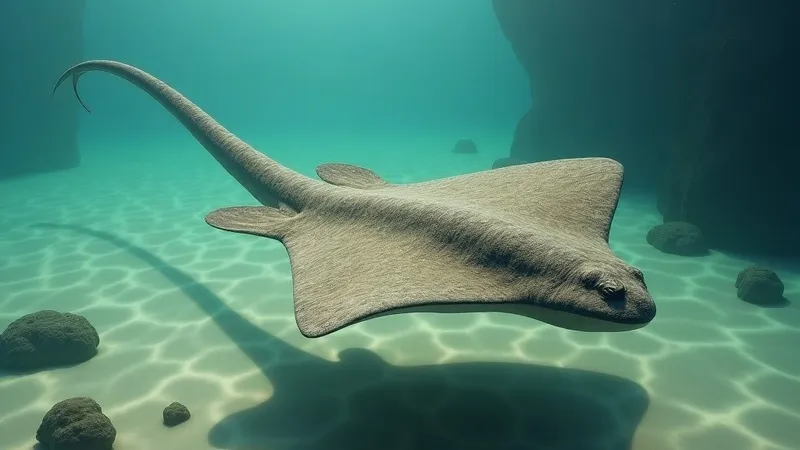
8. Apolithabatis seioma - a skate with a story
Apolithabatis seioma is a newly described fossil ray from the upper Kimmeridgian (Late Jurassic) of Painten, southern Germany, represented by a single, exceptionally complete specimen that preserves a heart-shaped disc and a long, narrow tail and reaches at least about 120 cm in total length in the known individual.
Described as a member of a newly proposed order, †Apolithabatiformes, this species combines a distinct suite of skeletal characters and unusual body proportions that separate it from other Late Jurassic rays and place it near the base (stem) of the batomorph lineage, making it important for understanding early ray evolution and morphology.
The genus name reflects its discovery and form: the holotype was recovered from Solnhofen-type deposits after quarry blasting, inspiring the name, and the specimen preserves exceptional anatomical detail - enough to support morphometric comparisons, phylogenetic analysis, and an environmental reconstruction that even shows the fossil in association with other local fauna.
Key anatomical notes include the broad, heart-shaped pectoral disc, elongated tail, and a combination of skeletal traits (skull and pectoral girdle features, fin proportions) that the authors used to diagnose the genus and species and to argue for a separate, plesiomorphic clade of Jurassic rays; these features also helped distinguish †Apolithabatis from contemporaneous genera such as †Aellopobatis and †Spathobatis.
Because the specimen is holomorphic (preserving both skeletal and soft-tissue impressions), it provides rare direct evidence about body shape, ecology, and the diversity of Mesozoic batoids; as a stem-group taxon, †Apolithabatis seioma helps fill a gap between early cartilaginous fishes and the crown-group rays alive today, informing interpretations of how modern skate- and ray-like body plans evolved.
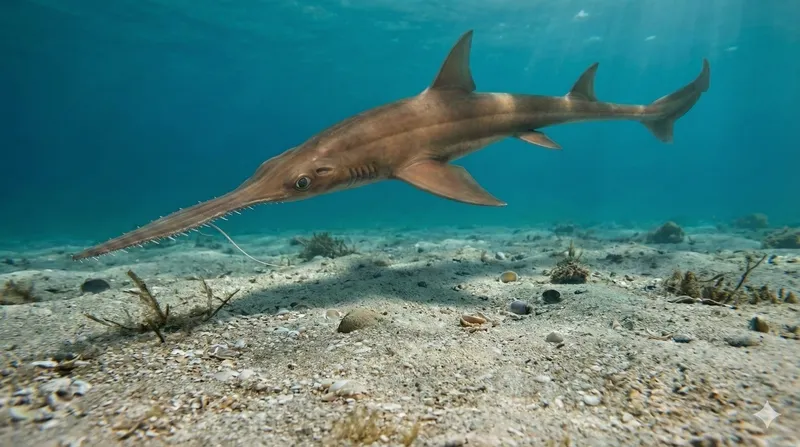
9. Pochitaserra patriciacanalae - a fossil sawshark with a pop culture twist
Pochitaserra patriciacanalae, an extinct monotypic genus of sawshark from the family Pristiophoridae, was discovered in the Upper Miocene Bahía Inglesa Formation of northern Chile's Atacama region, dating to at least 7-8 million years ago. The genus name combines "Pochita" from Tatsuki Fujimoto's manga Chainsaw Man - featuring a dog-like devil with a chainsaw-like forehead that mirrors the sawshark's elongated, toothed snout - with the Latin serra (saw); the species honors the late Chilean paleontologist Dr. Patricia Canales for her marine fossil research, including Ice Age discoveries at sites like Pilauco Bajo.
This gen. et sp. nov. was identified from nine fossil teeth - eight anterior and one lateral - among 241 elasmobranch microfossils representing 19 taxa, extracted by sifting over 300 kg of sediment from a new locality in the Caldera region's Econssa sector; the study, led by Dr. Jaime Villafaña and including co-author Martín Chávez-Hoffmeister, marks the first detailed analysis of chondrichthyan microremains from this formation and reports the first American record of Sympterygia alongside the new ray Dasyatis manuelcamposi sp. nov.
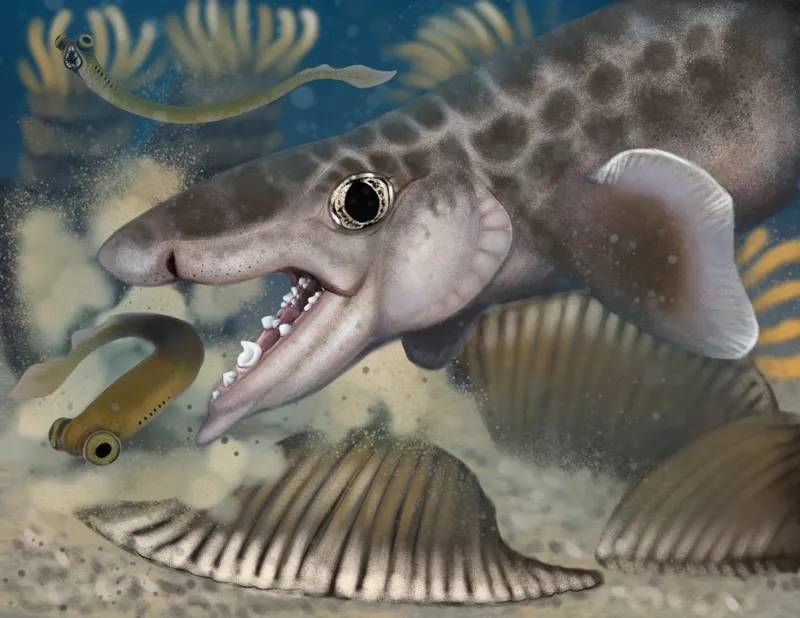
10. Macadens olsoni - another piece of the puzzle
Macadens olsoni is an extinct genus of small, holocephalan-like cartilaginous fish from the Late Mississippian period, about 340 million years ago, discovered in Mammoth Cave National Park, Kentucky. Named for "Mammoth Cave Denizens" and honoring retired park scientist Rickard Olson, it is known from a unique symphyseal tooth whorl with blunt, robust teeth adapted for durophagous feeding on hard-shelled prey like mollusks and polychaete worms.
Measuring less than 30 cm (12 inches) long, this cryptic species inhabited shallow, tropical reef ecosystems in the Mississippian Sea, a warm seaway linking ancient North America, Europe, and North Africa. As the fifth new shark species from the park since 2019 - following finds like Clavusodens mcginnisi - its description clarifies early chondrichthyan diversification and highlights the value of paleontological inventories in national parks.
Why these newly described and obscure species matter
Discovering and naming species isn’t just academic - it's practical. Here’s why these fishes deserve attention:
- Conservation prioritization: you can’t protect what you don’t know exists.
- Ecological insight: different species fill different ecological roles, from sediment turnover to plankton control.
- Evolutionary stories: each species helps trace how life in the oceans diversified and adapted.
- Human connections: species names often reflect local cultures and researchers, strengthening ties between communities and science.
How you can be part of the story
If this list ignites your curiosity, here’s how to stay involved (and help):
- Support or follow NGOs and research groups that fund surveys and DNA work - many discoveries come from modestly funded expeditions.
- Report unusual sightings: divers and fishers often provide the photos and specimens that lead to discoveries.
- Reduce bycatch impacts: choose sustainable seafood, support responsible fisheries policy, and back gear research that lowers accidental catches.
The ocean still hides many species and stories. Some are enormous and spectacular like the newly recognized Atlantic manta, while others are small, deep, or secretive. Each name - Mobula yarae, Etmopterus westraliensis, Macadens olsoni - represents a real animal with a role in its ecosystem and a tale to tell. If you love marine life, that’s an invitation: look closer, ask questions, and keep listening to the sea. It’s still teaching us.
PADI Divemaster and underwater storyteller with over 7 years of hands-on Red Sea diving experience, documenting marine life, mapping dive sites, and promoting responsible ocean conservation.