Volcanic Bubbles Reveal the Future of Coral Reefs

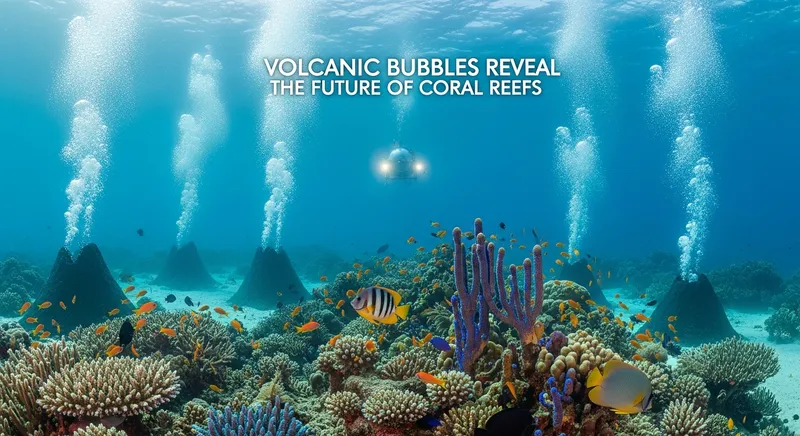
If you could peek into the future of coral reefs, what would you see? Scientists have found a real-life crystal ball in the remote waters of Papua New Guinea, where volcanic bubbles are quietly shaping the fate of coral in a world with rising carbon dioxide.
A Natural Laboratory Underwater
Off the coast of Papua New Guinea, carbon dioxide seeps out from volcanic vents on the seafloor, making the surrounding water more acidic - just like what’s happening in oceans worldwide as more CO₂ is absorbed from the atmosphere. This unique spot has become a living laboratory for marine biologists, offering a glimpse into what coral reefs might look like in the decades to come.
What Happens When the Water Gets More Acidic?
Researchers have noticed a clear pattern: as acidity increases, the vibrant coral communities start to fade. Instead of colorful, complex coral structures, the reefs become dominated by fleshy algae. These algae grow quickly and can smother the coral, making it harder for reefs to recover and thrive.
“With every bit of increase in CO₂, we will see fewer corals and more fleshy algae,” says Dr. Katharina Fabricius, a leading coral researcher. This shift isn’t sudden - it’s a gradual change, but the outcome is clear: reefs lose their complexity and biodiversity.
Why This Matters for the World
Coral reefs aren’t just beautiful underwater landscapes - they’re vital ecosystems that support countless marine species and provide food and income for millions of people. As oceans become more acidic, the health of these reefs is at risk, which could have ripple effects on marine life and coastal communities.
- Reefs become less complex and less able to support diverse life.
- Fleshy algae take over, crowding out coral and reducing habitat quality.
- Coastal communities that rely on reefs for fishing and tourism face uncertain futures.
A Warning and a Call to Action
The volcanic bubbles in Papua New Guinea aren’t just a curiosity - they’re a warning. The changes happening there are a preview of what could happen to coral reefs around the world if carbon emissions continue to rise. But they also offer hope: by studying these natural experiments, scientists can better understand how to protect and preserve coral reefs in the face of climate change.
“The more CO₂ we emit into the atmosphere, the greater the changes will be to coral reefs,” says Dr. Fabricius. “This is on top of the impact of global warming and sea level rise.”
So, what can we do? Reducing carbon emissions is the most important step. But supporting research and conservation efforts can also help us find ways to protect these precious ecosystems for future generations.
The story of Papua New Guinea’s volcanic bubbles is a reminder that the choices we make today will shape the oceans of tomorrow.
References
PADI Divemaster and underwater storyteller with over 7 years of hands-on Red Sea diving experience, documenting marine life, mapping dive sites, and promoting responsible ocean conservation.