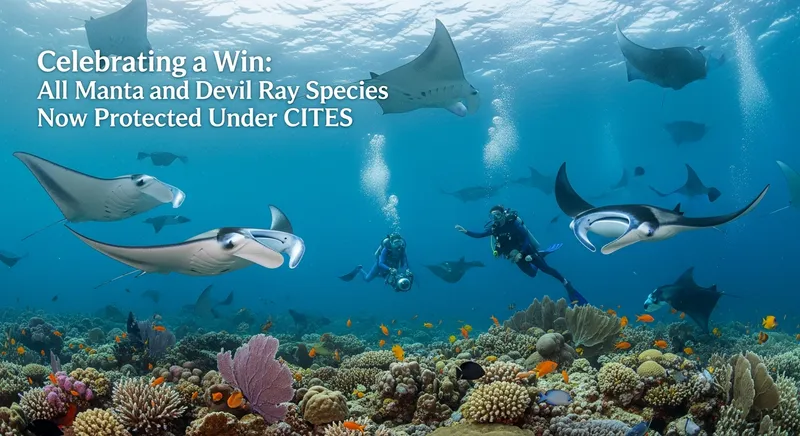
Celebrating a Win: All Manta and Devil Ray Species Now Protected Under CITES

A Landmark Victory for Ocean Conservation
On November 24, 2025, governments convened at the 20th Conference of the Parties to CITES (CoP20) and made a historic decision that marks a turning point for marine conservation.[1] All manta and devil ray species have been uplisted to CITES (Convention on International Trade in Endangered Species of Wild Fauna and Flora) Appendix I, the highest level of international protection.[1][2] This decision prohibits all international commercial trade in mobulid products, closing loopholes that have allowed unsustainable exploitation of these magnificent creatures for far too long.[1]
"This is a momentous day for manta and devil rays, and the fact there was a consensus in the room, shows that not only was the science clear, but that the world's countries are standing up for the survival our natural heritage."
- Rebecca Carter, Director of Conservation Programmes | The Manta Trust
This achievement represents the culmination of years of scientific research, advocacy, and collaboration from marine conservation organizations, governments, and ocean enthusiasts around the world. The timing could not have been more critical - three oceanic devil ray species had just been uplisted to Critically Endangered status, marking the final step before extinction in the wild.[1]
CITES Appendix I
Manta and devil rays have now been moved to CITES Appendix I, which is the highest level of protection available. This means every country that’s part of CITES must enforce much stricter rules when it comes to trading these species internationally. Here’s what’s changed:
No more commercial trade: It’s now illegal to buy or sell manta and devil ray products - like gill plates, meat, or anything else - across borders for profit. Any trade meant to make money is completely banned.
Only exceptions for important purposes: Trade is still allowed in rare cases, but only for things like scientific research, conservation efforts, or educational activities - not for commercial gain.
Tighter tracking and reporting: Every international movement of these animals must be closely monitored and reported. This helps authorities keep a better eye on how they’re being used and gives clearer insights into their population trends and overall health.
Understanding the Stakes: Why This Protection Matters
Manta and devil rays have faced unprecedented pressure from commercial fishing operations worldwide. Global populations have experienced alarming declines across multiple ocean basins, driven by unsustainable harvesting for their gill plates, meat, and other body parts.[1] These gentle giants play crucial roles in marine ecosystems, and their disappearance would leave irreplaceable gaps in ocean health.
Species like oceanic whitetip sharks, manta rays, and whale sharks simply cannot withstand commercial trade.[3] The science is unequivocal on this point. Unlike species that can recover from fishing pressure, these rays have biological characteristics - including slow reproductive rates and late sexual maturity - that make them particularly vulnerable to overexploitation.
What This Means for Scuba Divers and Marine Enthusiasts
For scuba divers and snorkelers, this protection ensures that future generations will have the opportunity to encounter these extraordinary creatures in their natural habitats.[1] Manta rays, in particular, are among the most sought-after wildlife experiences for ocean enthusiasts, offering unforgettable encounters that inspire deeper commitment to marine conservation.
The CITES Appendix I listing sends a powerful message to tourism operators and governments: these animals belong in the ocean, not in markets or on processing lines. This protection helps maintain healthy populations in regions where responsible diving tourism can continue, creating economic incentives for conservation rather than exploitation.
For Marine Biologists and Researchers
The uplisting represents a significant policy victory rooted in scientific evidence. Researchers have documented the steep population declines across multiple ocean basins, and this decision validates their calls for coordinated, science-based action.[1] The listing closes existing management and policy gaps that previously allowed unsustainable exploitation to continue.
Beyond the international trade ban, governments in high-risk fishing nations are now urged to implement full national legal protection for mobulids, including retention bans and the promotion of live-release practices.[1] This multi-layered approach creates a comprehensive framework for protecting these species both internationally and locally.
A Photographer's Dream Preserved
Underwater and wildlife photographers have long celebrated the ethereal beauty of manta rays gliding through the water column. The distinction between manta rays - which have terminal and forward-facing mouths - and devil rays with their subterminal mouths creates diverse photographic opportunities.[4] With these protections in place, photographers can continue documenting and sharing the beauty of these creatures, raising awareness and inspiring conservation action through their compelling imagery.
The Road Ahead: Implementation and Continued Action
While the CITES CoP20 decision is undoubtedly a major victory, the real work now lies in implementation. The decision must be enforced by participating nations through domestic legislation and monitoring systems. Governments must ensure that ports are equipped to prevent illegal trade, and enforcement agencies must have the resources to combat wildlife trafficking networks.
The Manta Trust and its conservation partners emphasize that the public also has an important role to play in supporting these efforts.[1] By backing the #SaveTheMantas campaign and signing the Only One petition, individuals can demonstrate widespread public support for stronger protections and help drive continued global action.[1]
Closing Loopholes for Lasting Change
One of the most significant aspects of this decision is that it closes existing loopholes that previously allowed unsustainable exploitation.[1] The commercial trade ban eliminates market incentives for targeting these vulnerable species, addressing one of the primary drivers of population decline.
This comprehensive approach - combining international trade restrictions with encouragement for national-level protections and live-release practices - provides the multi-faceted protection these species desperately need. It represents a fundamental shift in how the international community values these creatures: not as commodities to be exploited, but as irreplaceable components of healthy ocean ecosystems deserving of protection.
Why This Moment Matters
The CITES CoP20 decision on manta and devil rays exemplifies how scientific evidence, persistent advocacy, and political will can converge to create real change for endangered species. For scuba divers, this means continued opportunities for meaningful encounters with these gentle giants. For marine biologists, it validates decades of research demonstrating the urgent need for protection. For photographers, it preserves subjects of extraordinary beauty and ecological significance.
As our oceans face unprecedented challenges from climate change, pollution, and overfishing, the protection of manta and devil rays offers hope that coordinated international action can still turn the tide for vulnerable species. Every voice that called for this protection matters, and every individual who continues to support these efforts contributes to a future where these magnificent rays thrive in healthy, vibrant oceans.
The decision made on November 24, 2025, will be remembered as a critical moment in ocean conservation - a moment when the world chose protection over exploitation, and when manta and devil rays finally received the comprehensive international safeguards they have long deserved.
References
PADI Divemaster and underwater storyteller with over 7 years of hands-on Red Sea diving experience, documenting marine life, mapping dive sites, and promoting responsible ocean conservation.