Why the Red Sea’s Marine Life Is Diverse but Often Seen in Low Numbers

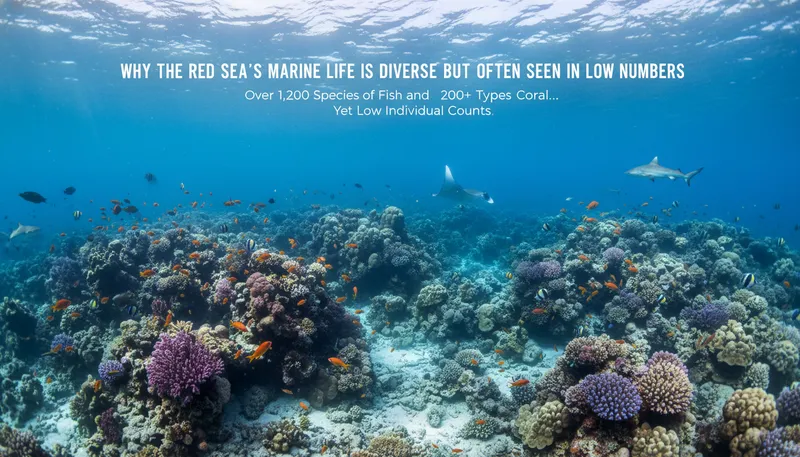
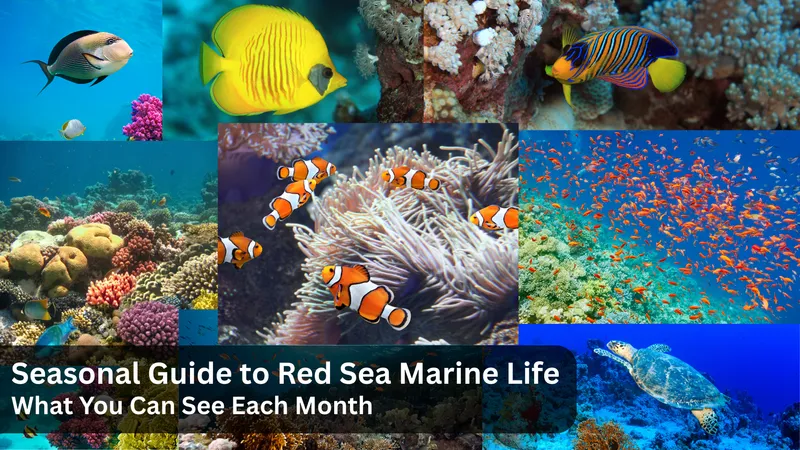
The Red Sea is a marine wonderland, renowned for its extraordinary biodiversity and vibrant underwater landscapes. Home to over 1,200 species of fish and more than 200 types of coral, this region is a living laboratory for tropical marine research and a dream destination for divers, scientists, and photographers alike [2][4][7]. Yet, despite its rich species diversity, many visitors and researchers are often surprised by the relatively low numbers of individual animals they encounter. What makes the Red Sea’s marine life so diverse, and why is it frequently seen in low densities? Let’s dive into the fascinating reasons behind this unique phenomenon.
The Roots of Red Sea Diversity
The Red Sea’s exceptional biodiversity is the result of its unique geography and evolutionary history. Isolated for millions of years, the Red Sea has become a hotspot for endemic species - about 10-15% of its fish and 5% of its corals are found nowhere else on Earth [1][2][5][7]. This isolation has allowed for the evolution of specialized species adapted to the region’s warm, saline waters and dynamic reef environments [7]. The presence of thriving coral reefs, seagrass meadows, and mangroves further supports a wide array of marine life, making the Red Sea one of the most biologically diverse coral reef communities outside Southeast Asia’s Coral Triangle [5].
Why Are Numbers Often Low?
Despite its species richness, the Red Sea’s marine life is often observed in low numbers. Several factors contribute to this pattern. First, the Red Sea’s ecosystem is relatively oligotrophic, meaning it has low nutrient levels compared to other tropical seas. This limits the overall biomass and abundance of marine organisms, resulting in fewer individuals per species [7]. Additionally, the region’s coral reefs, while resilient to climate change, are not as densely populated as those in the Indo-Pacific’s Coral Triangle, where nutrient-rich waters support higher densities of fish and invertebrates [5].
Another factor is the Red Sea’s history of low human pressure, which has allowed for the preservation of unique species but has not necessarily led to high population densities. However, recent coastal development and increased anthropogenic activities are beginning to impact these delicate ecosystems, potentially affecting population sizes and distribution patterns [7].
Implications for Divers, Biologists, and Photographers
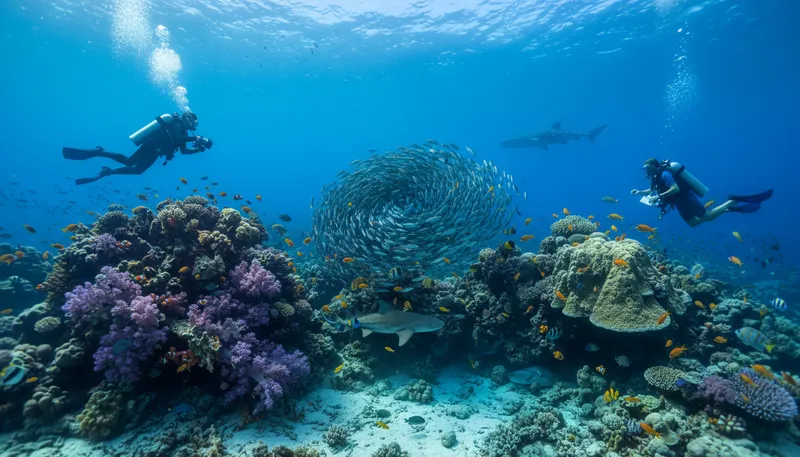
For scuba divers, the Red Sea offers a unique experience: encountering a wide variety of species, but often in small groups or as solitary individuals. This makes each sighting special and memorable, as divers are more likely to observe rare or endemic species rather than large schools of common fish [2][4]. Marine biologists find the Red Sea invaluable for studying reef dynamics, fish behavior, and coral adaptation strategies, as the region’s relatively healthy ecosystems provide a window into the complexities of tropical marine life [4].
Underwater photographers are drawn to the Red Sea for its crystal-clear waters and the opportunity to capture images of unique endemic species that exist nowhere else in the world [2]. The low numbers of individuals can actually enhance the photographic experience, allowing for more intimate and detailed shots of each creature.
Conservation and the Future
The Red Sea’s biodiversity is a precious resource that requires careful conservation. While the region’s coral reefs are resilient, they are not immune to the impacts of climate change, overfishing, and habitat loss [1][2]. Protecting the Red Sea’s unique marine life means balancing economic development with sustainable practices, ensuring that future generations can continue to marvel at its diversity and beauty [1][2].
In summary, the Red Sea’s marine life is diverse but often seen in low numbers due to its unique geography, evolutionary history, and ecosystem characteristics. For divers, biologists, and photographers, this makes the Red Sea a truly special destination, offering the chance to witness and document some of the world’s most remarkable marine species in their natural habitat [2][4][7].
References
PADI Divemaster and underwater storyteller with over 7 years of hands-on Red Sea diving experience, documenting marine life, mapping dive sites, and promoting responsible ocean conservation.