From Fishing Village to Dive Capital: The Rise of Hurghada's Diving Industry

From Fishing Village to Dive Capital: The Rise of Hurghada's Diving Industry
Today, Hurghada stands as one of Egypt's premier diving destinations, attracting thousands of divers from around the world each year. Yet this transformation from a quiet fishing village to a thriving dive capital is a remarkable story of discovery, development, and dedication to marine conservation. Understanding how Hurghada became what it is today reveals not only the history of a destination, but also the global evolution of recreational diving itself.
The Humble Beginnings: From Fishing Village to Oil Town
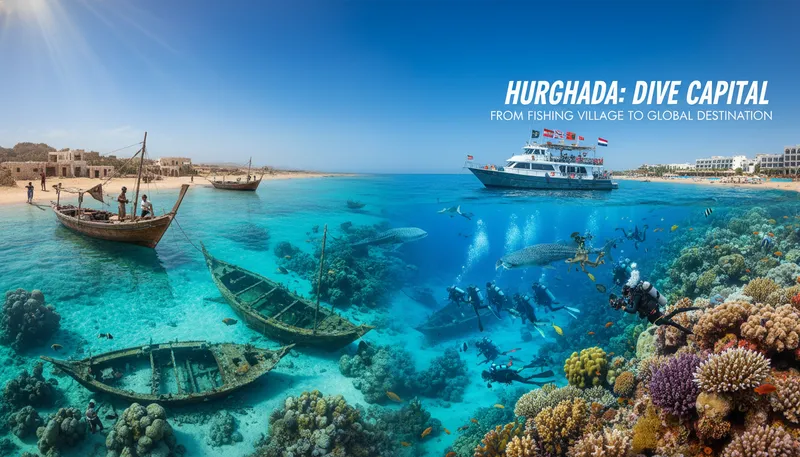
In 1905, Hurghada was nothing more than a simple fishing village on the shores of the Red Sea.[3] Local residents led peaceful, modest lives centered around the ocean's bounty. This quiet existence changed dramatically in 1909 when British engineers, exploring the region for oil reserves, discovered significant petroleum deposits nearby.[7] The discovery transformed Hurghada's economy and landscape, attracting foreign investment and establishing the town as a strategic outpost for resource extraction. For decades, oil and fishing remained the lifeblood of this small Egyptian settlement, with little indication of the tourism boom that would eventually define its future.
The Discovery of an Underwater Paradise
The catalyst for Hurghada's transformation into a diving destination came in the 1980s, when word spread about the extraordinary underwater wonders lurking beneath the Red Sea's surface.[6] Divers began arriving to explore the vibrant coral reefs, encounter moray eels, and witness the spectacular marine life that seemed almost painted from a fantasy.[6] Local residents, sensing opportunity and responding to growing interest, began offering simple services: boat trips, desert camping, and traditional fishing experiences.[6] The first small hotels emerged during this period, catering to the pioneering divers and adventure seekers drawn by rumors of an aquatic paradise.
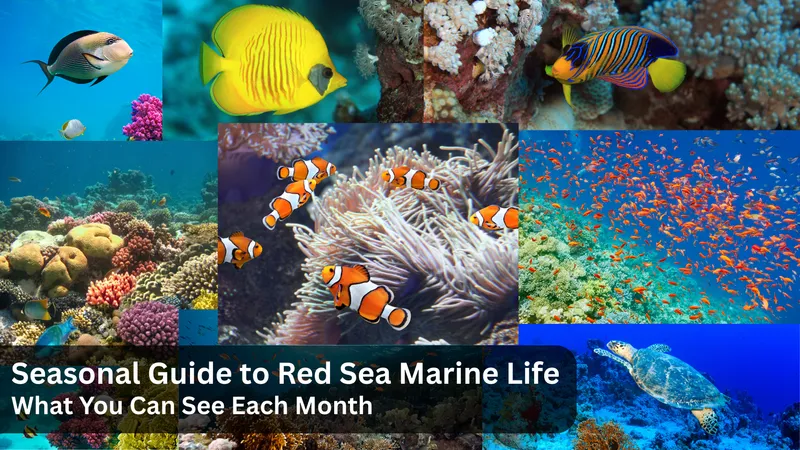
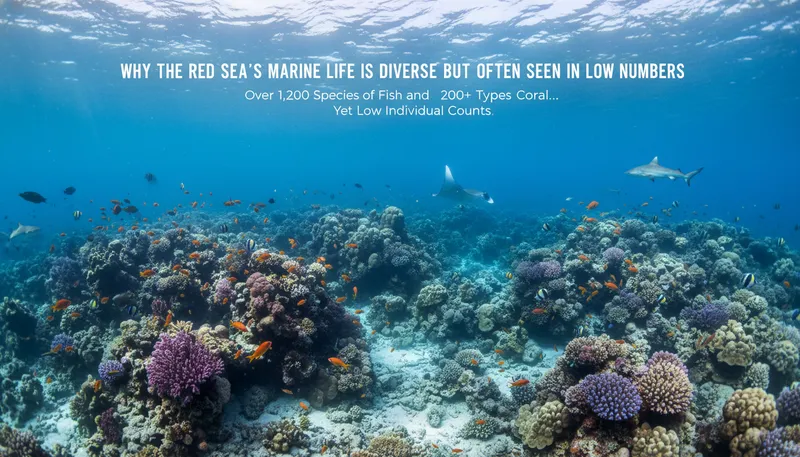
The Red Sea's diving appeal is rooted in genuine marine excellence. Hurghada is home to some of the most vibrant coral reefs in the Red Sea, creating a paradise for divers of all experience levels.[9] The underwater landscape features spectacular coral reef caves with intricate coral forests and underwater gardens, hosting diverse marine creatures including hammerhead sharks, tuna, and countless other species.[3] These natural formations provide both visual splendor for photographers and rich ecosystems for marine biologists to study.
The Tourism Boom: Building an International Resort
While the 1980s marked the beginning of Hurghada's transformation, the real explosive growth occurred during the 1990s and 2000s.[6] Investors recognized the enormous potential of the Red Sea as a tourist destination and began developing the infrastructure necessary for international tourism. Large resort hotels with swimming pools and private beaches sprouted along the coastline, while the city center filled with shops, bars, and entertainment venues.[6] This period of rapid development established Hurghada's status as a legitimate international resort destination.
The growth trajectory was remarkable: satellite imagery from 1984 shows Hurghada as little more than a modest cluster of buildings set against the tan desert, while by 2014, the landscape was crowded with hotels, residential developments, and commercial infrastructure hugging the coast, particularly in the nightlife hub of Sekala.[7] This physical transformation reflected the broader shift from a small oil and fishing town to a thriving tourist economy.
Professional Excellence: The Development of Diving Services
As the diving industry grew, Hurghada attracted professional operators committed to delivering quality service and education. Emperor Divers, for instance, became the first PADI 5 Star Instructor Development Centre on mainland Egypt, pioneering professional diving education in the country.[4] What began with a single diving center at the Princess Palace Hotel evolved into a comprehensive operation with multiple locations across Egypt, a growing fleet of day-dive boats, and eventually liveaboard vessels like the Golden Diver and Pegasus to explore deeper dive sites.[4] This professionalization of the diving industry ensured that tourists received proper training, safety protocols, and guided experiences that enhanced both their enjoyment and their respect for the marine environment.
Honoring History: Wrecks and War Graves
Beyond the natural coral reefs, Hurghada offers unique diving experiences at historically significant wreck sites. The El Mina, a 70-meter Egyptian minesweeper sunk during the Yom Kippur War on October 6, 1973, serves as both a war grave and a distinctive dive destination.[1] Struck by Israeli fighter jets while moored in Hurghada harbor, the El Mina settled on its port side on the seabed, where it remains today as a tangible piece of modern Egyptian history.[1] Divers exploring the wreck begin their descent through blue water toward the harbor entrance, encountering the unmistakable silhouette of the fallen warship at depths starting around 25 meters and sloping to the sandy seabed at 32 meters.[1] Such wrecks provide not only fascinating underwater exploration but also opportunities for reflection on history and respect for those lost at sea.
Innovation and Sustainability: The Underwater Military Museum
Recognizing the environmental challenges posed by over-tourism, Hurghada has pioneered an innovative solution that combines conservation with cultural heritage. The initiative involves sinking 15 decommissioned military warships at three popular dive sites: Sha'b al-Saqala, Uruq al-Tawil, and Erq Jamea in Magawish.[2] This ambitious project addresses alarming statistics revealing that existing reef sites have endured over 200,000 dives per year - far exceeding the sustainable limit of 22,000 dives annually.[2]
By creating new dive sites centered on sunken warships, Hurghada aims to attract divers interested in historical exploration while relieving pressure on fragile natural reef ecosystems.[2] This diversion allows existing sites to gradually regenerate and expand their territories, supporting ecosystem growth and recovery.[2] Additionally, the breathing room provided by these new alternatives enables institutions and conservation organizations to develop more progressive management plans for underwater sites.
These conservation efforts build on earlier successes, particularly the creation of the world's largest mooring system, which plays a crucial role in preserving Egypt's coral reefs.[2] Estimates suggest that without these mooring buoys, coral reef destruction along Egypt's Red Sea coastline would have been 70% higher.[2] Such infrastructure demonstrates how thoughtful planning can reconcile tourism with environmental stewardship.
HEPCA: Guardians of the Red Sea
Established in 1992, the Hurghada Environmental Protection and Conservation Association (HEPCA) has played a pivotal role in safeguarding the Red Sea's unique marine ecosystems as tourism in Hurghada surged. Founded by a coalition of local dive operators, scientists, and environmentalists, HEPCA emerged in response to growing concerns about the impact of mass tourism on coral reefs and marine life. The organization quickly became a leader in marine conservation, implementing practical measures such as the world’s largest mooring buoy system to prevent anchor damage to fragile reefs, and launching educational campaigns to raise awareness among tourists and locals alike.
HEPCA’s influence extends beyond reef protection. The association has been instrumental in shaping sustainable tourism policies, advising government bodies, and supporting scientific research on marine biodiversity in the Red Sea. Through initiatives like reef monitoring, waste management programs, and the promotion of eco-friendly diving practices, HEPCA has helped ensure that Hurghada’s transformation into a global dive capital does not come at the expense of its natural heritage. Their work exemplifies how local action can drive meaningful change, balancing economic growth with environmental responsibility and setting a benchmark for marine conservation worldwide.
A Destination for All Enthusiasts
Today, Hurghada appeals to diverse visitors: recreational divers seeking vibrant coral gardens and abundant marine life, marine biologists interested in studying one of the world's most biodiverse ecosystems, technical divers pursuing deeper explorations, and underwater photographers capturing the stunning beauty of the Red Sea's inhabitants and underwater landscapes.[9] The destination has evolved from an accidental discovery to a carefully managed destination that balances tourism, education, conservation, and cultural memory.
The rise of Hurghada from a quiet fishing village to a world-class dive capital represents more than just successful tourism development. It reflects humanity's fascination with the underwater world, the power of preserving and respecting natural environments, and the possibility of honoring history while looking toward a sustainable future. For anyone considering a diving adventure, Hurghada offers not just extraordinary diving experiences, but a chance to be part of a destination committed to responsible exploration and conservation.
References
PADI Divemaster and underwater storyteller with over 7 years of hands-on Red Sea diving experience, documenting marine life, mapping dive sites, and promoting responsible ocean conservation.