Diving Into the Deepest Reaches: The Discovery of Earth’s Deepest Ocean - Dwelling Creatures

The Deepest Animal Communities Yet Found
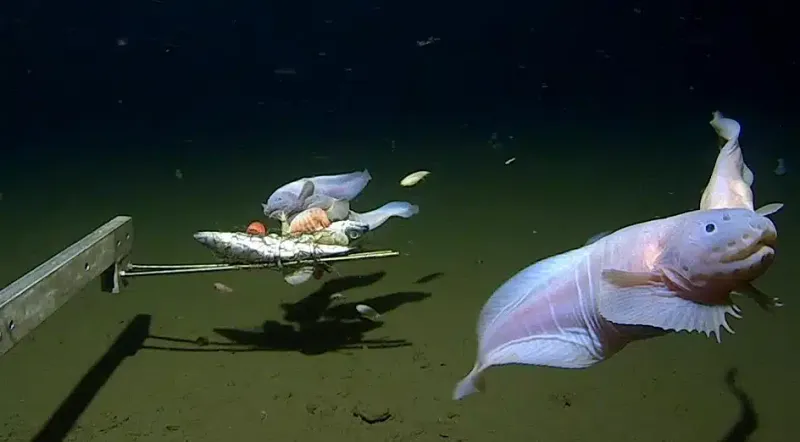
In an extraordinary breakthrough, a Chinese manned submersible named Fendouzhe explored the Mariana Trench in the western Pacific Ocean, reaching nearly 10 kilometers below sea level. Scientists observed thriving colonies of marine creatures living on the seafloor, including thousands of tubeworms and mollusks such as bivalves. These animals survive not by sunlight, but through a process called chemosynthesis, where bacteria convert chemicals like methane and hydrogen sulfide from the seafloor into organic nutrients. This represents the deepest known ecosystem dependent on chemosynthesis, expanding our awareness of life’s tenacity under crushing pressure and pitch-black waters[2][3].
The Mysterious Magnapinna Squid: A Resident of the Hadal Zone
Among the ocean’s deep mysteries is the elusive Magnapinna, or bigfin squid, recently filmed at a staggering depth of 5,180 meters near the Cook Islands. This squid is unique and currently the only known species that inhabit the hadal zone - the ocean’s lowest regions, including deep trenches. Magnapinna’s characteristic long, filament-like arms give it an almost alien appearance, and spotting one offers vital clues about life existing even in the ocean’s most extreme environments[1].
New Predators From the Depths
Researchers have also identified surprising new predators lurking around 8,000 meters deep in the Atacama Trench off South America’s west coast. One notable discovery was a small crustacean, named Dulcibella camanchaca, confirmed as both a new species and a new genus. Its ability to survive in these dark, high-pressure habitats gives further evidence that the hadal zone is more ecologically complex than previously understood[5].
Uncovering a Wealth of New Species
Thanks to advances in technology such as micro-computed tomography and genetic barcoding, scientists are unearthing a treasure trove of new species from the deep sea. Recently, researchers described 14 bizarre new species from depths greater than 6,000 meters, including a carnivorous bivalve found at over 5,200 meters - setting new records for deep-sea species discovery. These tools not only allow detailed anatomical studies without damaging specimens but also illuminate evolutionary connections deep underwater[6].
Why These Discoveries Matter
Each new deep-ocean discovery challenges assumptions about the limits of life on Earth. These creatures live where conditions are extreme: immense pressure, near-freezing temperatures, and total darkness. Yet life thrives by relying on sources like chemosynthetic bacteria rather than sunlight. Understanding these unique ecosystems not only deepens our appreciation for biodiversity but also informs the search for life beyond Earth, for instance, on ocean worlds like Jupiter’s moon Europa[5].
The deep sea remains one of Earth’s final frontiers, with mysteries still hiding in the abyssal dark. As exploration continues, who knows what extraordinary organisms await discovery, patiently enduring in the darkest, most remote corners of our planet?
References
PADI Divemaster and underwater storyteller with over 7 years of hands-on Red Sea diving experience, documenting marine life, mapping dive sites, and promoting responsible ocean conservation.