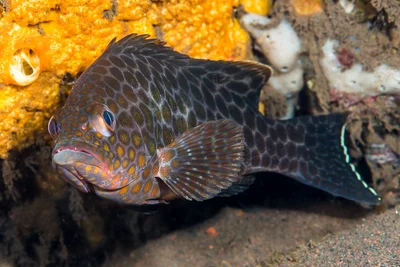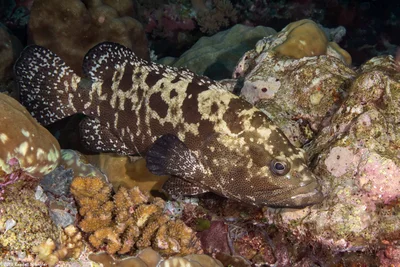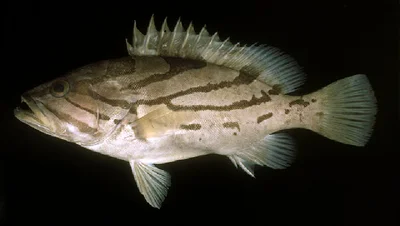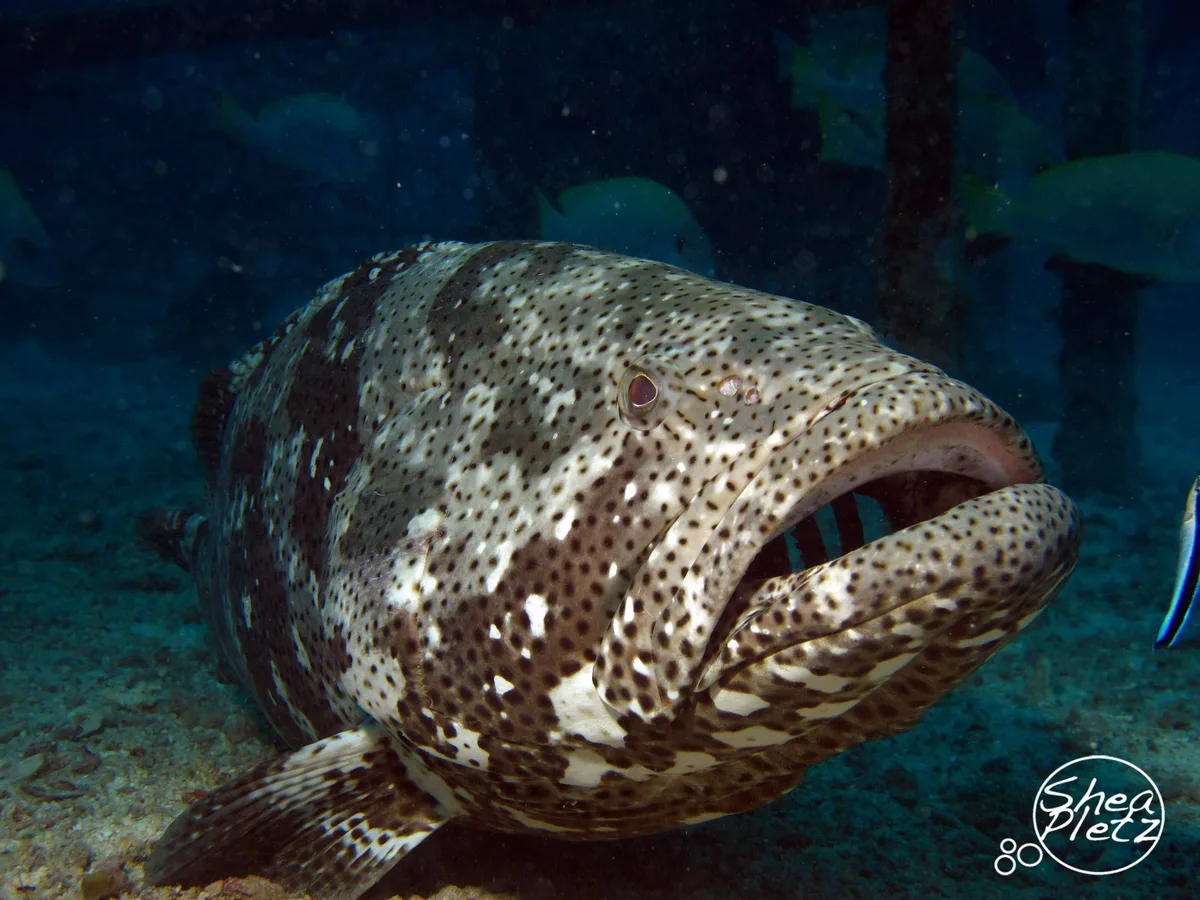
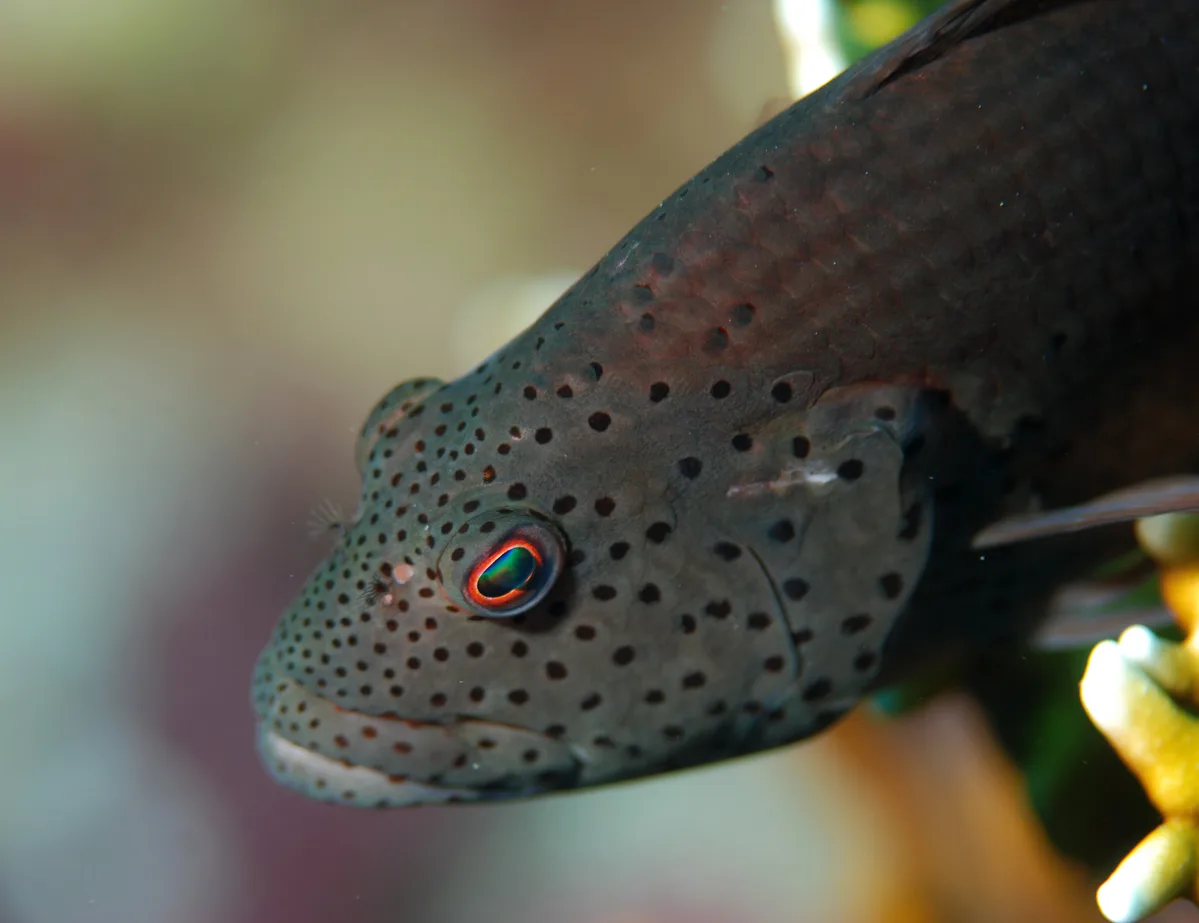
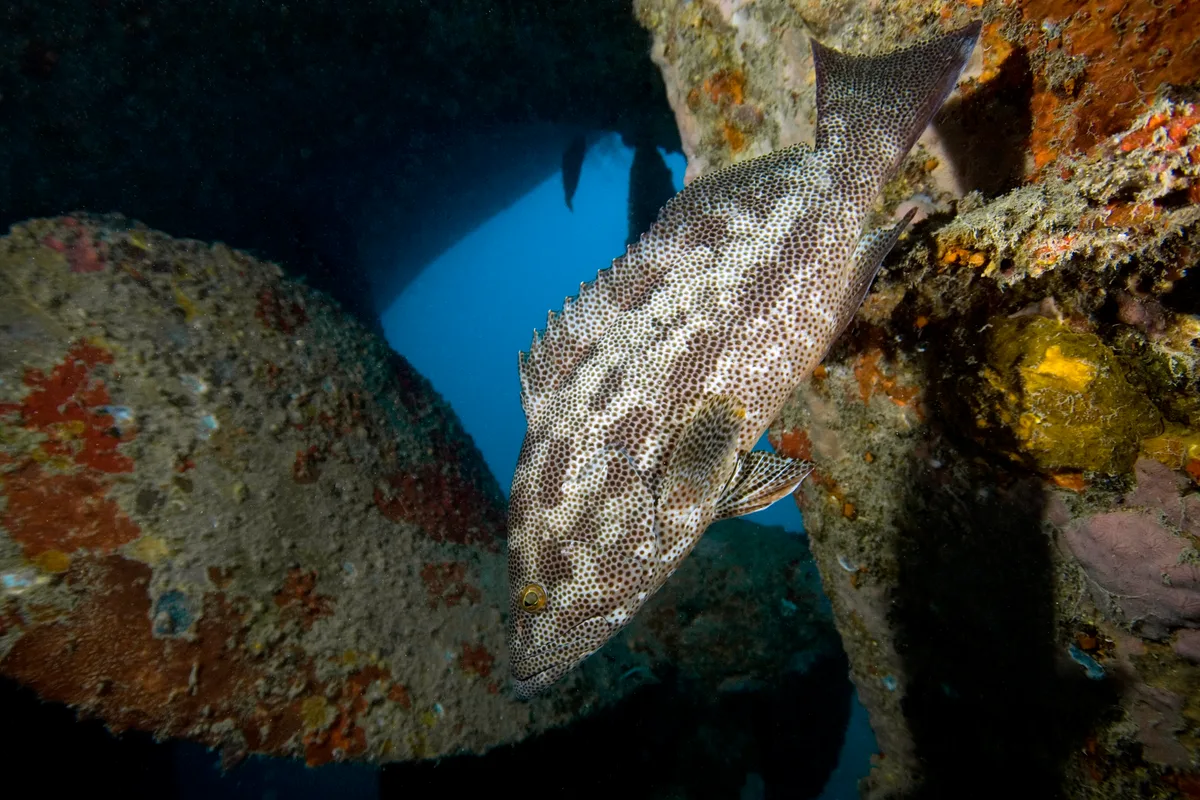
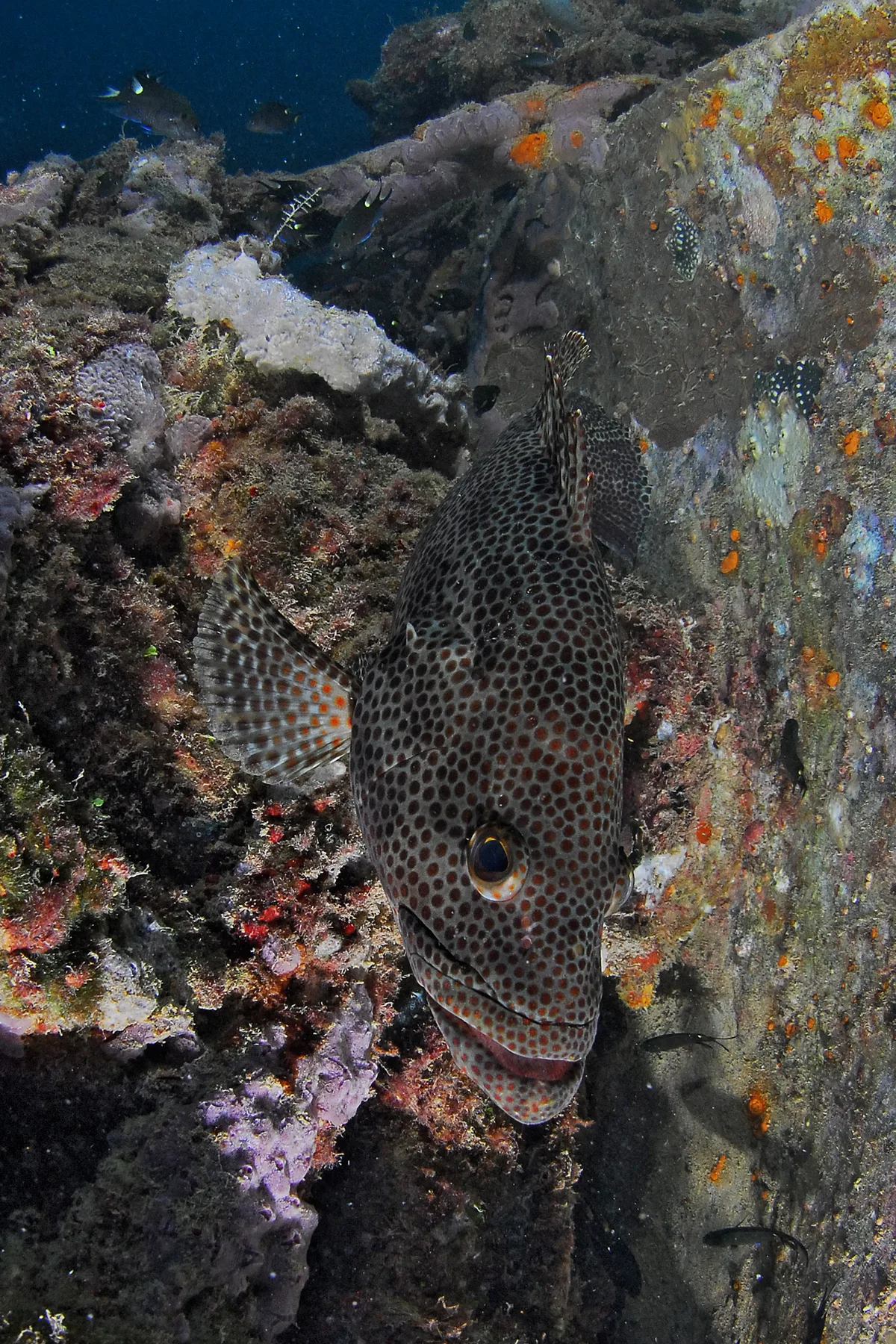
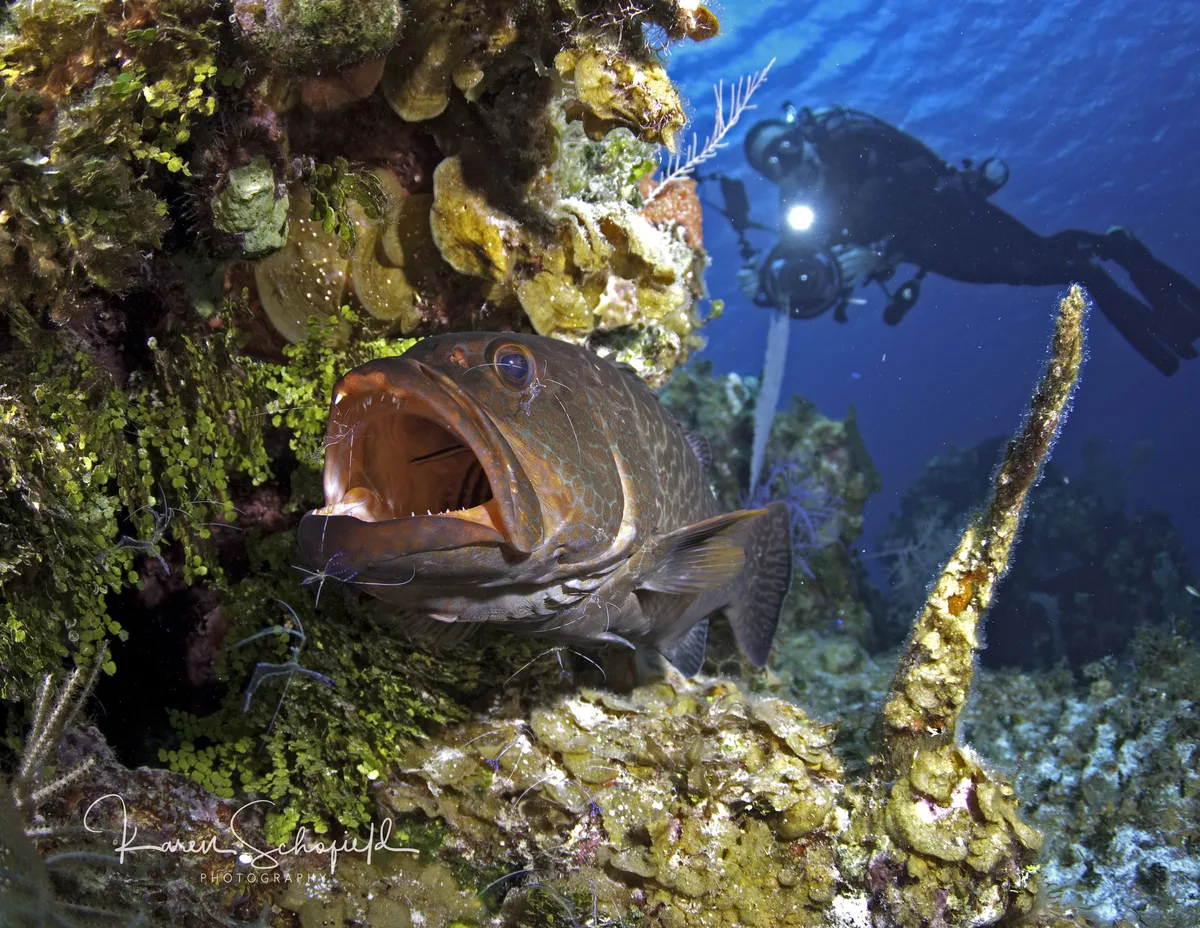
A small pale grouper covered evenly in round brown spots, sitting on rubble in the open rather than hiding in a hole. Forty centimeters (16 in), and the grouper a diver here sees most often without registering it as one.
Its name is recent. For decades these fish were filed under the wide-ranging Epinephelus chlorostigma, and only later work separated the 🌊 Red Sea and Arabian populations as a species of their own - which is why older books here use the other name and why the two are still confused in fish markets.
It hunts small fish and crustaceans over open bottom, and unlike the big groupers it does not depend on a cave: it rests on sand or rubble, moves off a few meters when approached, and settles again. That habit makes it easy to photograph and easy to spear, and it is heavily fished across the region.
Like its relatives it starts female and changes to male with size. In a species this small, that transition happens at a length that fishing regularly removes, which is a quieter problem than it looks.
The genus. Epinephelus Bloch 1793 - epinéphelos (ancient Greek for clouded over). ETYFish
- pale body covered evenly in small round brown spots, no blotches or bars
- spots on the head smaller and denser than on the flank
- tail slightly rounded with a pale rear margin
- length up to 40 cm
Why it's threatened
Overfishing is a potential threat to this species.
Threat classification from the IUCN Red List.