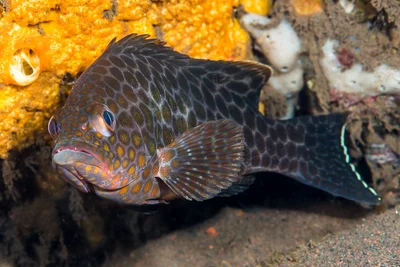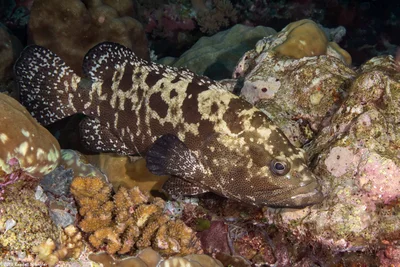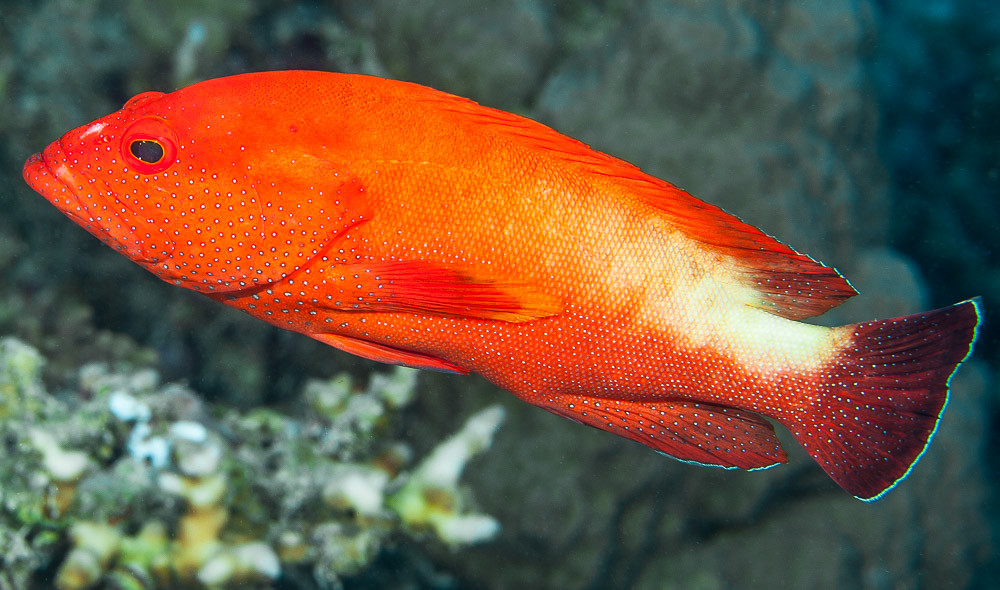


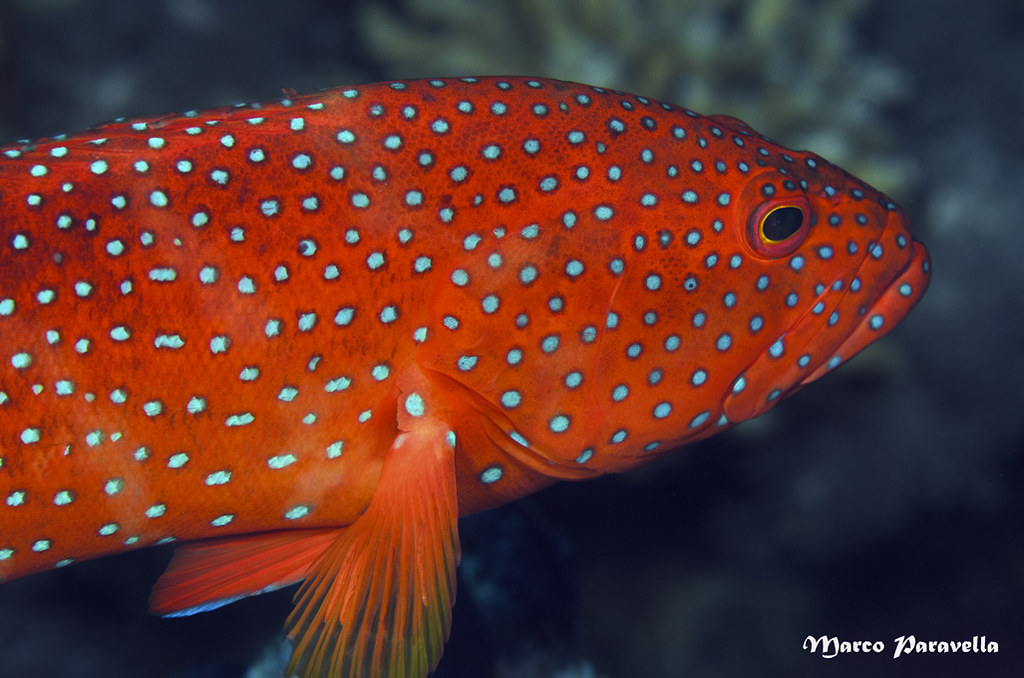
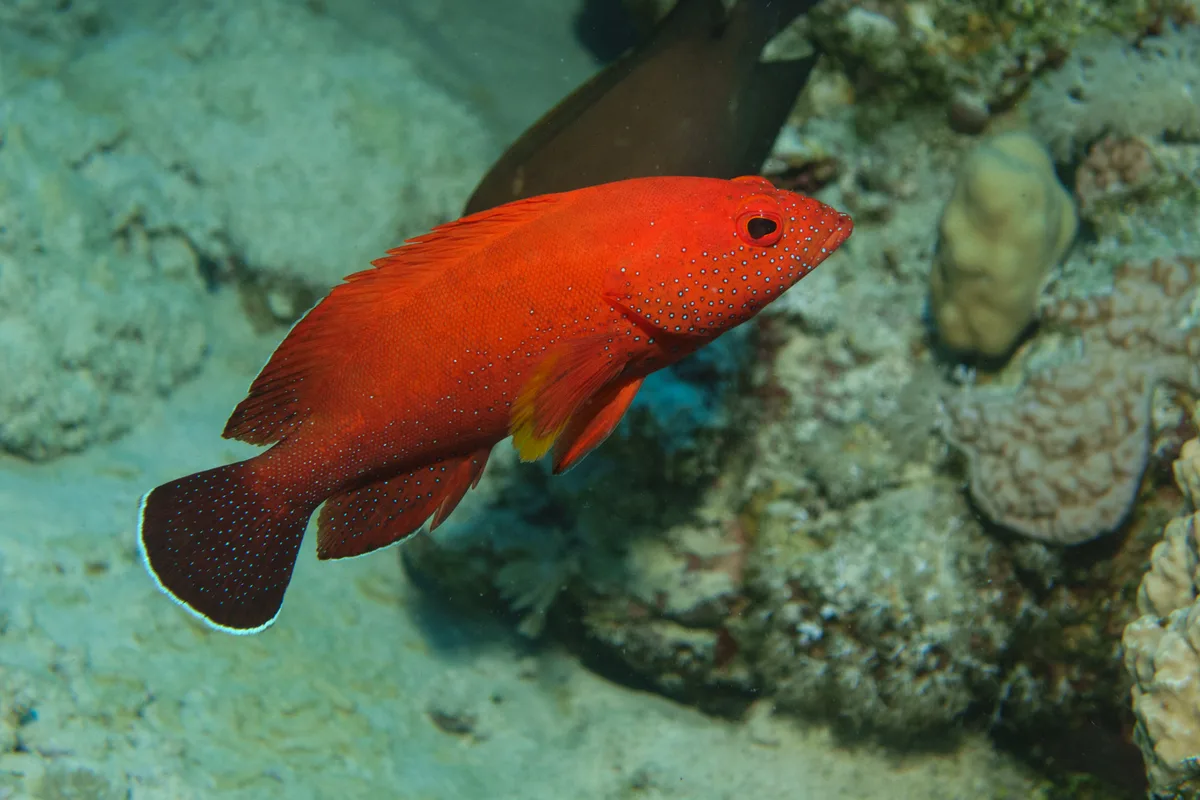
A small grouper that lives a long time in a small place. Individuals have been aged at twenty-six years, and a pair holds one territory of up to about sixty square meters - the floor area of a small apartment - defending it together.
The long-term pairing is the unusual part. Most groupers begin as females, change into males, and the large males keep a harem of several females on a much bigger patch of reef. The sex change still happens here, but the social arrangement that comes out of it is a pair rather than a harem.
What it eats is specific enough to have been measured: about two thirds damselfish, most of the rest crustaceans. So it works the coral heads where damselfish live, and it takes them with a short rush from cover rather than by chasing anything down.
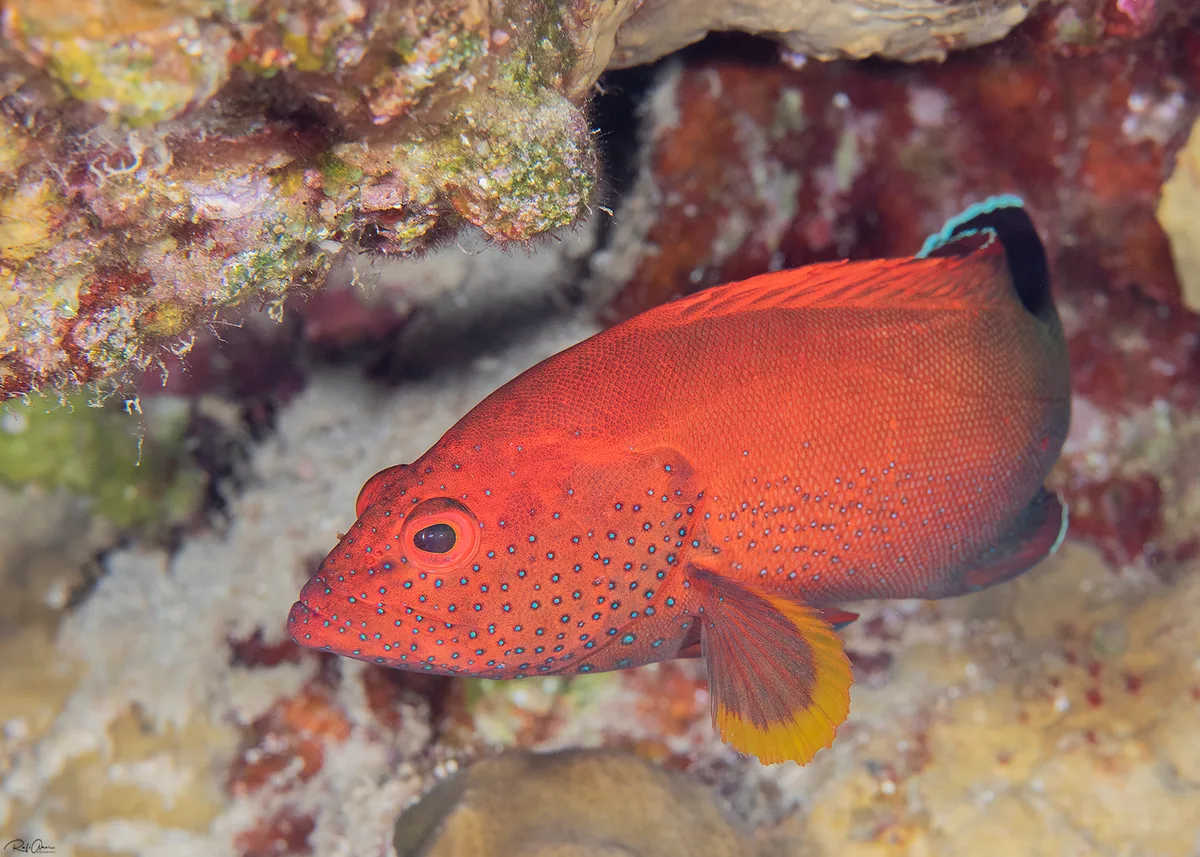
It is red-brown under small blue spots, with yellow-edged pectoral fins, and it is a genuinely difficult fish to photograph. Not shy exactly - it simply keeps a coral head between itself and you and moves when you move.
The Red List has it as Least Concern globally, but that is not the whole picture. The 🌊 Persian Gulf population is assessed separately and comes out Near Threatened, for the ordinary reasons: it is good to eat, it lives close inshore, and it is slow to replace itself.
The genus. Cephalopholis Bloch & Schneider 1801 - cephalus (head) + pholis (scale). ETYFish
The species. Cephalopholis hemistiktos (Rüppell 1830) - hemi- (partial) + stiktos (mark or spot). ETYFish
- red-brown to reddish body covered in small dark-edged blue spots
- yellow edge to the pectoral fins
- deep red dorsal fin
- keeps a coral head between itself and a diver
- up to 35 cm