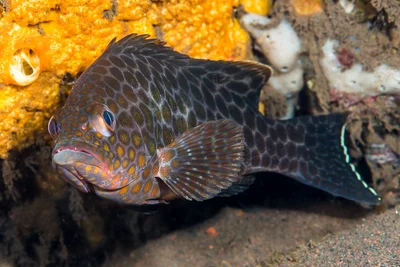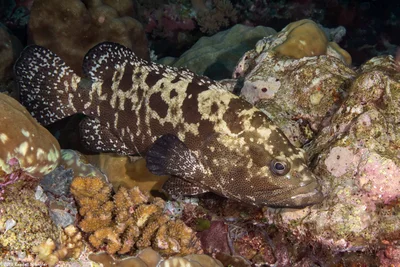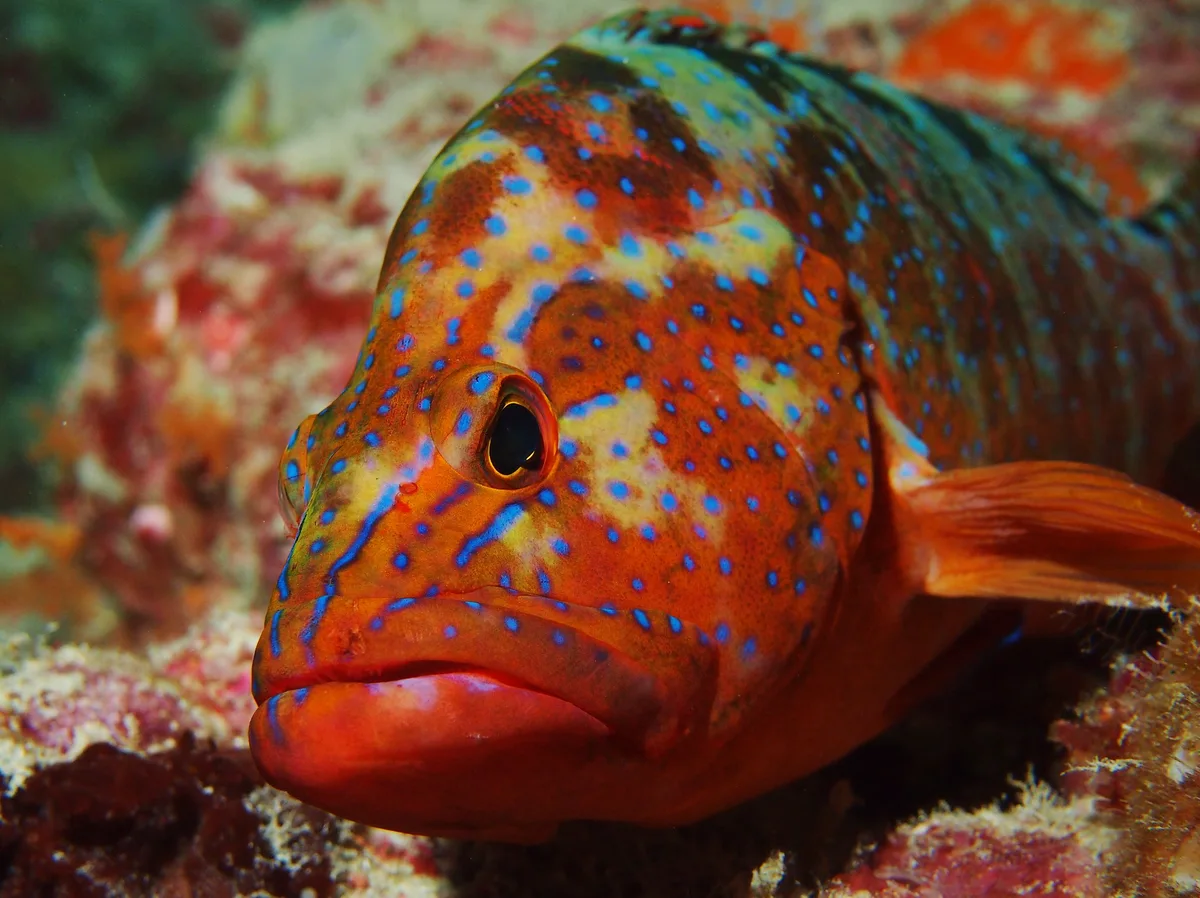
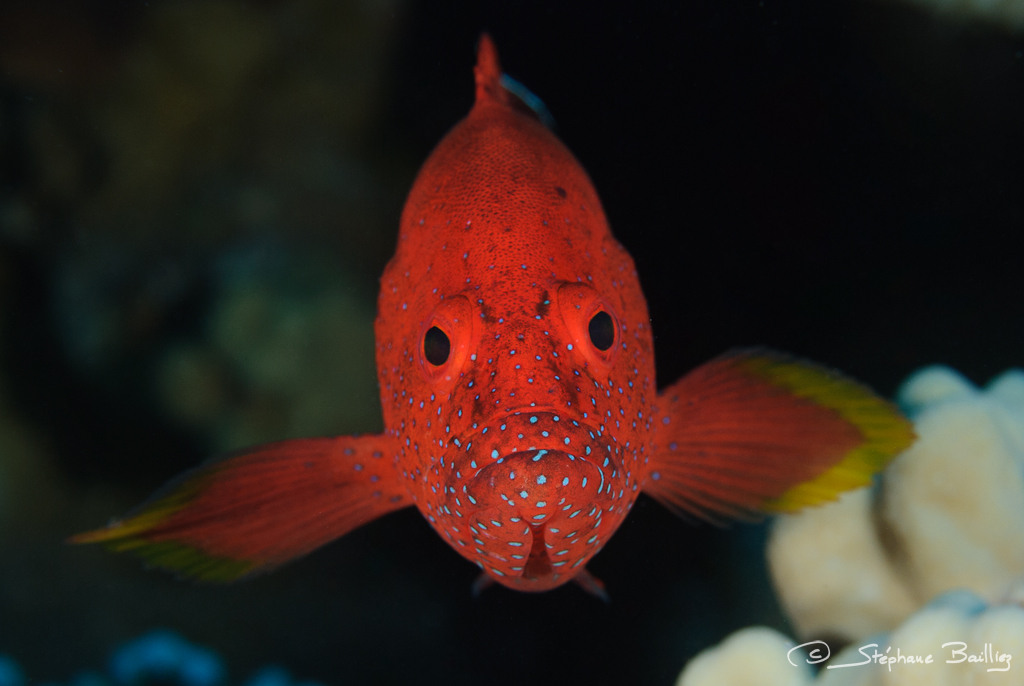
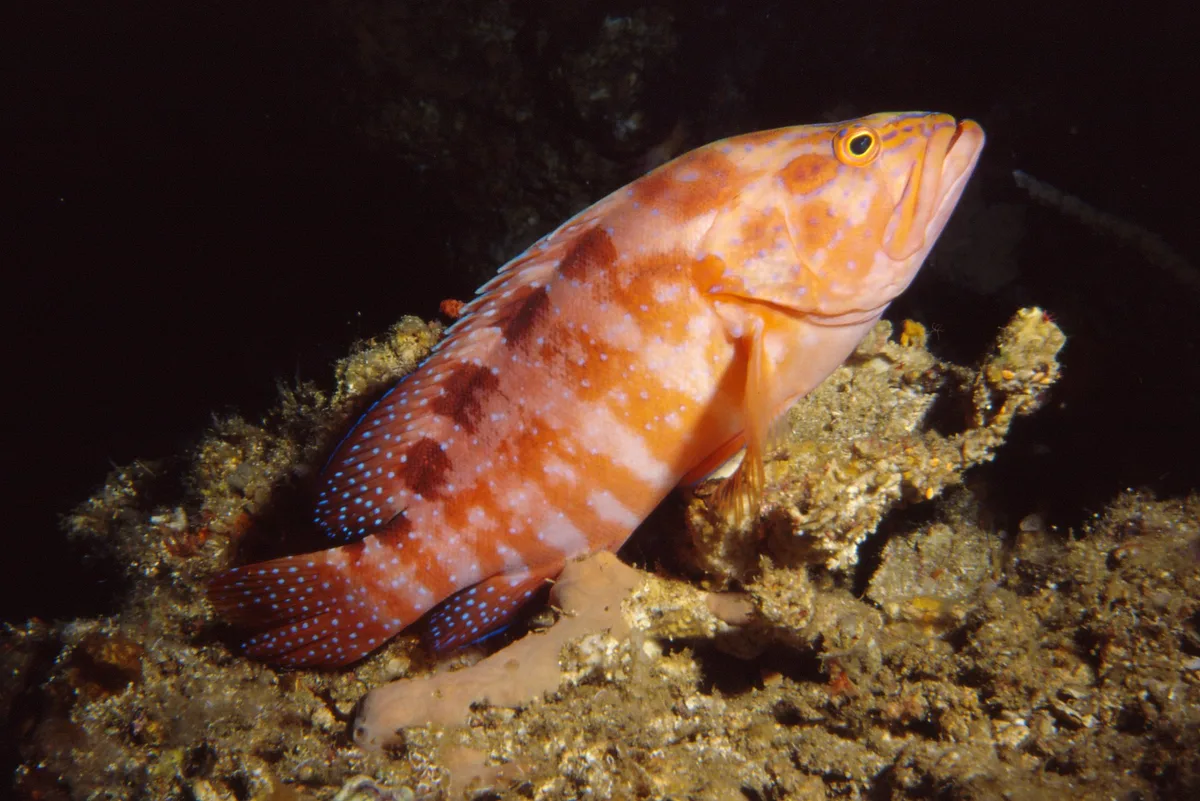
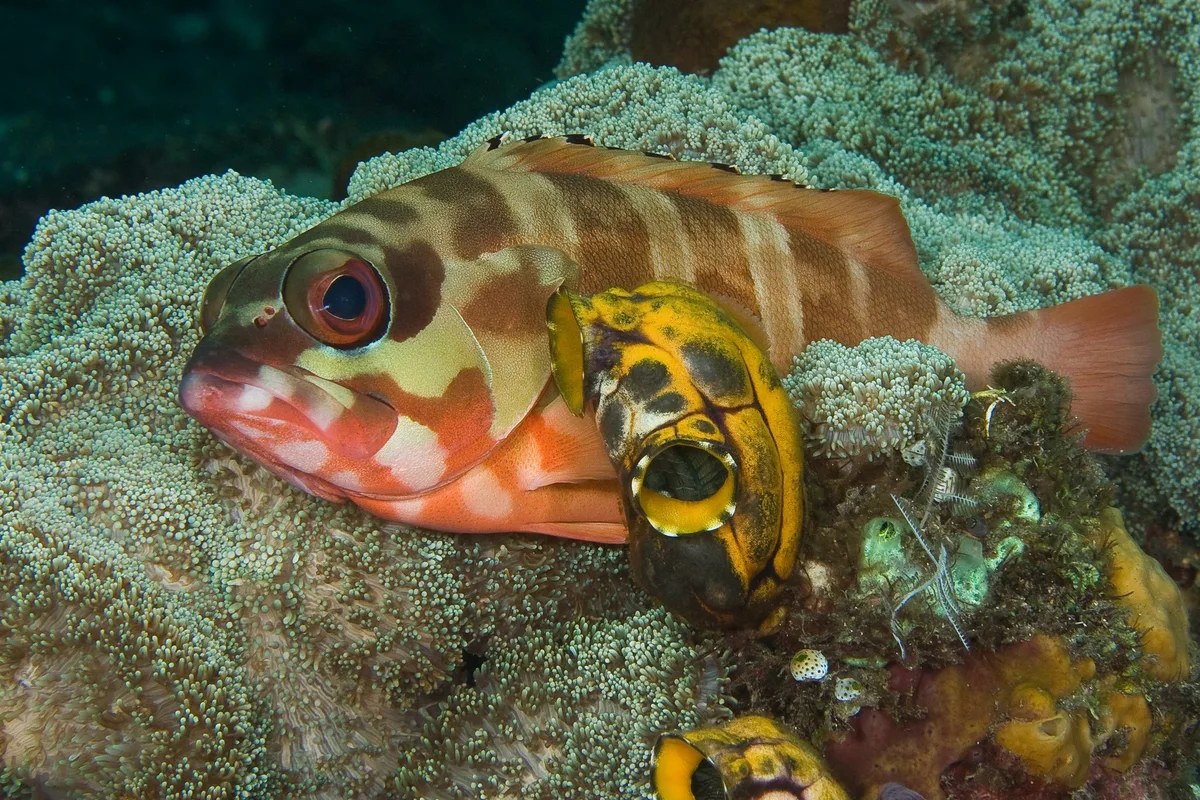
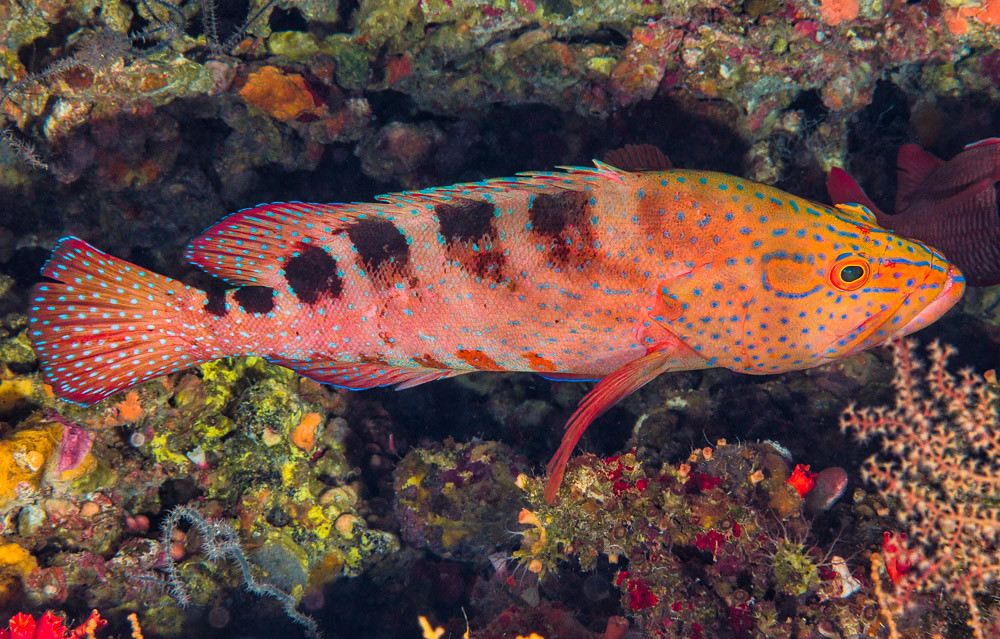
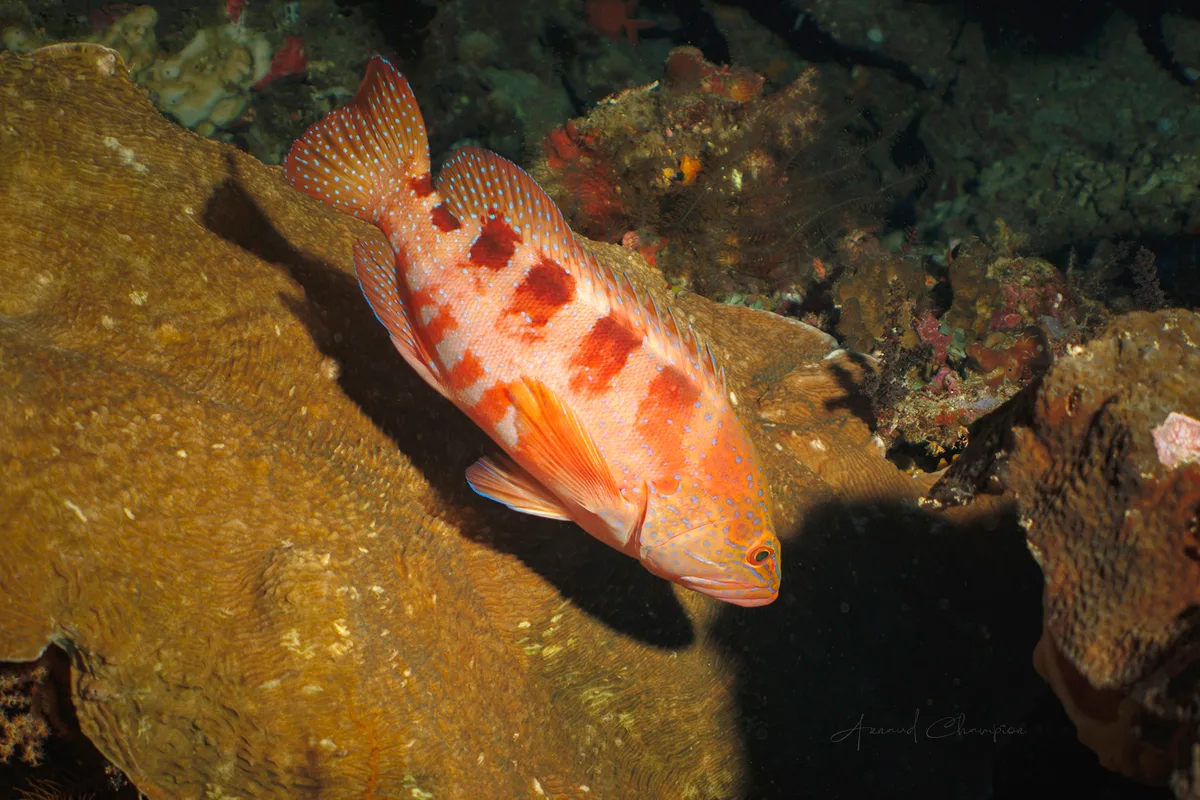
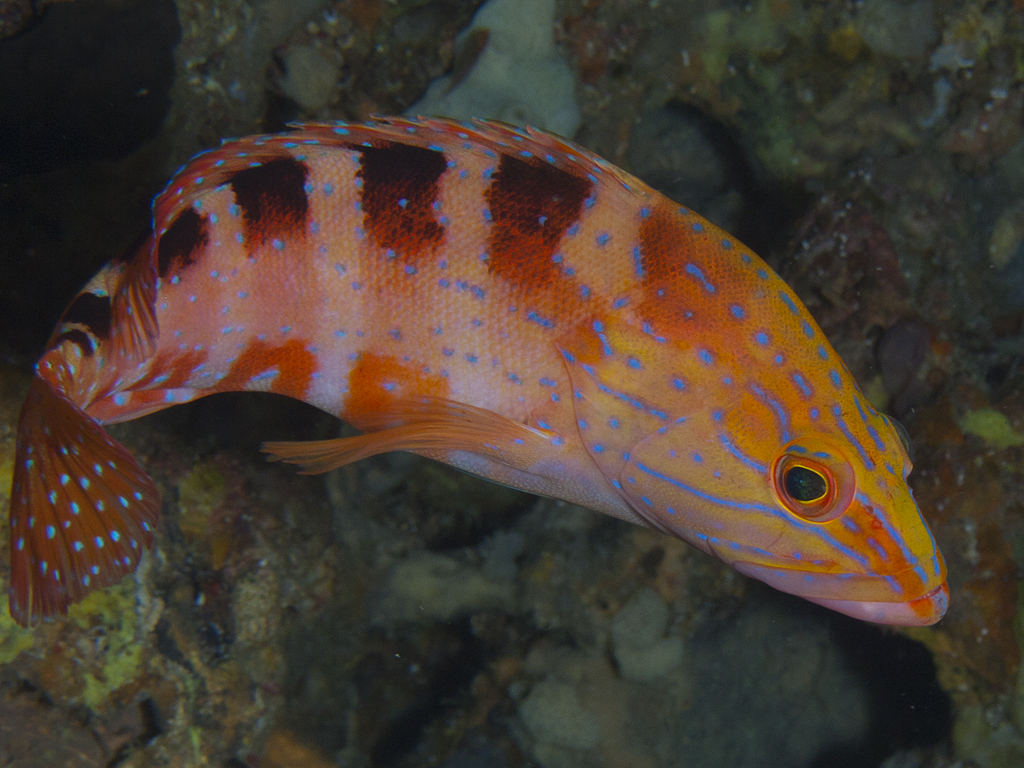
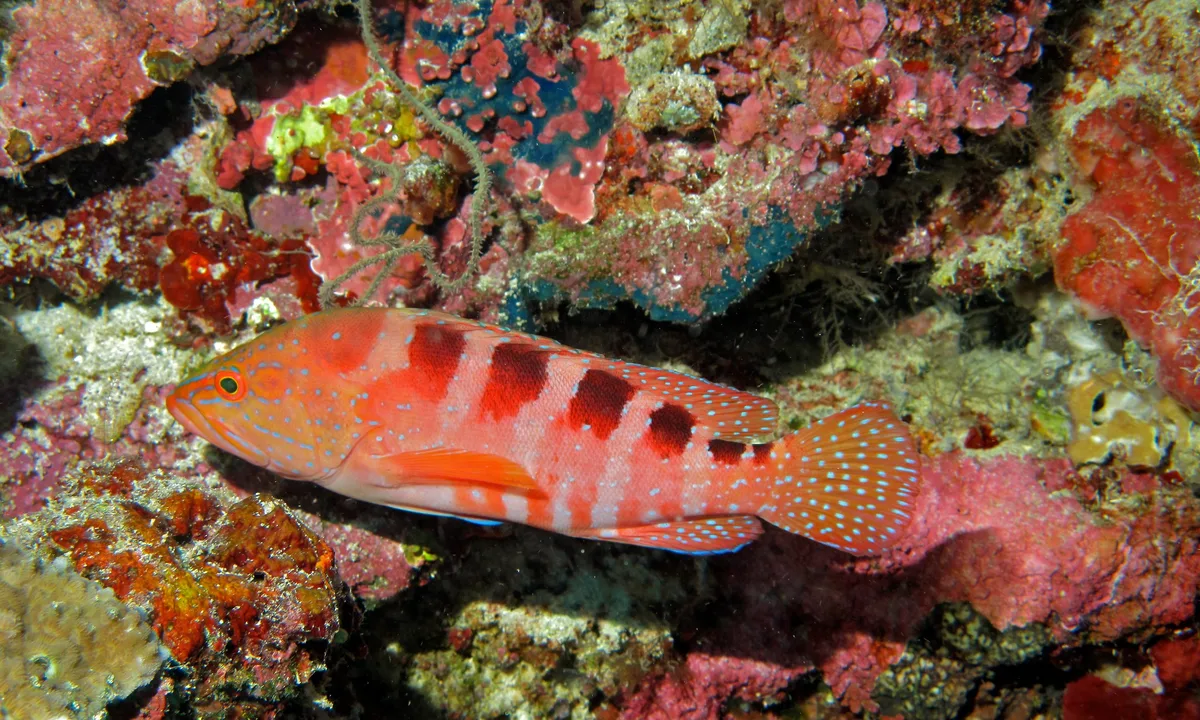
An orange-red hind to 50 cm (20 in), dusted with small blue spots and marked with six darker saddles along the back that fade with age. It lives deeper and darker than the other hinds here, hanging upside down under cave roofs and along shaded walls, which is why photographs of it are usually taken looking up.
It hunts at night and at the edges of the day, taking small fish and crustaceans in short rushes from cover. The rounded fins and heavy head are ambush equipment: acceleration over two body lengths matters, sustained speed does not.
Like most groupers it starts life female and changes sex later, so the largest fish on a wall is a male that spent years as a female before switching. Fishing that targets the biggest individuals removes the males first, which is a structural problem for every animal built this way.
It ranges from 6 m down to 150, and the shallow records are almost always fish sitting in caves rather than out on the reef.
The genus. Cephalopholis Bloch & Schneider 1801 - cephalus (head) + pholis (scale). ETYFish
The species. Cephalopholis sexmaculata (Rüppell 1830) - sex (six) + maculatus (spotted). ETYFish
- orange-red body covered in small blue spots, with darker blotches along the back
- six dark saddles across the upper body, clearest in young fish
- rounded tail and rounded fins, no spines showing in outline
- length up to 50 cm
Why it's threatened
Threat classification from the IUCN Red List.