The young of this species pretend to be a wrasse, and they do it in order to eat.
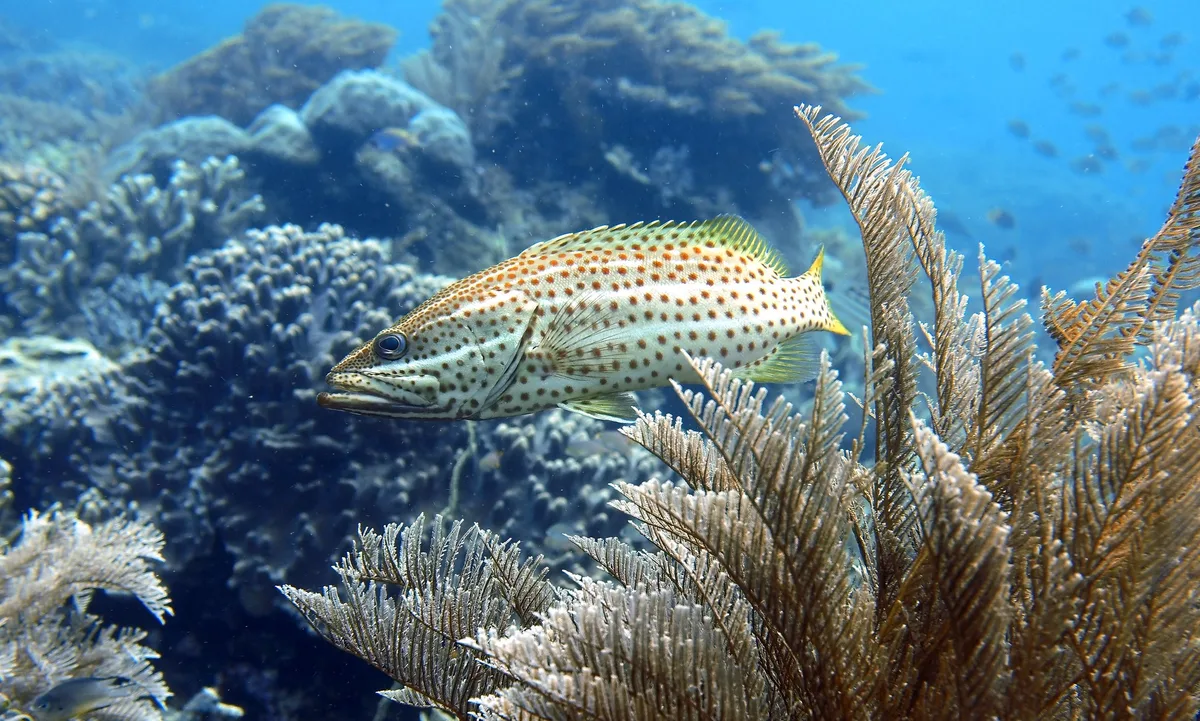
A juvenile slender grouper carries the color pattern of a small Halichoeres wrasse and, more importantly, swims like one: the same rowing motion of the pectoral fins, the same busy pottering along the bottom. Small reef fish do not flee wrasses, because a wrasse of that size is picking at invertebrates and is no threat to them. So the disguised grouper gets to move through a crowd of potential prey that would scatter instantly from anything recognizable as a predator, and takes them from inside the crowd.
This is aggressive mimicry, and it is uncommon among groupers. The trick has a shelf life: it works while the fish is small enough to pass, and is abandoned as it grows into an adult that hunts by ambush like the rest of the family.
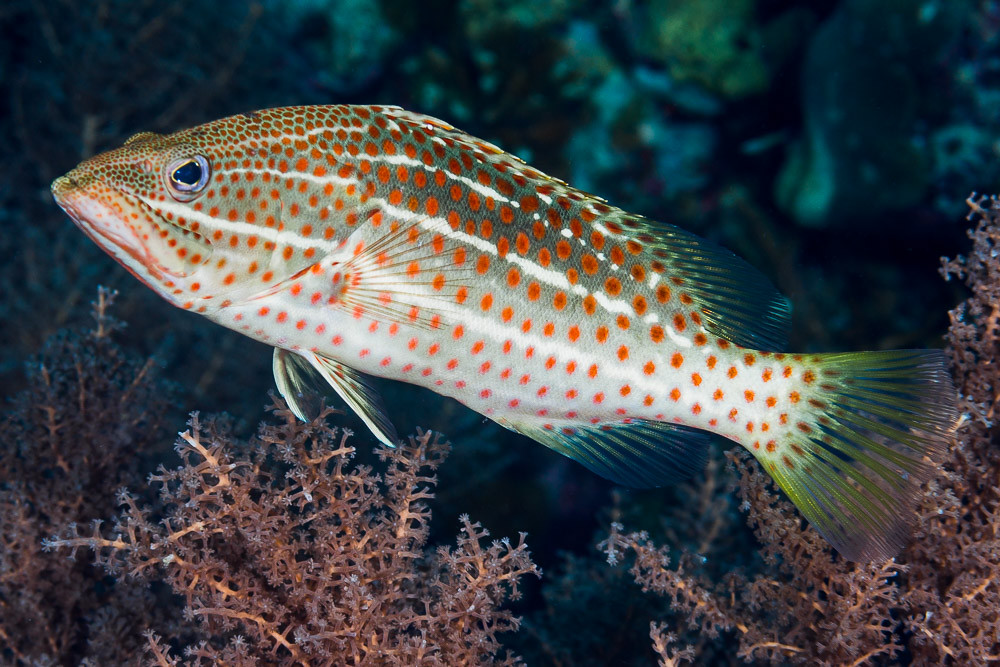
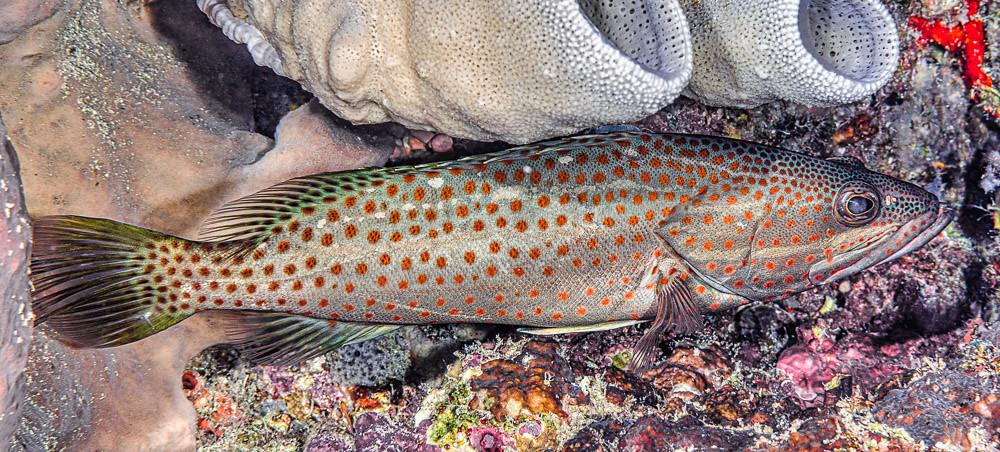
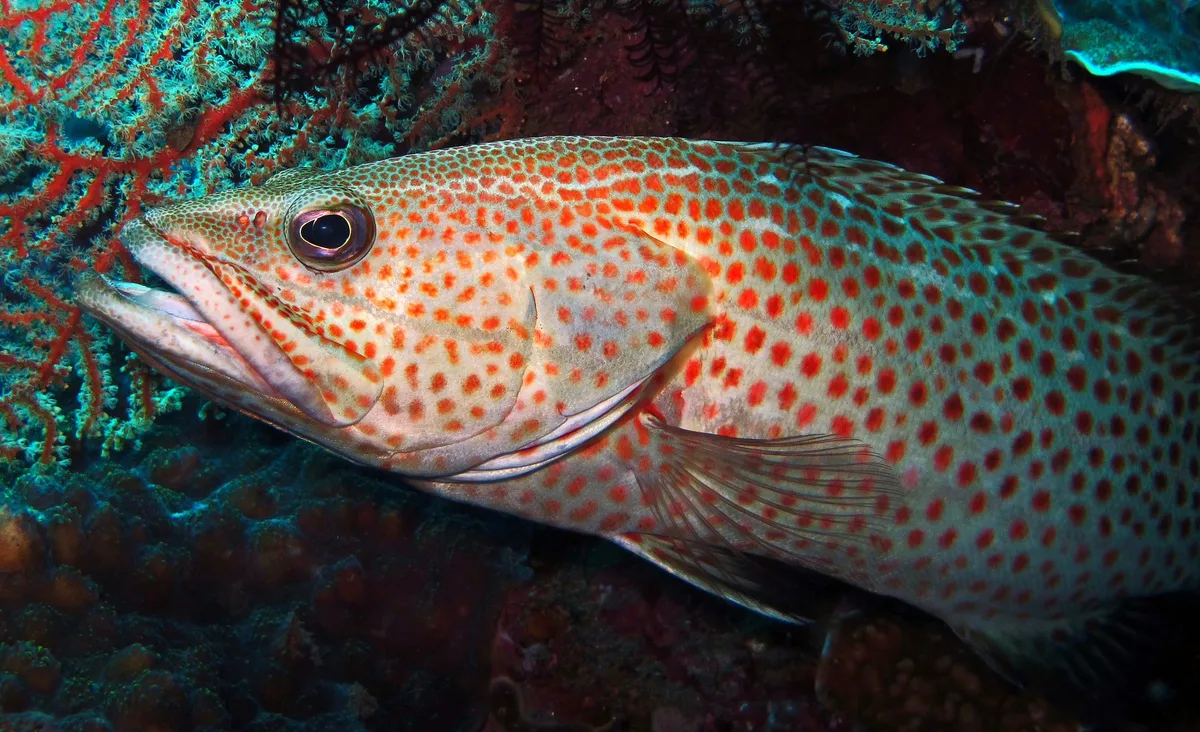
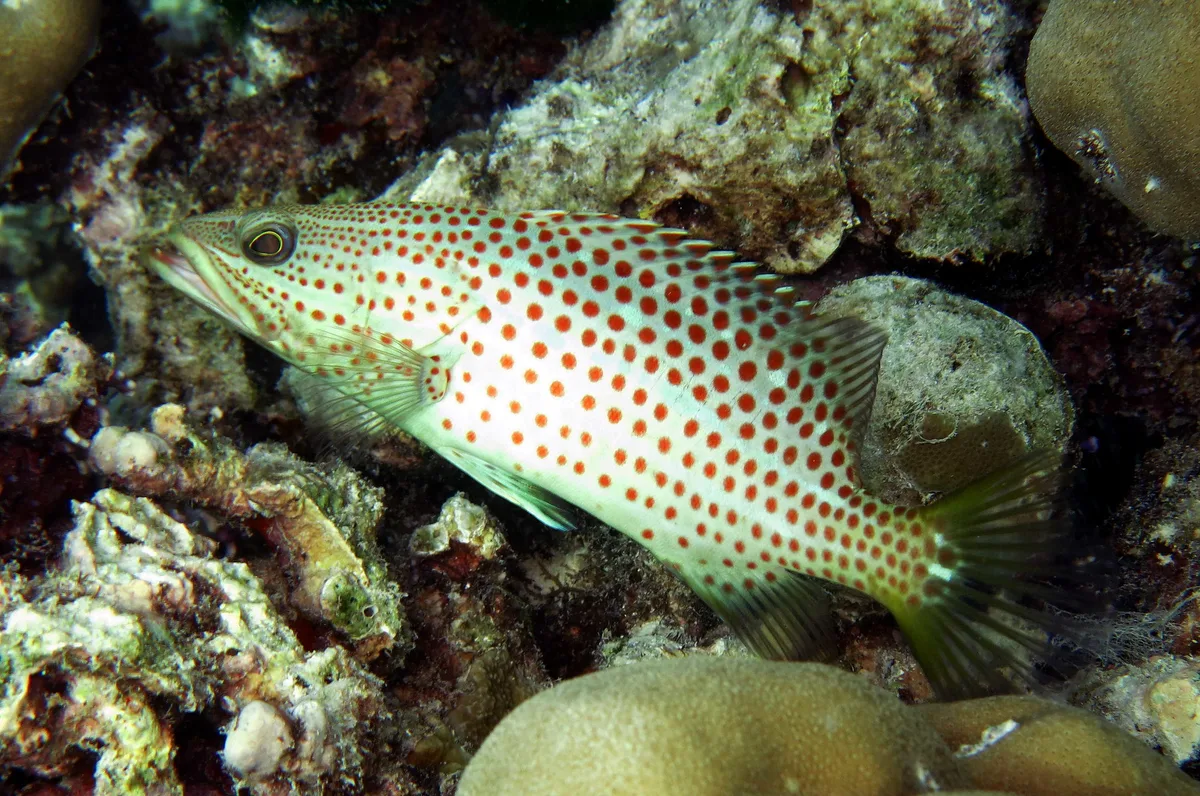
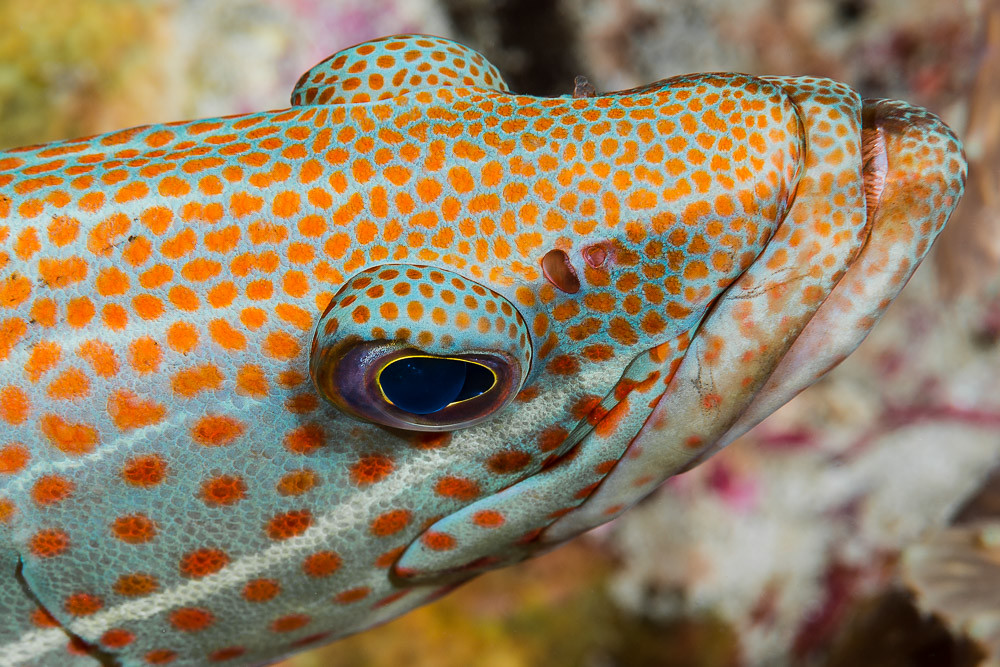
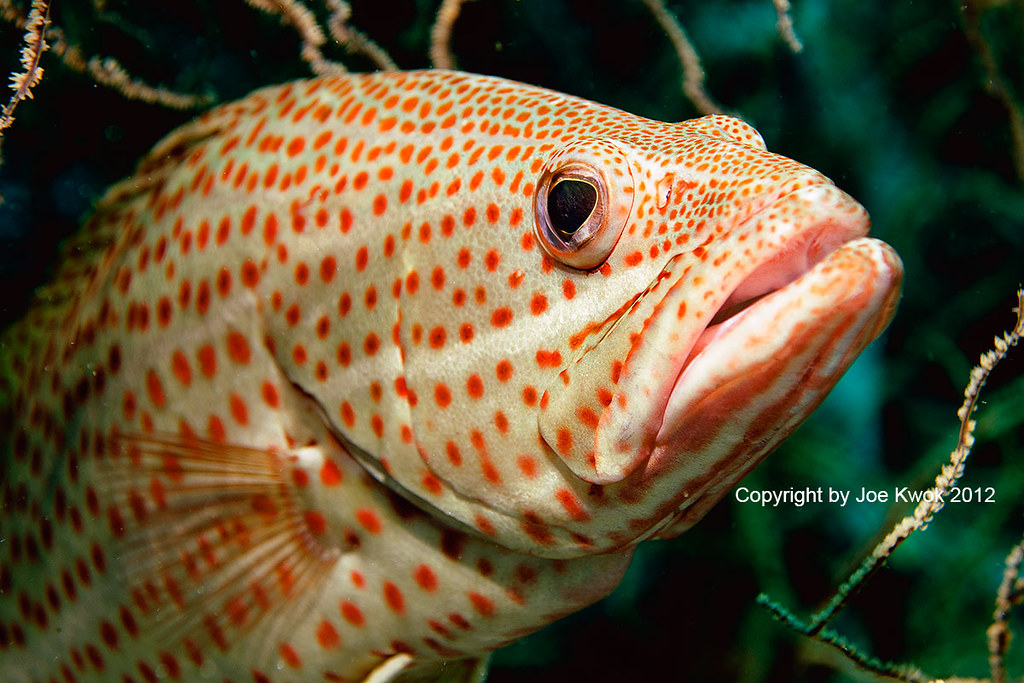
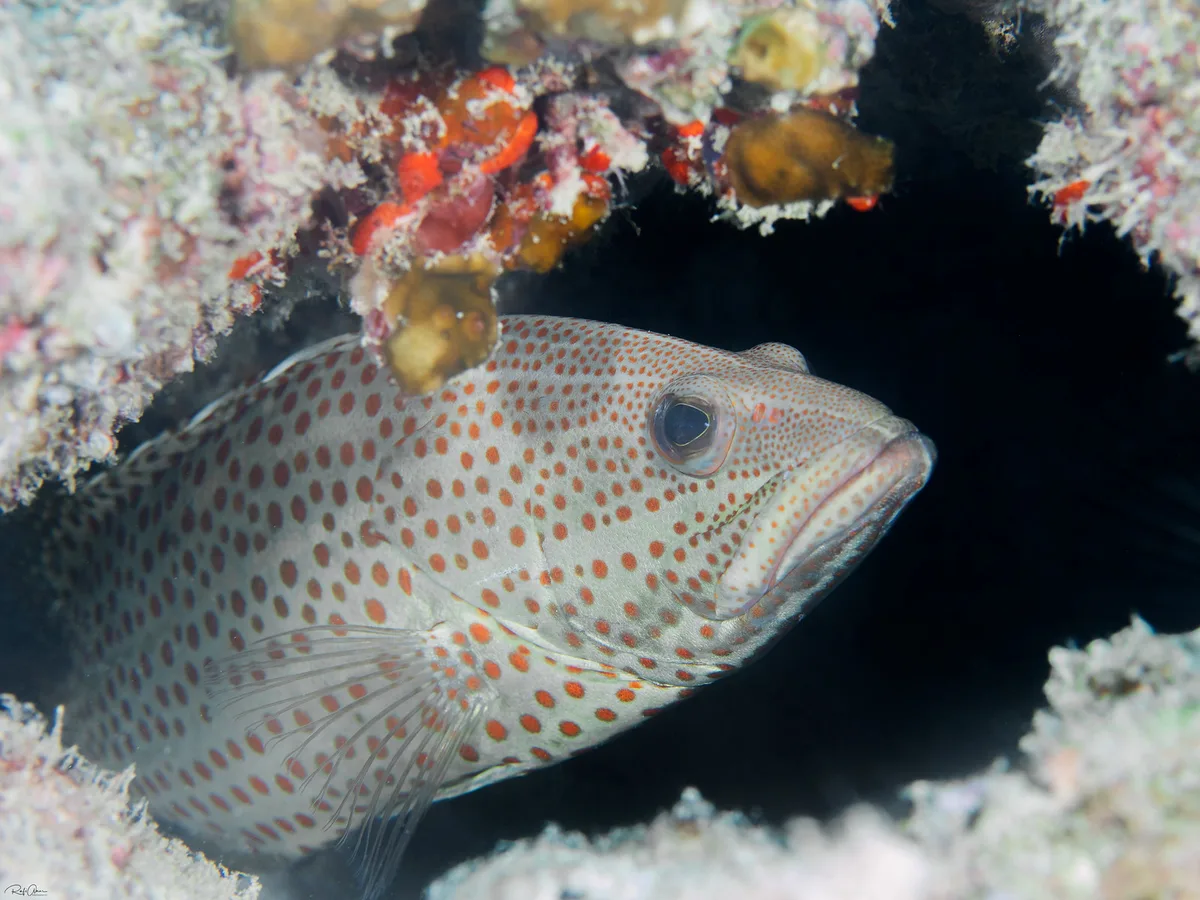
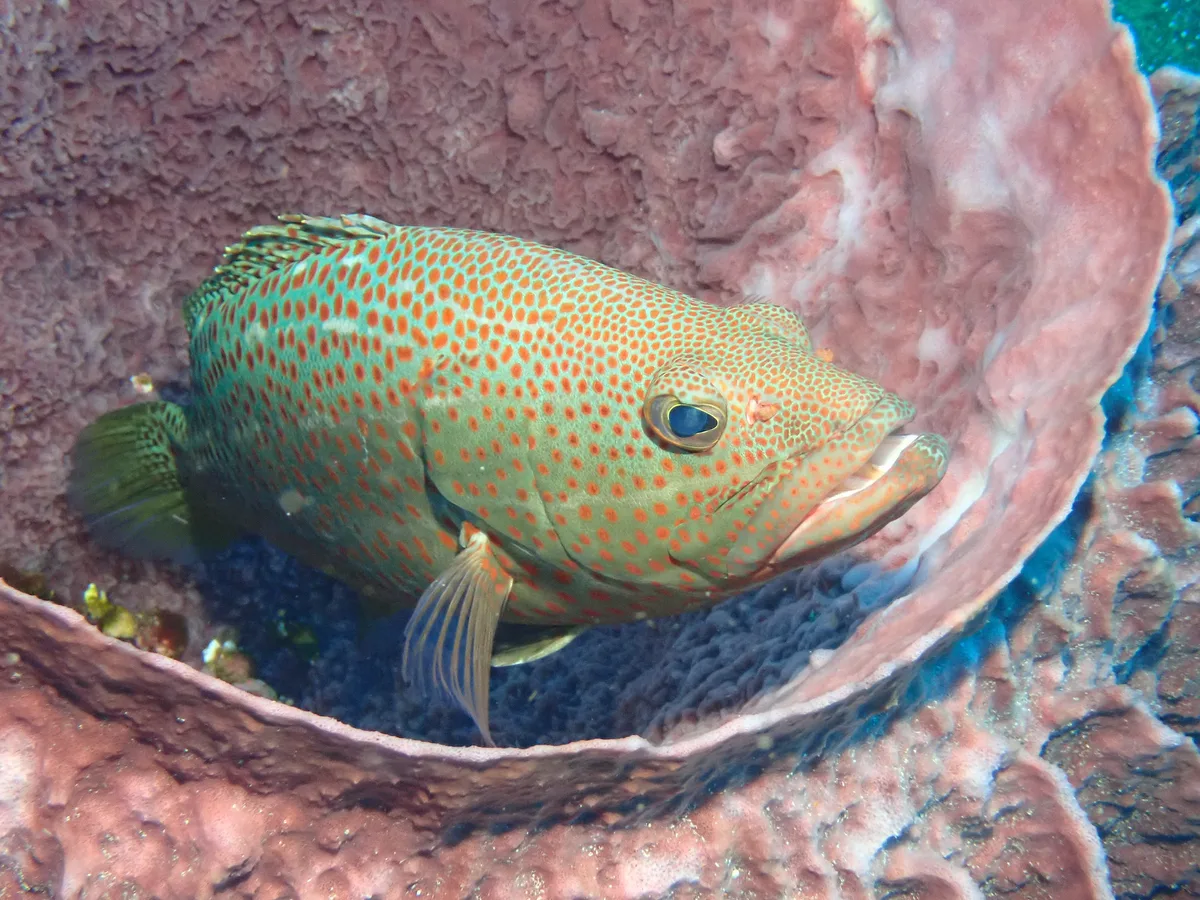
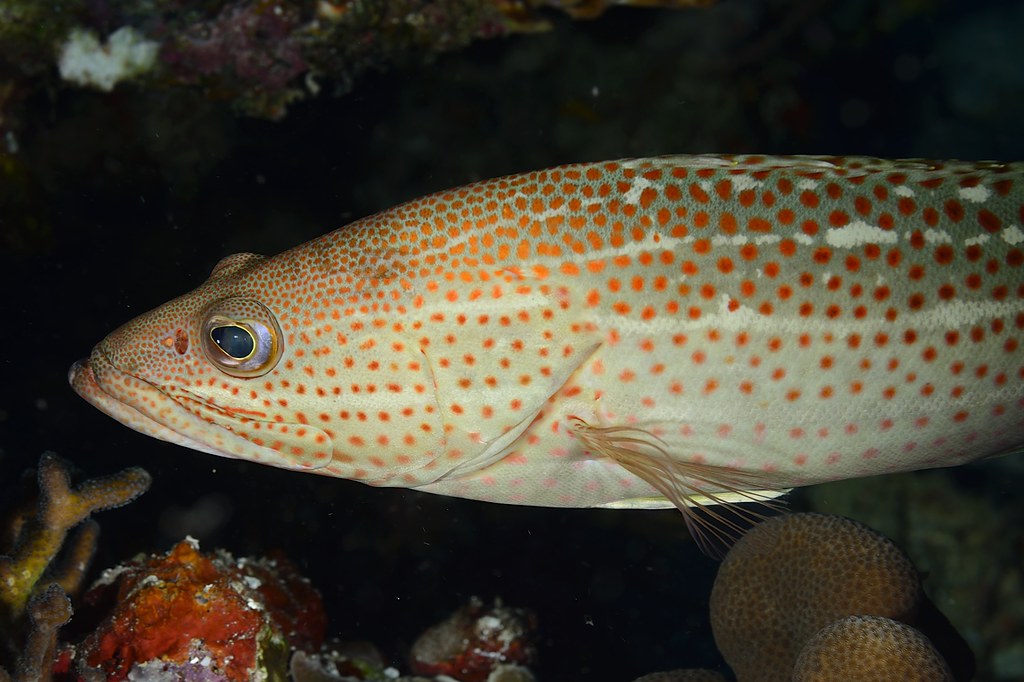
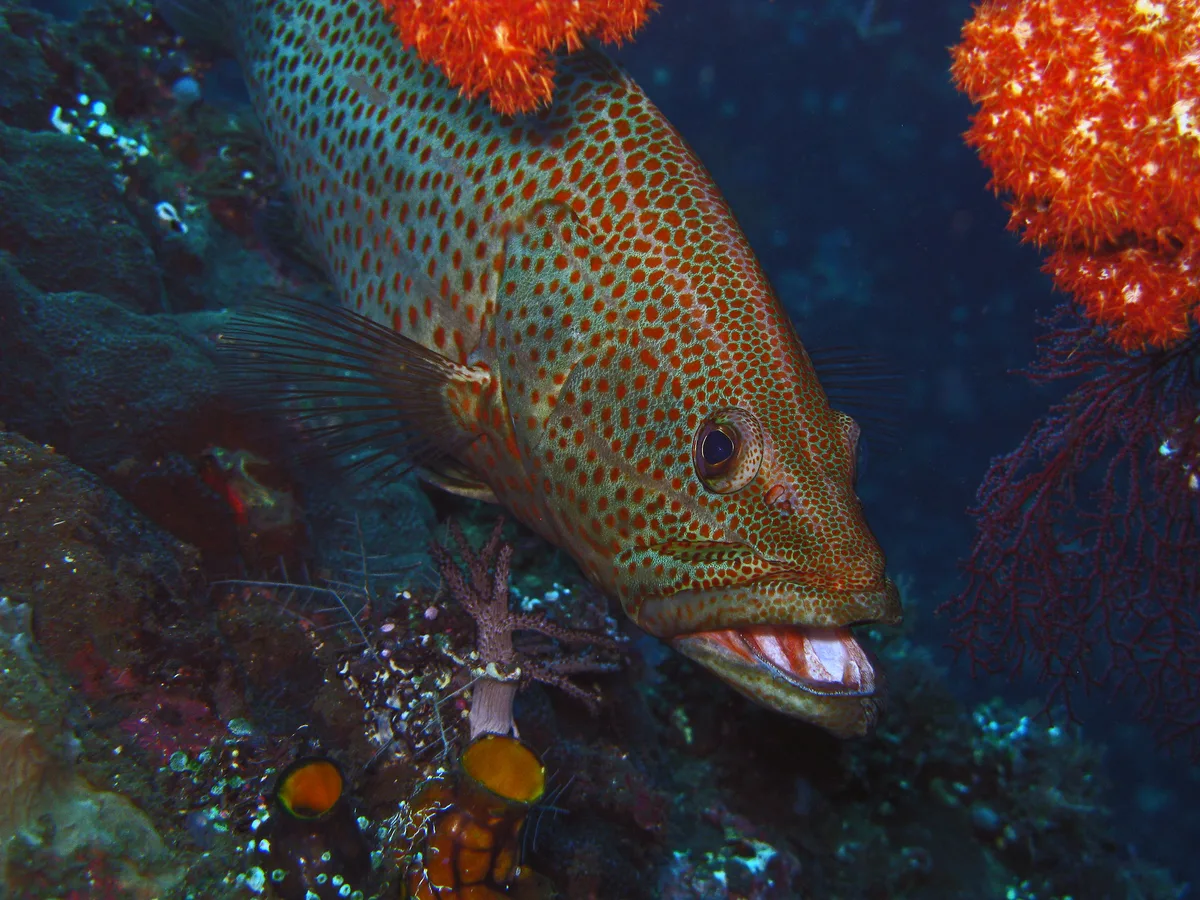
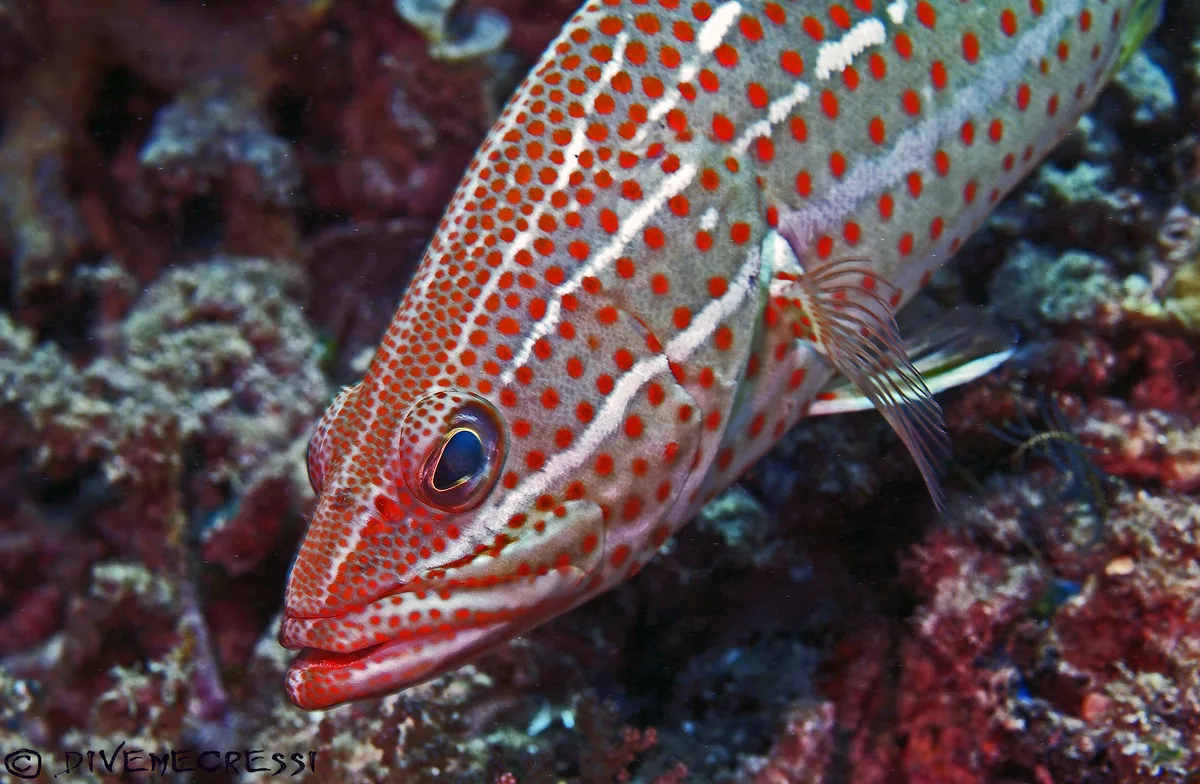
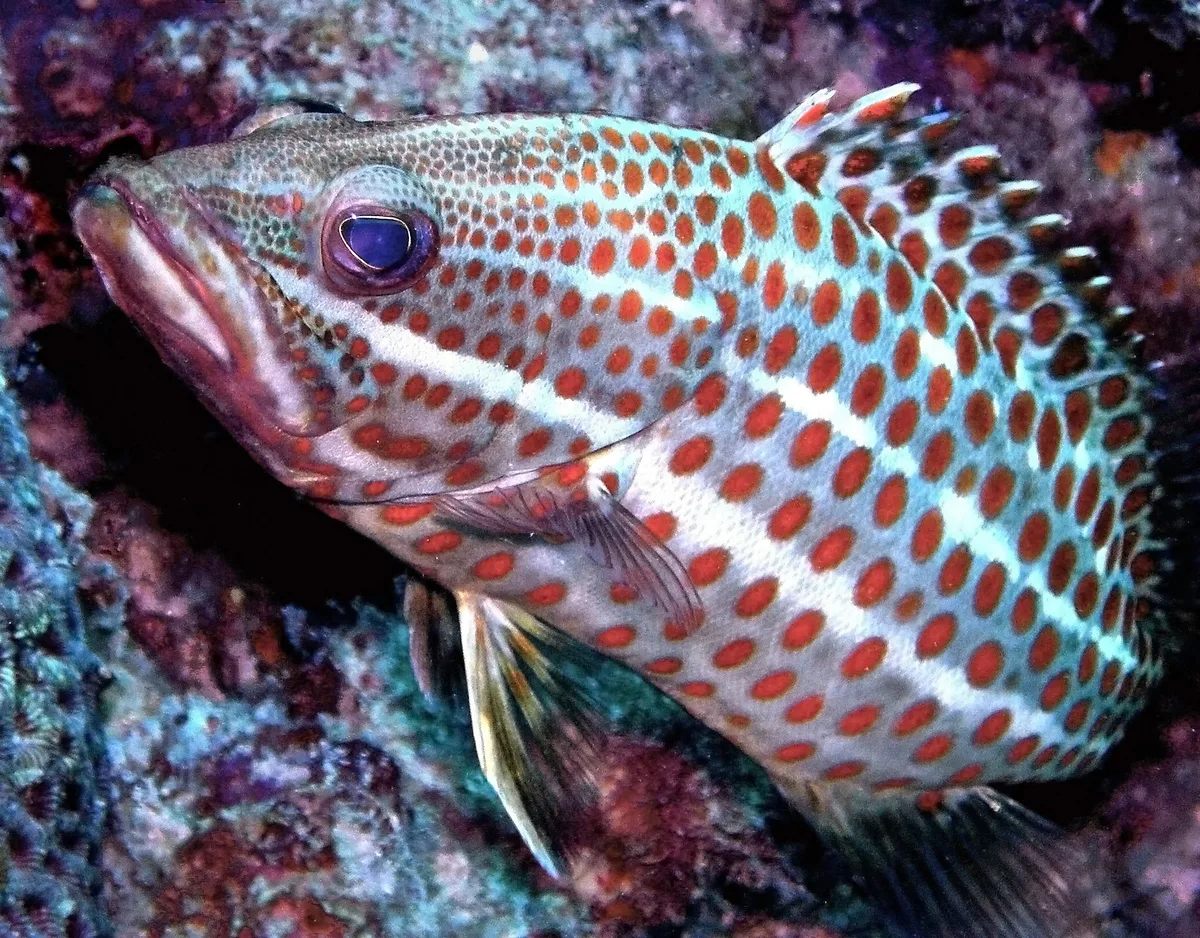
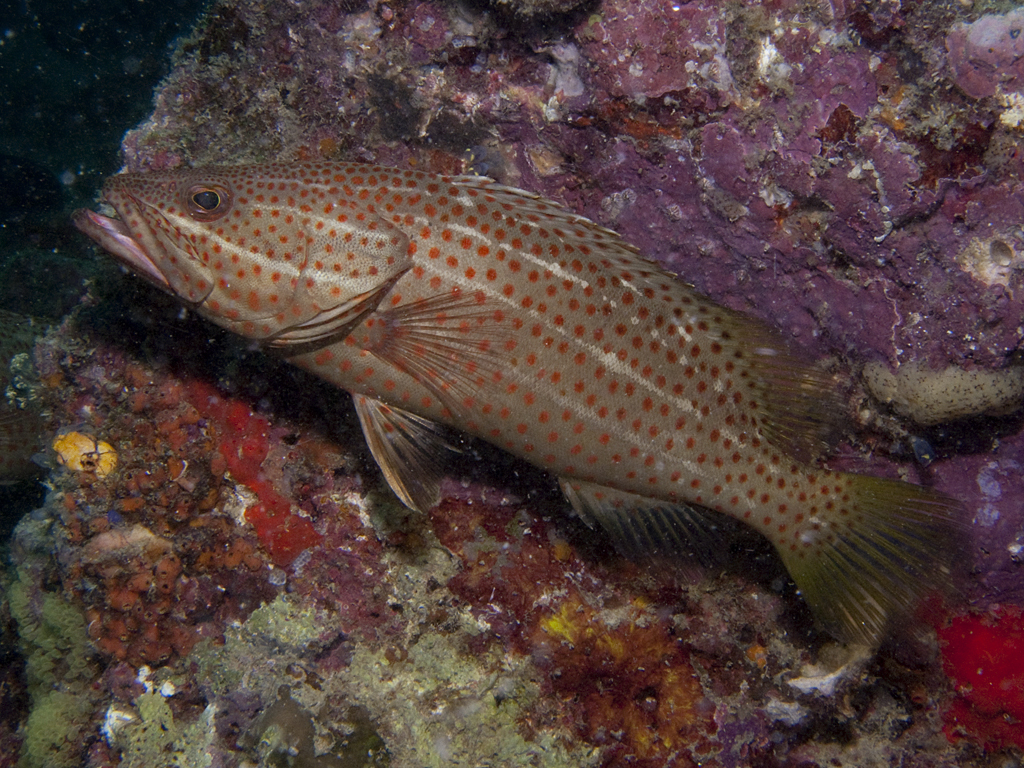
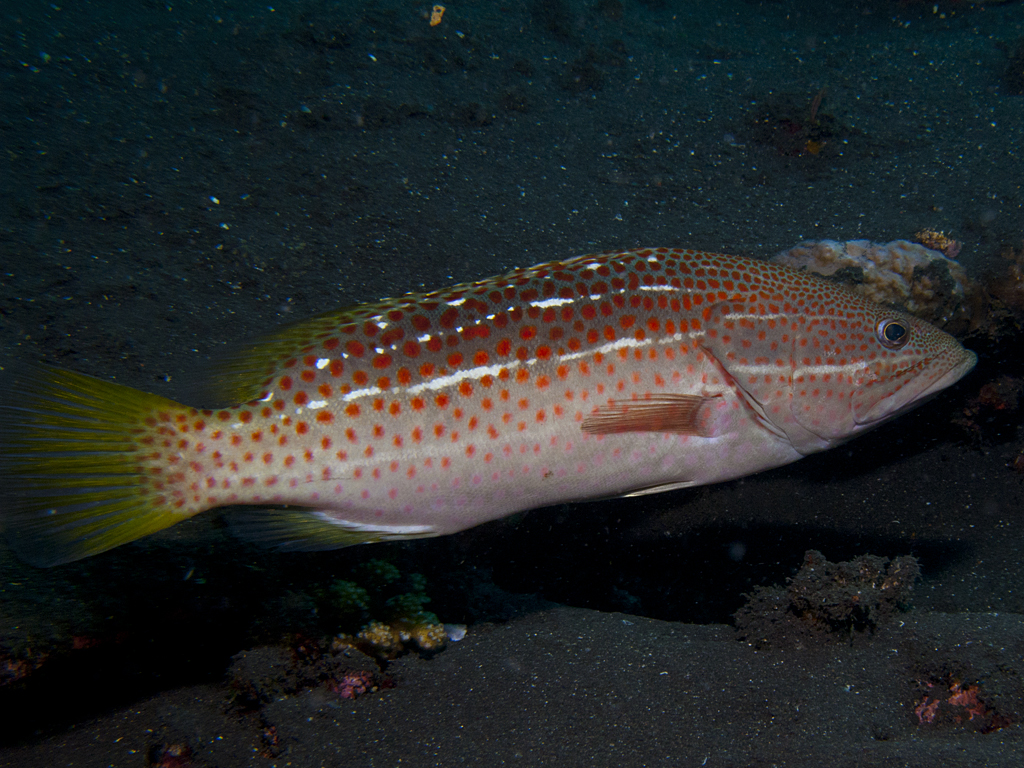
The adult is worth knowing by shape alone. Where other groupers are heavy and blunt, this one is long and slim, pale green-gray with small orange-red spots, and it moves along the reef rather than sitting on it.
The regional guide does not picture it, but the records for this sea are real: it is here, and it is simply not often seen.
The genus. Anyperodon Günther 1859 - [h]yper (upper) + odon (tooth). ETYFish
The species. Anyperodon leucogrammicus (Valenciennes 1828) - leucos (white) + grammicus (lined). ETYFish
- long slim body, unlike the stocky build of other groupers
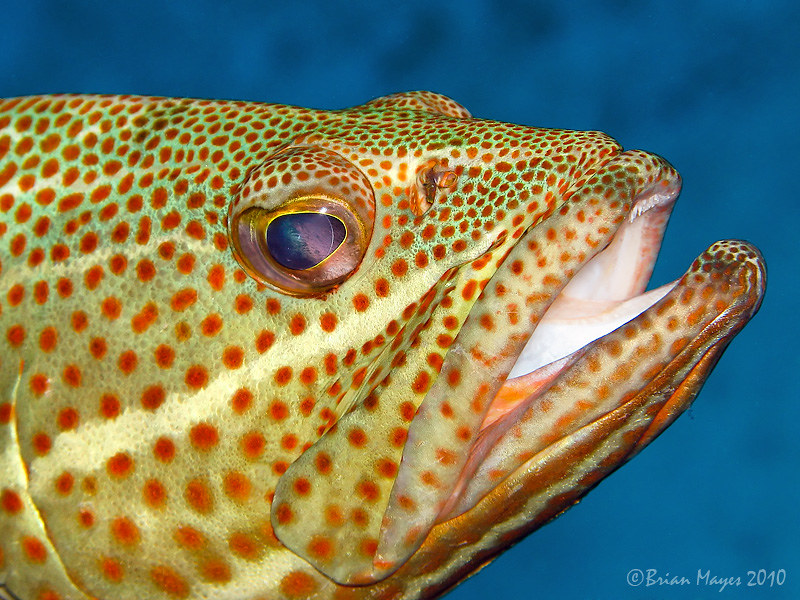
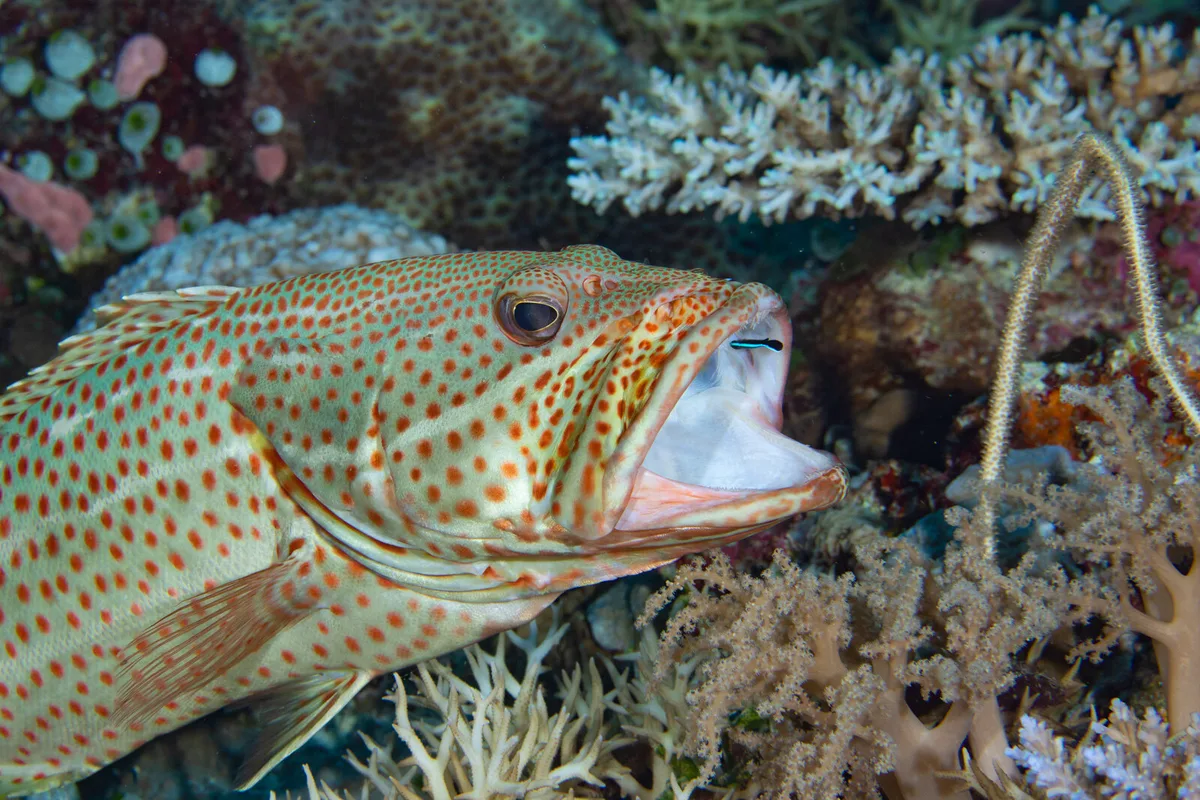
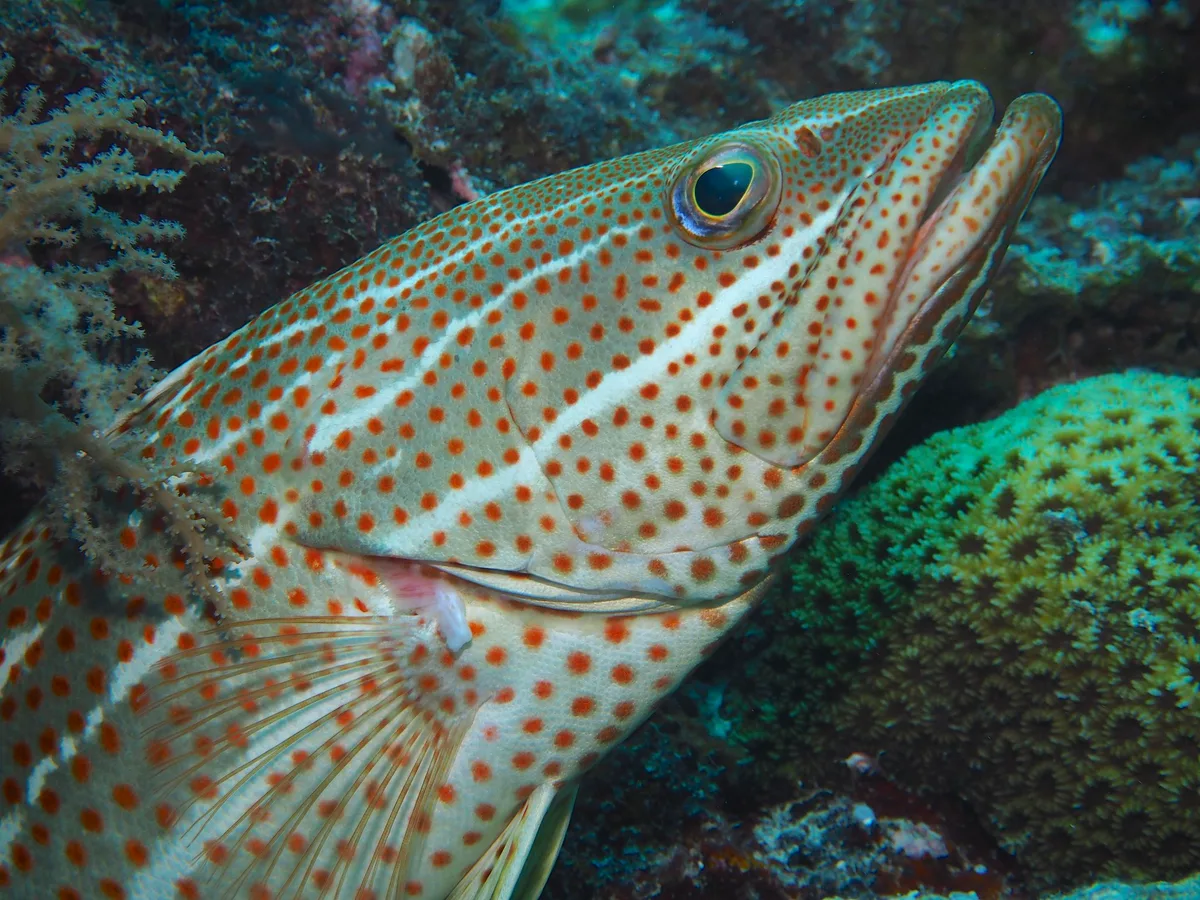
- pale green-gray with small orange-red spots and faint pale lines along the flank
- juveniles patterned and swimming like a wrasse
- up to 65 cm