Why One Red Sea Shark Generates $200,000 Yearly: Egypt's Bold Protection Plan

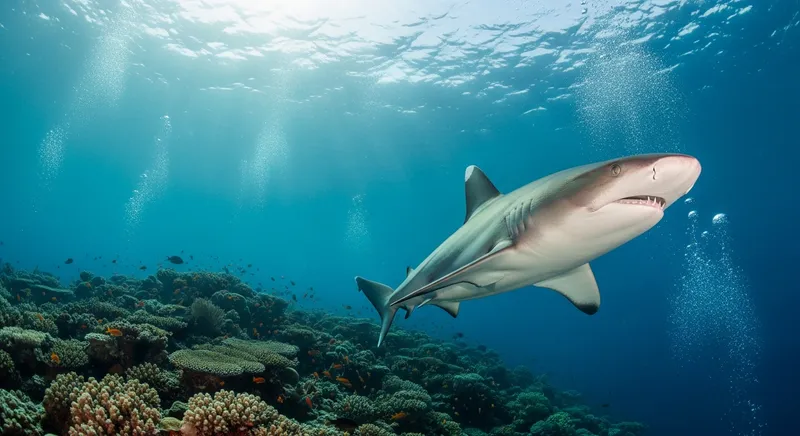
Yes - and it’s not an exaggeration: recent Egyptian government figures and conservation estimates treat individual Red Sea sharks as true “ecotourism engines,” with each animal estimated to contribute roughly $200,000 in tourism value every year. That’s not just a catchy headline - it’s the backbone of an argument driving a new national plan to protect these animals from illegal fishing and collapsing fish stocks.
If you love the Red Sea as much as I do - the glittering reefs, the surreal cathedral sponges, and those slow, elegant silhouettes of sharks on the blue horizon - this story matters. It links ecology, local livelihoods, and national economics in a way that’s both simple and surprising: healthy shark populations help sustain a multi-million-dollar dive and tourism industry, and when sharks disappear (or change their behaviour) the people who depend on tourists feel it almost immediately.
Why sharks are worth so much - literally
Sharks draw divers from around the world. People pay good money for the chance to glimpse, snorkel with, or photograph species like tiger sharks, makos and oceanic whitetips - the same species the new Egyptian plan targets for monitoring and protection. Researchers and economic assessments of shark ecotourism have long shown that individual sharks can produce far more value alive, through repeat visits by divers and associated spending, than their value as catch or fins[3].
That idea is now reflected in official Egyptian assessments and conservation messaging: each shark’s annual contribution to tourism revenue is being cited in public communication to underline why protecting them is also protecting a vital income stream for coastal communities and national tourism[8][7].
What’s driving the new Egyptian plan?
The Ministry of Environment has launched a comprehensive plan aimed at safeguarding Red Sea sharks from illegal fishing and the broader decline in marine biodiversity. The initiative has several clear goals: continue and expand scientific monitoring and tracking of shark species; better understand global and local environmental drivers that alter shark distribution and behaviour; and reduce the fishing pressures that collapse natural fish stocks and push sharks closer to shore in search of food[7][8].
Those coastal shifts are important. When sharks alter where they feed - moving into shallow, tourist-frequented waters because prey is depleted offshore - the result is a complex mix of ecological stress and public safety concerns. Experts and community voices have pointed to illegal or unregulated commercial fishing (including banned nets and other destructive practices) as a main culprit behind depleted fish populations and destabilized ecosystems in the Red Sea[2][5].
Key measures in the plan
- Expanded scientific programs to monitor and track shark movements, behaviour, and populations, with special focus on threatened species such as Tiger, Mako, and Oceanic Whitetip sharks[7][8].
- Research into environmental variables - from local prey availability to larger oceanographic and climatic drivers - that influence shark distribution[8].
- Stronger enforcement against illegal fishing practices that deplete fish stocks and damage reef habitats, including targeted patrols and legal action where needed[5][2].
- Engagement with tourism operators, local communities and NGOs to build sustainable ecotourism models that reward live sharks and healthy reefs rather than extractive fisheries[7][9].
How this helps both sharks and people
Framing sharks as economic assets - not just charismatic megafauna - is a pragmatic conservation strategy. When a single shark represents hundreds of thousands of dollars in yearly tourism revenue, policymakers and local stakeholders gain a clear incentive to protect it[8][3]. This is especially urgent in the Red Sea, where tourism (dive tourism in particular) is a major source of foreign exchange and local jobs[4][1].
There’s a ripple effect too: protecting sharks often means protecting reefs and fish stocks, which benefits fishers, dive operators, hotel workers, and local markets. Conversely, continued poaching and illegal fishing can degrade reef systems, reduce biodiversity, and ultimately undermine the very tourism the region depends on[4][5].
Real-world challenges and trade-offs
This plan is ambitious, and ambition is necessary, but implementation will be complicated. Scientific data on Red Sea shark populations are still sparse in places, which makes robust management tricky[7]. Enforcement across thousands of kilometres of coastline - and balancing the needs of small-scale fishers whose livelihoods may depend on certain catches - requires finely tuned policies and community buy-in[5].
There’s also the public perception problem. Incidents such as rare shark bites can produce headlines and tourist anxiety that threaten short-term arrivals, even if the long-term economic calculus supports protection and ecotourism as the safer, more lucrative path[1][2]. That’s why the plan couples monitoring with outreach and regulation: to reduce risky practices that push sharks inshore and to explain to the public why live reefs and live sharks are an economic asset.
Where things go from here
Success will hinge on a few practical things:
- Reliable, long-term scientific monitoring programs to fill data gaps and guide adaptive management[7][8].
- Clear enforcement and anti-poaching measures that target the worst illegal practices while supporting sustainable small-scale fishing where appropriate[5].
- Partnerships with dive operators and local communities to develop responsible shark ecotourism that spreads the economic benefits[9].
- Public awareness campaigns that explain both the ecological role of sharks and their real, measurable value to the tourism economy[8][3].
If these pieces come together, the plan could do more than protect sharks: it could strengthen an entire coastal economy, improve reef resilience, and offer a model for other regions where tourism and biodiversity are tightly linked.
One last thought
When you next watch a tiger shark glide over a coral wall in a Red Sea dive video, remember that animal isn’t just part of a wild scene - it’s also part of an economy, a culture, and a fragile ecosystem that people depend on. Protecting sharks here isn’t just sentimental; it’s smart economics backed by science and increasingly urgent policy[7][8][3].
If you want, I can pull together a short factsheet for divers or for tourism operators summarizing how to support responsible shark ecotourism, or draft a one-page explainer about the new Egyptian plan aimed at local communities - whichever would be most useful to you.
References
PADI Divemaster and underwater storyteller with over 7 years of hands-on Red Sea diving experience, documenting marine life, mapping dive sites, and promoting responsible ocean conservation.