Drones Capture Lemon Sharks Hunting Invasive Jaguar Cichlid in Brazil – A First-Ever Record

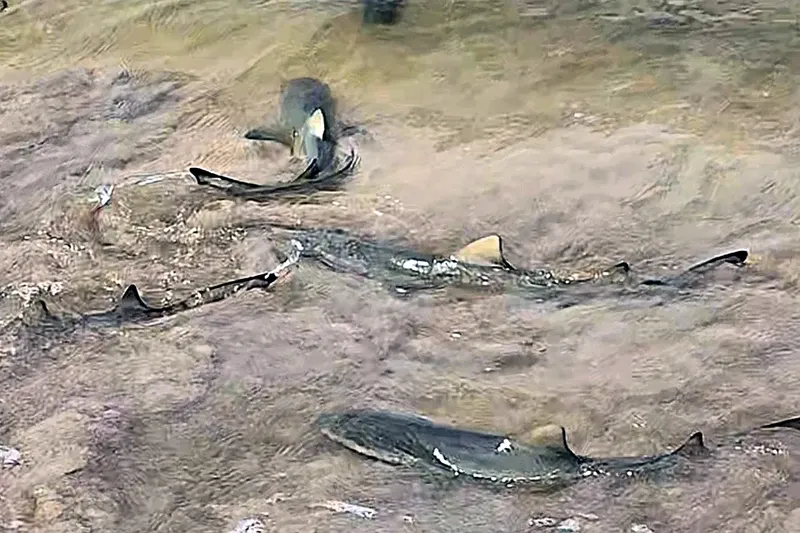
Lemon sharks are fascinating marine predators known for their characteristic yellowish skin and preference for shallow coastal waters like coral reefs and mangroves. However, a surprising behavior observed recently in Brazil reveals their opportunistic hunting skills extend to an unexpected prey: the invasive freshwater jaguar cichlid fish.
A Shark’s Unexpected Catch: Lemon Sharks and Jaguar Cichlids
During observations in Sueste Bay, located in the Fernando de Noronha archipelago off Brazil’s coast, researchers documented lemon sharks preying on the jaguar cichlid (Parachromis managuensis), an invasive freshwater fish. This event was notable because Sueste Bay is primarily saltwater, while jaguar cichlids naturally inhabit freshwater environments. The interaction was made possible due to freshwater inflows into the bay from an adjacent mangrove swamp during periods of heavy rainfall.

The jaguar cichlid was likely introduced to the area as a source of animal protein but poses ecological risks as an invasive species. Although it can tolerate some salinity, it becomes stressed in saltier water, which causes erratic swimming behavior, making it vulnerable to shark predation.
Shark Behavior and Ecological Implications
Lemon sharks in Sueste Bay include both juvenile pups and adults. The pups stay within the shallow bay for about a year before moving out to deeper waters, which also protects them from potential predation by adult sharks. Both age groups were seen taking advantage of the presence of jaguar cichlids. While sharks are unlikely to completely eradicate this invasive fish, their predation may help reduce the population when the cichlids enter the bay.
This opportunistic feeding shows lemon sharks’ ability to adapt their diet based on available prey, even extending outside their usual saltwater fish diet. However, researchers are uncertain how frequently jaguar cichlids enter the bay or if this predation event was a rare occurrence related to specific environmental conditions.

About Lemon Sharks: Habitat, Behavior, and Conservation
Lemon sharks (Negaprion brevirostris) typically inhabit warm coastal waters in subtropical regions ranging from New Jersey down to southern Brazil. They favor shallow areas like mangroves, coral reefs, and bays, often returning to specific nursery sites to raise their young. Their yellowish skin acts as effective camouflage against sandy or murky waters, enabling them to be stealthy hunters of bony fish, crustaceans, and occasionally seabirds or smaller sharks.
These sharks display social behavior, sometimes gathering in groups, and are mainly nocturnal or crepuscular hunters. Juveniles use nursery areas within shallow waters to avoid adult sharks that may prey on them, illustrating interesting intrapopulation dynamics. Lemon sharks can grow to around 3 meters (10 feet) and have a stocky build with two similarly sized dorsal fins.
Conservation Concerns
The lemon shark faces threats from fishing, bycatch, and the shark fin trade, causing their numbers to decline significantly over recent decades. Their skin is prized for leather products, and their meat and fins are targeted in commercial markets. Given their importance as a coastal predator that helps balance marine ecosystems, conservation efforts emphasize protecting their habitats and curbing unsustainable hunting practices.
Final Thoughts
The recent observation of lemon sharks preying on invasive freshwater jaguar cichlids in a marine bay highlights the adaptability and opportunistic nature of these sharks. It also underscores the complex interactions between species influenced by changing environmental conditions such as rainfall and freshwater inflows. Understanding and protecting lemon sharks not only helps preserve a key marine predator but may also provide natural assistance in managing invasive species in sensitive coastal ecosystems.
References
PADI Divemaster and underwater storyteller with over 7 years of hands-on Red Sea diving experience, documenting marine life, mapping dive sites, and promoting responsible ocean conservation.