Gentle Giants: Understanding the Migration Patterns and Behavior of Whale Sharks

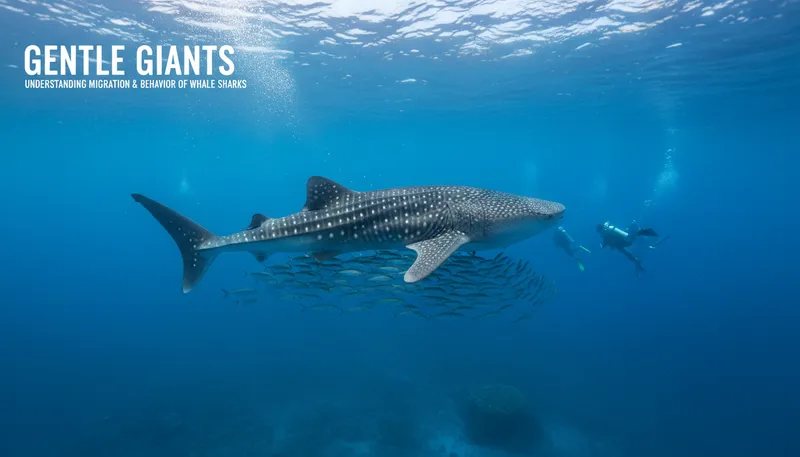
The whale shark (Rhincodon typus), often dubbed the gentle giant of the oceans, captivates scuba divers, marine biologists, photographers, and ocean enthusiasts alike. As the largest fish species on Earth, whale sharks not only inspire awe because of their enormous size but also for their complex migration patterns and unique behaviors that remain partially shrouded in mystery. Understanding these patterns is key to appreciating their role in marine ecosystems and supporting conservation efforts.
Migration Patterns: Traversing the Warm Oceans
Whale sharks are known for their extensive migrations across tropical and subtropical waters worldwide. Their movements are heavily influenced by water temperature, food availability, and reproductive behavior. As cold-blooded animals, whale sharks prefer warm waters, causing them to follow seasonal temperature changes. For instance, they often migrate to regions with higher water temperatures and rich biological productivity, such as during coral spawning or plankton blooms.
Key migration routes have been documented across various parts of the globe. In the Indo-Pacific region, locations like Australia’s Ningaloo Reef, the Philippines, and Indonesia see large seasonal aggregations of whale sharks, often linked to feeding on plankton during coral spawning events between March and July. Similarly, in the eastern Pacific, whale sharks migrate around the Galápagos Islands and Ecuadorian waters, sometimes journeying as far west as Hawaii. In the Arabian Sea, they travel seasonally along the coasts of Oman, Yemen, and Saudi Arabia in response to food availability and reproductive cues[1][2][4].
Behavioral Patterns: Surface Cruising to Deep Diving
Whale sharks exhibit fascinating behaviors that adapt to their environment and biological needs. Generally solitary, these creatures spend a substantial part of their daytime hours cruising close to the surface, feeding primarily on plankton and small fish eggs. Observations and tagging studies reveal a phenomenon known as reverse diel vertical migration, where whale sharks remain near the surface after sunrise, feeding intensively, then transition into a pattern of vertical oscillations in deeper water starting mid-afternoon and continuing overnight. This suggests a complex foraging strategy that leverages different water layers at different times of day[3][6].
Tagged individuals have been recorded diving to depths exceeding 900 meters, exploring the mesopelagic and occasionally the bathypelagic zones. These deep dives are believed to correlate with feeding in less productive oceanic waters or energy-efficient gliding during descents that exploit negative buoyancy, minimizing swimming effort[3][6].
Reproduction and Aggregations: Mysteries Yet to Unveil
While much about whale shark reproduction remains unknown, female whale sharks are thought to migrate to specific but undiscovered nursery areas for giving birth. Occasional large aggregations - sometimes over 100 individuals - are observed but the purpose and triggers for these gatherings are not fully understood. Patterns suggest links to feeding and possibly social or reproductive behaviors, with some evidence indicating regions like the southeast waters off Taiwan and the Philippines may serve as important birthing grounds during summer months[1][5].
Insights for Scuba Divers, Marine Biologists, and Photographers
Scuba divers are often thrilled to encounter whale sharks in known aggregation hotspots such as Ningaloo Reef, the Philippines’ Tubbataha Reefs, and Mexico’s Yucatan Peninsula. Understanding whale sharks’ preference for warm, plankton-rich waters during certain seasons can enhance the likelihood of sightings and contribute to safer, responsible diving experiences that minimize disturbance to these gentle creatures.
Marine biologists gain vital data from satellite tagging and acoustic monitoring, helping to map migration corridors and understand habitat use. These studies aid in identifying critical feeding and breeding areas which are essential for conservation planning to protect whale sharks from threats like habitat loss and fishing pressures[1][2][4].
Photographers benefit from awareness of whale shark behaviors - such as surface feeding during daylight hours and their typically slow swimming speed (around 3 mph) - which allows for better shot preparation. Photographers should also respect the sharks’ space to avoid stress or injury, as these interactions can help promote awareness and appreciation of this species.
Conservation and Future Study
Despite their global presence, whale sharks are classified as endangered. Their enigmatic migrations, deep-diving habits, and poorly understood reproductive patterns highlight the need for ongoing research and international cooperation for conservation. Protecting key habitats and migration routes is crucial as changes in ocean temperatures and human impacts continue to affect their survival.
In sum, the whale shark’s gentle nature, combined with their vast migrations and complex behaviors, make them a true marvel of the marine world - offering endless opportunities for discovery, admiration, and protection.
References
PADI Divemaster and underwater storyteller with over 7 years of hands-on Red Sea diving experience, documenting marine life, mapping dive sites, and promoting responsible ocean conservation.