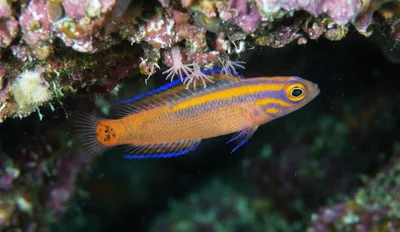
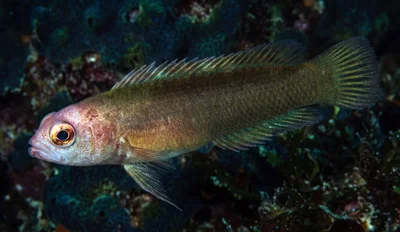
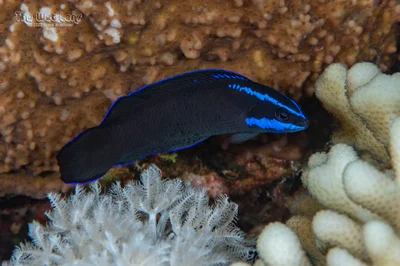
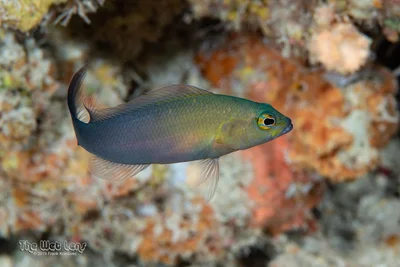
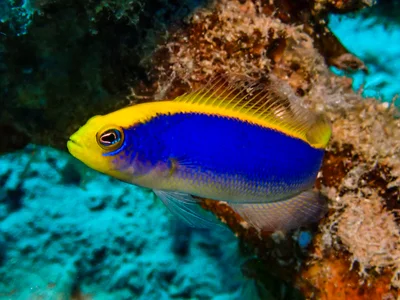
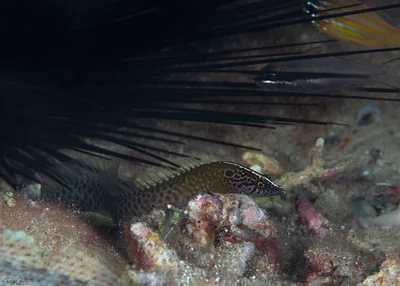
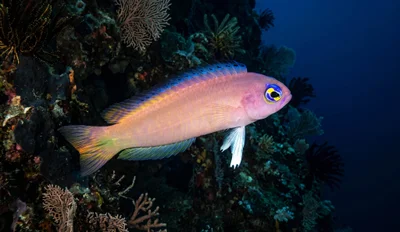
The family is named after a mistake. Pseudochromis means false chromis, and a chromis is a damselfish: the first of these fish to reach a European desk was filed as a near miss for something already described, and the name stuck to the whole group. The resemblance turned out to be the most interesting thing about them.
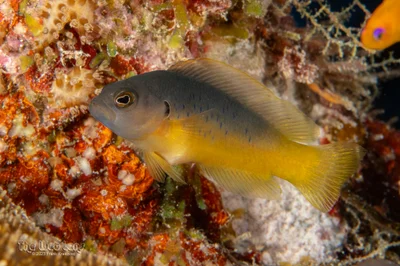
A damselfish is a plant-eating nuisance that the reef's small fry learn to ignore. A dottyback is a predator, and a predator that reads as a damselfish gets closer before anything moves. In the Pacific, one species has been shown to switch between a yellow and a brown form to match whichever damselfish is common where it happens to be living, and to catch more young fish while wearing the local costume. Nothing that specific has been demonstrated for the species in this sea, and the text will not pretend otherwise. What is documented here is the second half of the family's living: they hunt inside the reef rather than over it.
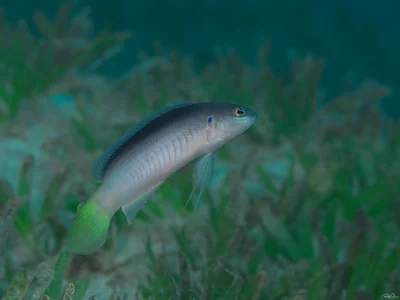
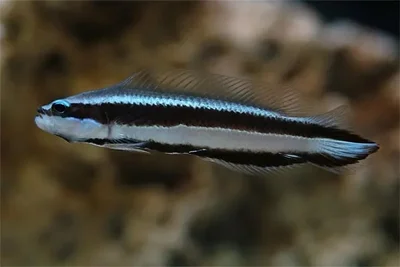
That is what the shape is for. A dottyback is elongated and blunt-headed with one long unbroken dorsal fin, built to move through rock instead of through water, and it works the crevice zone on small crustaceans, worms and the newly settled young of other fish. That size class is produced by the reef continuously, in spaces that nothing large enough to be called a predator can enter. A dottyback is what lives in there with it.
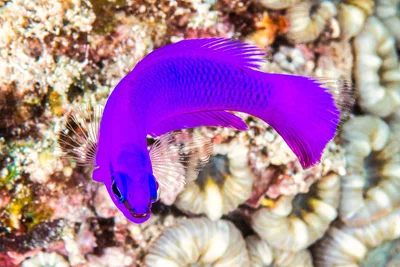
Eleven species are listed for this sea and almost all of them are found here and nowhere else, which the species pages take apart properly. They are also among the most strongly marked fish on the reef and among the hardest to see, and the way to fix that is to stop at one broken rock face and watch it for a full minute while everybody else swims on.
How to recognise dottyback
ElongateLong and slender, but still fish-shaped - trumpetfishes, needlefishes, cornetfishes.
- small, elongated body
- rapid, darting movements
- sheltering in reef crevices
- bright, often striking colours