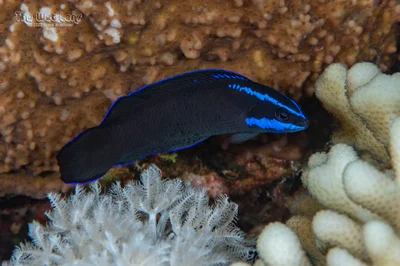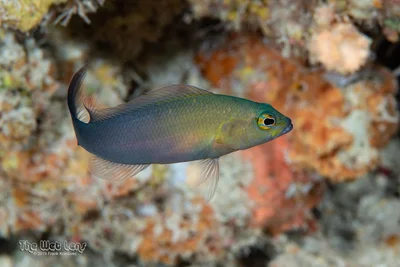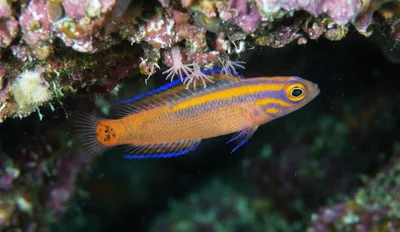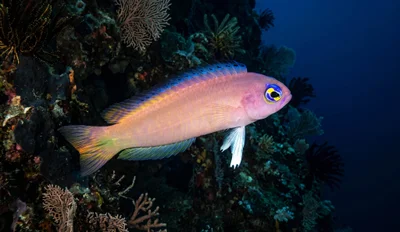
Of the eleven dottybacks in this catalogue, ten are found in the 🌊 Red Sea and nowhere else, or at most a little way past its southern gate. That is an extraordinary figure for a family of reef fish, and it is worth understanding why it happens here.
Dottybacks are built to be trapped. They are small, they never leave the rock for long, they hold tiny territories, and their young spend far less time drifting in open water than most reef fish do. A species that cannot disperse cannot recolonize, and cannot keep exchanging genes with populations outside. Put that animal in a sea that has repeatedly been cut off from the ocean and you get endemics.
That is exactly the 🌊 Red Sea's history. Every ice age dropped the global sea level enough to nearly close the strait in the south, and what was inside sat in water hotter and saltier than anything outside, several times over. The fish that could not disperse stayed, changed, and became species found only here.
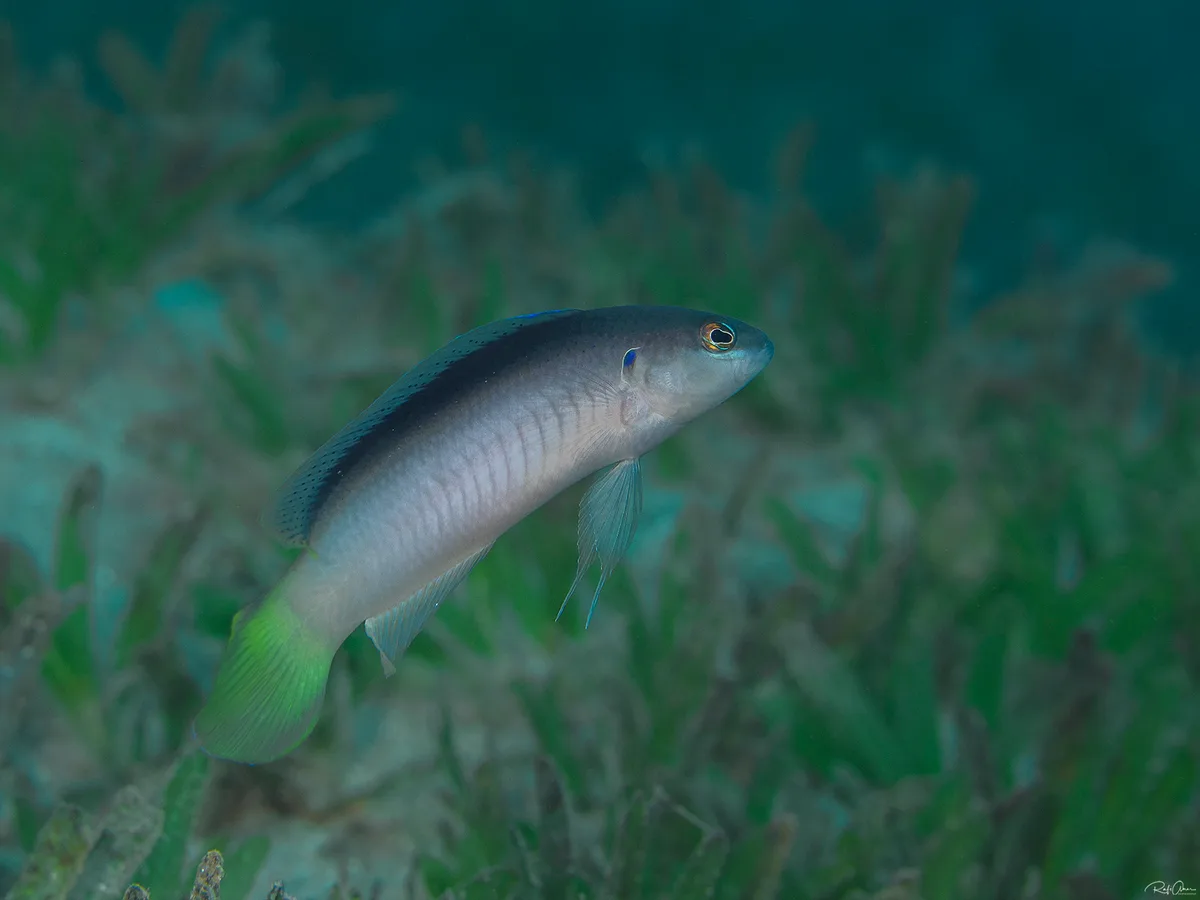
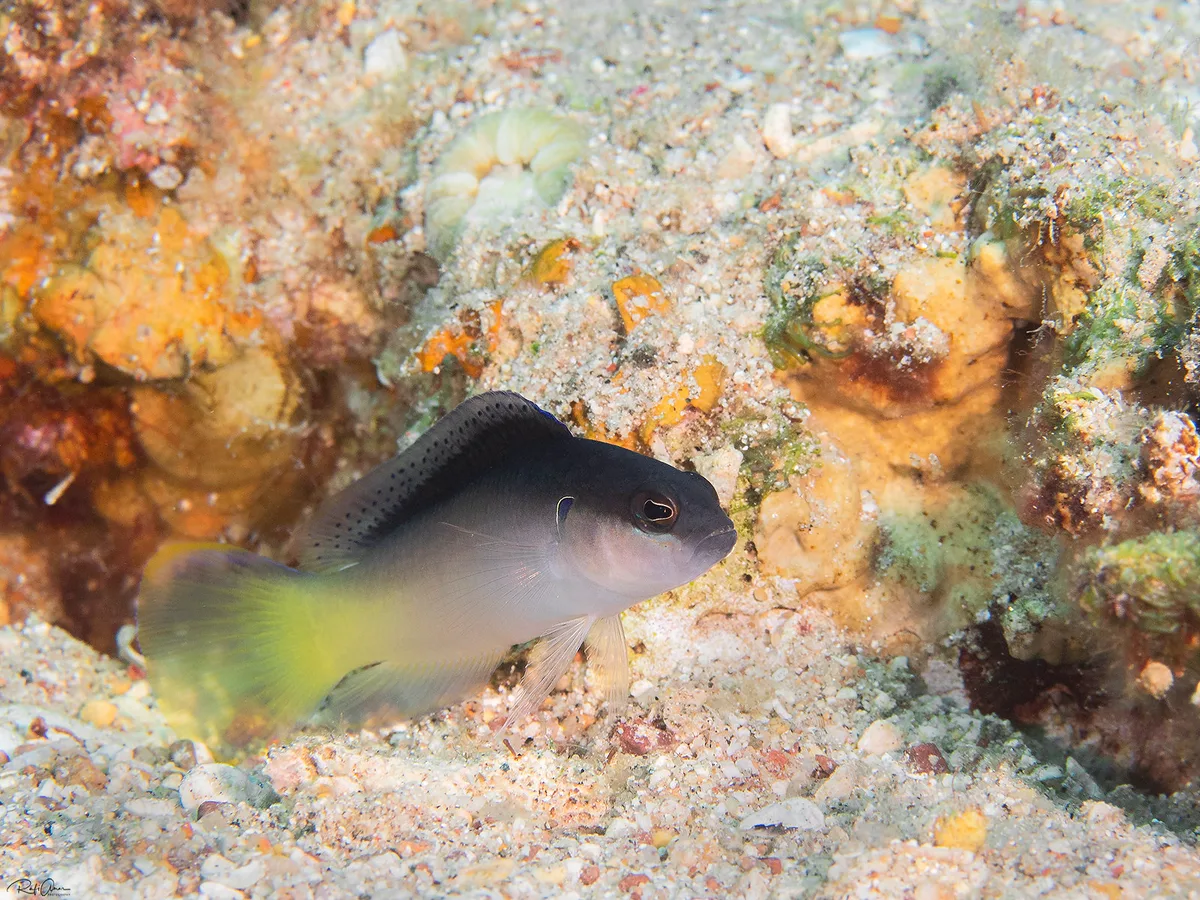
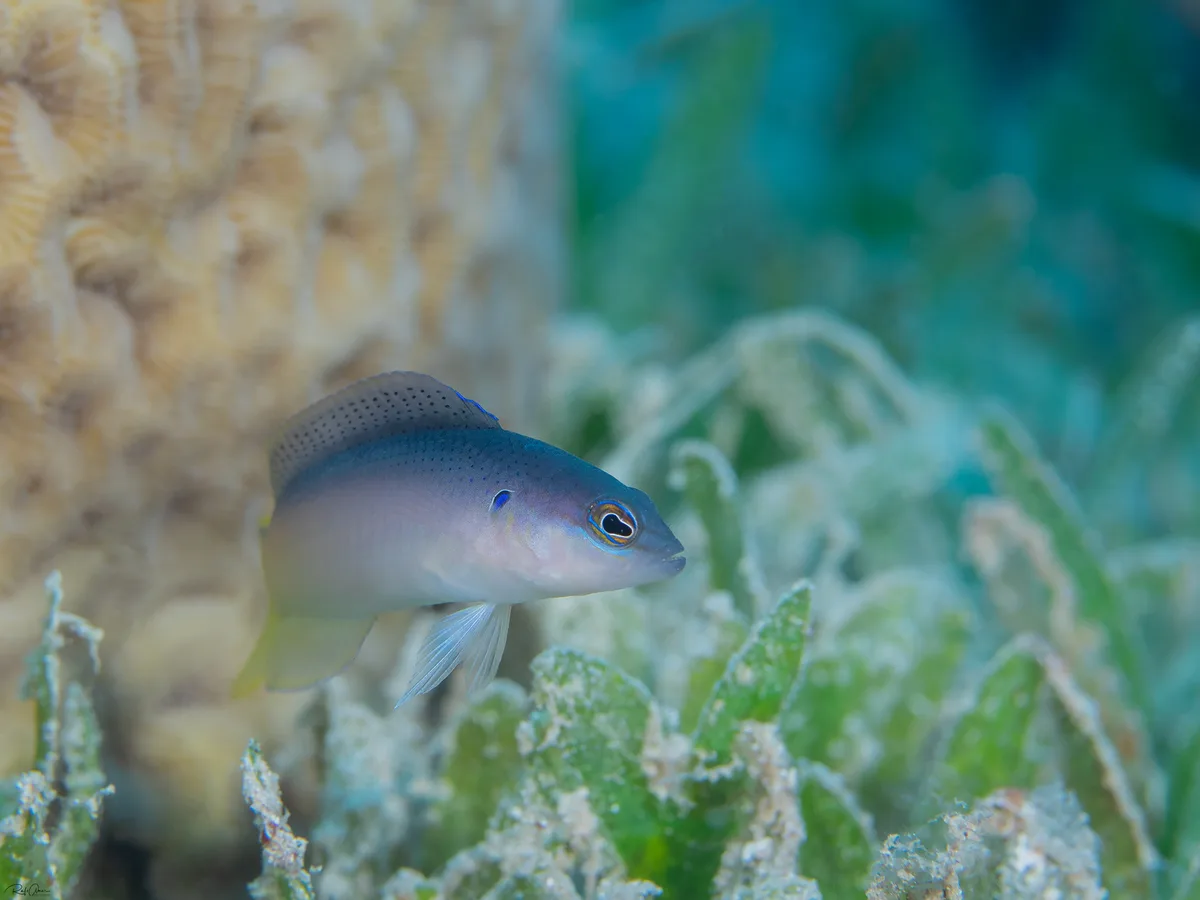
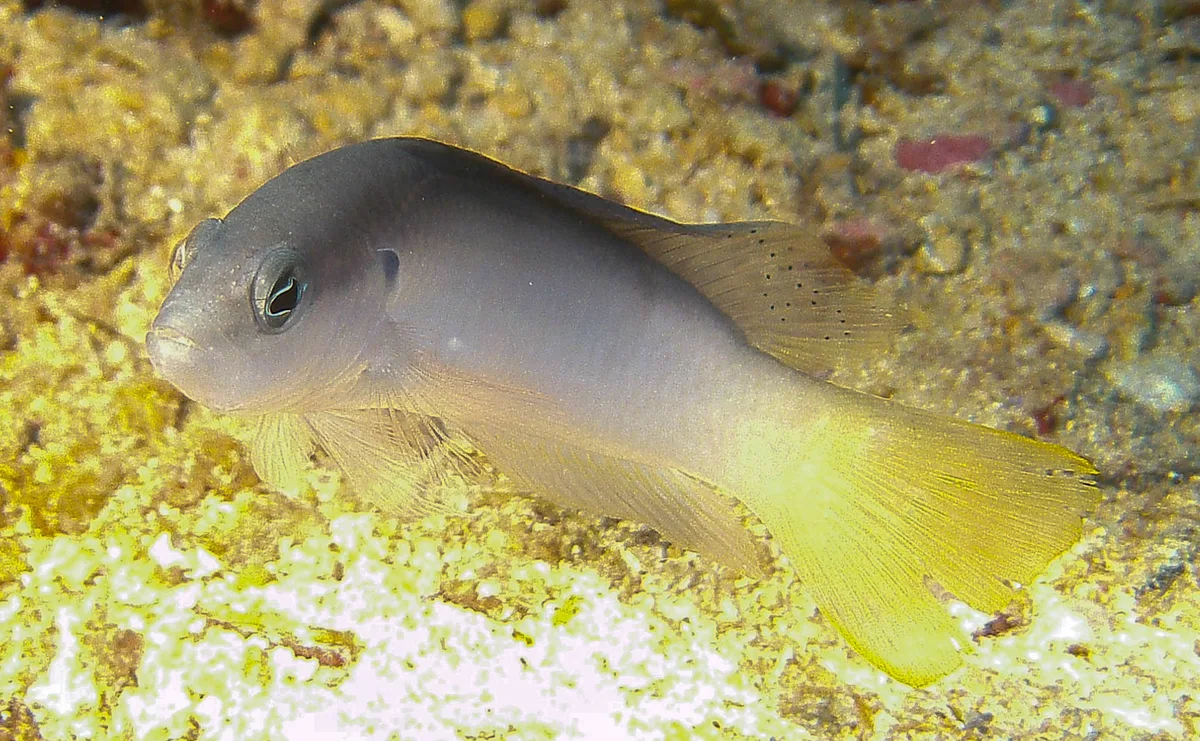
This one is the plainest of them and the largest, around ten centimeters of pale bluish gray, and it sits deeper than its relatives. Nothing about it stands out, which is its own kind of field mark in a family of magenta and gold.
The genus. Pseudochromis Rüppell 1835 - pseudo- (false). ETYFish
The species. Pseudochromis pesi Lubbock 1975 - Honours Peter F. D’o. Etherington-Smith. ETYFish
- pale bluish gray, plainer than any other dottyback here
- the largest of the local dottybacks at around 10 cm
- deeper than the rest, from about ten meters down
- up to 10 cm
Why it's threatened
There are no known major threats.
Threat classification from the IUCN Red List.