Dottybacks do not scatter their eggs and leave. The male clears a hole in the rock, courts a female into it, and what she leaves behind is a ball: a few hundred eggs bound together by fine filaments into a single sphere, sticky enough to stay put in surge.
Then he guards it. For the next several days the male stays with the ball, fanning it with his fins to keep water moving through, mouthing it to clean off silt and fungus, and driving off anything that approaches. He does not feed much while he is doing it.
It is a good deal on a reef where almost everything eats eggs. Broadcast spawners lose most of their output within minutes; a guarded ball wedged in a crevice loses very little, which is how a fish this small maintains a population without producing millions of eggs.
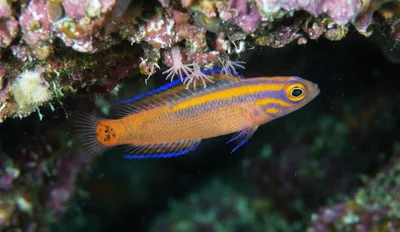
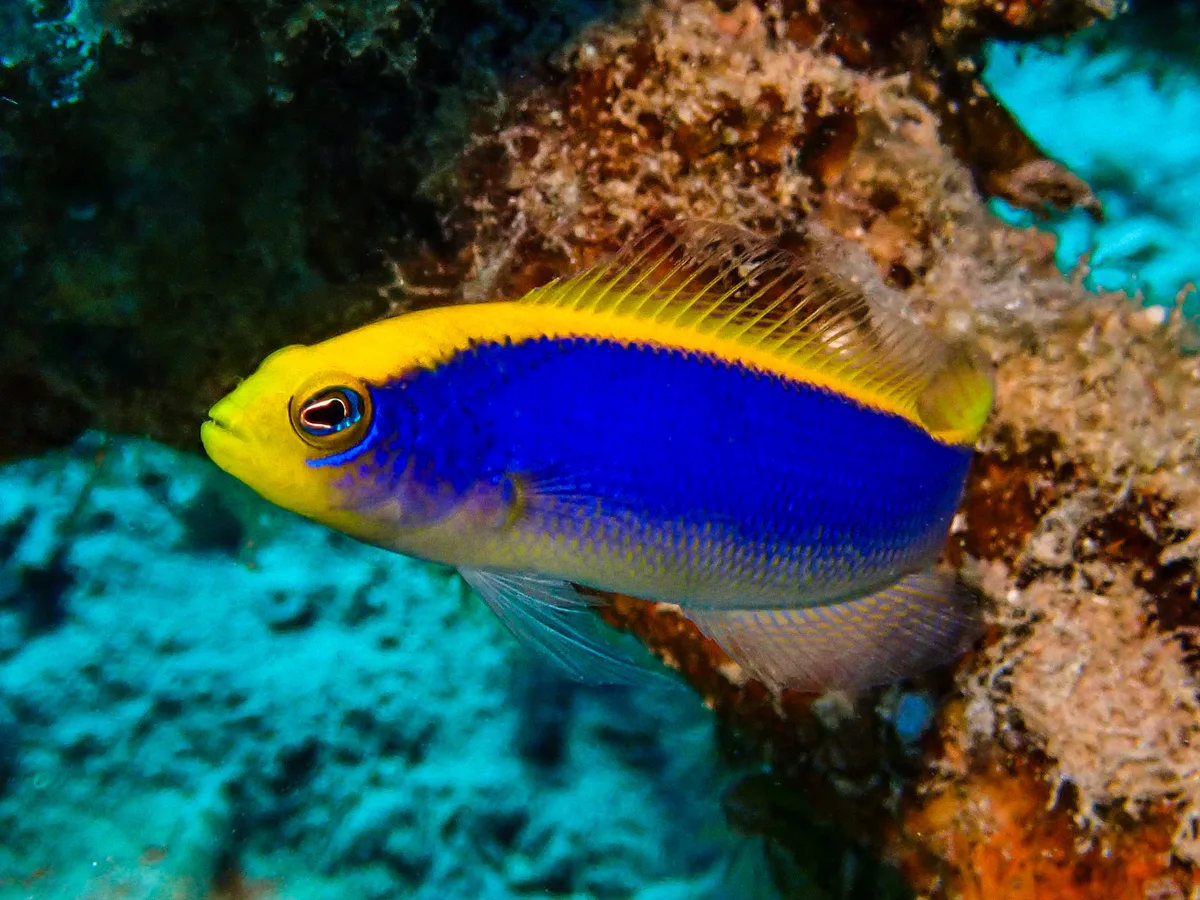
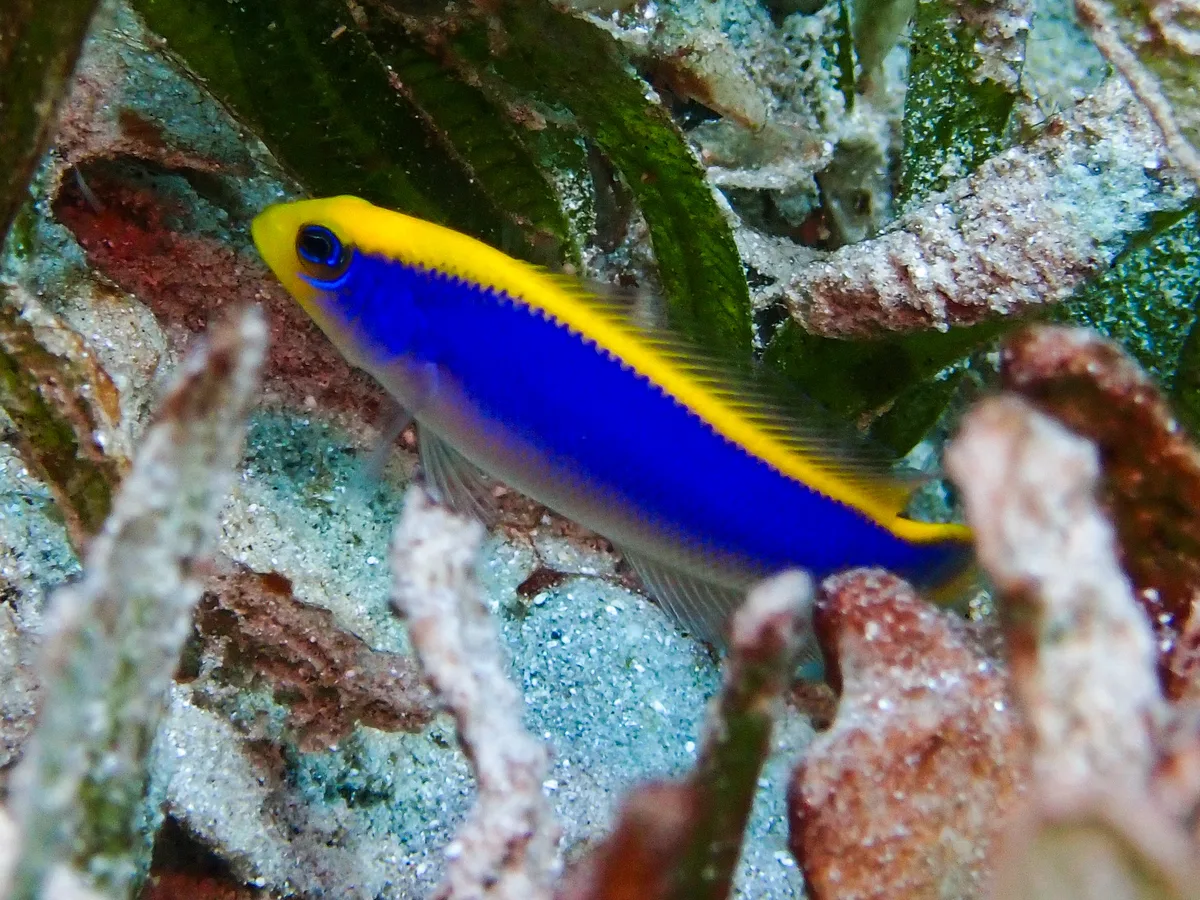
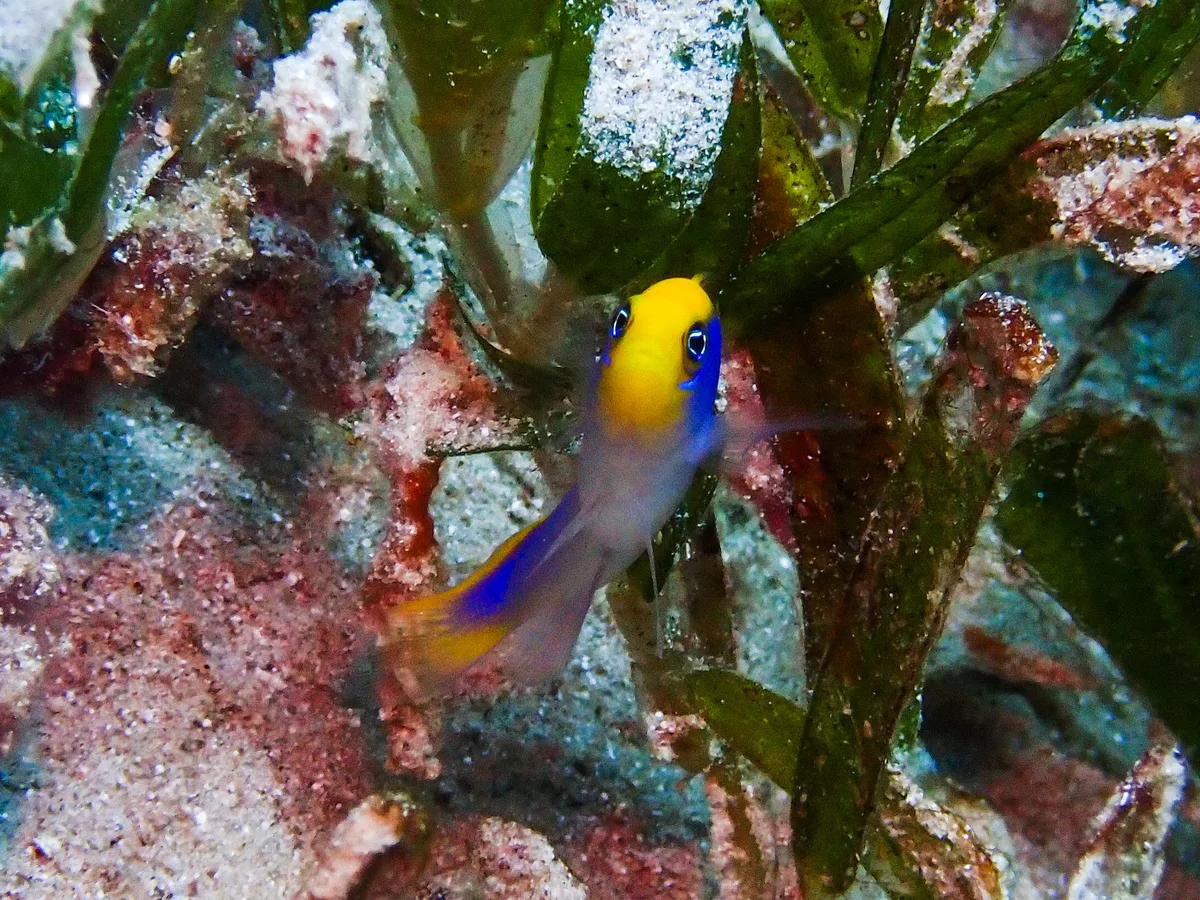
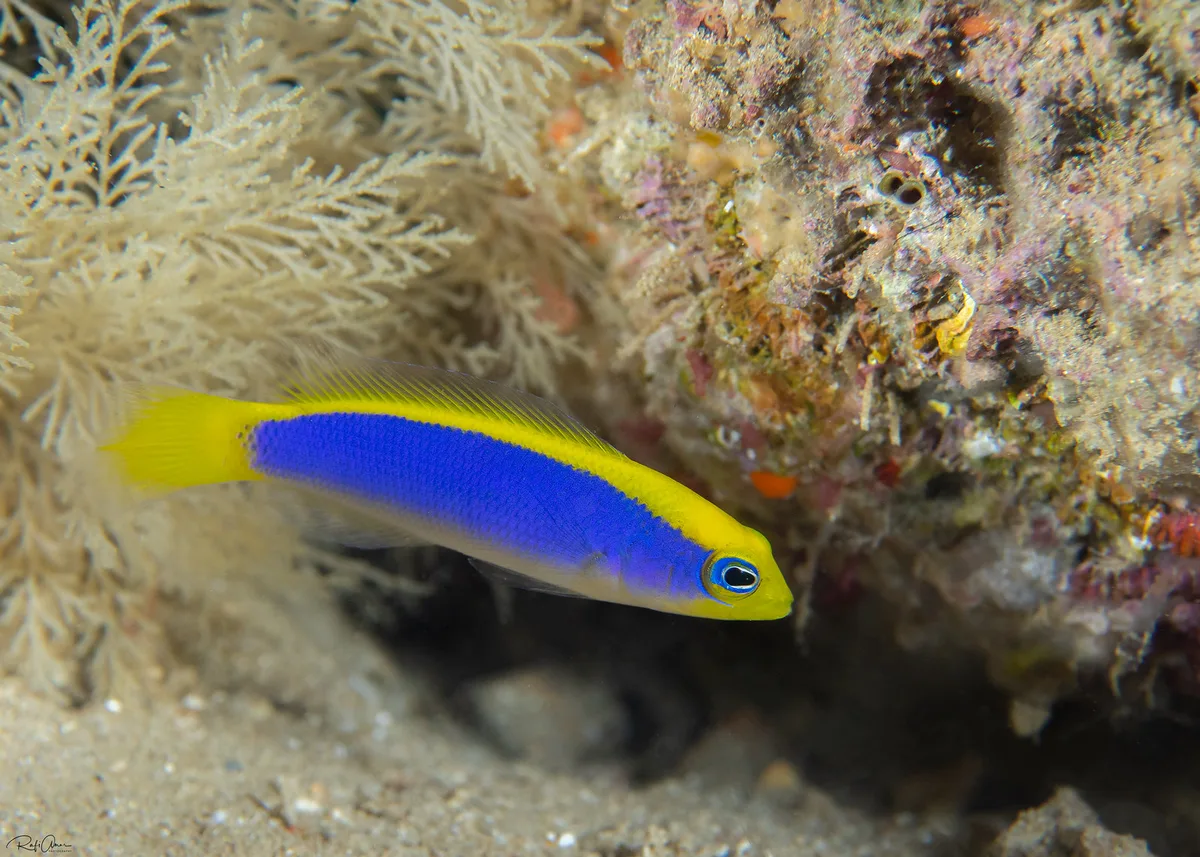
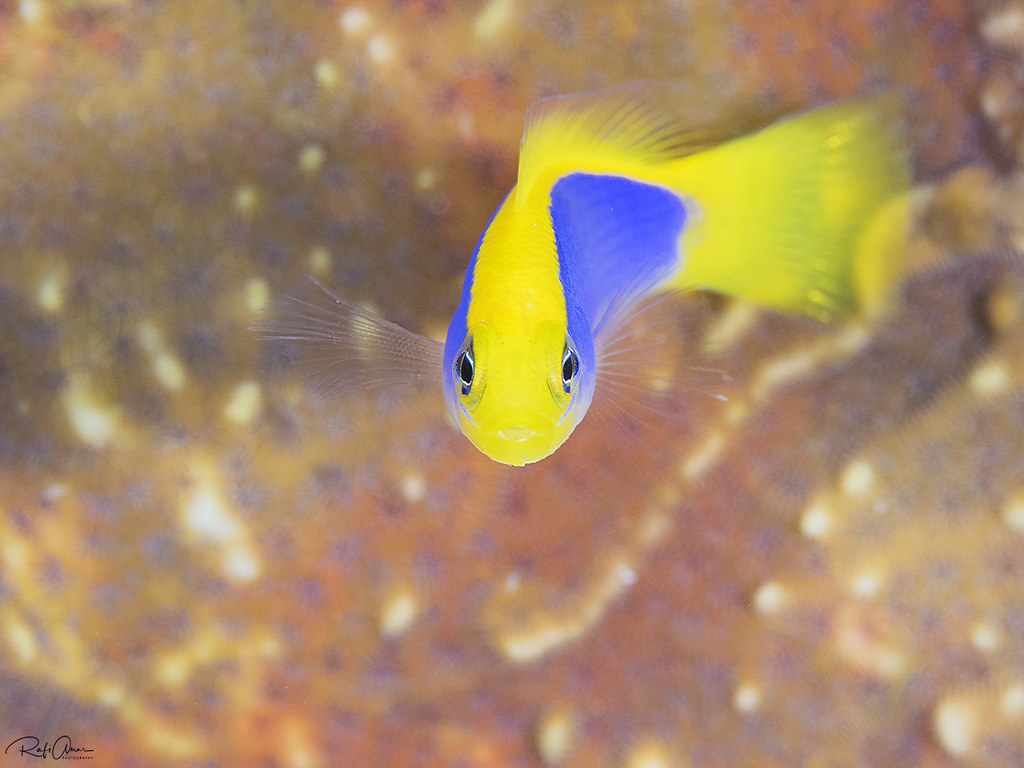
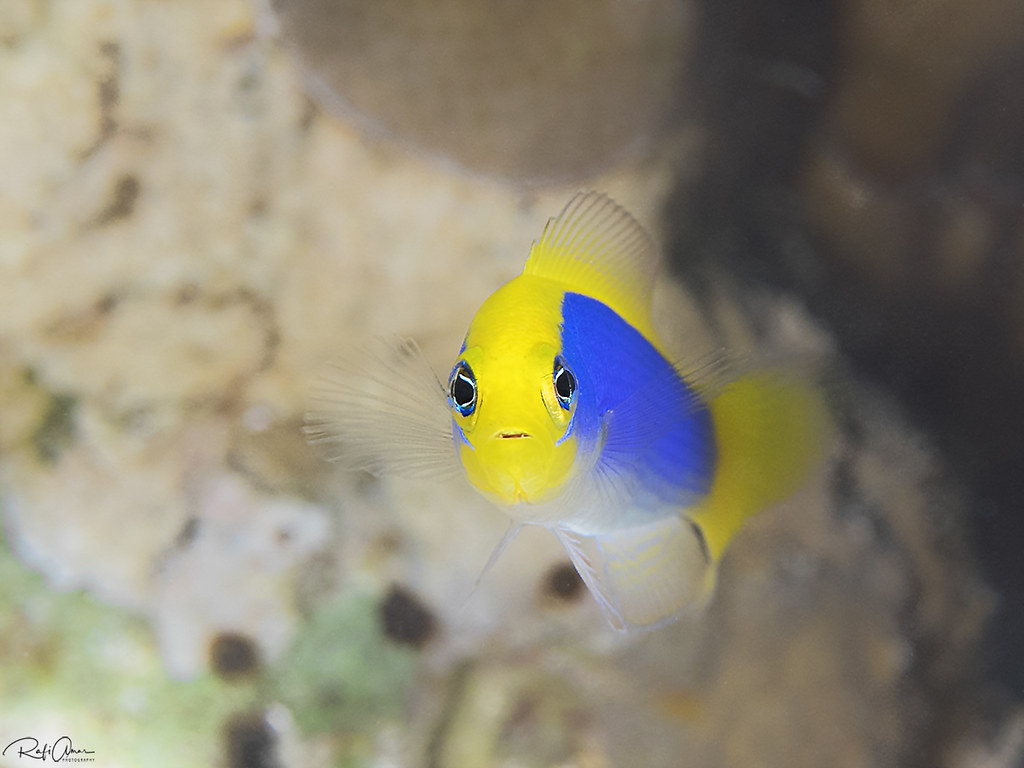
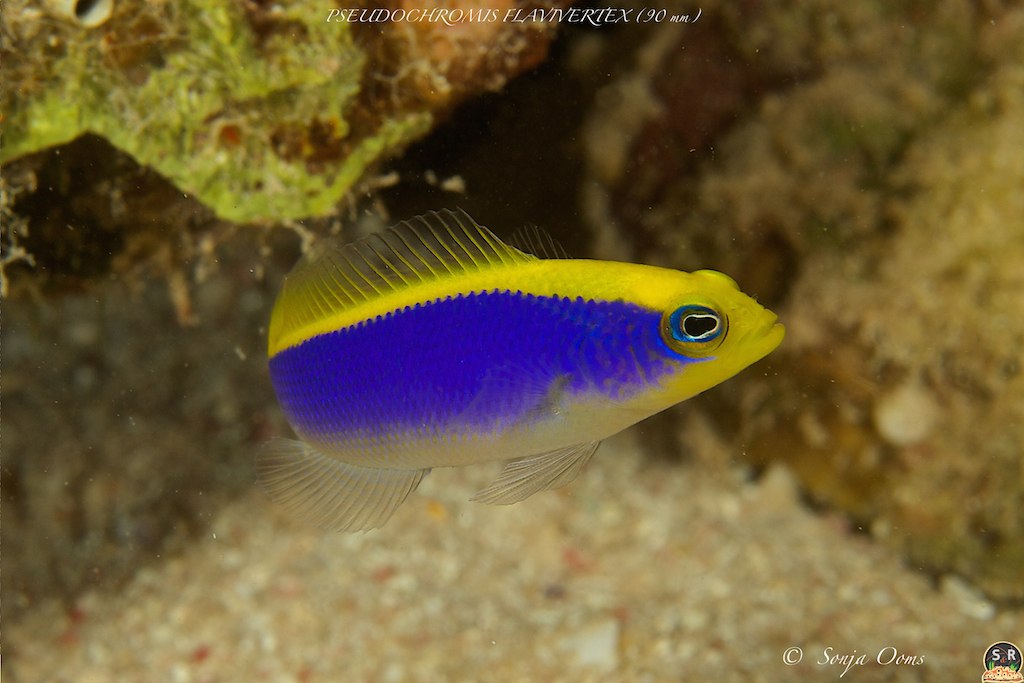
This one is named for the color scheme: yellow laid along the whole back over blue-gray flanks, like light coming up over a ridge. Look for it low on the reef, near sand or mud, rather than up among the corals where the other dottybacks are.
The genus. Pseudochromis Rüppell 1835 - pseudo- (false). ETYFish
The species. Pseudochromis flavivertex Rüppell 1835 - flavus (yellow) + vertex (top). ETYFish
- yellow along the whole back, from the snout to the tail
- blue-gray flanks fading to a yellow wash below
- lower reef, close to sand or mud rather than up in the coral
- up to 8 cm
Why it's threatened
There are no known major threats to the species.
Threat classification from the IUCN Red List.