
CephalopodsCephalopoda
An octopus is a mollusc. So is a clam, and so is the snail on a garden wall, and that is the strangest fact in this catalogue: the most intelligent invertebrate on Earth belongs to the same group as an animal that spends its life filtering water between two shells.
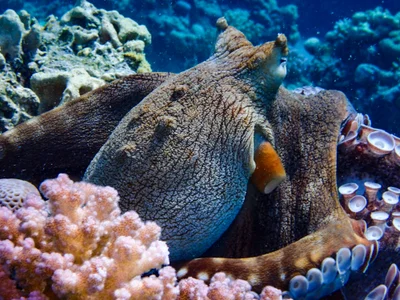
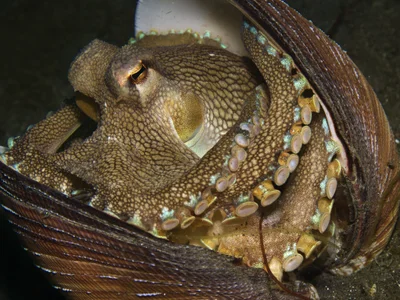
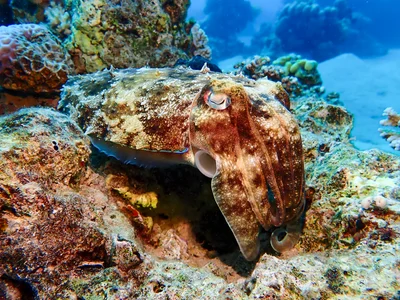
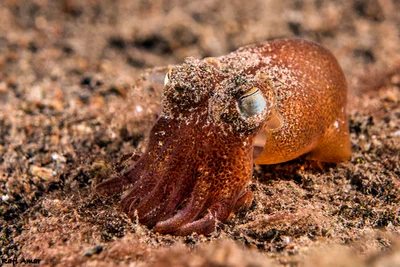
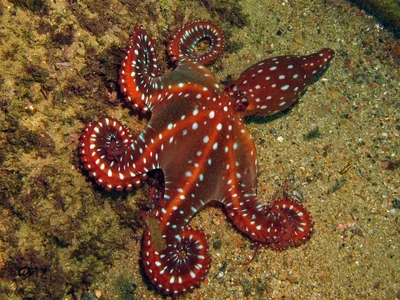
Cephalopod means head-foot, and it describes the arrangement: a head with large eyes, and the foot of the ancestral snail split into arms around the mouth. The shell went inside and shrank into a stiffening blade, or into the buoyancy chamber a cuttlefish adjusts like a submarine, or vanished entirely, which is what an octopus did. Losing it bought them speed and the ability to pour a body the size of a football through a hole the width of their own eye, and it cost them all their armor. Everything they became since is a response to being soft, edible and hunted.
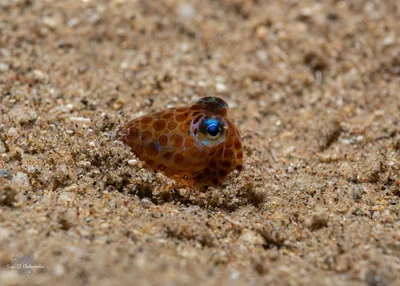
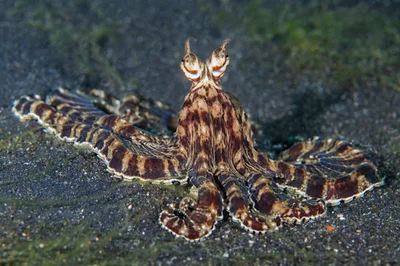
What they became is the best skin in the sea. It is covered in millions of pigment sacs, each with its own muscles and its own nerve, and the animal contracts them individually to repaint itself in a third of a second. Under that layer sit reflective cells for silver, blue and green, and over it a set of muscles that can raise the skin into spikes and flaps to change the texture as well. A cuttlefish can run a wave of color down its own body while hunting. The strangest part is that they are almost certainly colorblind, and how they match colors they cannot see is still argued over.
The wiring is unusual too. Two thirds of an octopus's neurons are in its arms rather than its head, so an arm can taste, feel and solve part of a problem without central instruction. The blood is blue, being copper-based rather than iron-based, and it runs through three hearts.
And almost all of them die young. Most cephalopods live one or two years, breed once, and die shortly after, which means every bit of that intelligence is assembled from scratch, alone, in a single short life, with nothing handed down.
- distinct head with prominent eyes
- eight to ten arms surrounding the mouth
- rapid changes in skin colour and texture
- jet propulsion for swimming or crawling locomotion
- releasing a cloud of dark ink when threatened
11 species in Cephalopods




Other groups in Molluscs
Nearby in the catalogue.


Last Update: August 23, 2026