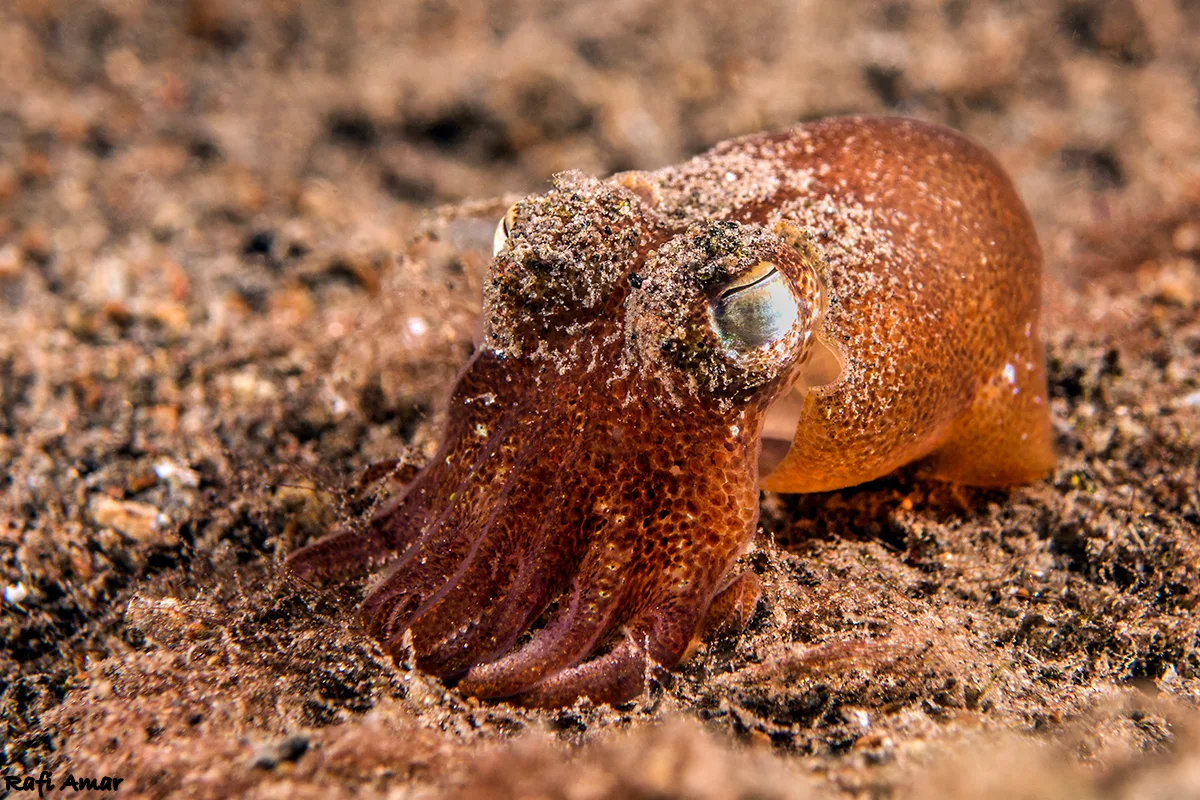
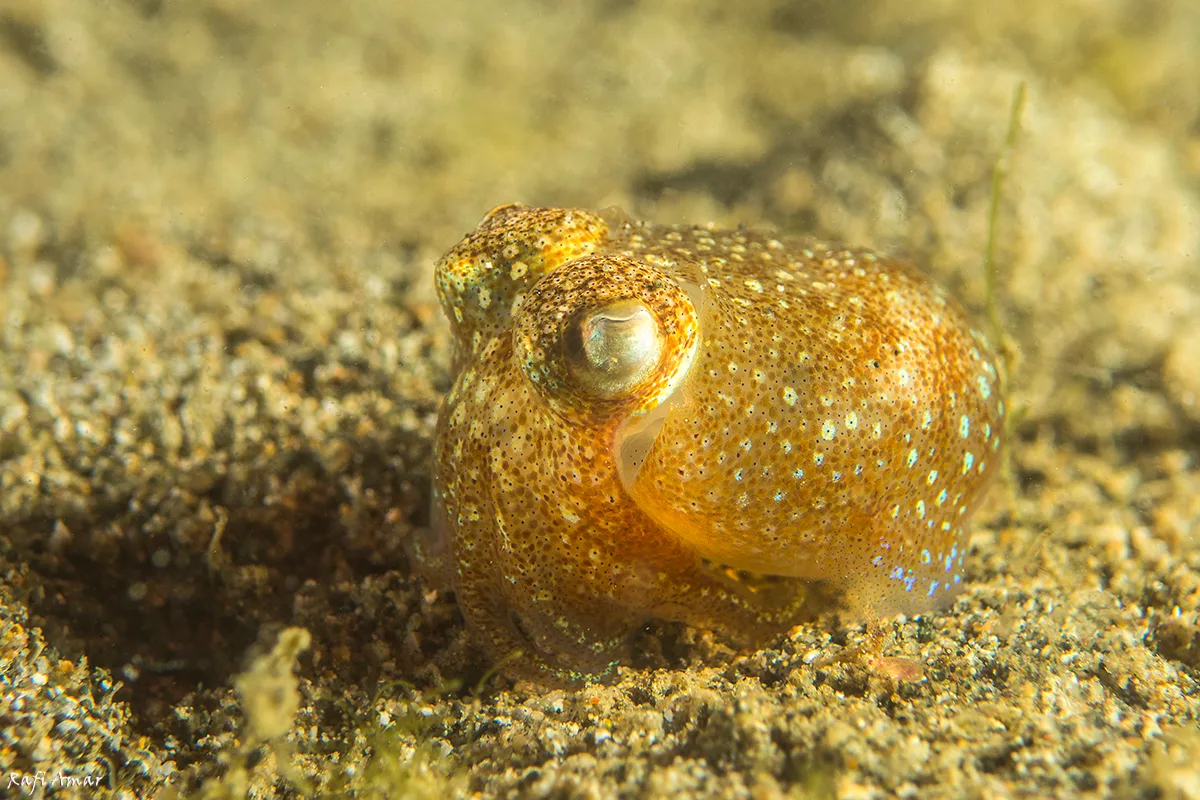
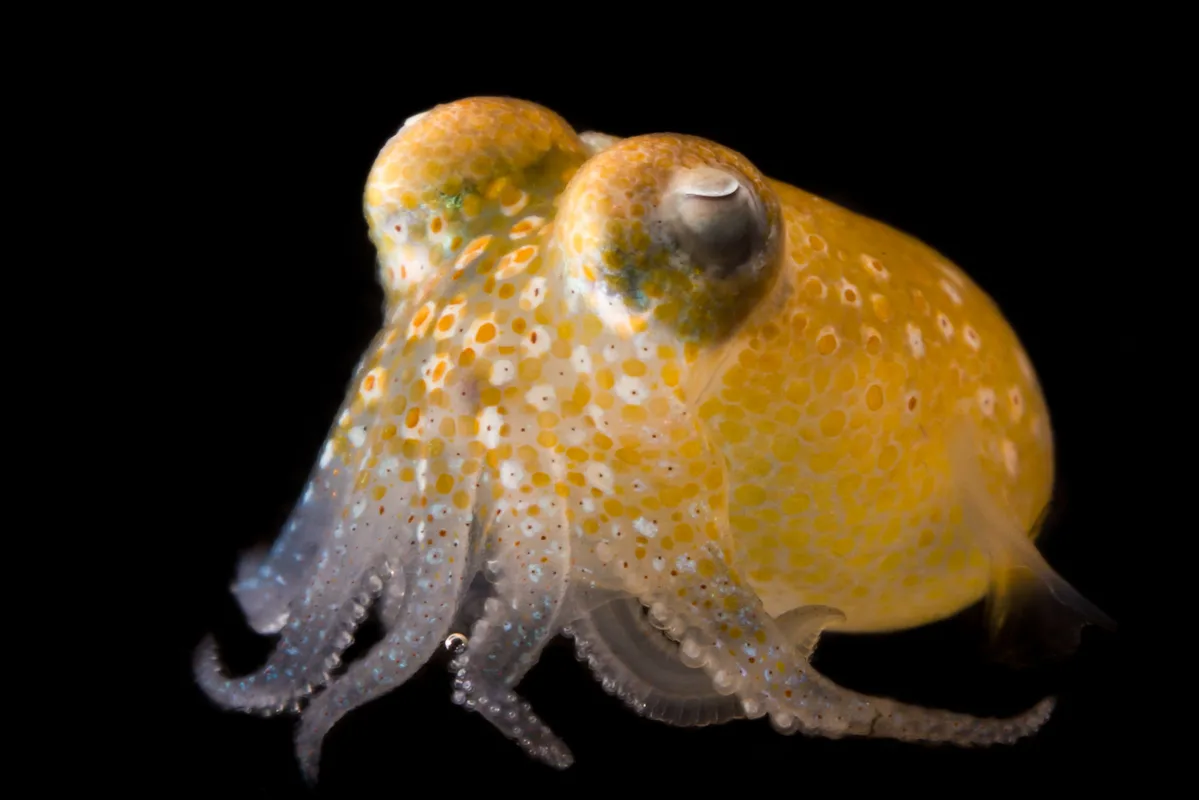
A bottletail squid of about 3 cm (1.2 in): a small rounded body tapering to a blunt point, with short fins set well back and a texture like wet rubber. It spends the day buried in soft sediment and comes out over open bottom at night, which is the only time anyone sees one.
Unlike the cuttlefish it resembles, it has no cuttlebone at all - no internal shell, no gas chambers, no buoyancy control. The body is simply denser than seawater, so the animal either swims or sits on the bottom, and it sits most of the time.
Its defense is glue. Glands on the underside secrete a sticky mucus that the squid coats itself in, and sand grains bind to it into a rough shell that both hides the animal and makes it unpleasant to swallow. When it leaves, the coat is shed and left behind.
Almost nothing else is documented: no lifespan, no breeding season, no diet beyond small crustaceans. Bottletails are common enough on muck dives across the Indo-Pacific and small enough that nobody has studied them, which is a fair summary of most of the sediment fauna in this catalogue.
- small rounded body tapering to a blunt point at the rear
- short fins set well back, near the tip
- often coated in sand grains stuck to its own mucus
- length about 3 cm
Why it's threatened
The threats to this species are unknown.
Threat classification from the IUCN Red List.