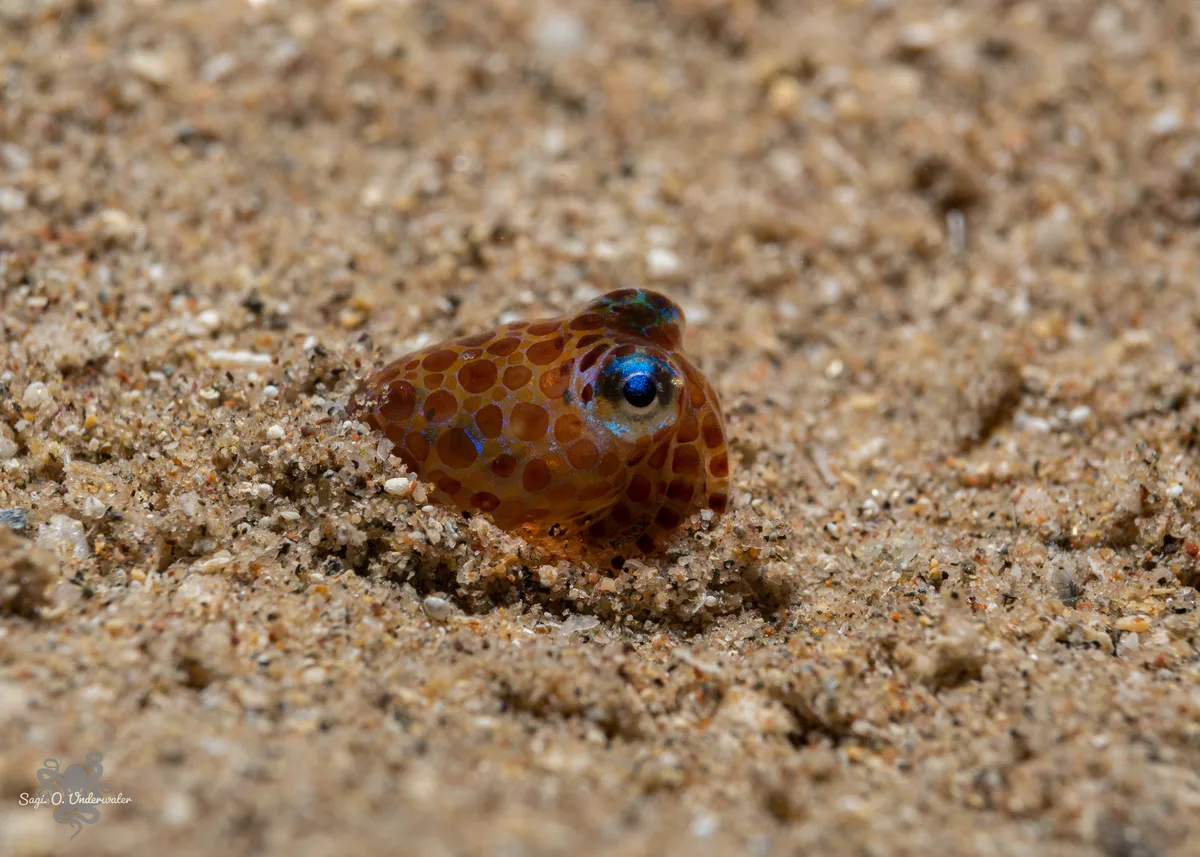
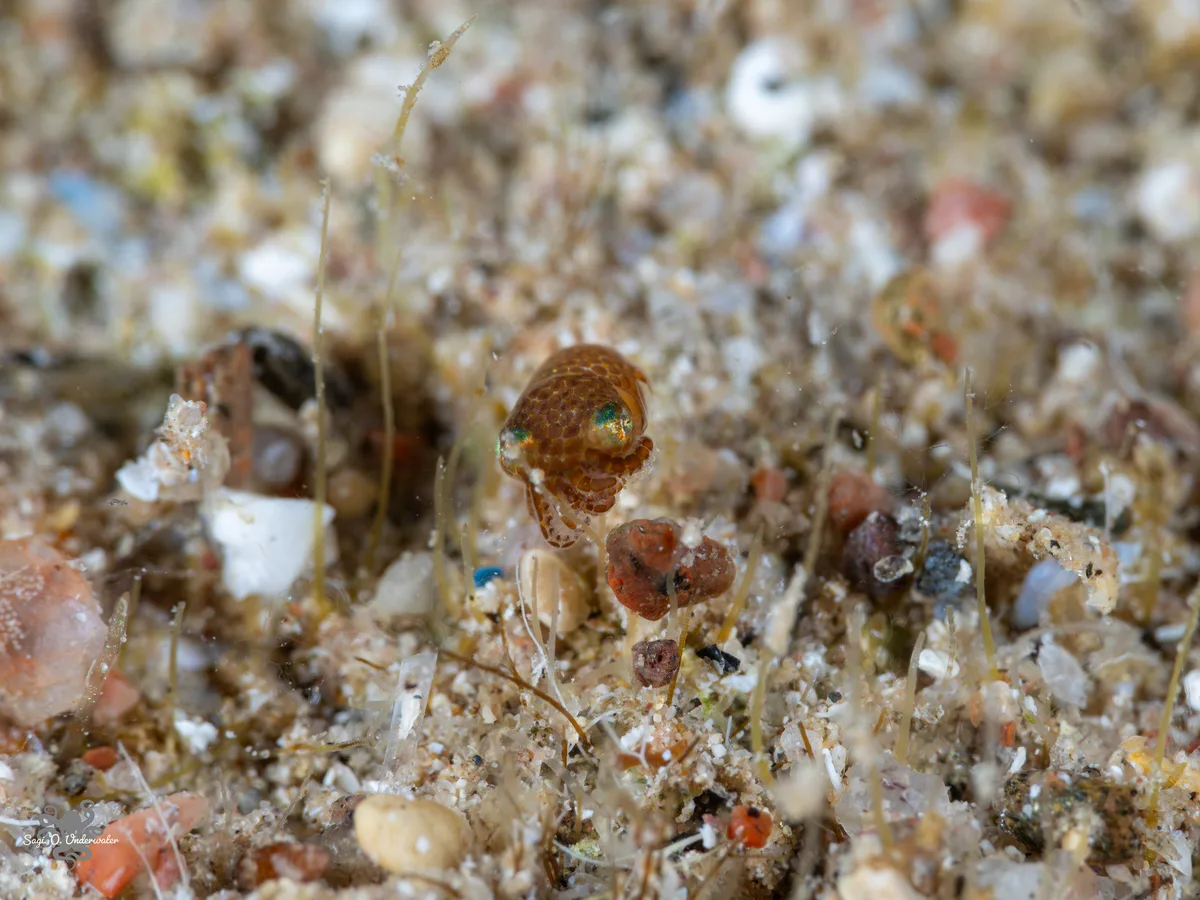
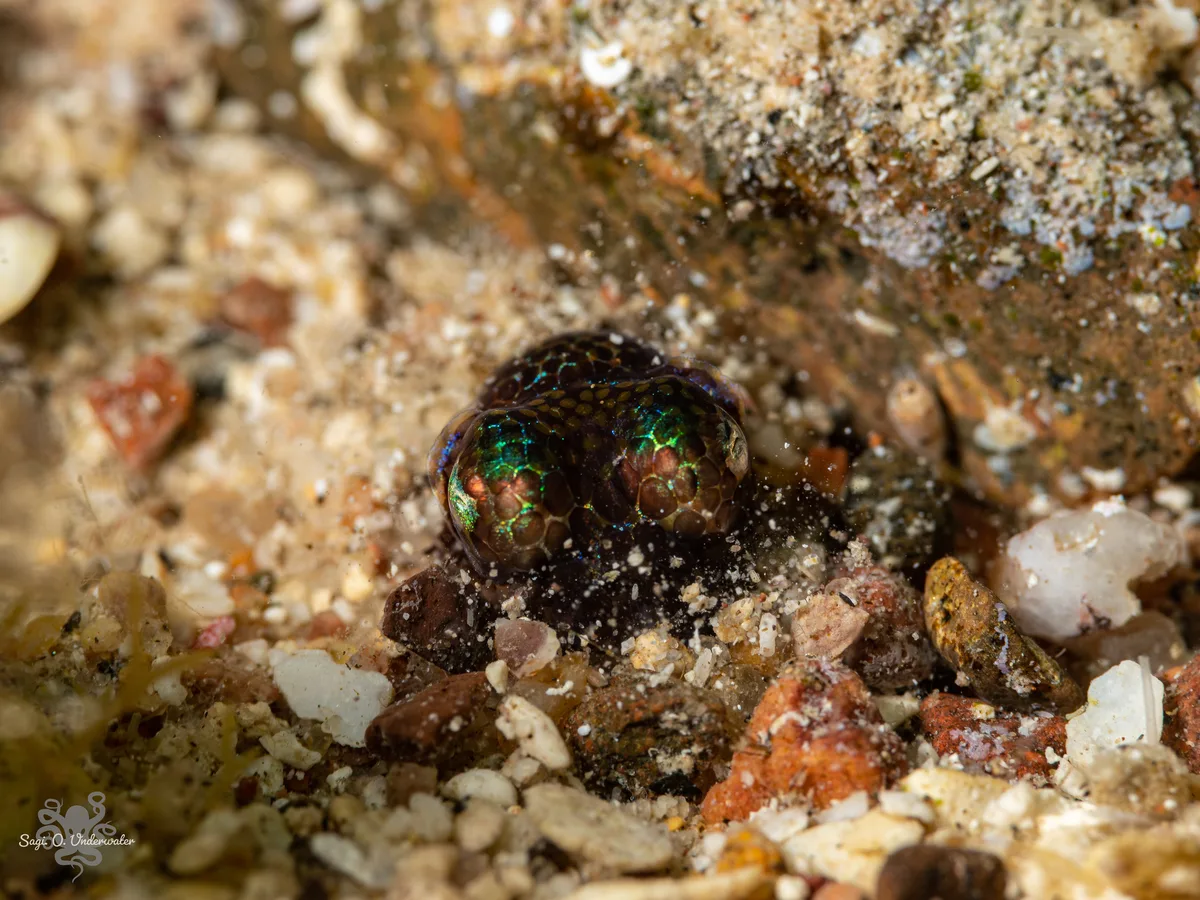
A bobtail squid the size of a thumbnail, 2.5 cm (1 in), with a rounded body, ear-like fins and a habit of burying itself in sand at dawn with only the eyes exposed. It is not a true squid and not a cuttlefish, but a member of a separate group with a short blunt body and no internal shell.
Its defense is light. Under the mantle sits an organ housing a culture of luminous bacteria, kept alive and fed by the squid, and at night the animal shines that light downward at an intensity matched to the moonlight above it. Seen from below, its silhouette disappears against the surface. The squid adjusts the output with an ink-sac shutter as the moon rises and sets.
The partnership is built fresh every generation. A hatchling has no bacteria at all and must recruit them from the seawater within hours, selecting one species out of thousands present, and every morning it vents roughly ninety percent of the culture back into the sea and regrows it during the day. That cycle made the genus one of the standard laboratory models for how an animal and a microbe establish a partnership - work that underpins a great deal of what is now understood about gut microbiomes.
Which name the local animal should carry is genuinely unsettled. Bobtail squid are separated by internal anatomy rather than by anything visible in a photograph, and this species is known with certainty only from 🇲🇺 Mauritius, where the type specimen was collected; records from elsewhere in the Indo-West Pacific are treated as doubtful. Its close relative Euprymna berryi is widespread and could account for some of the animals found here. Anyone photographing a bobtail on 🌊 Red Sea sand has recorded the genus for certain and the species probably.
It lives a few months, breeds once and dies. Nothing is published on its diet or behavior in this sea specifically.
- thumbnail-sized rounded body, no fin fringe along the mantle
- a pair of small ear-like fins set at the middle of the body
- buried in sand by day with only the eyes showing
- length about 2.5 cm
Why it's threatened
The threats to this species are unknown.
Threat classification from the IUCN Red List.