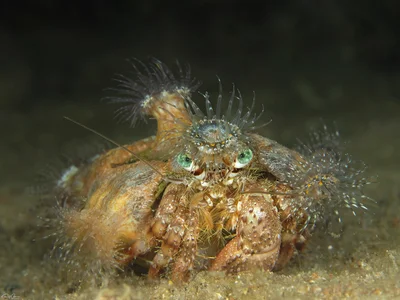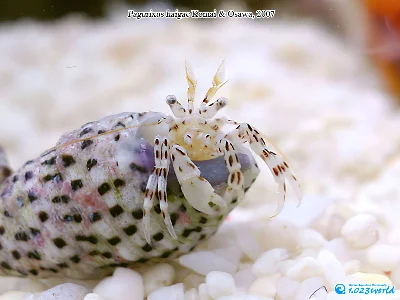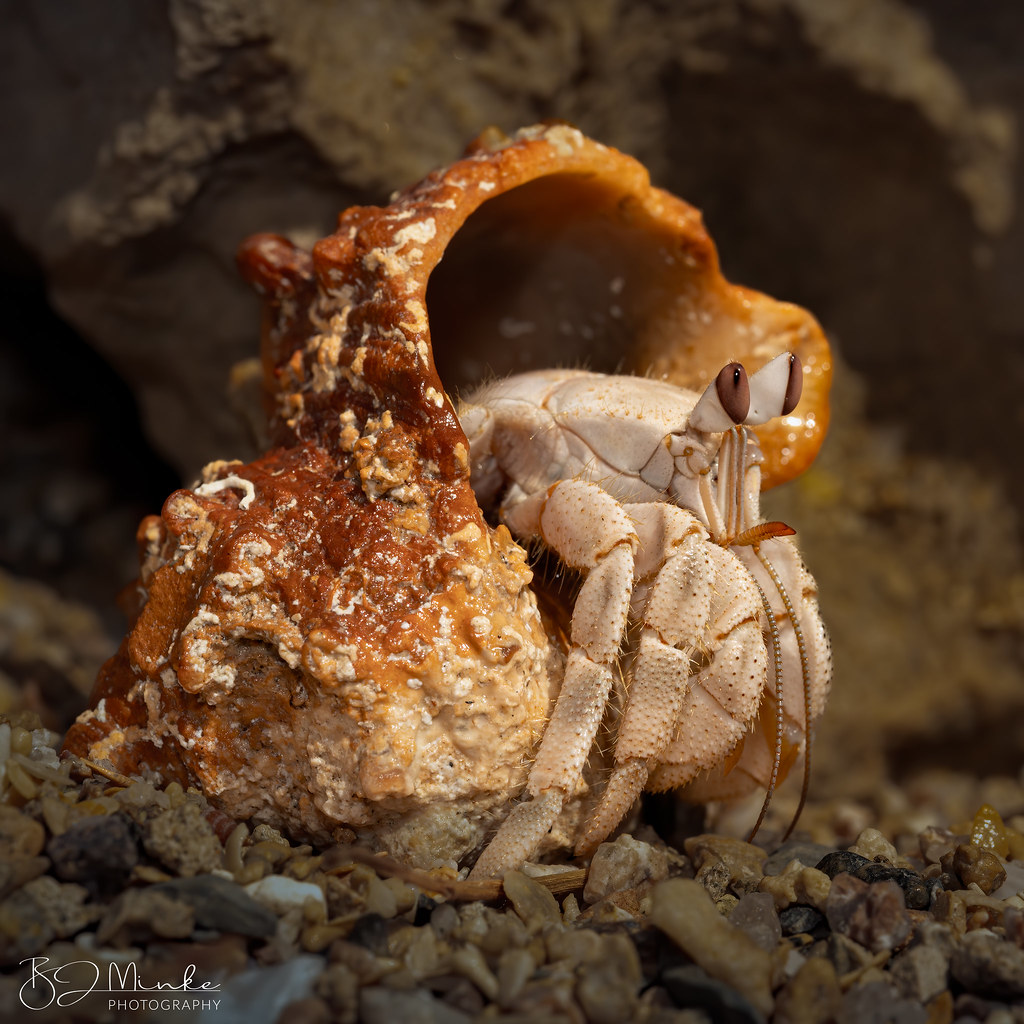
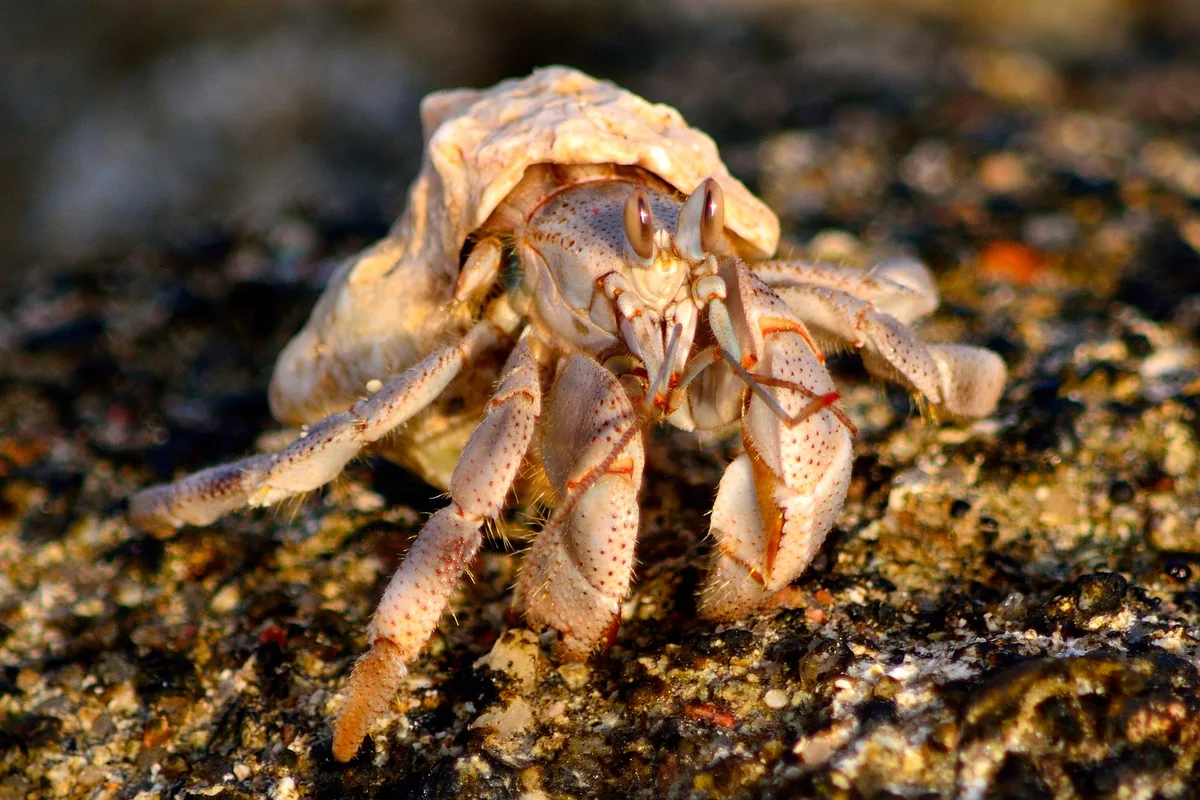
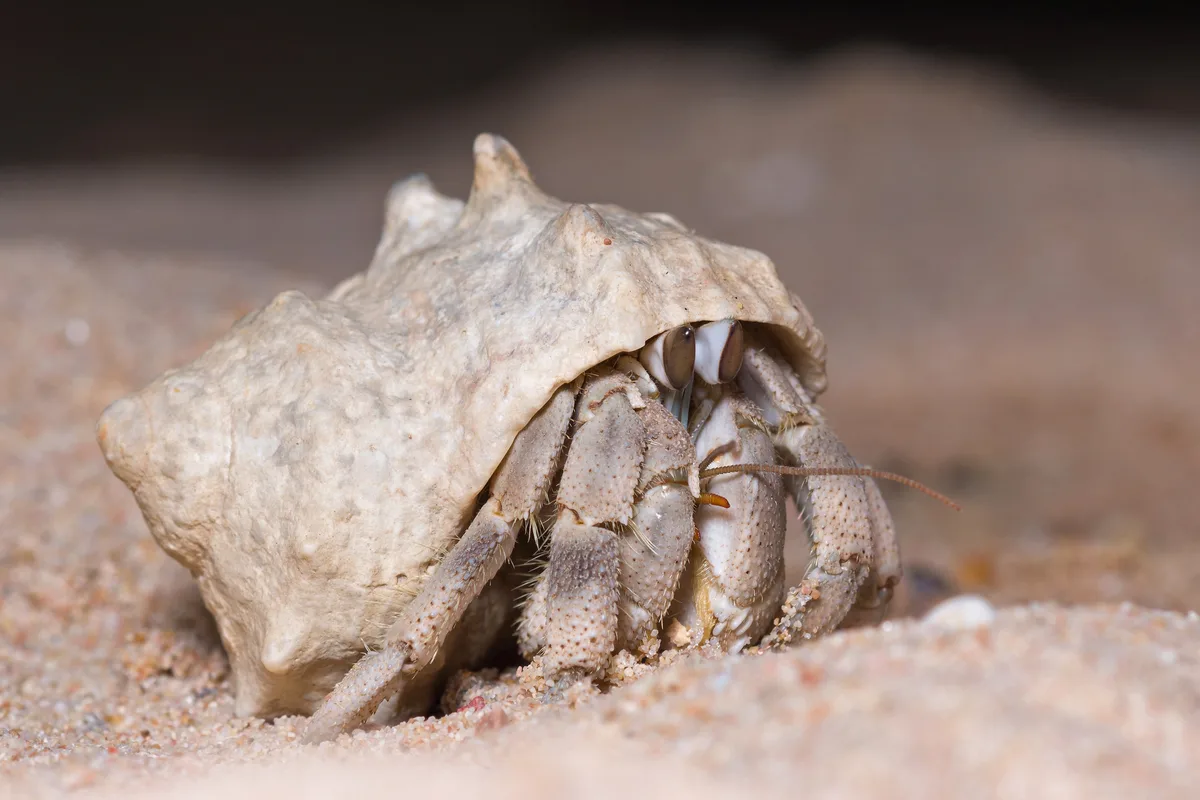
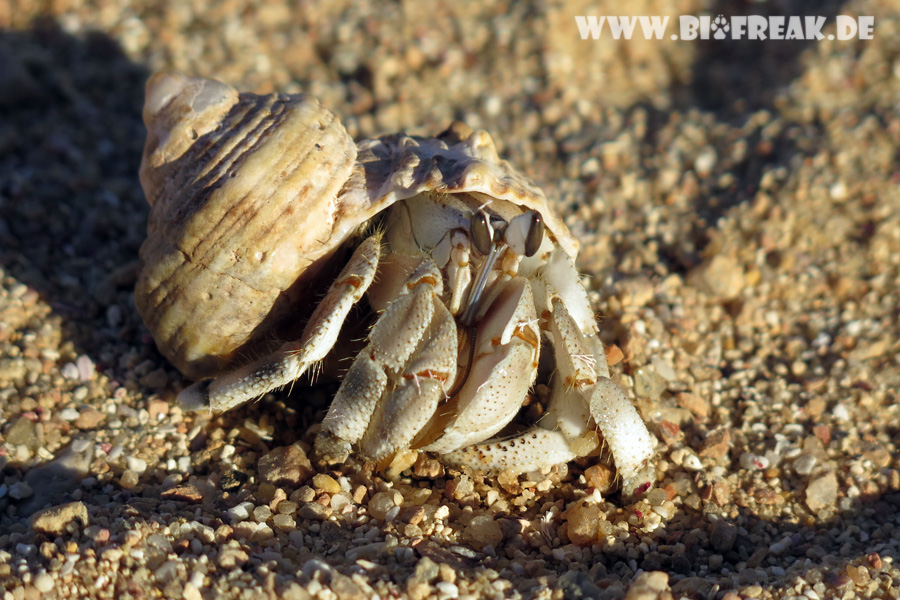
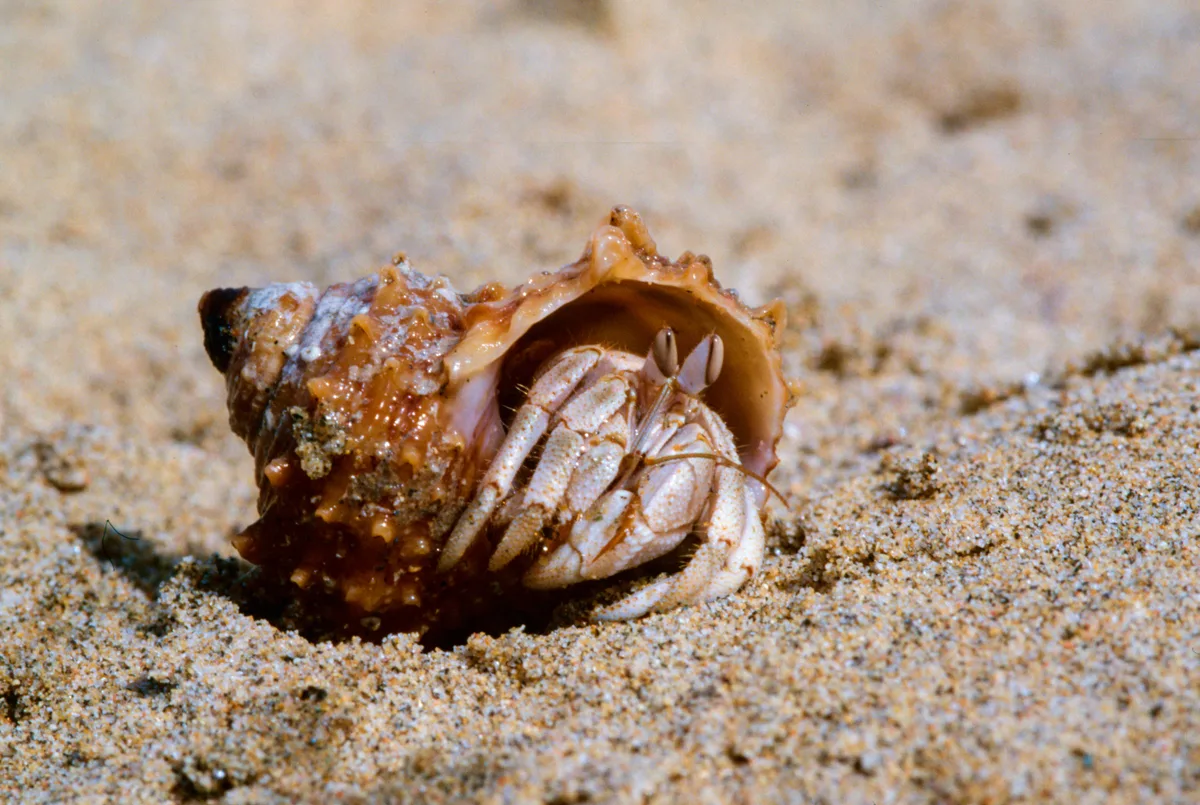
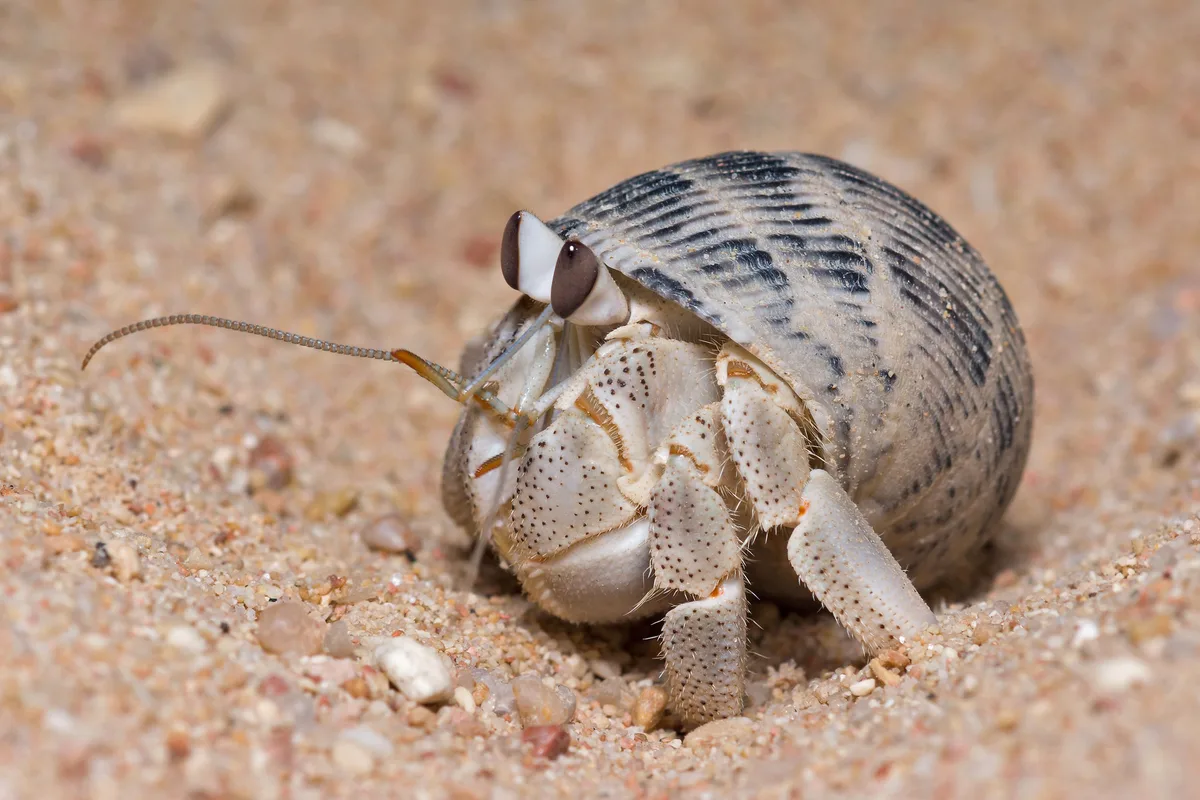
A hermit crab that lives on land. It walks the beach and the scrub above the tideline at night, feeds on stranded weed, carrion and fruit, and goes to the sea only to release its larvae - as an adult it drowns in water it cannot leave.
Shells are the currency of its life, and it cannot make one. Every shell is inherited from a dead snail, and a growing crab that cannot find the next size is stuck in a house that will kill it. So they queue. When a new empty shell appears, crabs gather and line up by size, largest first; the biggest takes the new shell, the next takes the one it vacated, and so on down the line, a whole chain of animals rehoused in seconds. Biologists call it a vacancy chain, and it is the same mechanism that moves people through housing markets.
The left claw is oversized and shaped to seal the shell mouth when the crab withdraws, which is a door rather than a weapon.
Five centimeters (2 in) of animal that is genuinely part of the beach fauna, and the reason to leave empty shells where you find them.
- land hermit crab, pale to purple-brown, in a beach snail shell
- left claw much larger than the right, used as a door
- found on sand and rock above the water, not in it
- length up to 5 cm