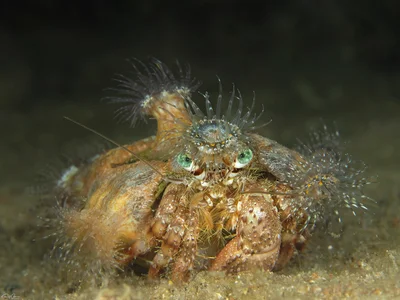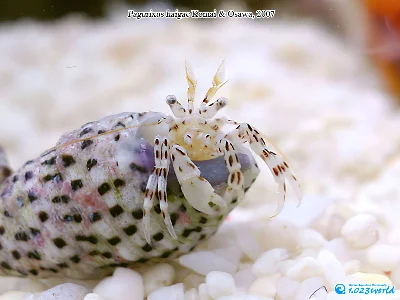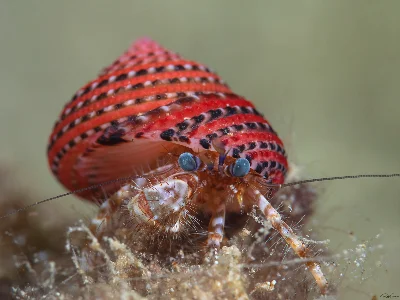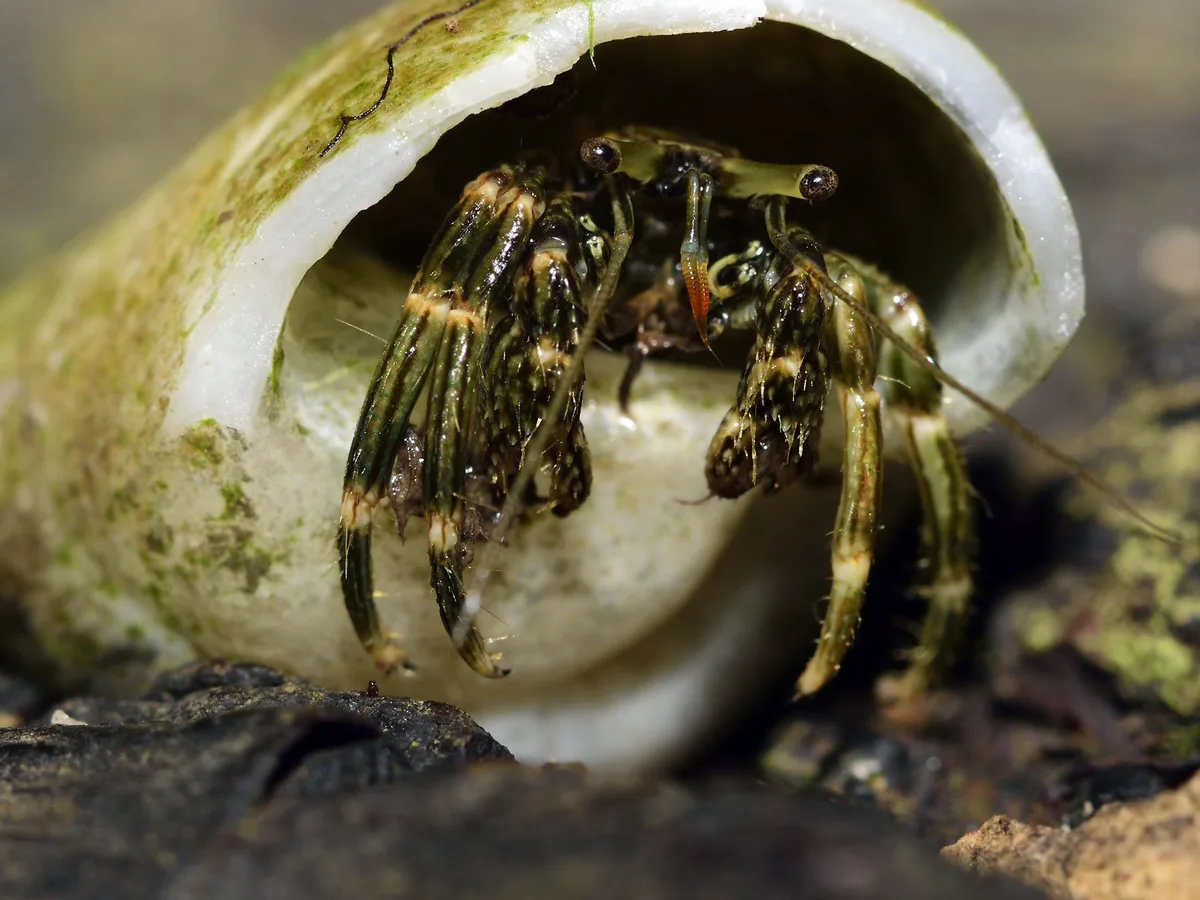
The Banded Hermit Crab, scientifically known as Clibanarius eurysternus, is a small marine creature reaching about 0.5 cm in size. It is recognized by its dark brown stripes that traverse its pale-yellow body and carapace, and this distinctive pattern continues onto its eyestalks and limbs, enhancing its banded appearance.
These crabs are found in tropical regions within shallow waters, inhabiting depths ranging from the tide line down to 3 meters (10 feet). They typically dwell in coral reefs, rocky shores, and sandy or muddy areas. The species has a penchant for snail shells from the Conidae family, which they use as mobile homes for protection and mobility.
Ecologically, the Banded Hermit Crab plays a vital role as a scavenger or "reef caretaker," feeding on small animals and detritus. This omnivorous diet helps maintain the ecological balance by recycling nutrients within its habitat.
Reproduction in Banded Hermit Crabs involves a unique mating process typical of their order, Decapoda. The species is gonochoric, meaning individuals are distinctly male or female. Mating behavior includes a precopulatory courtship ritual, usually involving olfactory and tactile signals, followed by indirect sperm transfer. Females lay their fertilized eggs inside their shells, with specialized studies shedding light on their reproductive biology and egg development.
In the grand classification of life, these hermit crabs belong to the Animal Kingdom, within the Arthropod Phylum, Class Malacostraca, and Order Decapoda. They are members of the Diogenidae Family, with their genus name being Clibanarius.
Occasionally referred to as the Black-striped Clibanarius, the Banded Hermit Crab is an essential component of its ecosystem, not only for its scavenging habits but also for its unique adaptation to life in shallow marine environments.