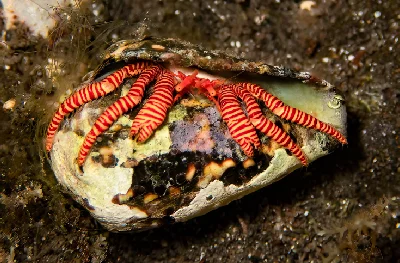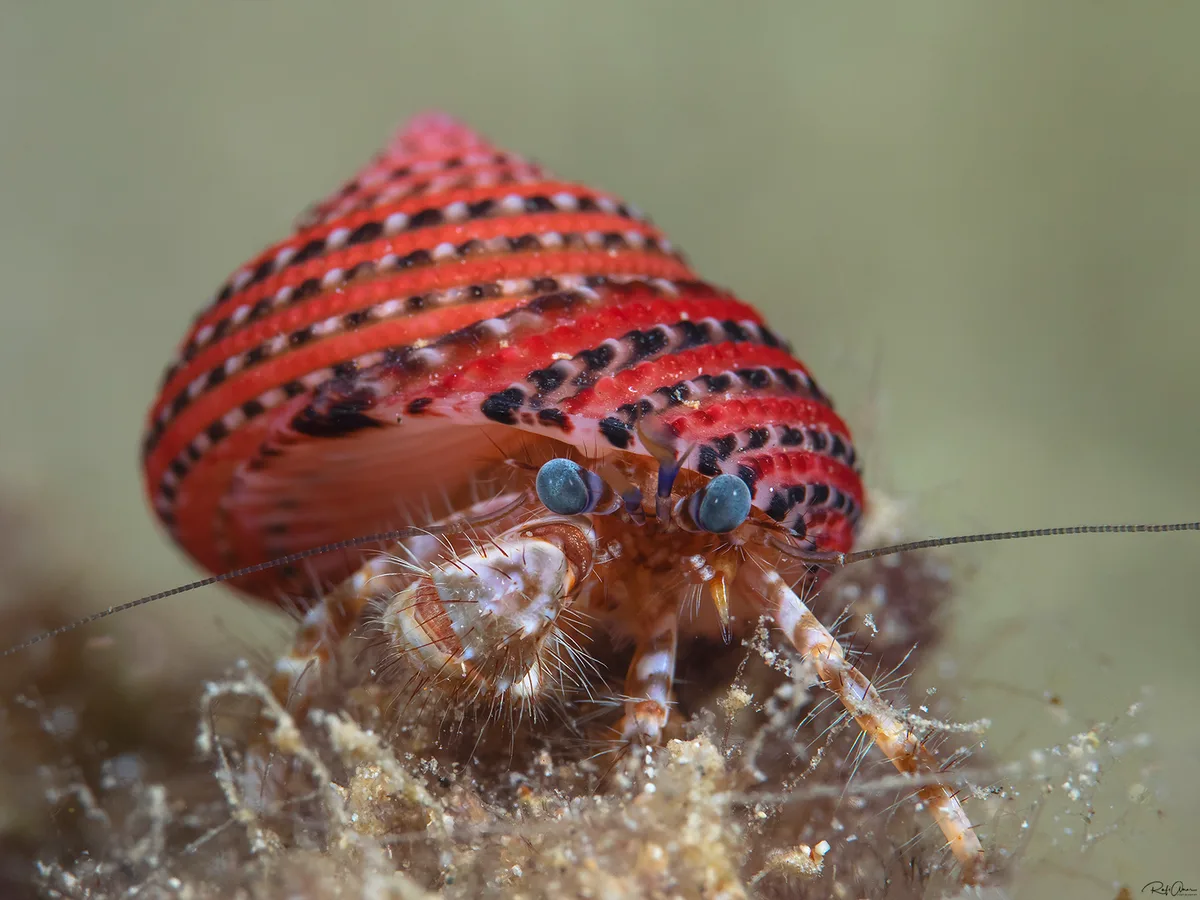
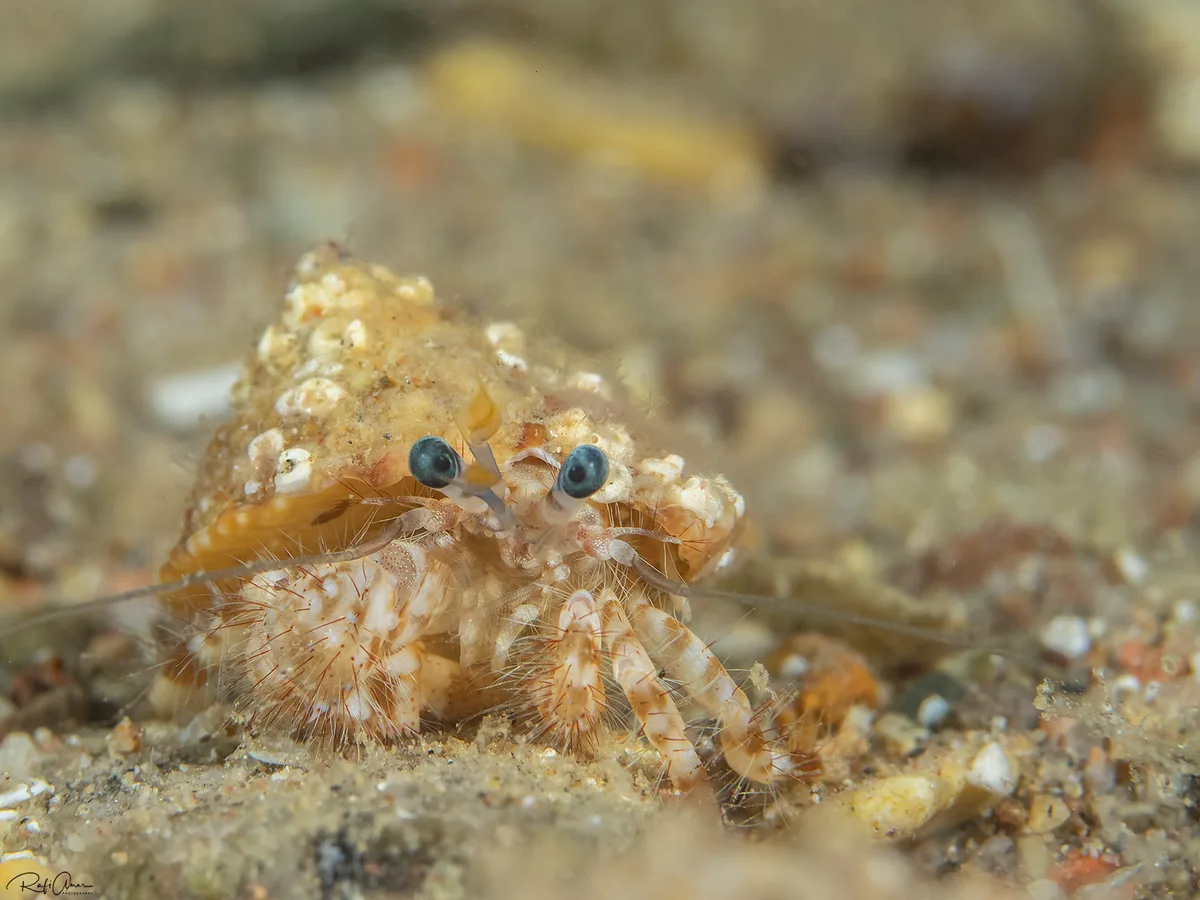
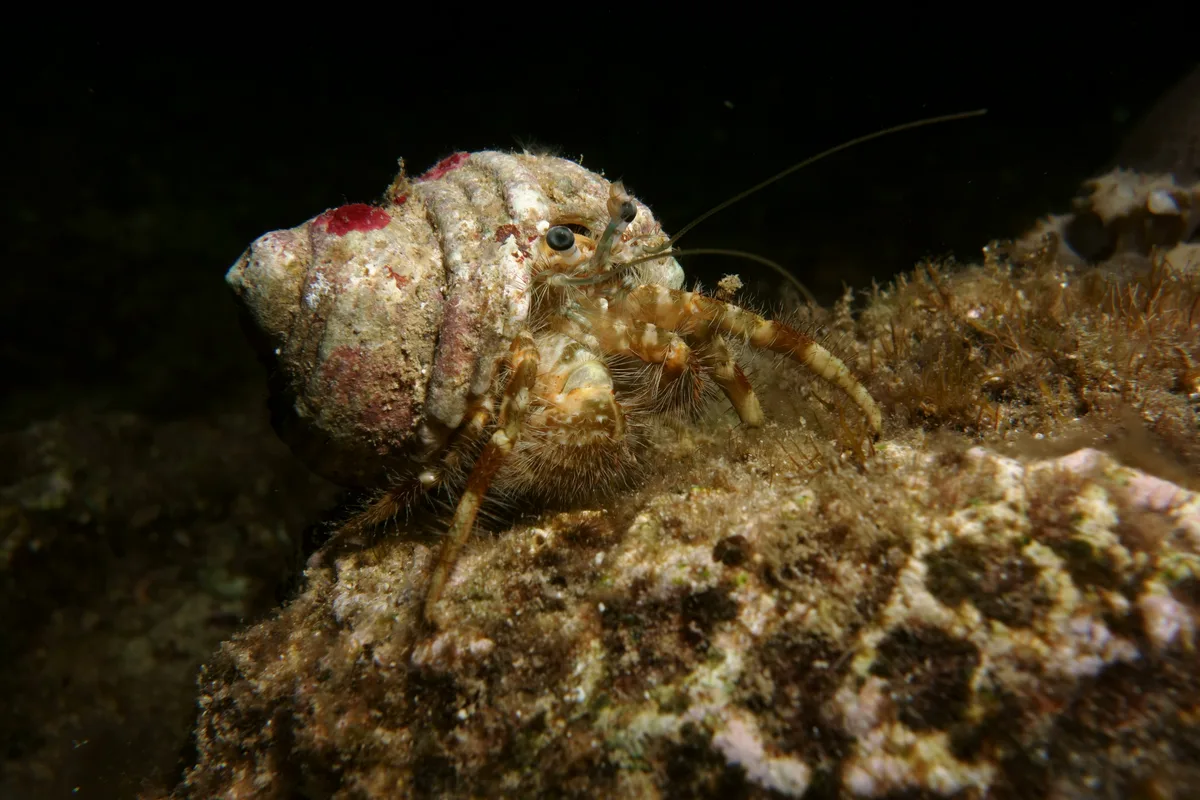
The Pagurus hirtimanus, commonly known as a hermit crab, is a fascinating marine creature belonging to the family Paguridae. They are typically found on rocky shores and coral reefs in the tropical waters of the Indo-West Pacific region, ranging from the 🌊 Red Sea to 🇫🇯 Fiji, and as far north as the Ryukyu Islands (🇯🇵 Japan) and 🇦🇺 Australia. They usually inhabit areas from the intertidal zones to subtidal depths.
This species is relatively small, with a body size of about 3 cm (1.2 inches). In terms of appearance, they have distinctive white eyestalks each marked with a dark brown band and striking blue eyes. Their bodies are not covered by an exoskeleton, which is why they rely on empty mollusk shells for protection.
Pagurus hirtimanus are omnivorous creatures, feeding on small animals and detritus. They are mostly active during nighttime or twilight hours, often moving around to forage. Like many other decapods, they are gonochoric, meaning individuals are distinctly male or female. Their mating behavior involves a precopulatory courtship ritual using sensory cues, and reproduction typically involves indirect transfer of sperm.
These hermit crabs often host a parasitic barnacle, Peltogaster lata, particularly when they reach adulthood. Additionally, they are known as "right-clawed hermit crabs," as their right claw is usually larger than the left, offering further protection.
Synonyms for Pagurus hirtimanus include Eupagurus hirtimanus and Pagurus janitor, reflecting the species' historical classification. Despite the protective measures they employ, their soft abdomens remain vulnerable, necessitating a reliance on shells for shelter.