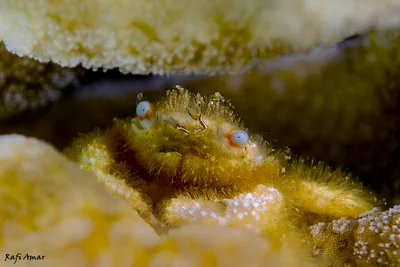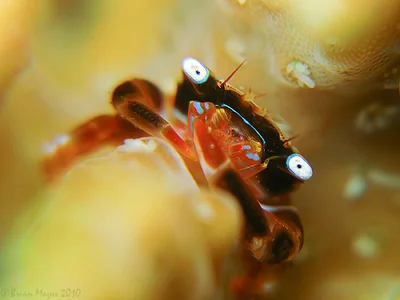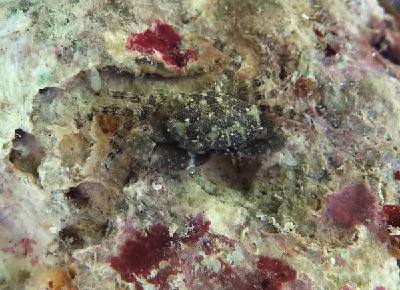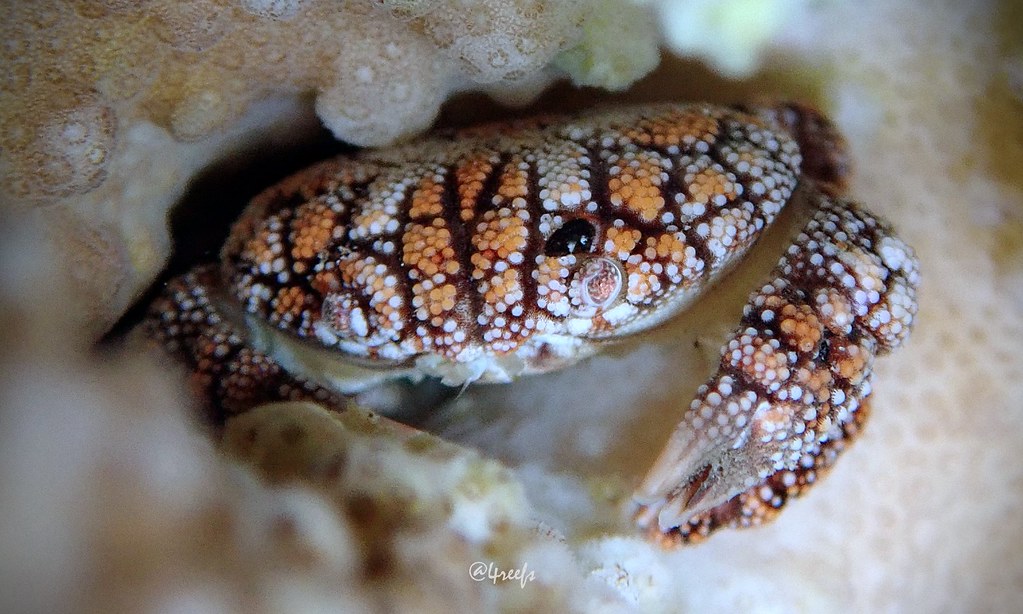
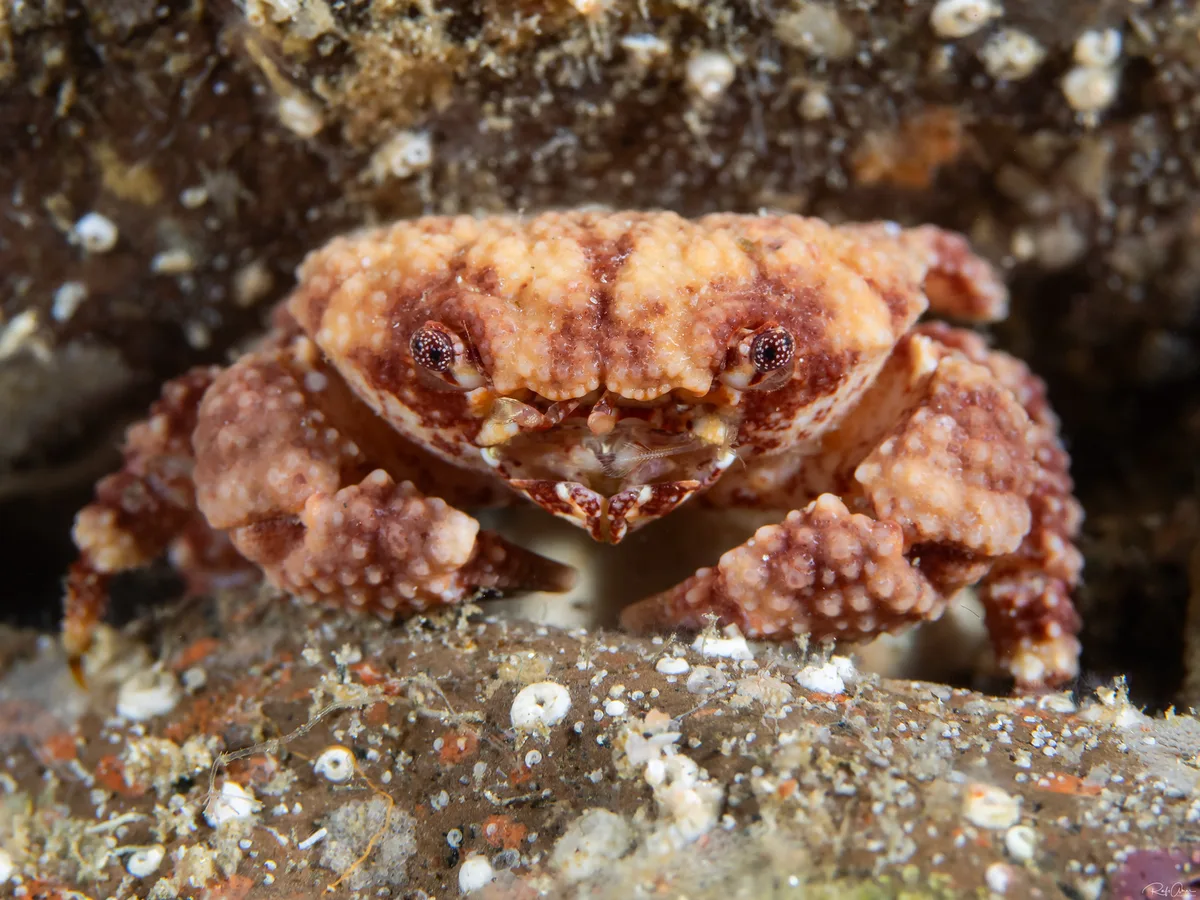
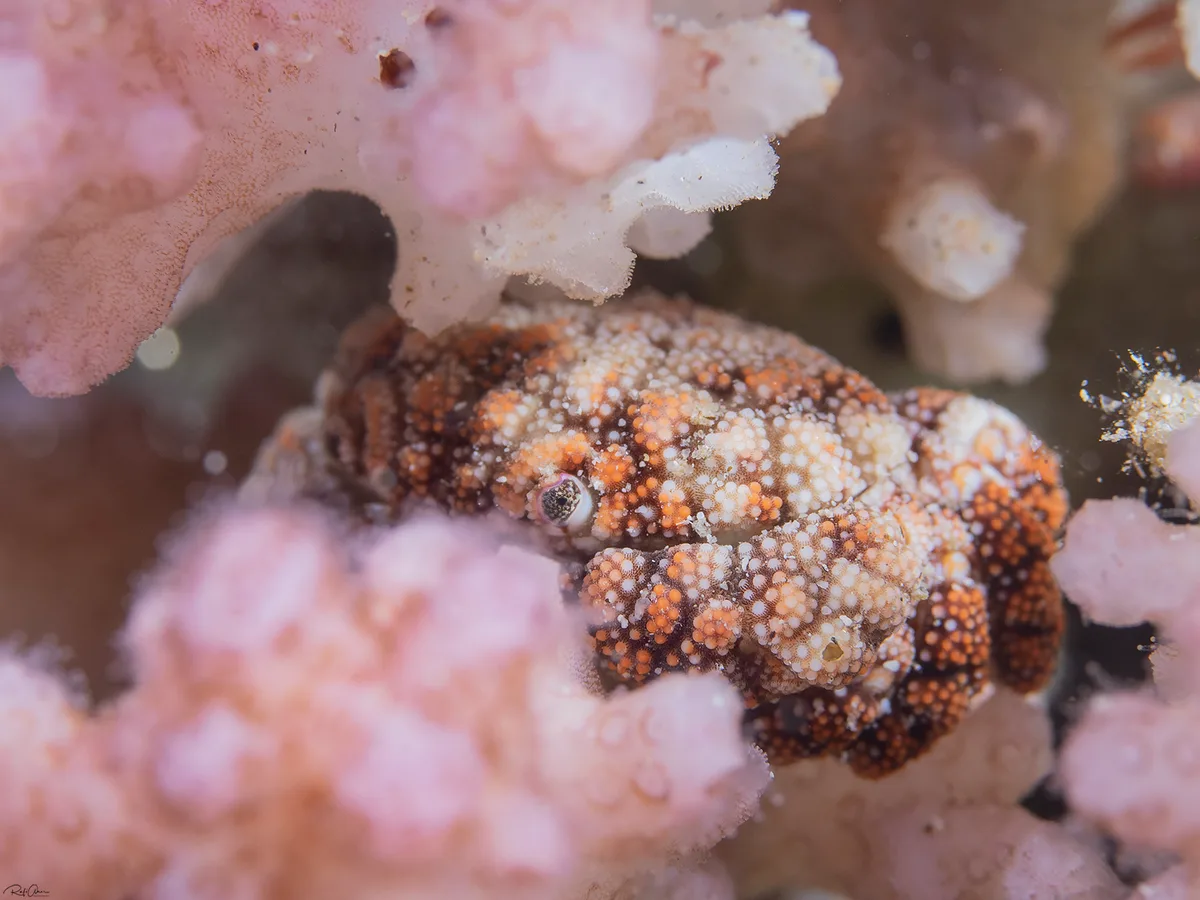
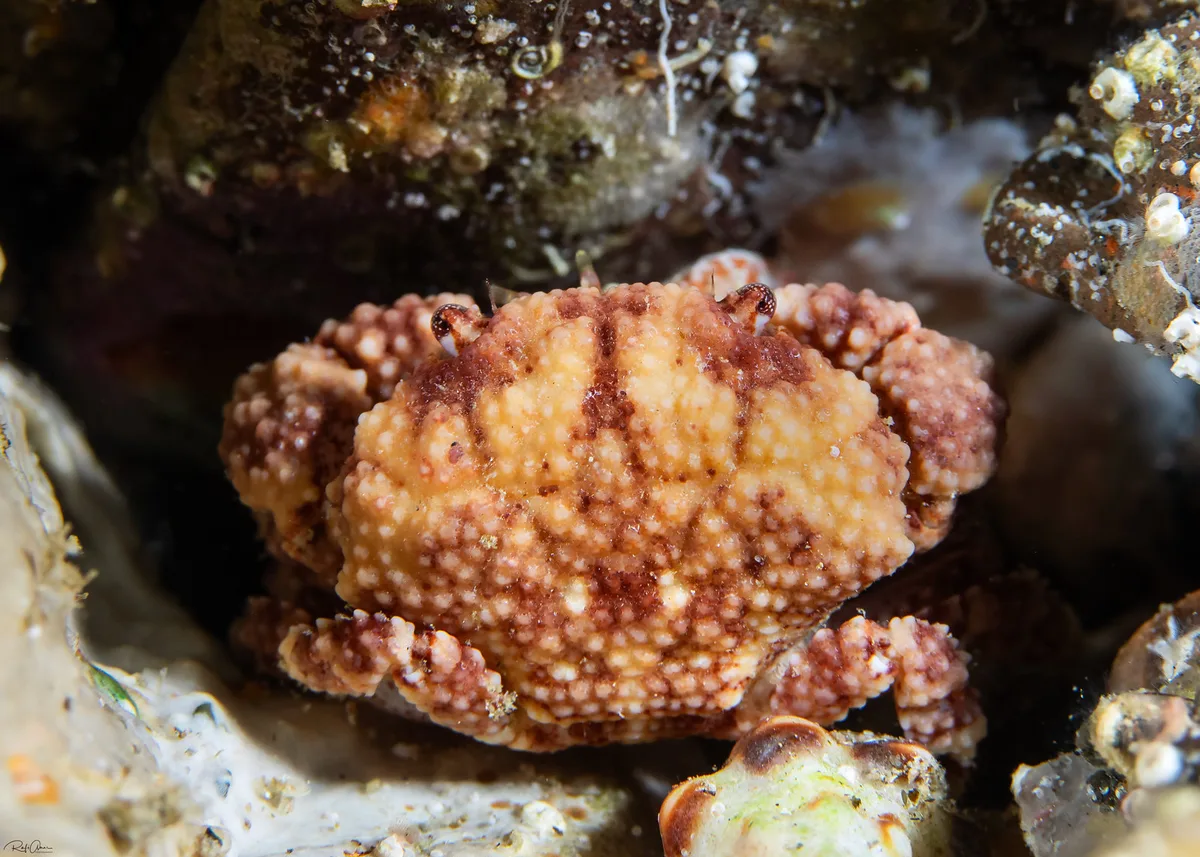
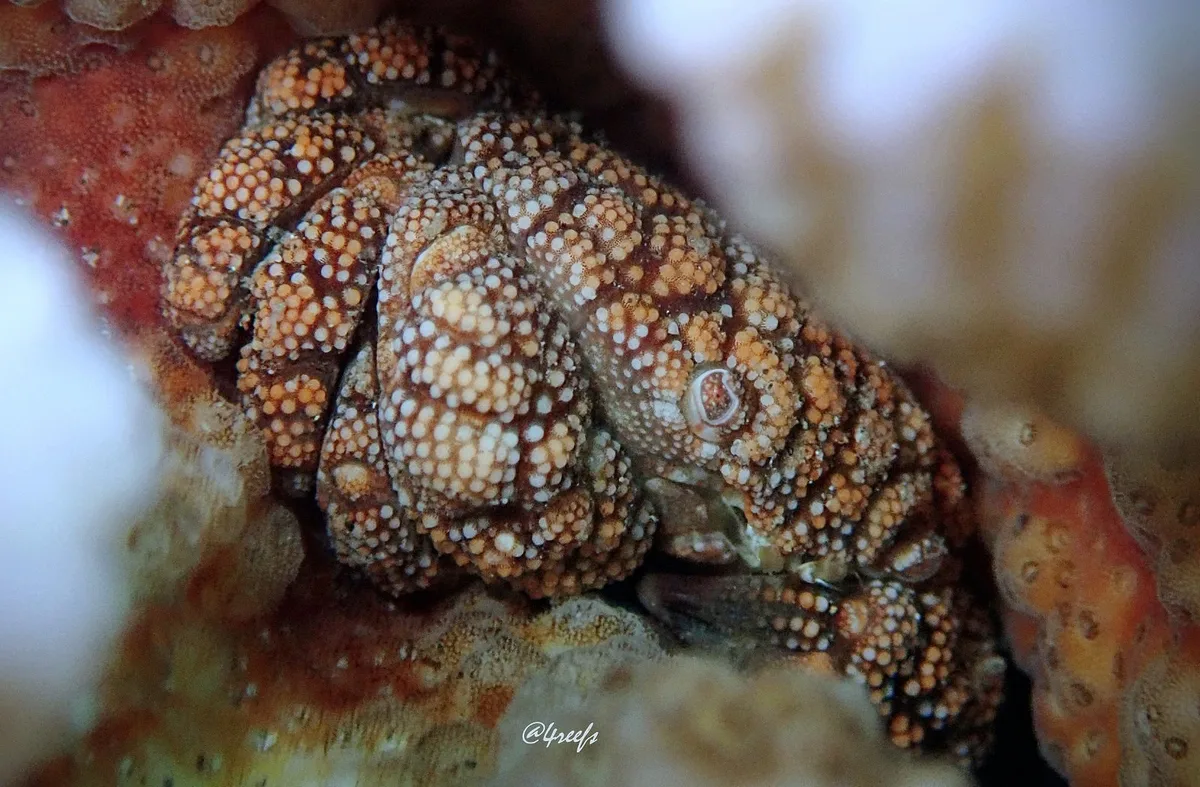
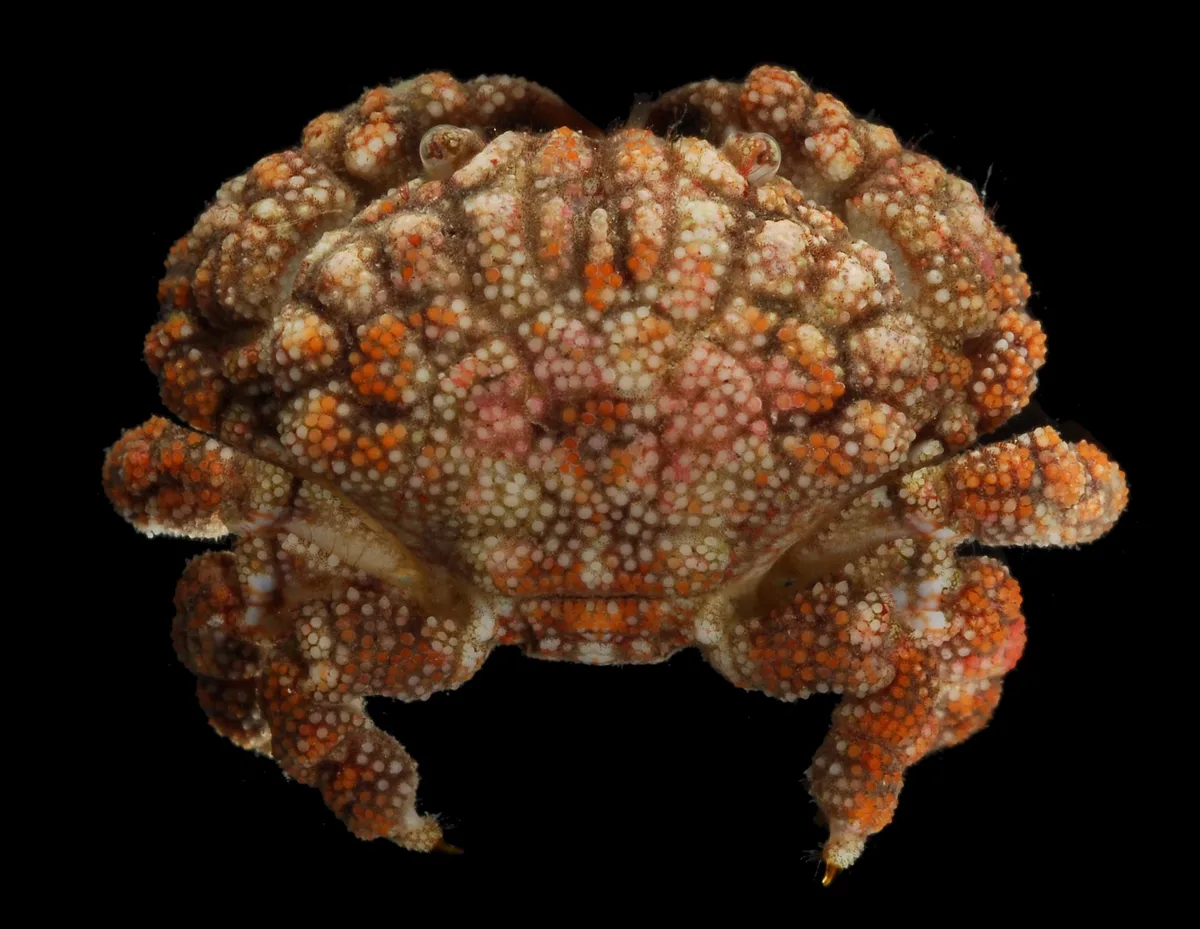
A small crab with a smooth domed shell in deep red and orange, out on the rubble in a torch beam and back under it in seconds.
Color this strong on an animal that hides all day is worth a moment. Red is invisible below about ten meters of water - it reads as black - so a red crab at night is effectively a black one, and the pigment is doing something other than display. In shallow water it may be camouflage against red coralline algae; deeper, it is simply a color that costs nothing to have.
Like the rest of the xanthids it grazes algae, detritus and small animals in the dark, and hides by day.
And like the rest of the family it should not be eaten: xanthid crabs are the group responsible for the worst crab poisonings on record, carrying toxins accumulated from their food that cooking does not touch.
- smooth domed shell in deep red or orange with paler mottling
- black-tipped claws, held folded across the front
- out on the rubble only at night
- width up to 2 cm