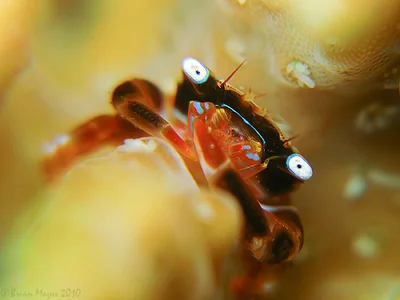
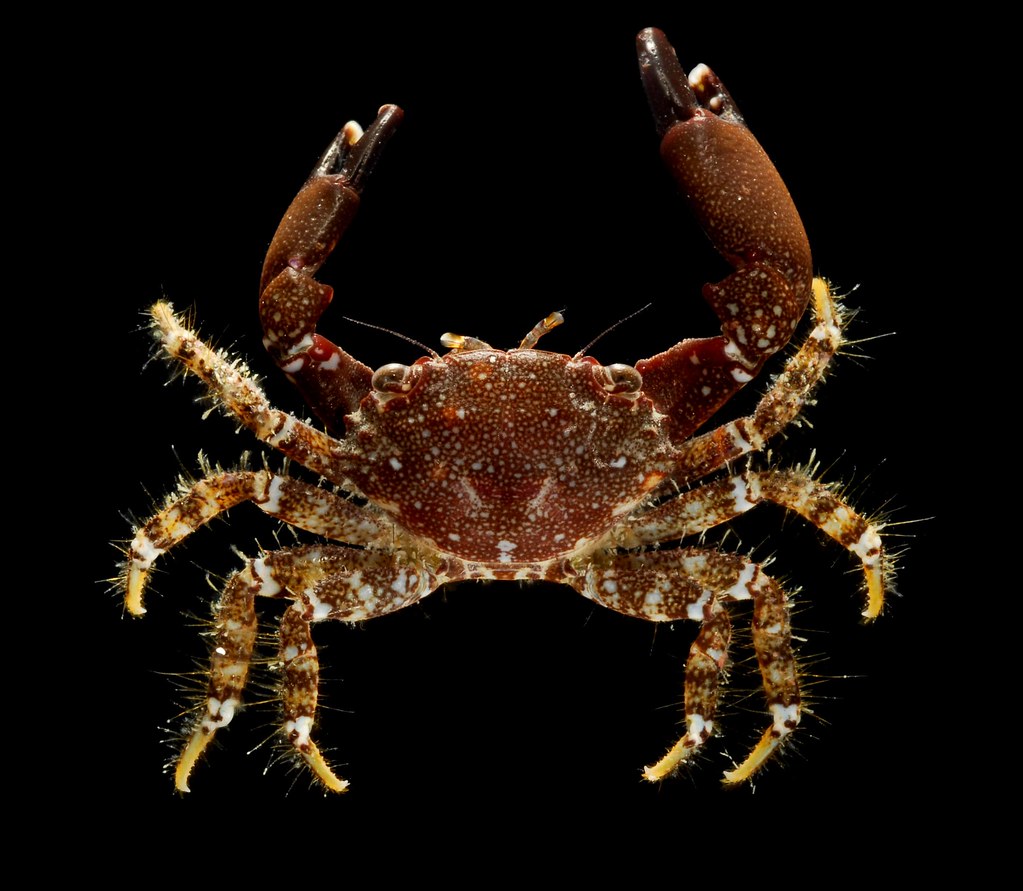
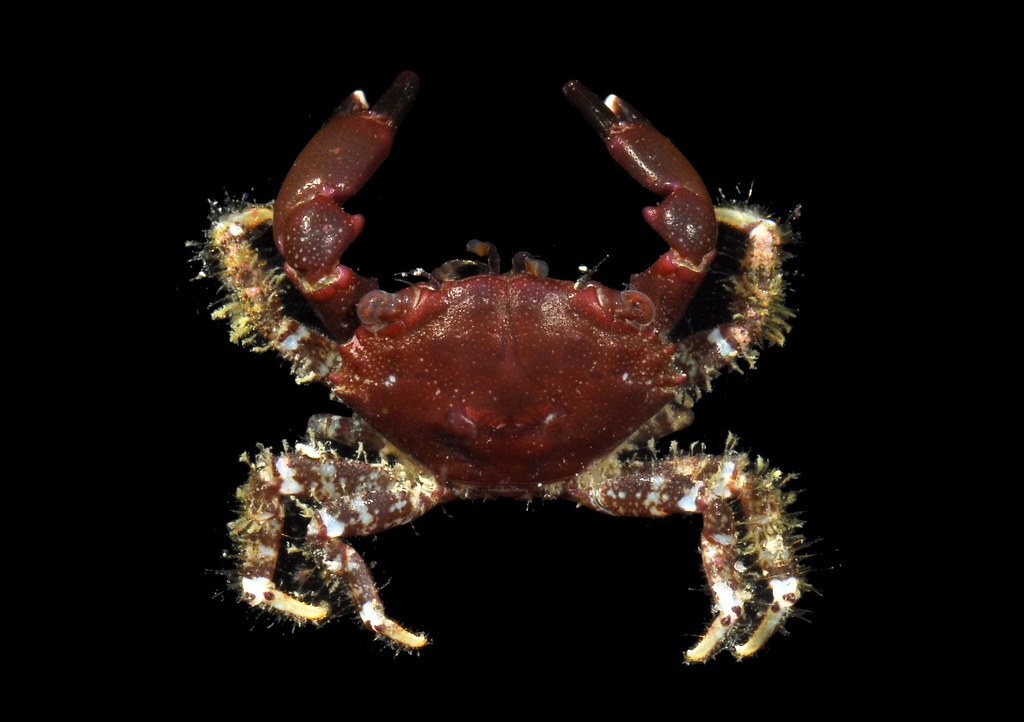
The tips of its claws are hollowed out into a pair of small spoons. That is the mark of the group this crab belongs to, and it is a tool rather than an ornament: the crab works the spooned fingers across dead coral and rock, scraping off the algal film and the fine debris caught in it, the way you would clean a plate with the back of a teaspoon.
The legs are built to hold. In this group the last joint of each walking leg folds back against the segment before it and catches there, a mechanical lock, so a crab clamped into a coral branch does not come out when pulled. Pull hard enough and you get the leg: like all crabs it can shed a limb at a preset joint and grow it back over the next few molts.
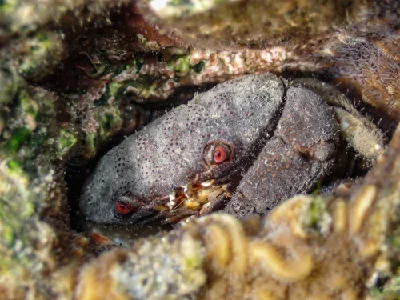
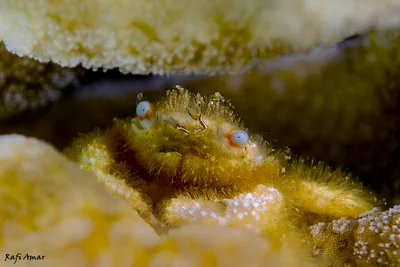
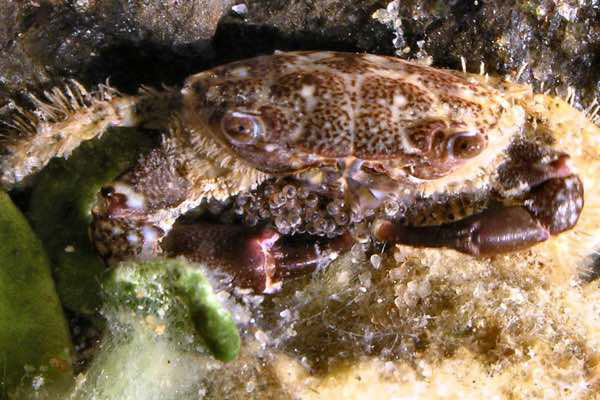
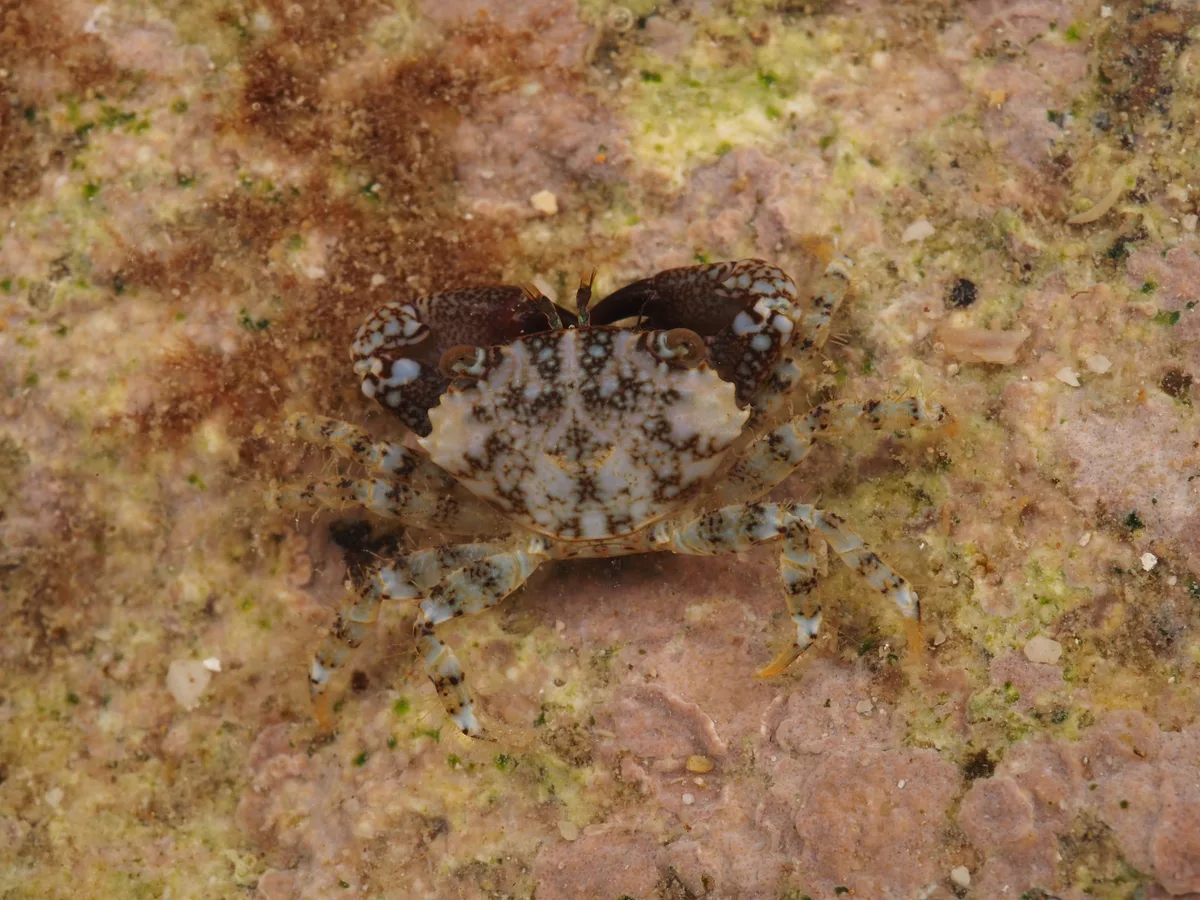
On the animal itself, look for a low rounded brown carapace about 2.5 cm across, with the teeth along its front side edges so low and so close together that they nearly run into one continuous rim. That near-fused edge is the quickest way to separate it from the other brown rubble crabs on the same reef.
It lives in dead coral heads and rubble from the shoreline down to about 5 m, and by day it is not visible at all. Crabs of this group are among the most abundant animals in reef rubble by sheer weight, and almost none of that is ever seen, because it is all under something. Turn a slab of dead coral over and several will run for cover.
Growing means shedding the whole skeleton, spoons and leg locks and all, and for a few hours after that the new shell is soft, the grip does not work, and the crab is defenseless. It spends that time as deep inside the rubble as it can get.
- claw fingers hollowed out at the tips into small spoons
- brown, low, rounded carapace
- teeth along the front side edge so low and close they nearly run into one continuous rim
- grips coral so hard it has to be dug out rather than pulled
- up to 2.5 cm across the carapace