
HalfbeaksHemiramphidae
Almost nothing in open water eats plants. Grazing is a bottom job, done on reef and in seagrass by animals with something to hold on to, and the surface of the sea is not a pasture. Halfbeaks are the exception, and most swimmers here have gone past them without noticing. They work the top layer of the water for fragments of seagrass and algae torn loose by waves and left drifting there, along with the small animals riding the same water, and in several species that plant material is a real part of the diet rather than an accident. The gut is long for a fish of this shape, which is what a gut has to be if leaves are going through it.
Eating low in open water puts an animal at the bottom of the surface food chain and keeps it there in numbers. Halfbeaks are what the needlefish, the jacks and the terns are taking up there, and across the tropics they are netted at night under lights for food and for bait. A fish converting drifting weed into protein at the top of the water column is doing something nothing else over this reef does, in plain sight, at snorkeling depth, all day long.
The jaw everyone notices belongs to the species pages, which take it apart properly. What is worth adding at this level is where the rest of the family went with it: the freshwater halfbeaks of Southeast Asia, now separated into a family of their own, fertilize internally and give birth to live young, which is close to unheard of in this part of the fish tree.
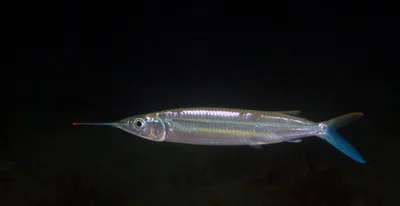
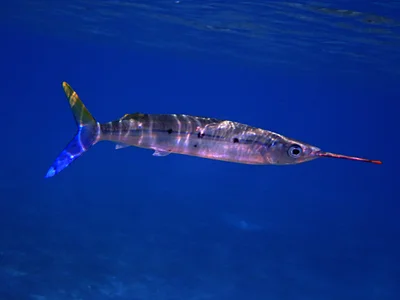
Three species are listed for this sea, running from about 10 cm (4 in) to some 45 cm (18 in). They travel in loose schools over reef flats, inside harbors and along the drop, holding a few centimeters under the surface, and they are the fish that the most people here have seen the most often and looked at the least.
- elongated, slender body
- very long, protruding lower jaw, short upper jaw
- dorsal and anal fins positioned far back
- often seen in schools near the surface
3 species in Halfbeaks

Other elongated groups
Similar silhouette underwater - worth a look if this was not your animal.


Last Update: August 23, 2026