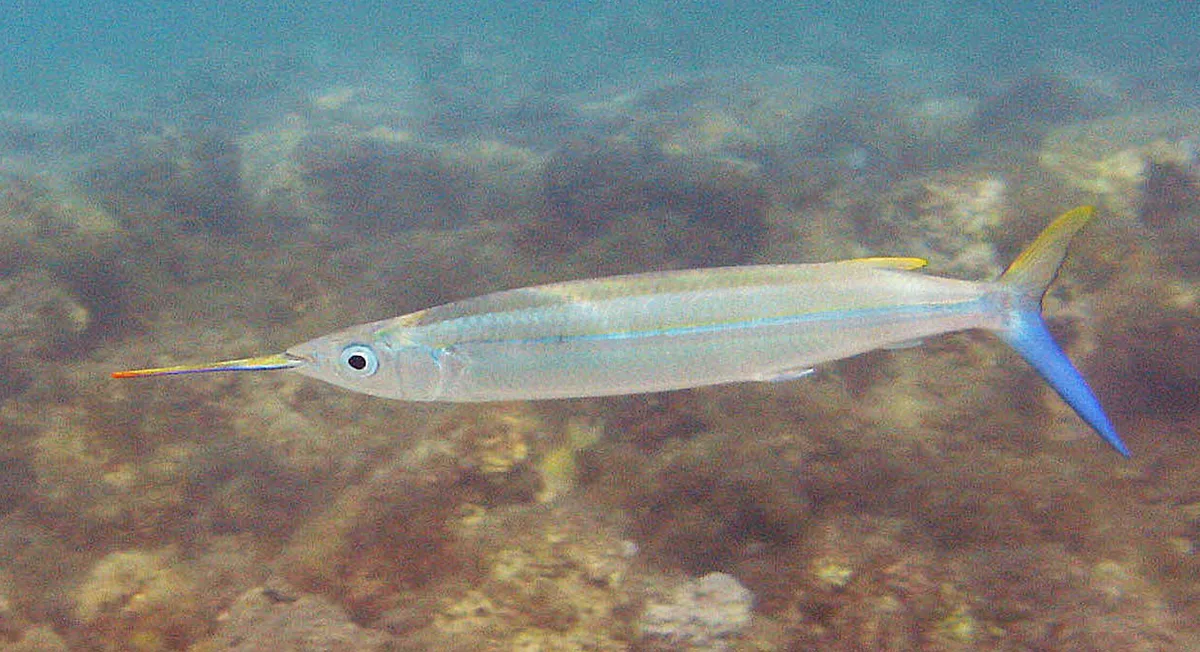
Flying fish came out of this body plan, and you can see how from here.
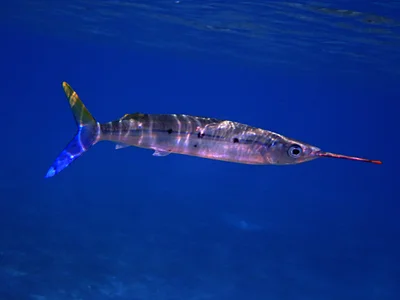
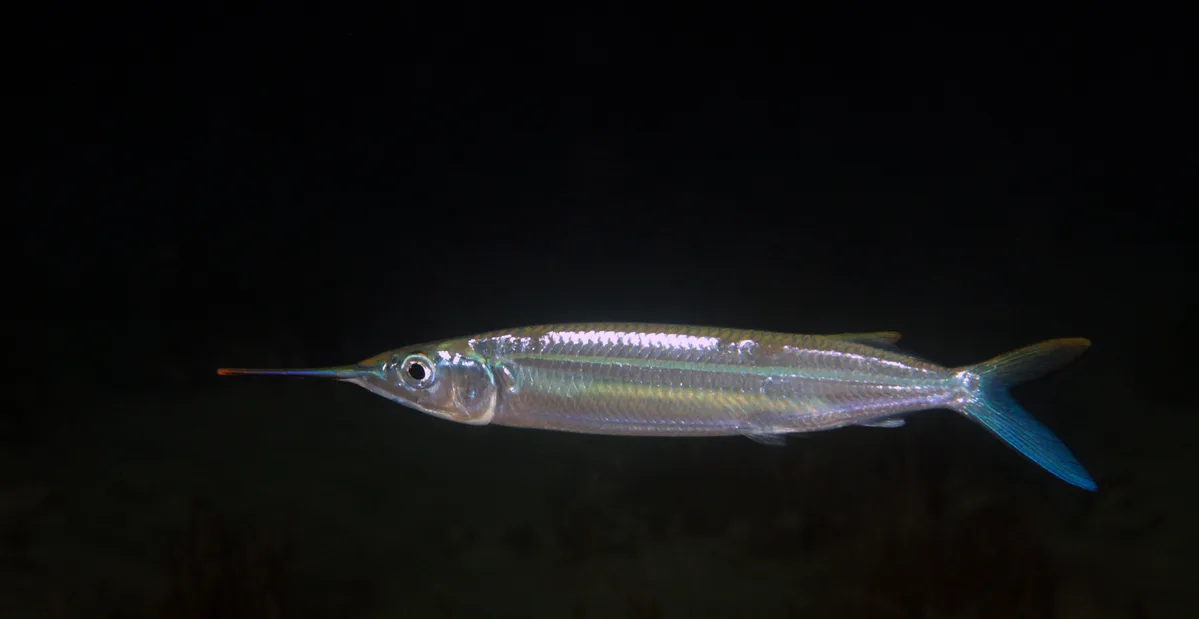
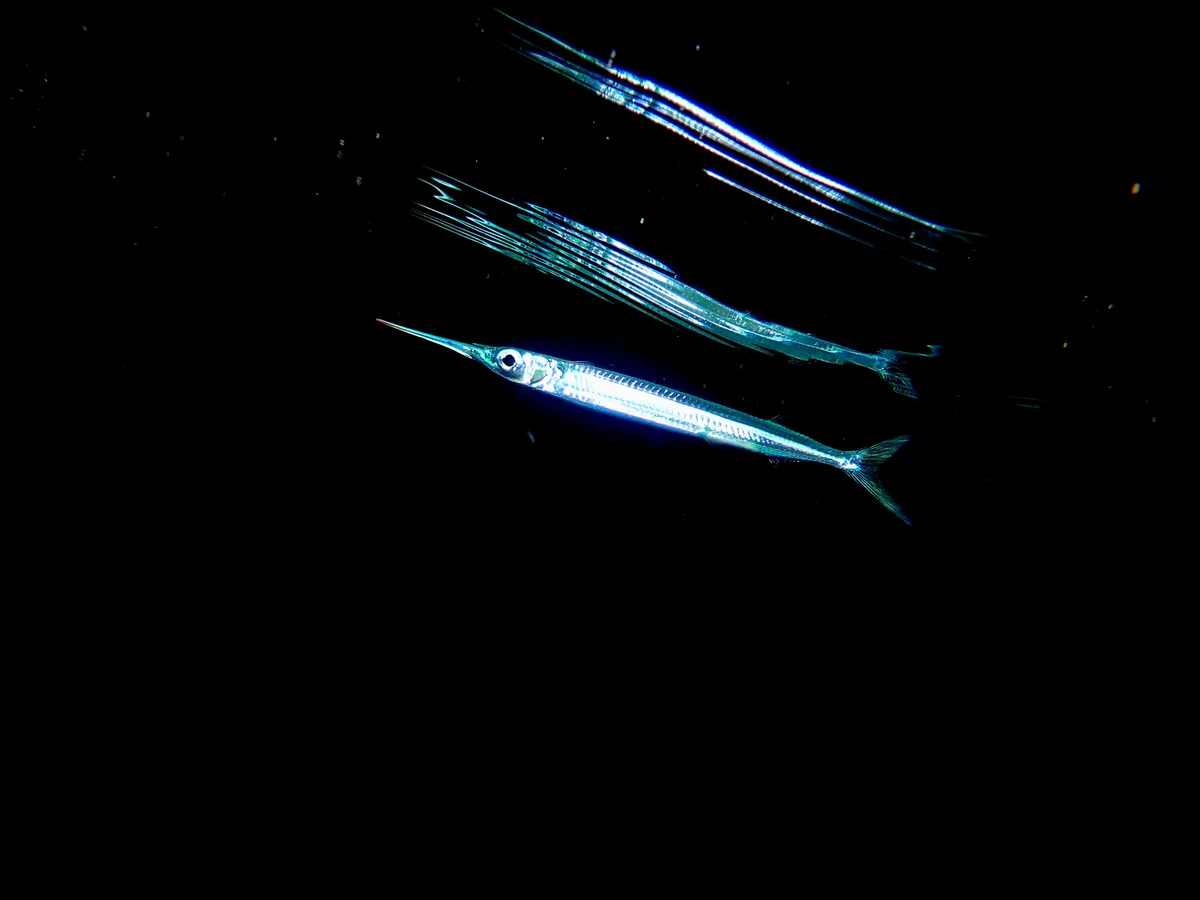
Halfbeaks, needlefish and flyingfish are one lineage, and the halfbeaks sit closest to the starting point: a slim surface fish with an elongated lower jaw, a tail whose lower lobe is longer than the upper, and the habit of escaping by skittering along the surface rather than diving. That asymmetric tail is the key piece. It lets the fish keep driving while the body is already out of the water, and it is the same equipment a flyingfish uses to taxi before it launches.
From there the change is mostly one of degree. Enlarge the pectoral fins into wings, lengthen the lower tail lobe further, and the skitter becomes a glide of a hundred meters or more. Several halfbeak groups have gone part of the way independently, with enlarged pectorals and short glides, which is what an intermediate stage looks like when it is still in use.
This one is the blue-backed halfbeak with a bright silver stripe along the side and a dark edge to the upper tail lobe, in open surface water rather than in the sheltered bays its larger relative prefers.
The genus. Hemiramphus Cuvier 1816 - hemi- (half) + rhamphus (beak). ETYFish
The species. Hemiramphus marginatus (Forsskål 1775) - edged or bordered. ETYFish
- blue back with a bright silver stripe along the middle of the side
- dark edge to the upper lobe of the tail
- beak shorter than in the spotted halfbeak
- up to 30 cm
Why it's threatened
There are no known threats to Hemiramphus marginatus in the Persian Gulf.
Threat classification from the IUCN Red List.