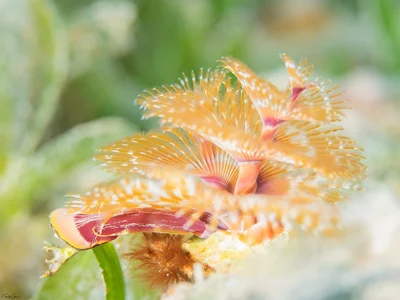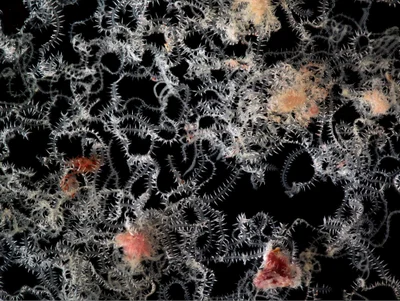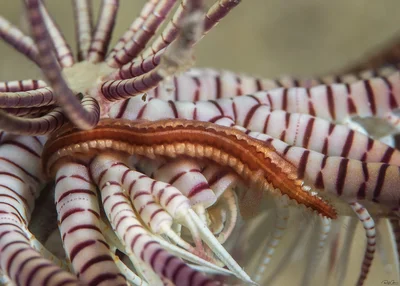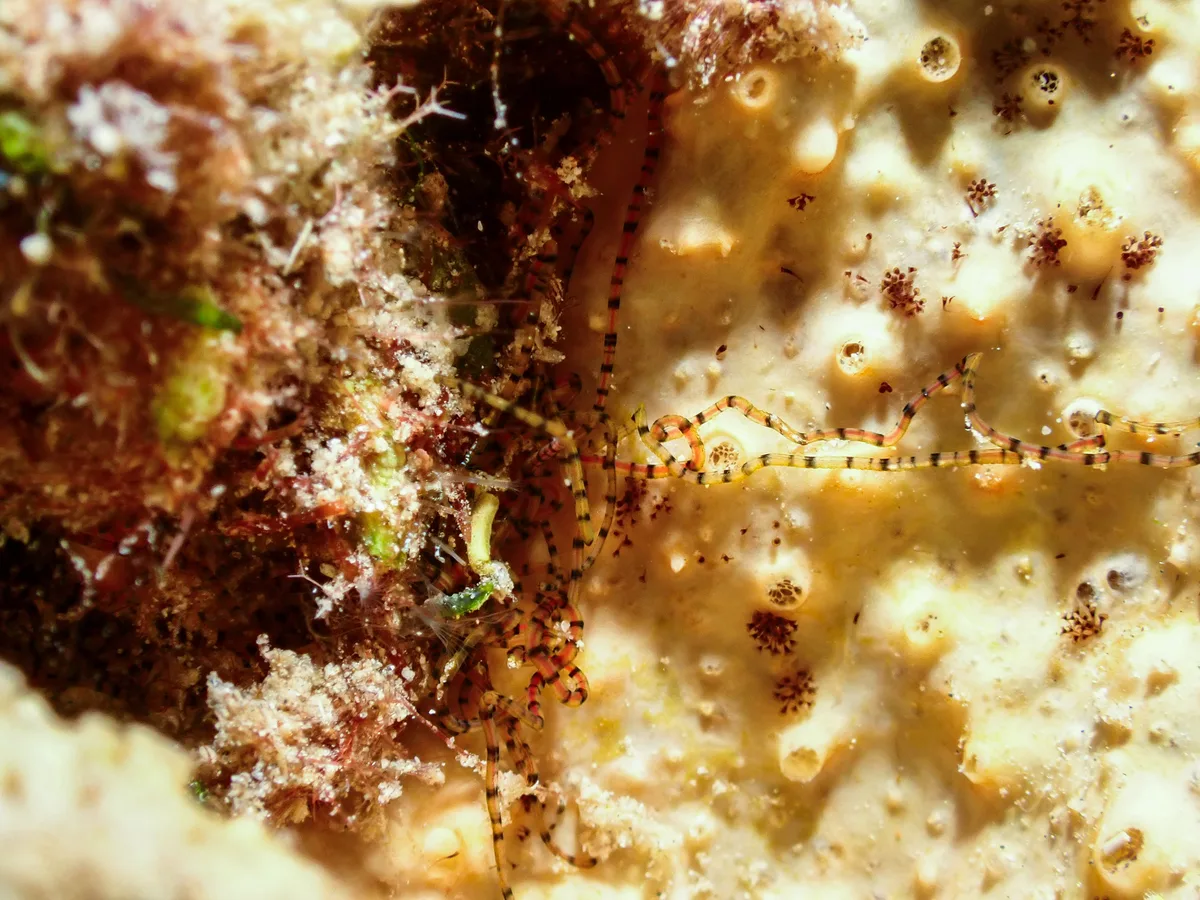
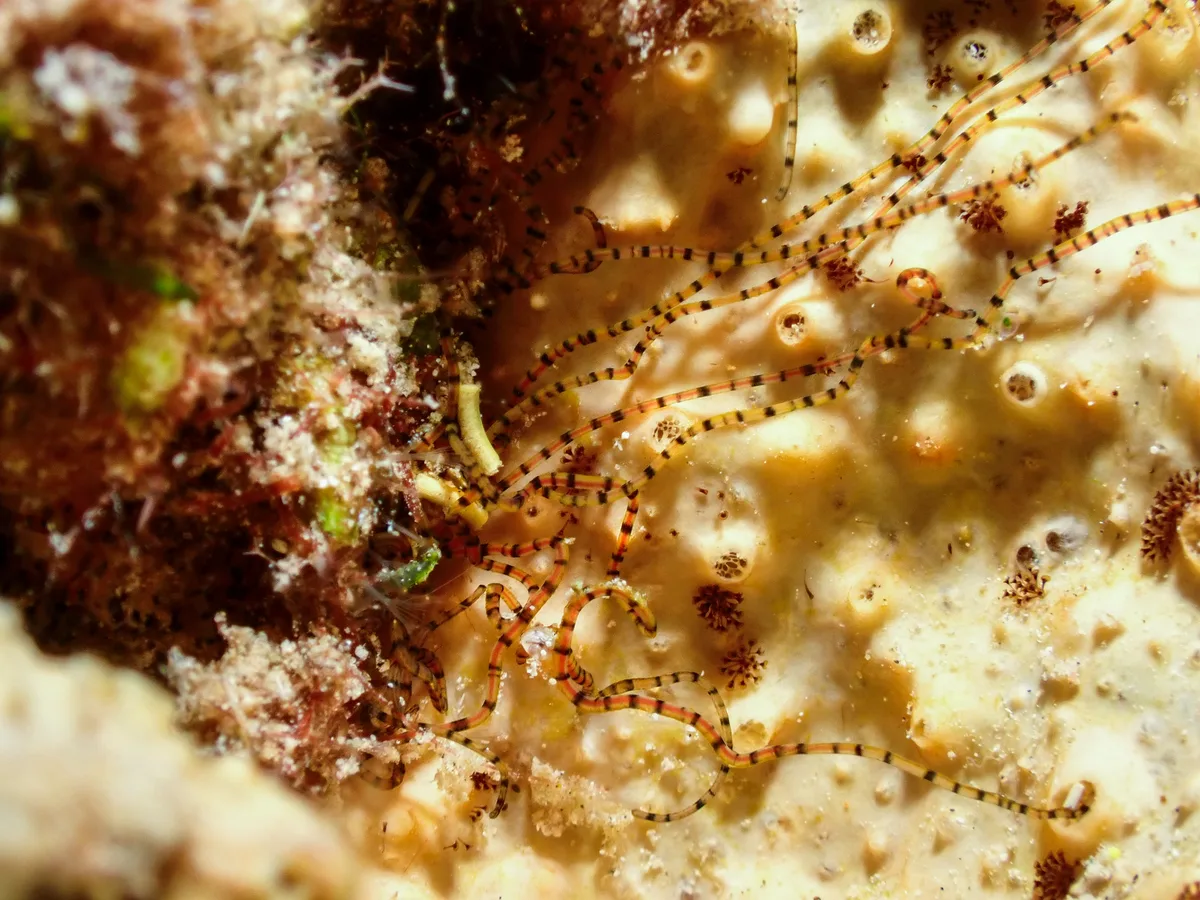
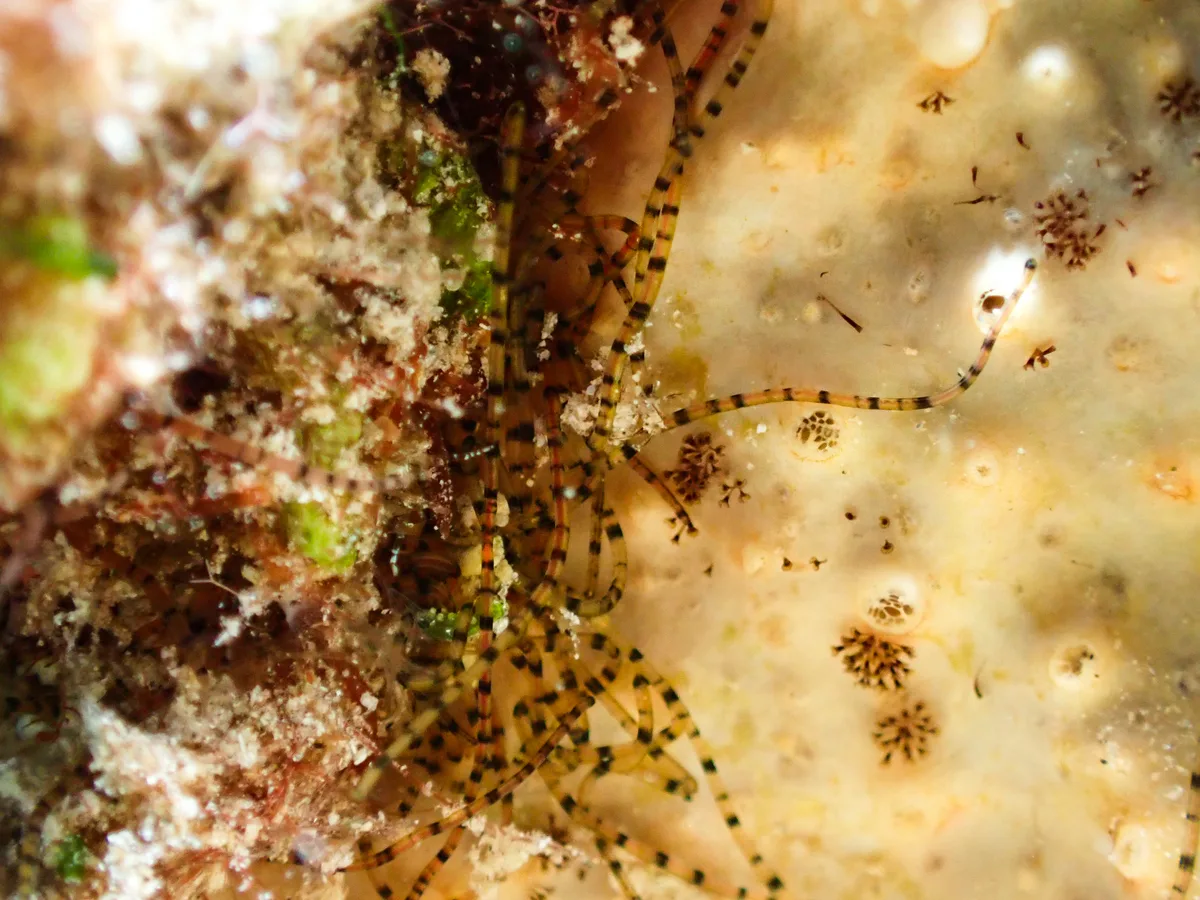
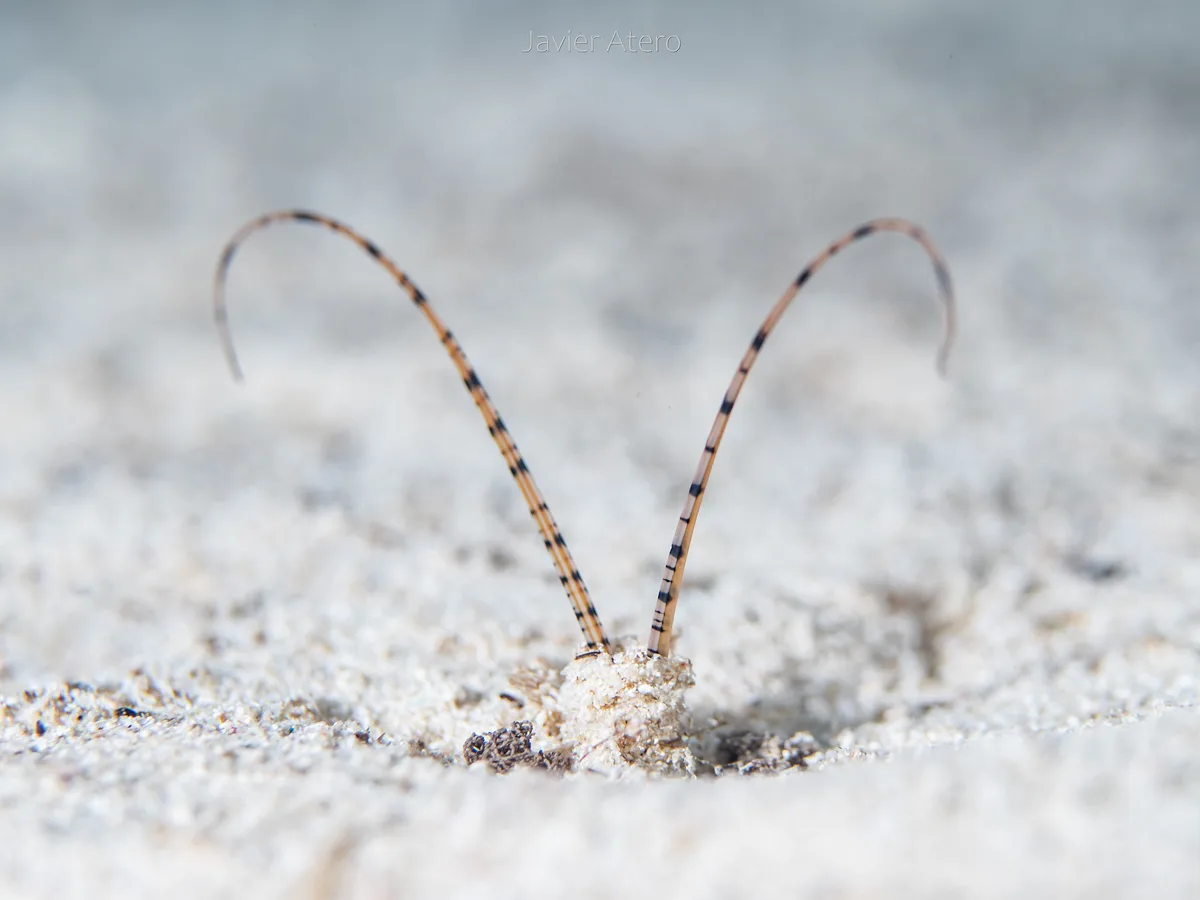
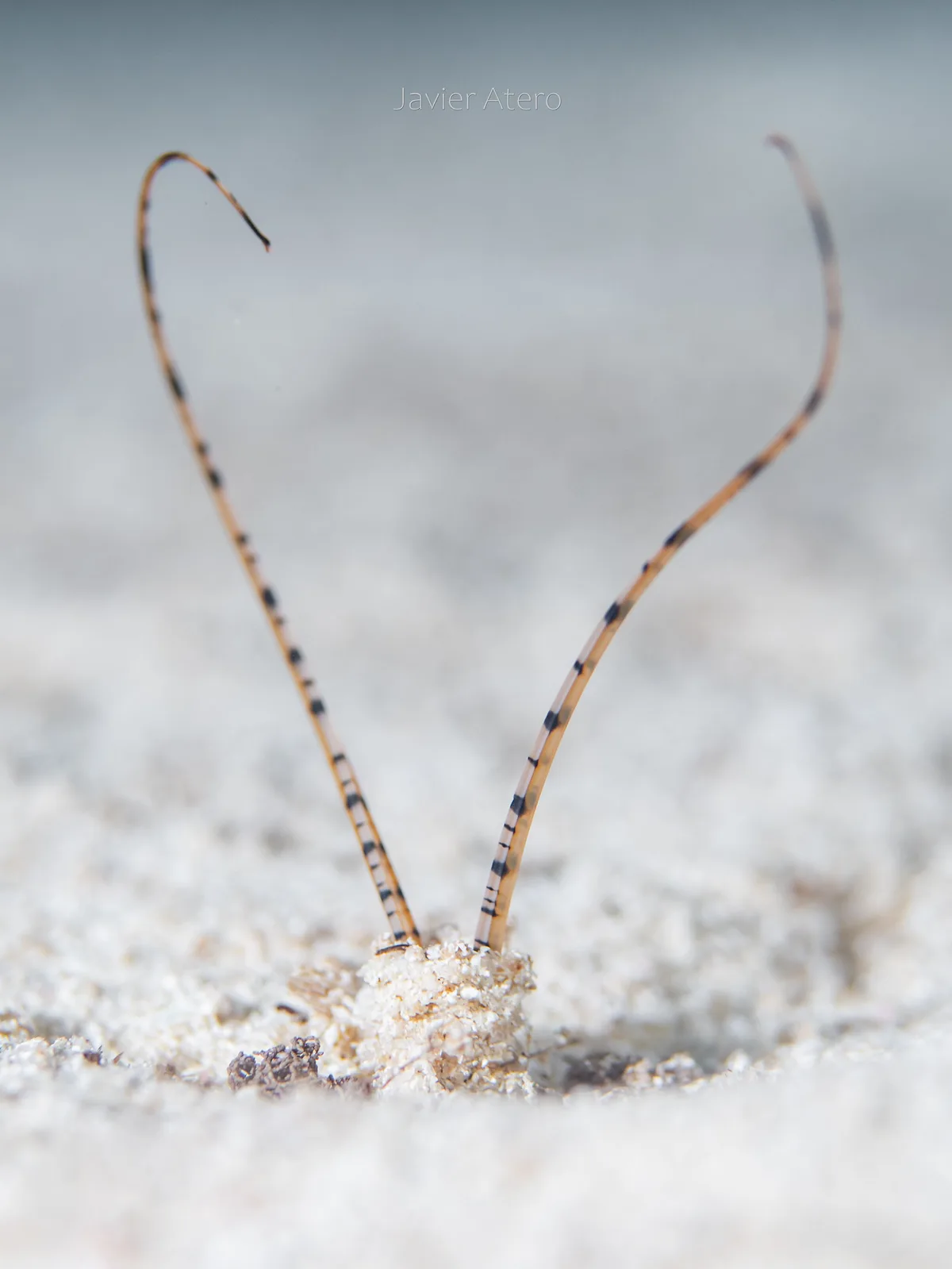
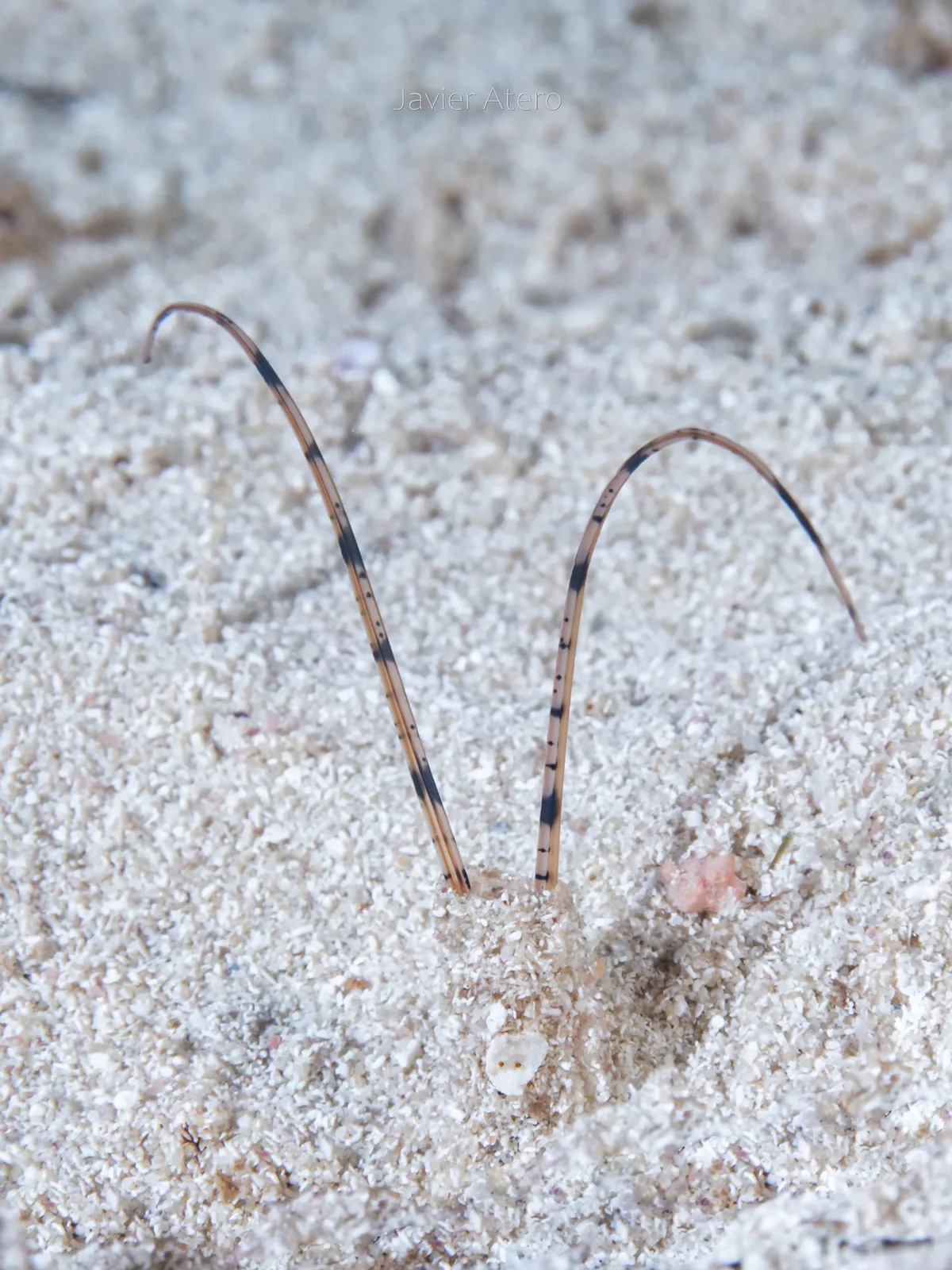
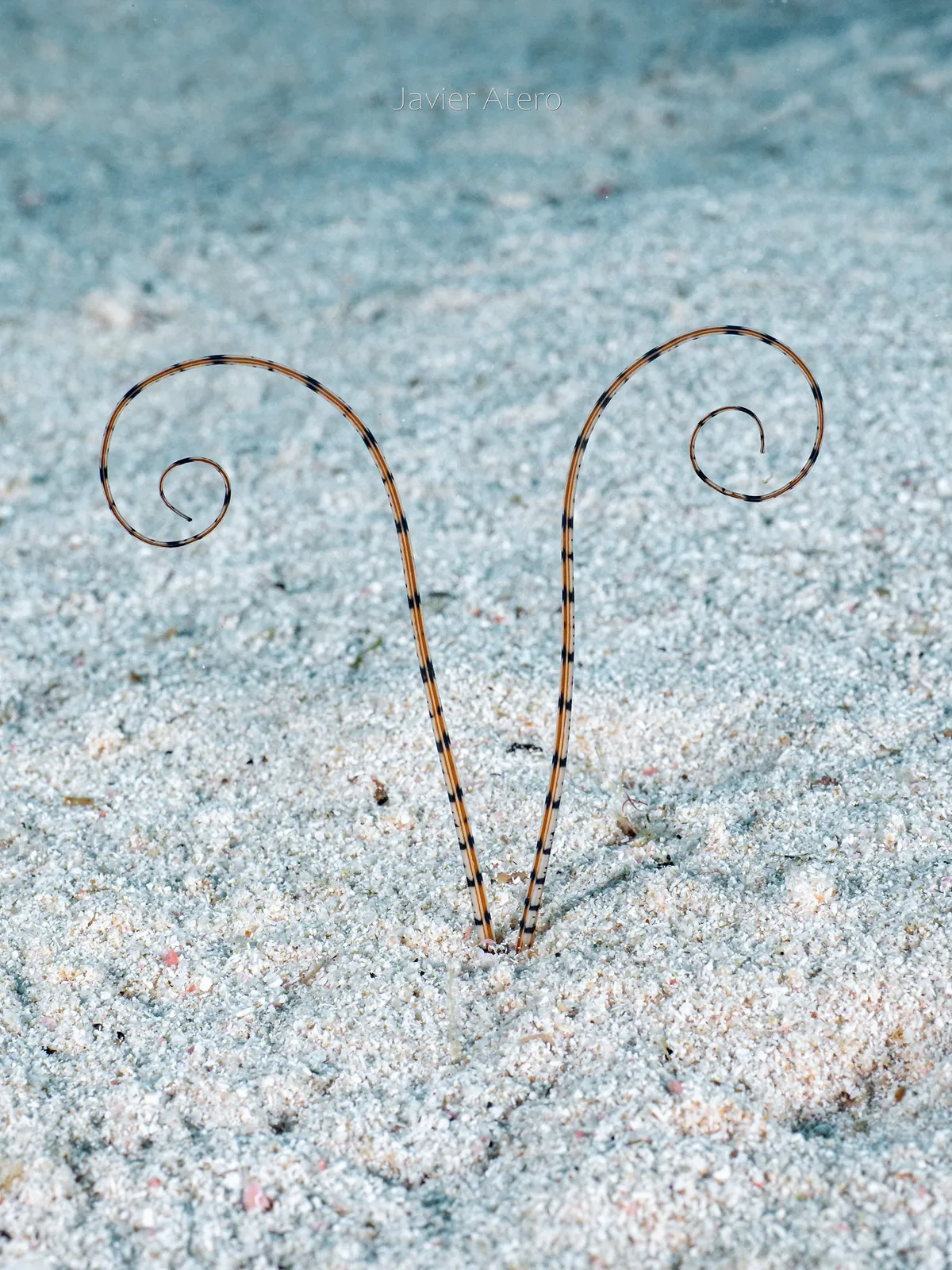
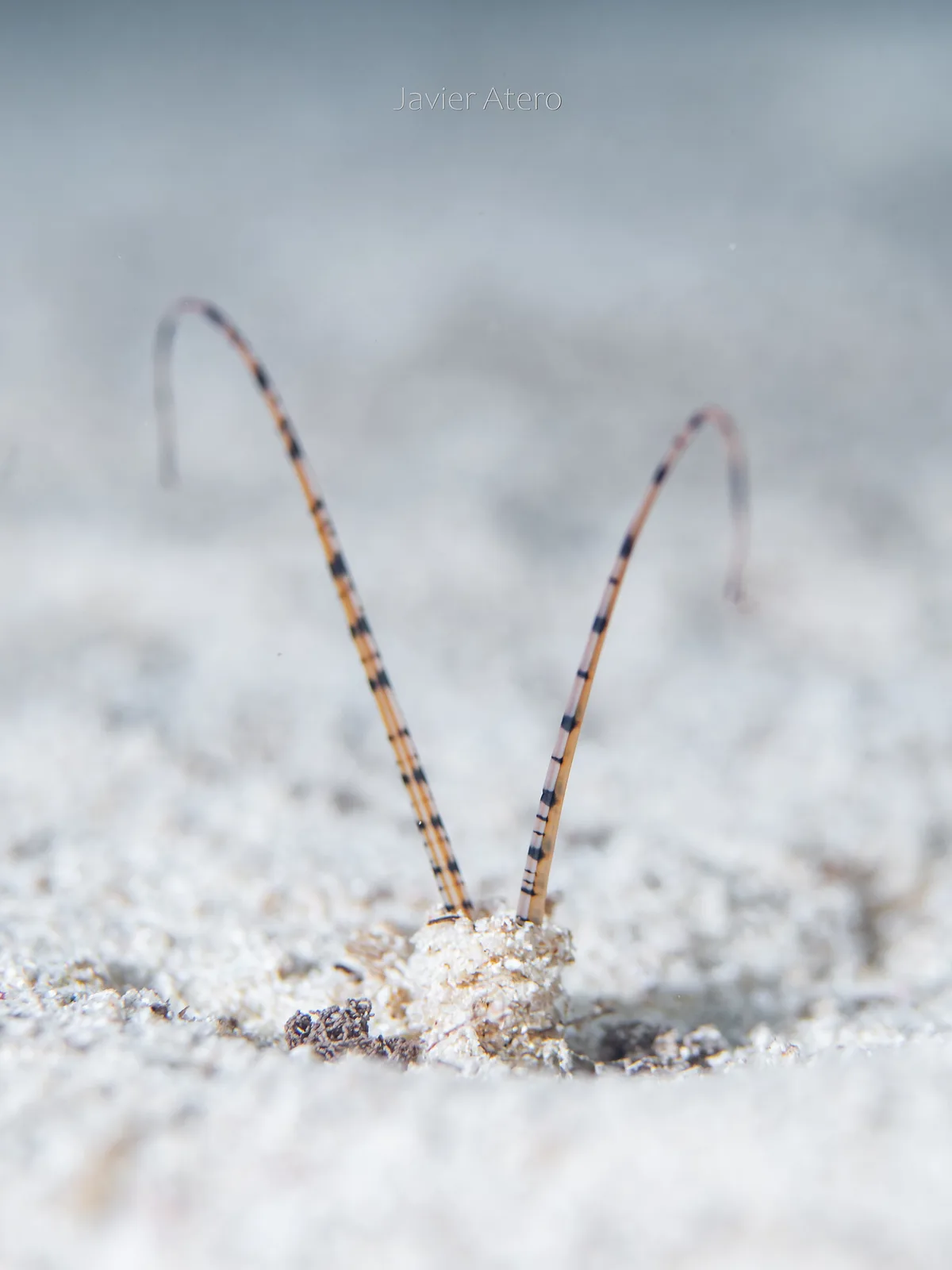
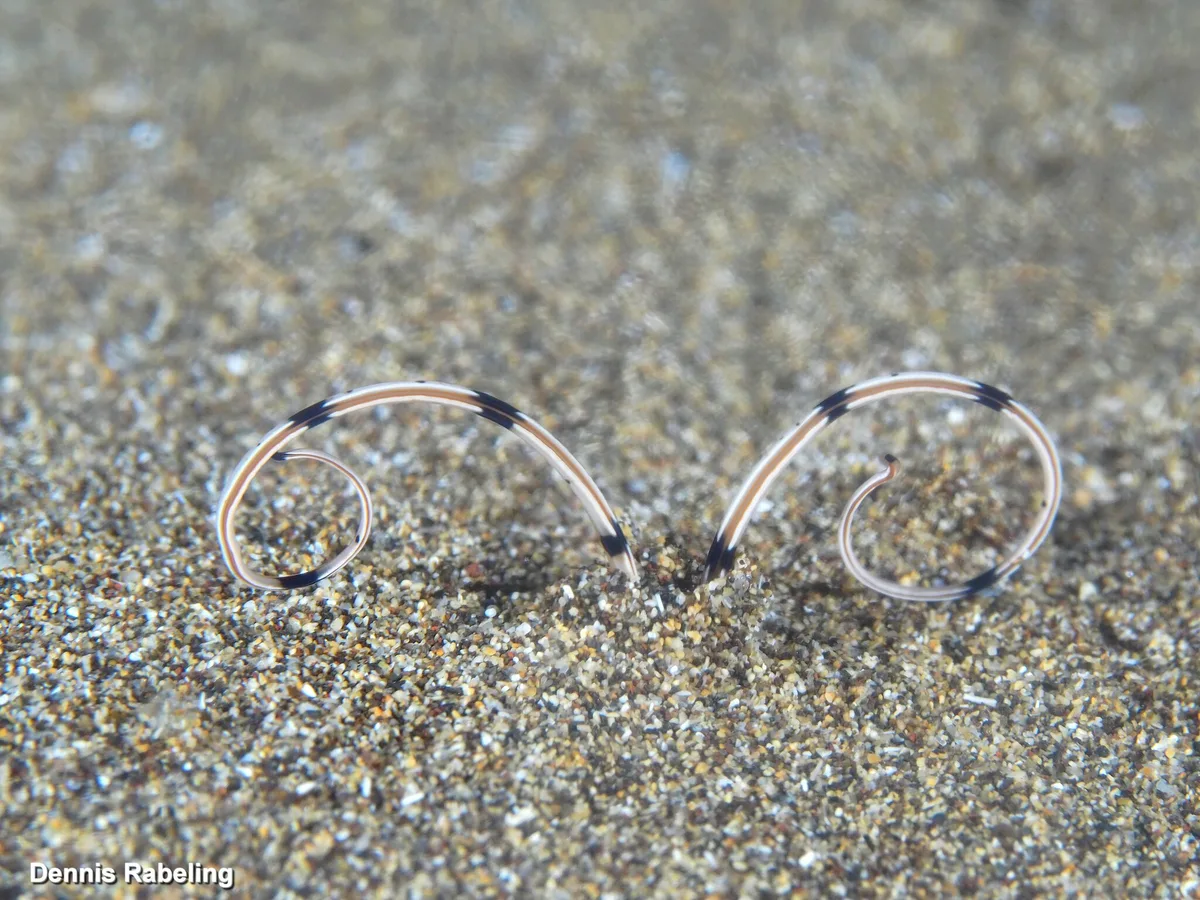
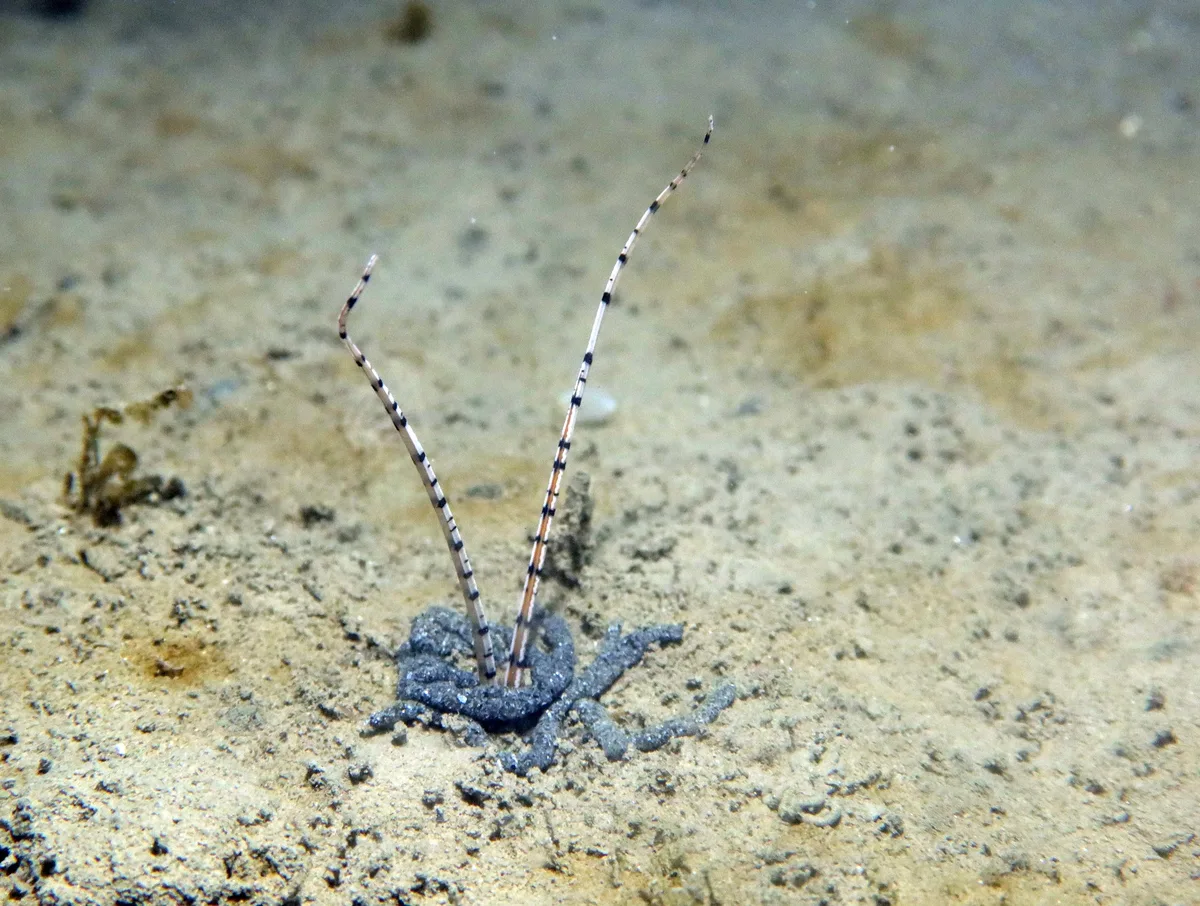
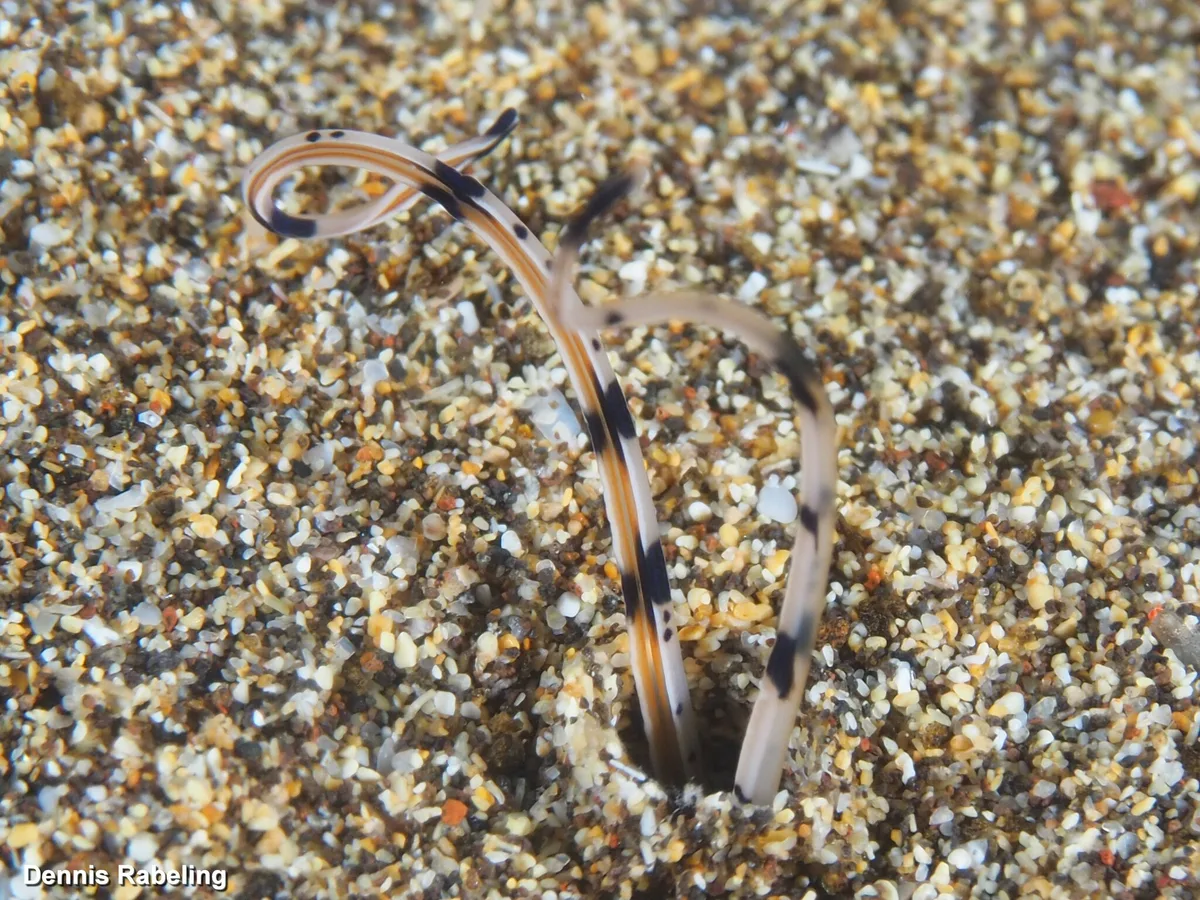
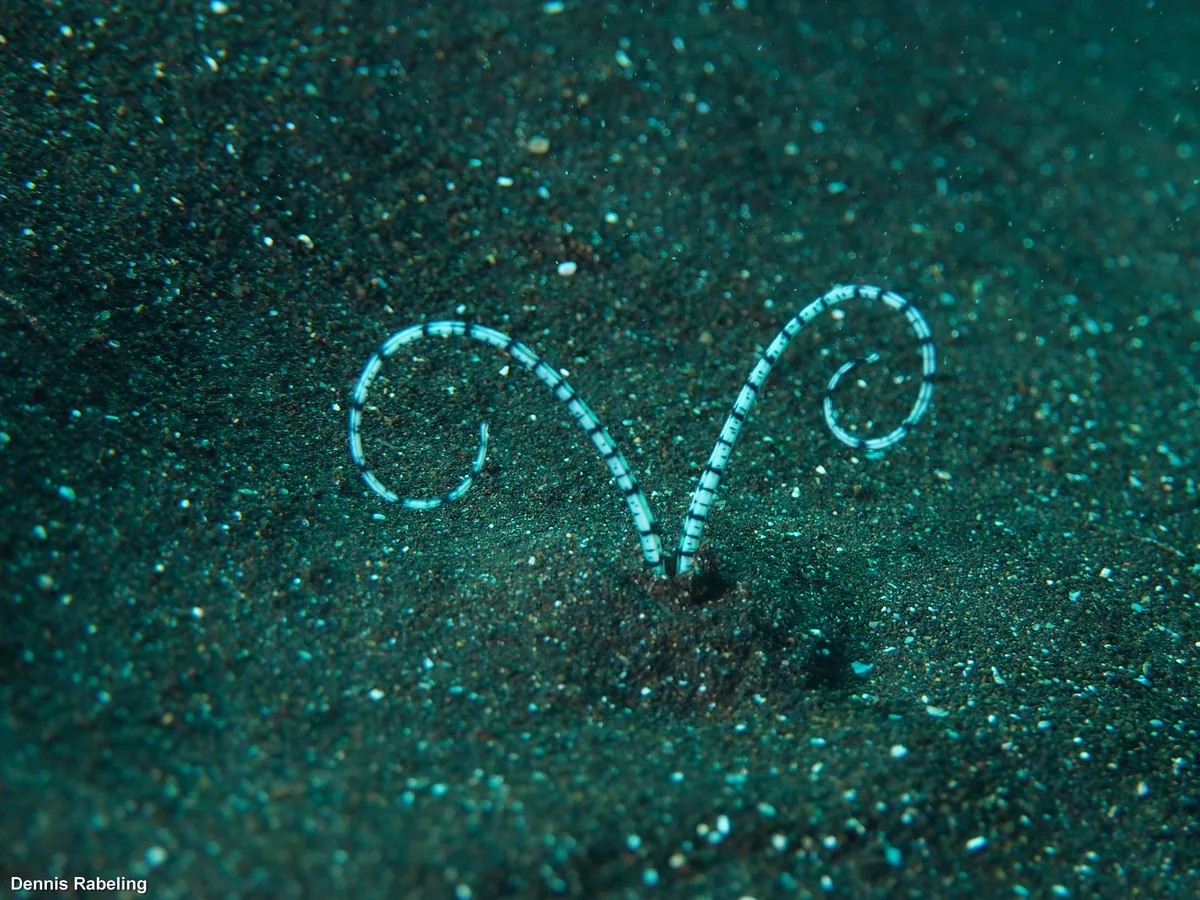
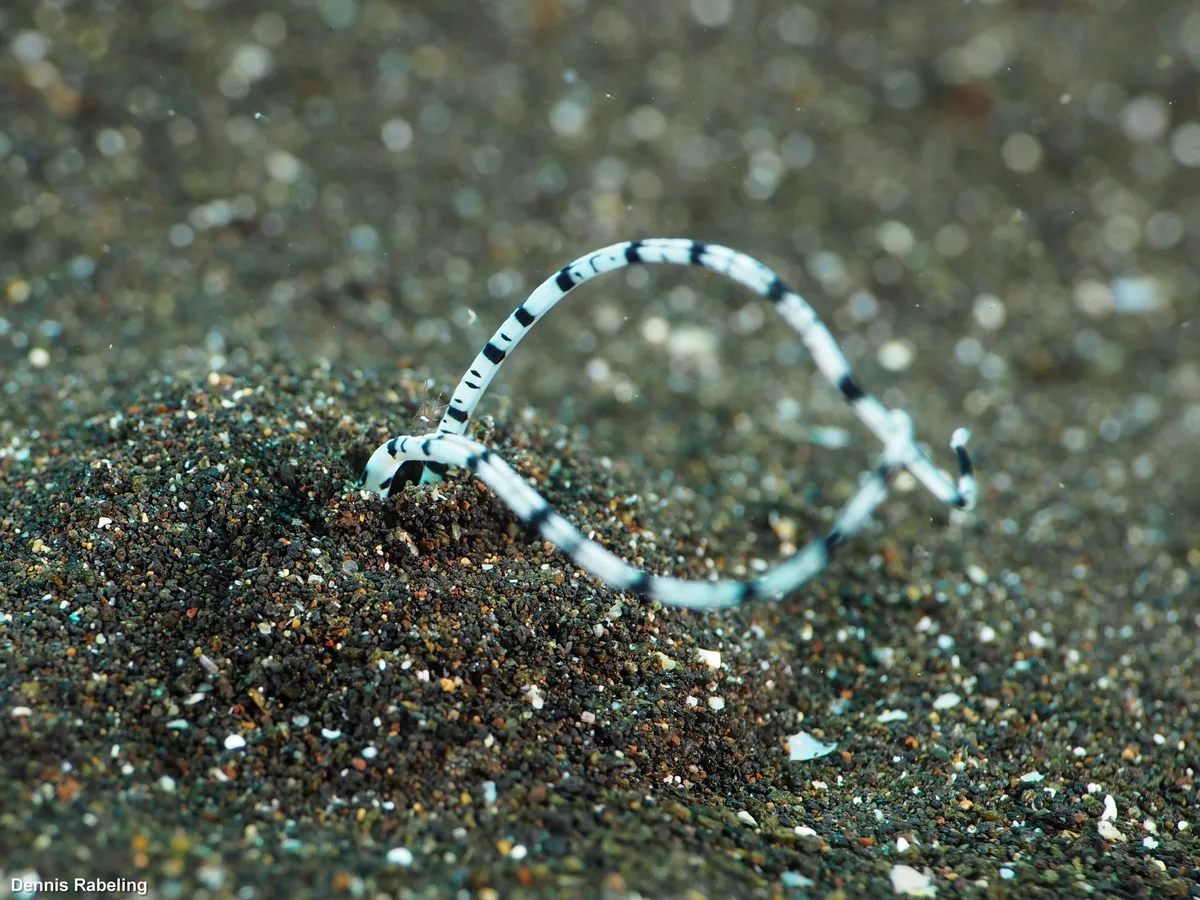
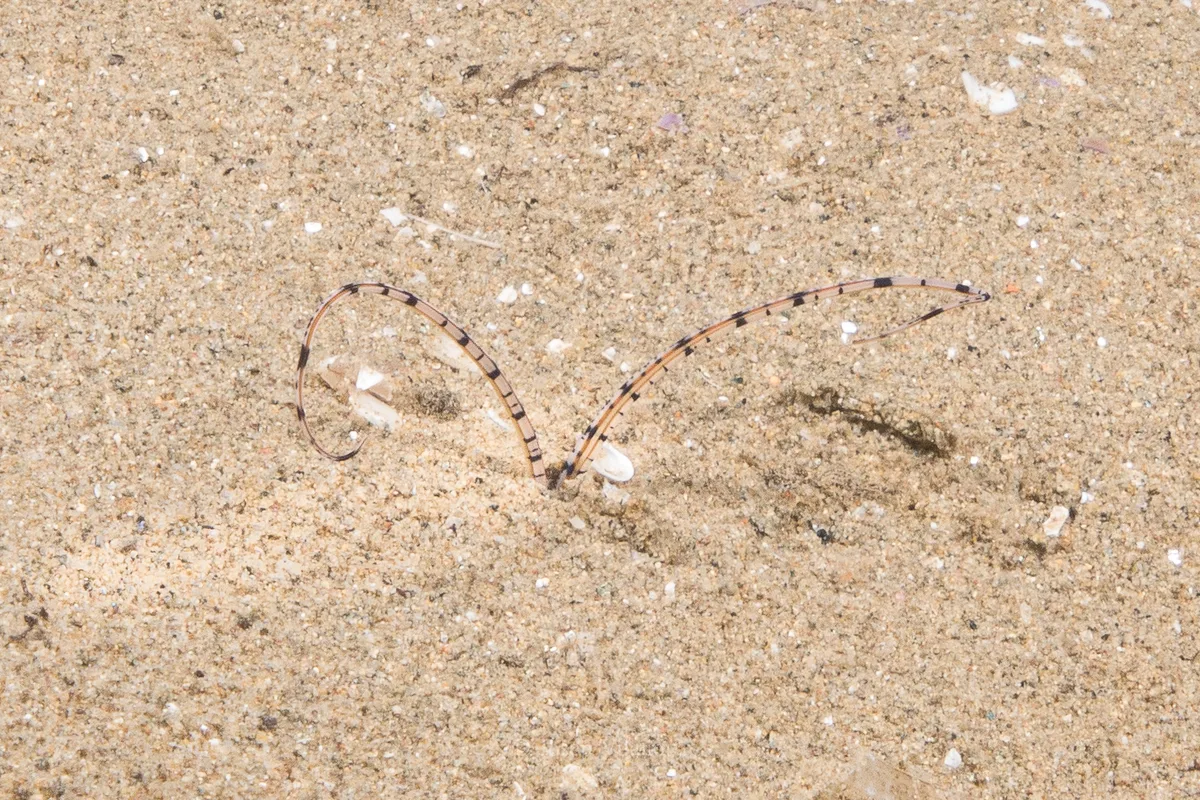
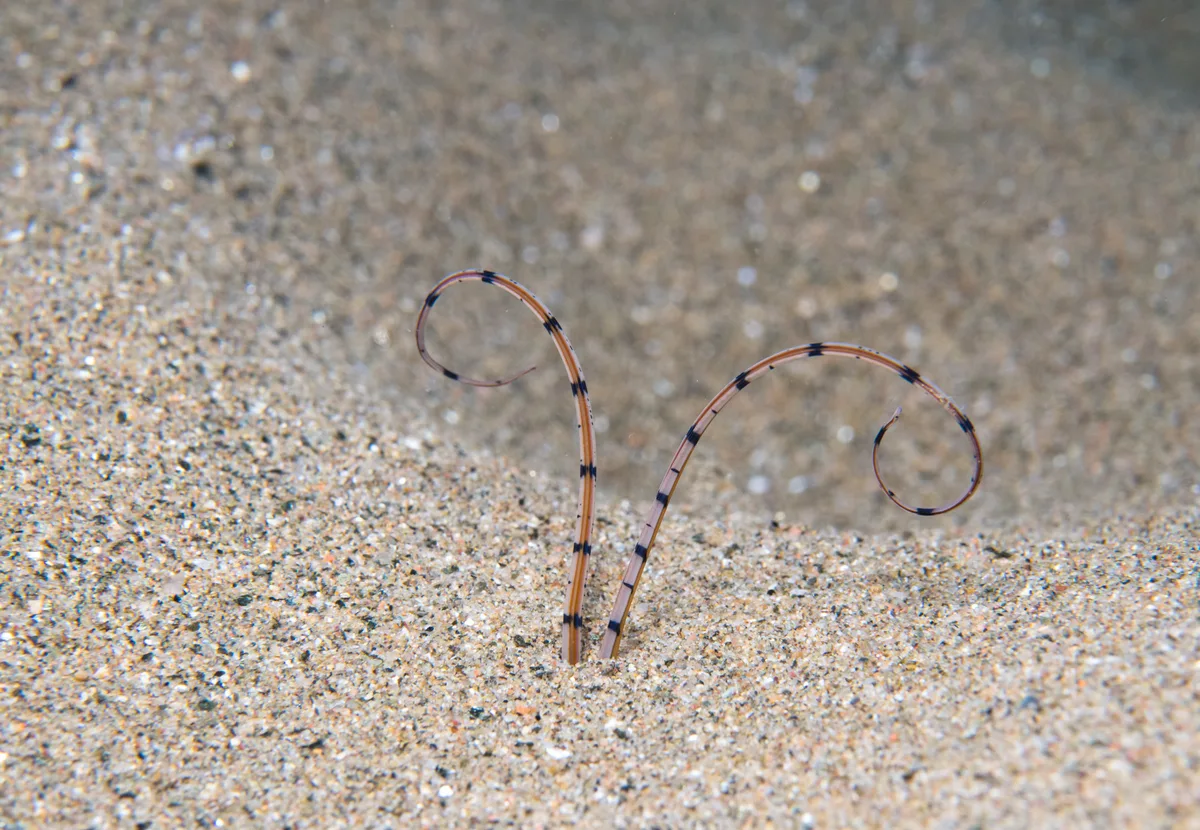
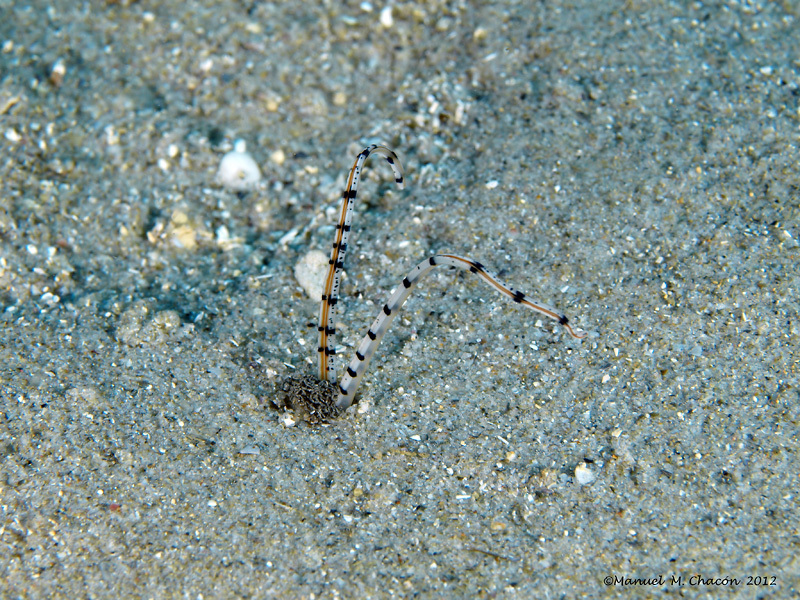
What a diver sees is two pale ribbons lying on the sand, moving slowly, apparently attached to nothing. They are the feeding tentacles of a worm that lives permanently inside a buried tube up to two and a half meters long, and the animal itself is never visible at all.
Inside that tube it does something remarkable. The worm secretes a fine mucus net across the tunnel, pumps water through it with paddle-shaped segments, and the net strains out particles down to the size of bacteria. When the net is loaded the worm rolls it into a ball, passes it forward along a groove to its mouth, and eats net and catch together - then spins a new one. It is a purpose-built filter, made and consumed several times an hour.
The tube is parchment-tough and lined smooth, and it is a habitat in its own right: commensal crabs, scale worms and shrimps live inside them.
The family is also famously luminous - disturbed worms of this group release a glowing blue mucus - and one of the very few reasons to be out over sand at night with a torch off.
- two soft cream-white tentacles spread flat on the sand from a hole
- the animal itself never visible - only the tentacles and the tube opening
- tube of tough parchment-like material, buried, up to 2.5 m long
- tentacles reaching 30 cm across the bottom