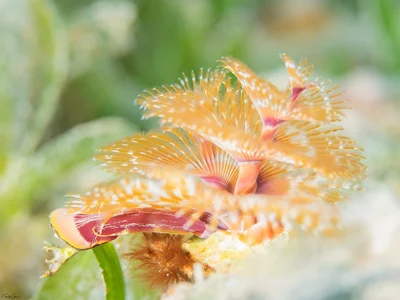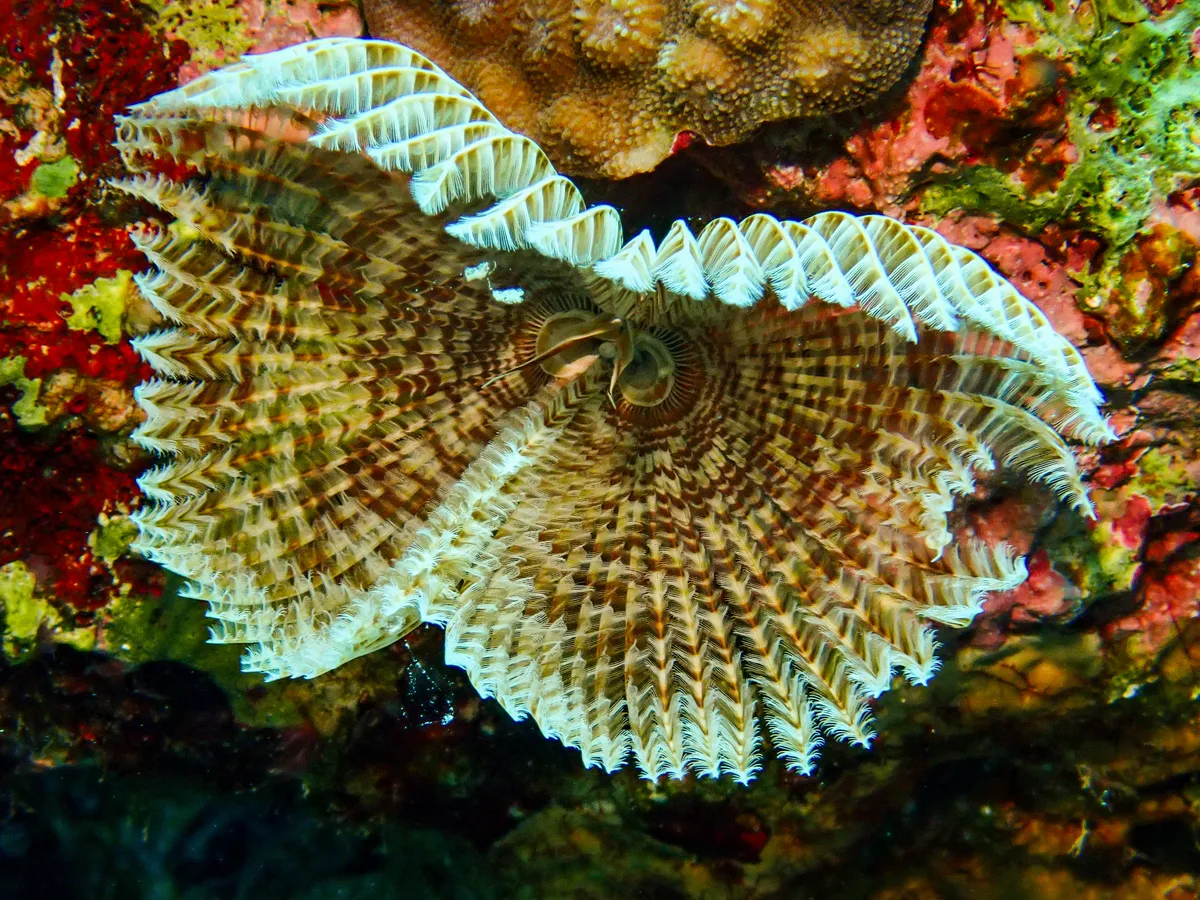
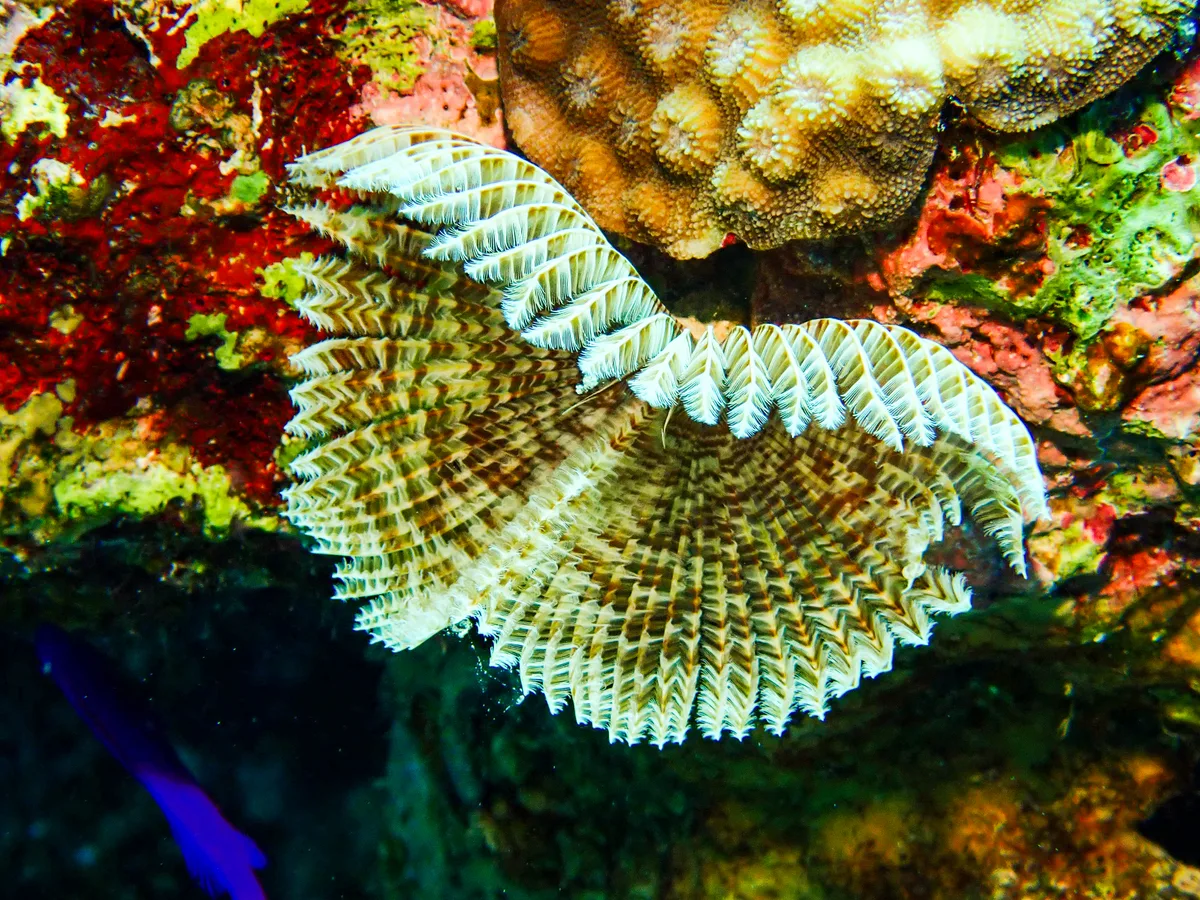
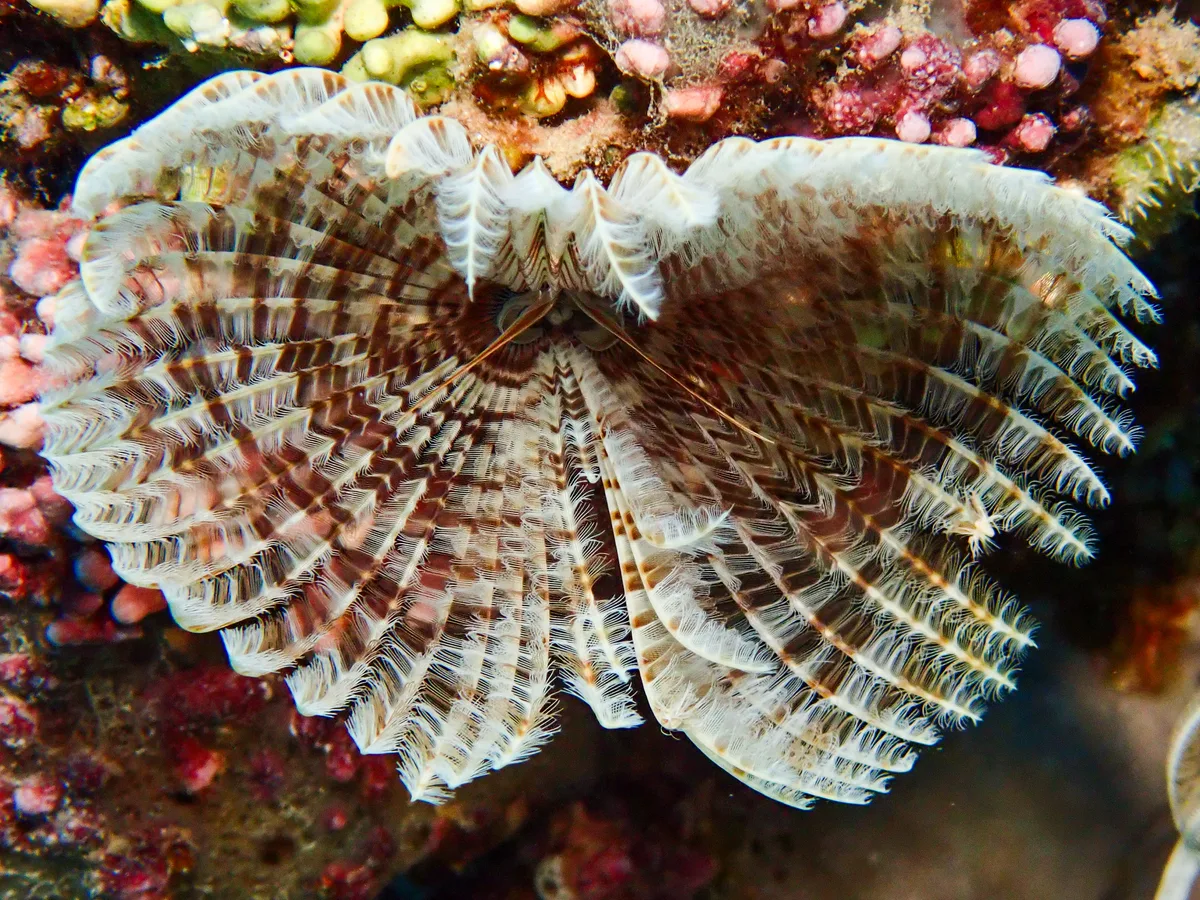
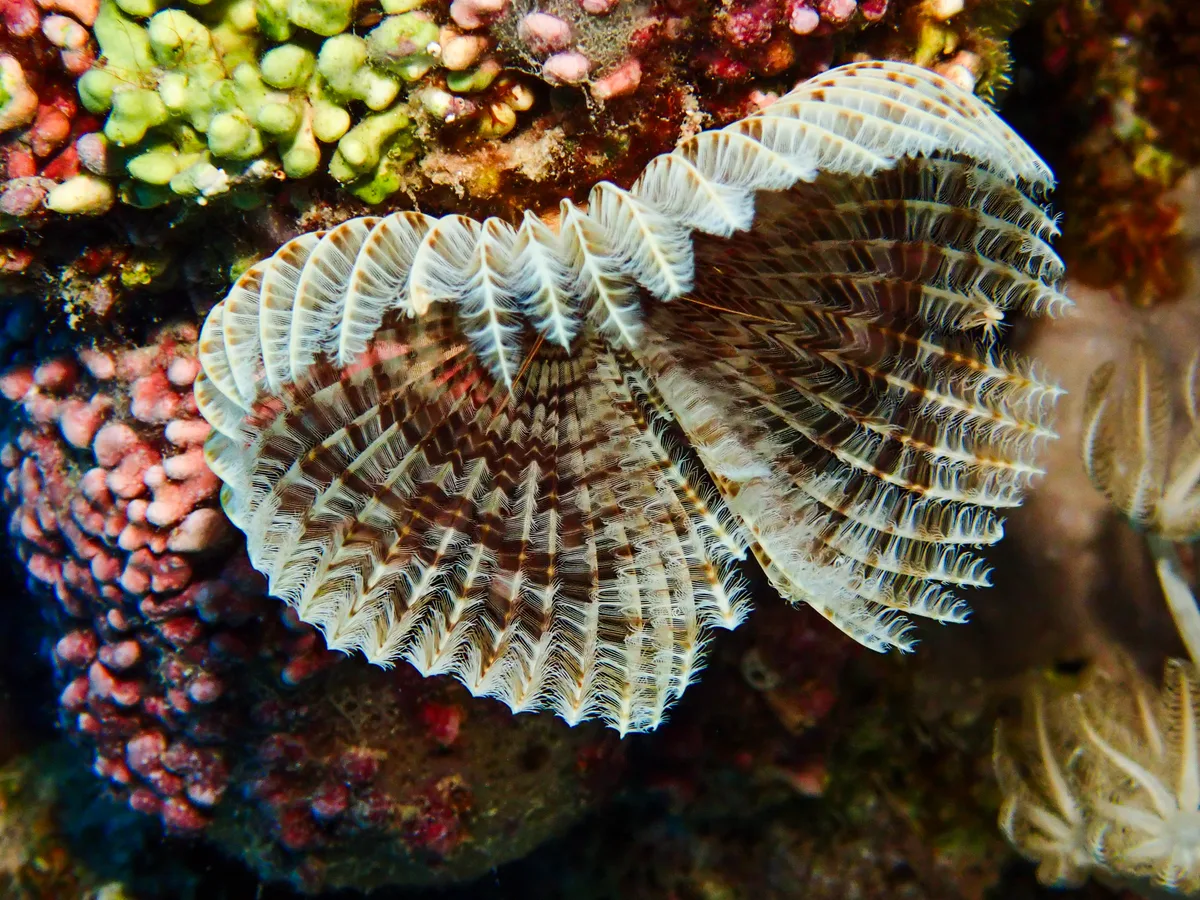
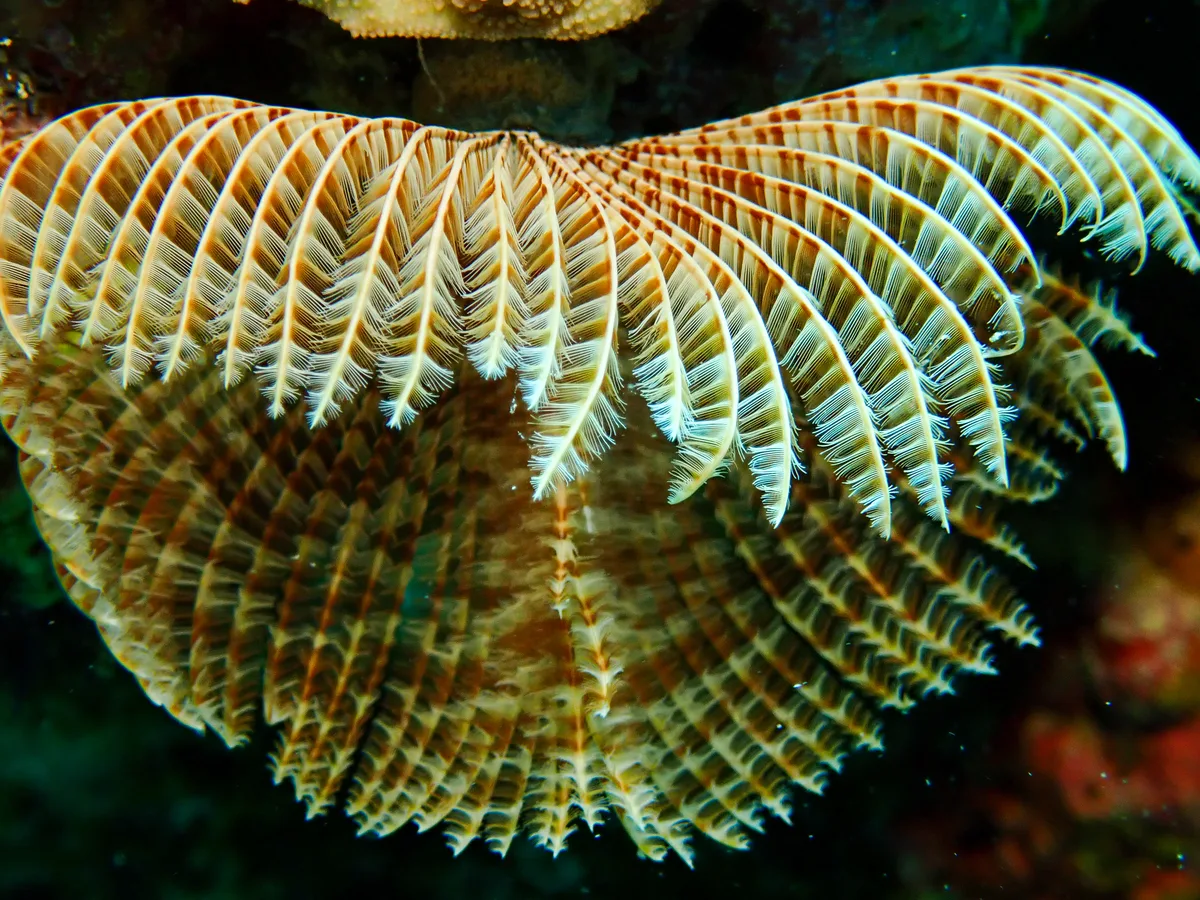
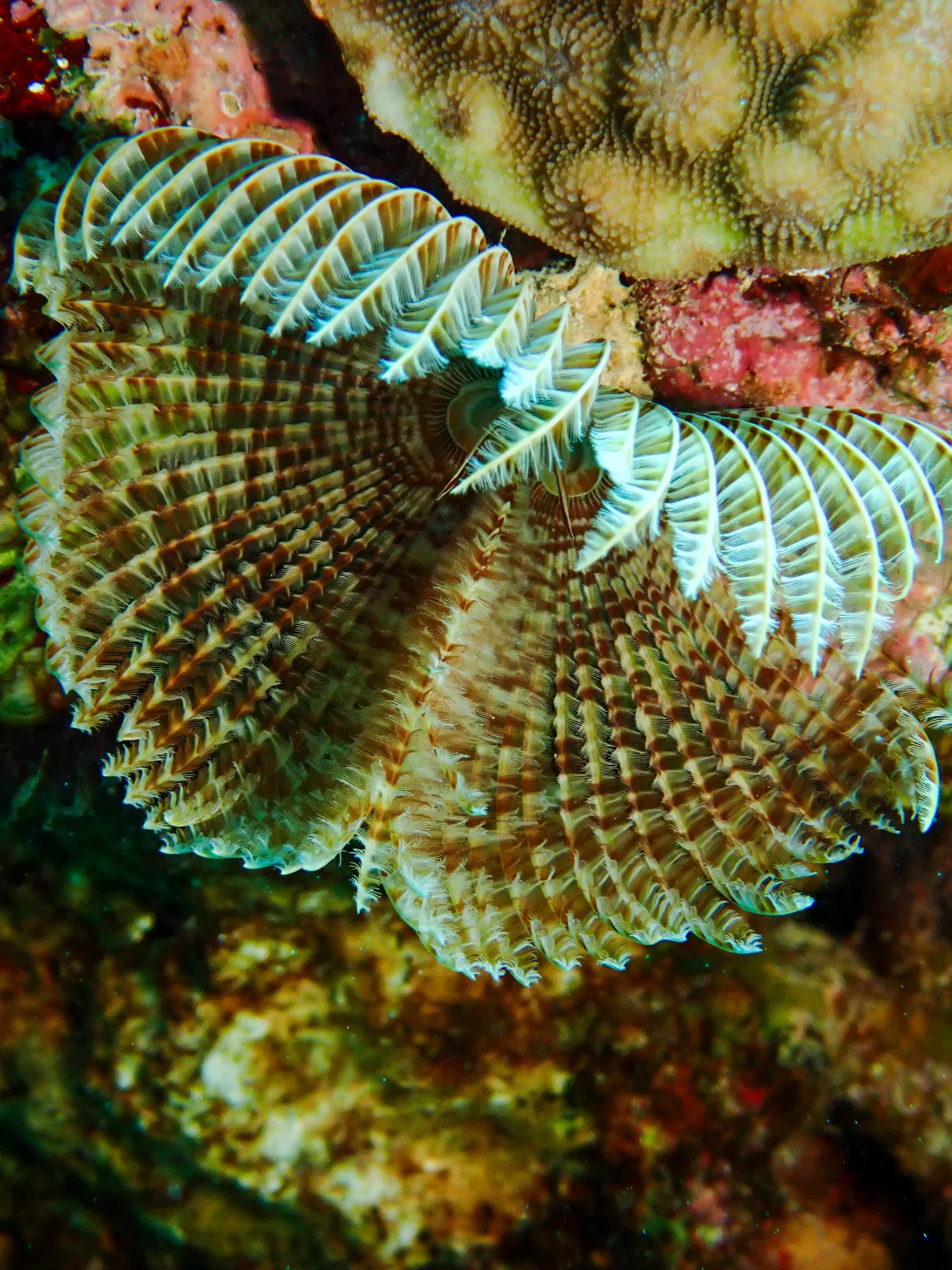
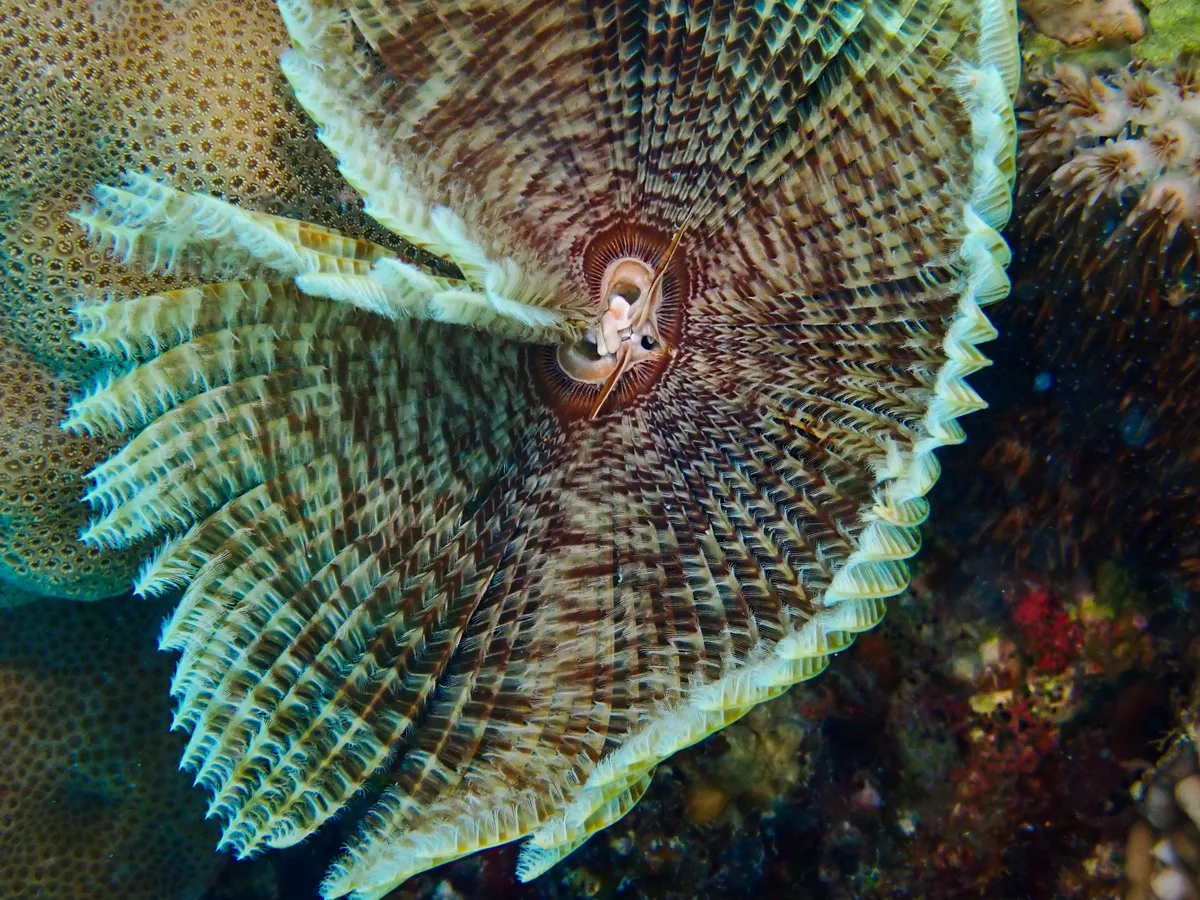
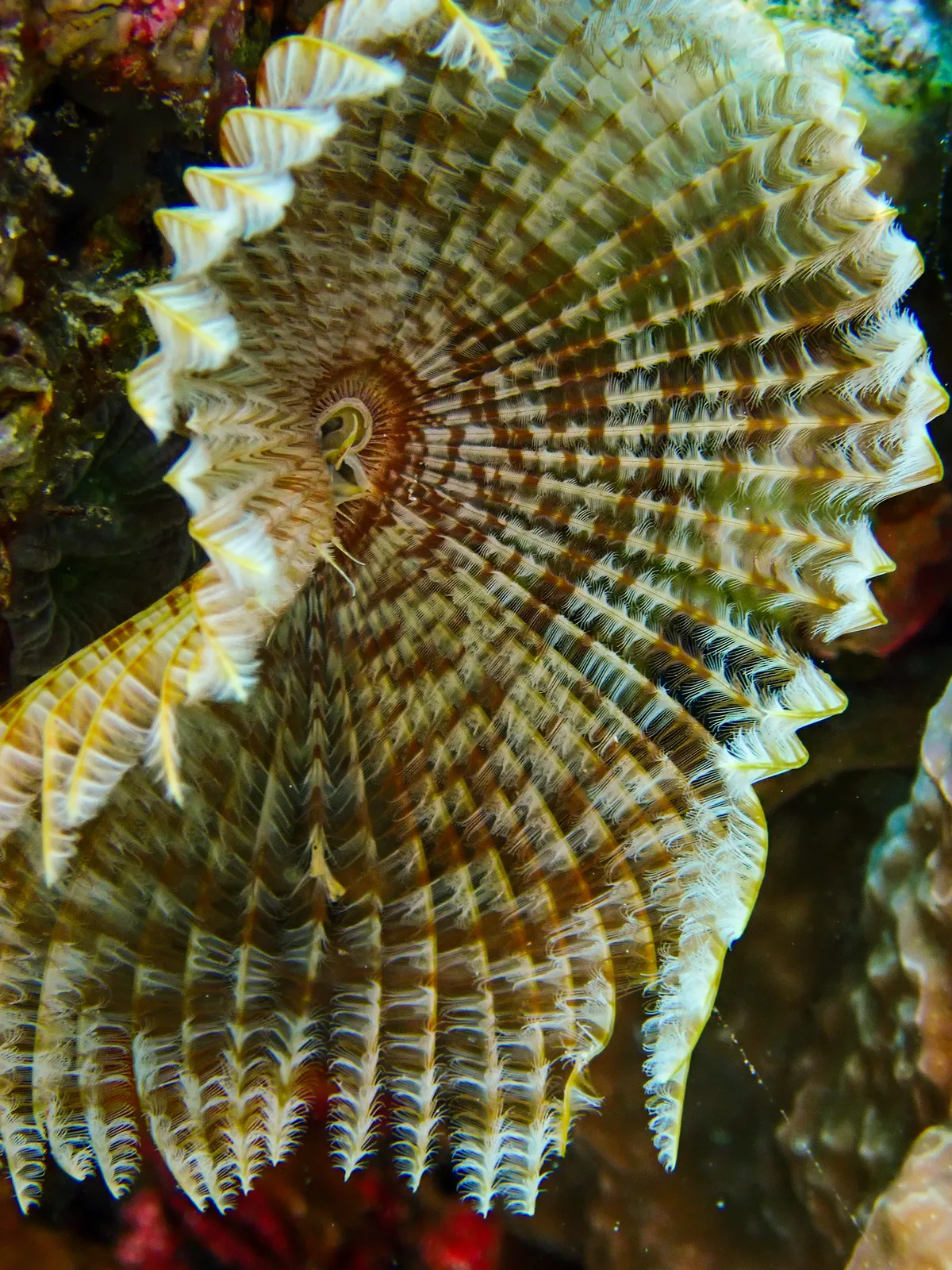
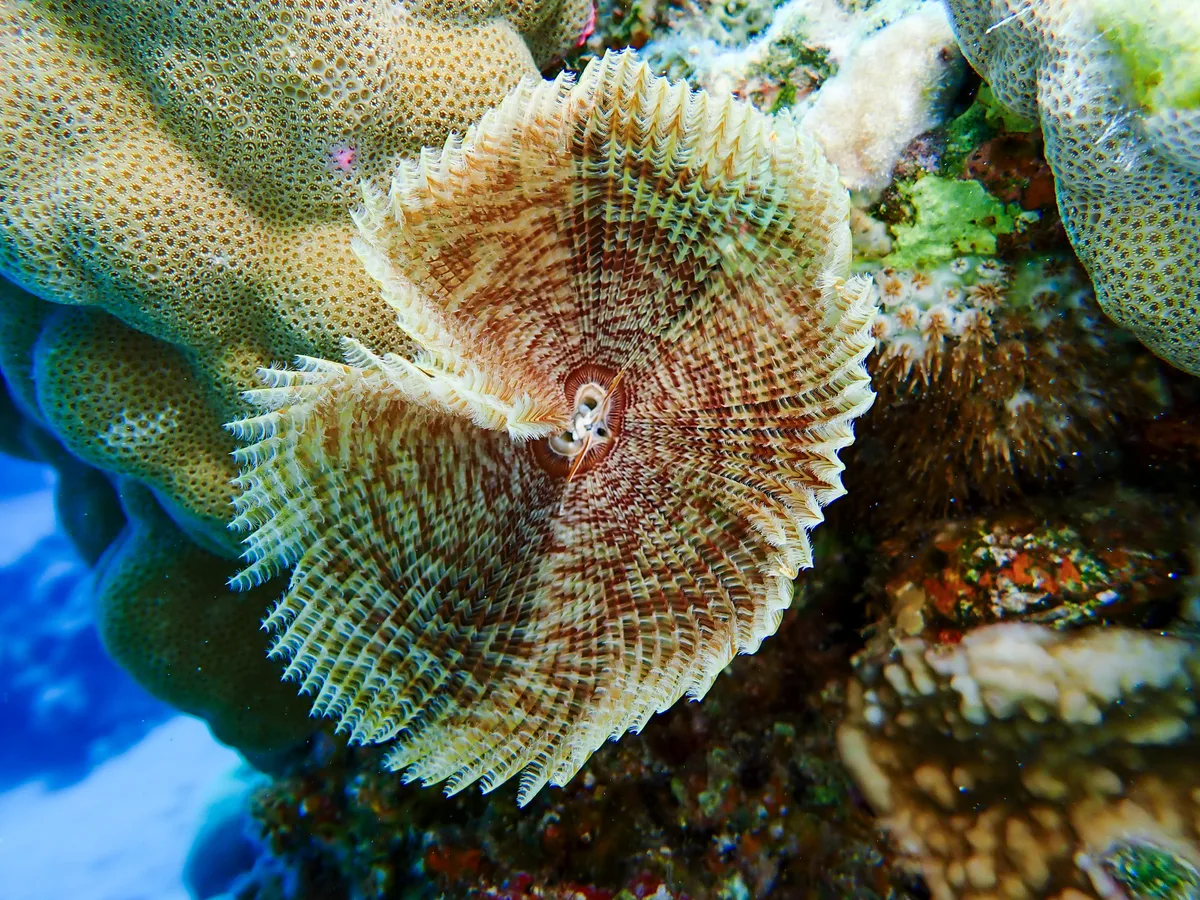
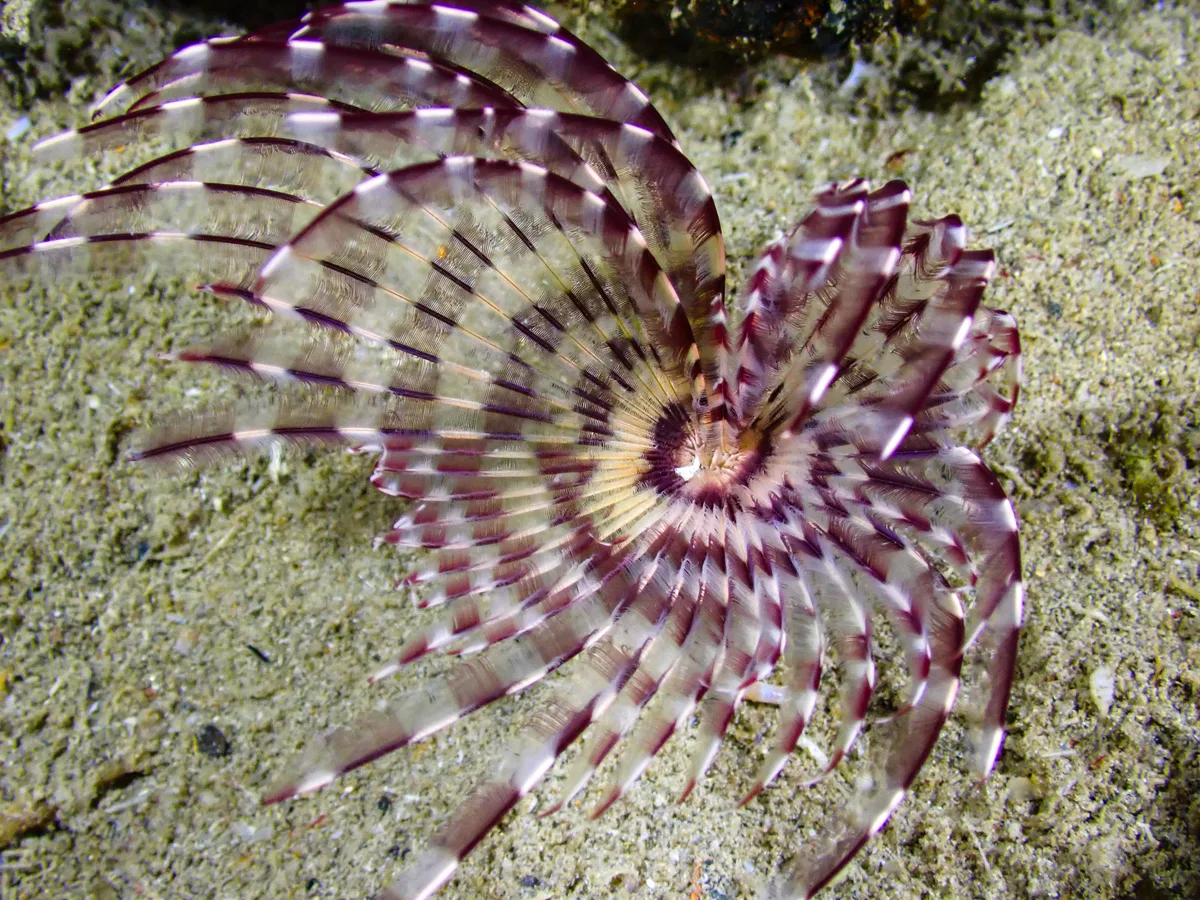
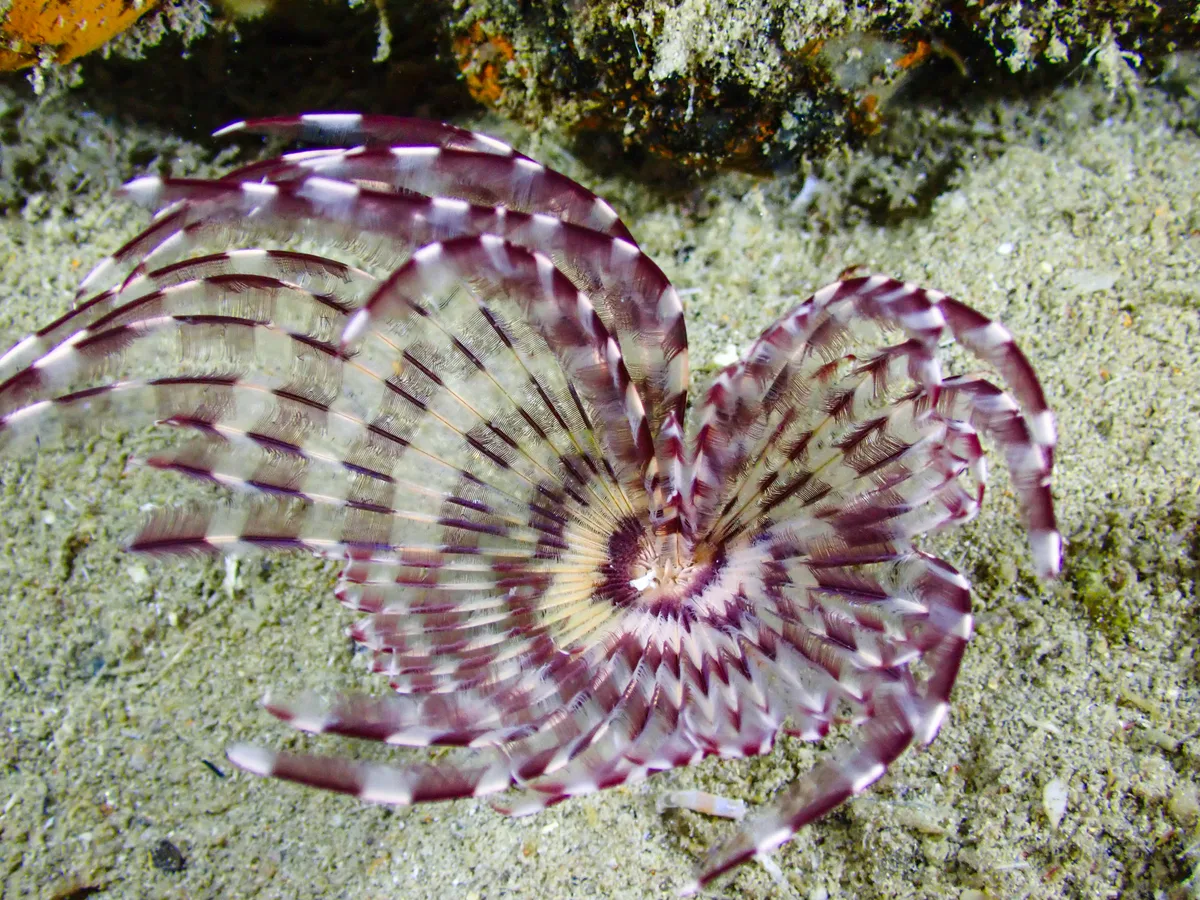
A wide feathery crown banded in brown and cream, up to 10 cm (4 in) across, rising straight out of the sediment on what looks like nothing at all. The fan is two spirals of branched tentacles called radioles, and it is a filter and a gill at once: cilia drive water through it, edible particles are sorted by size on the way past, and the smallest are graded down to the mouth while sand grains are shunted aside to be built into the tube.
That tube is the animal's whole house, and it is made of mucus mixed with sediment rather than lime, so it stays soft and slightly flexible. This is the practical difference from the christmas tree worms cemented into coral: a fanworm's tube can be pulled apart, and once the crown is withdrawn the worm has nothing but depth of burial between it and a hungry wrasse.
The crown does not retreat so much as vanish. A shadow crossing it, a diver's fin wash, a fish turning nearby, and the whole fan folds and drops out of sight in well under a second, then eases back out over the following minute if nothing further happens. Photographers learn to approach from below and wait. Lost crowns regrow within weeks, which is just as well, because fish crop them regularly.
The species has spent two centuries under two names. Savigny described it in 1822 as Sabellastarte indica, Grube described it again in 1878 as S. spectabilis, and the two were eventually recognized as one animal - the older name is the one you will still find in most dive guides, and the newer one is the one that stands.
- wide feathery crown banded brown and cream
- soft leathery tube of mucus and sediment, not a hard limy one
- crown folds away in one movement when a shadow passes
- crown up to 10 cm across