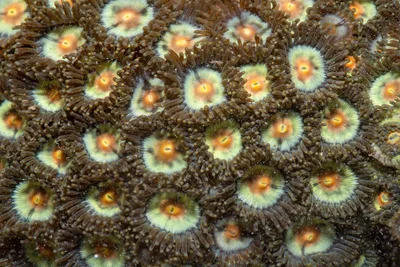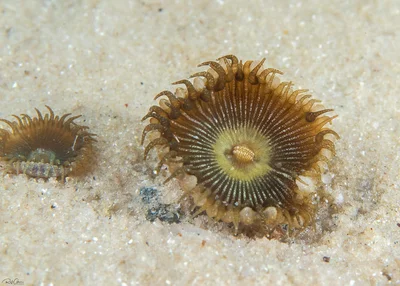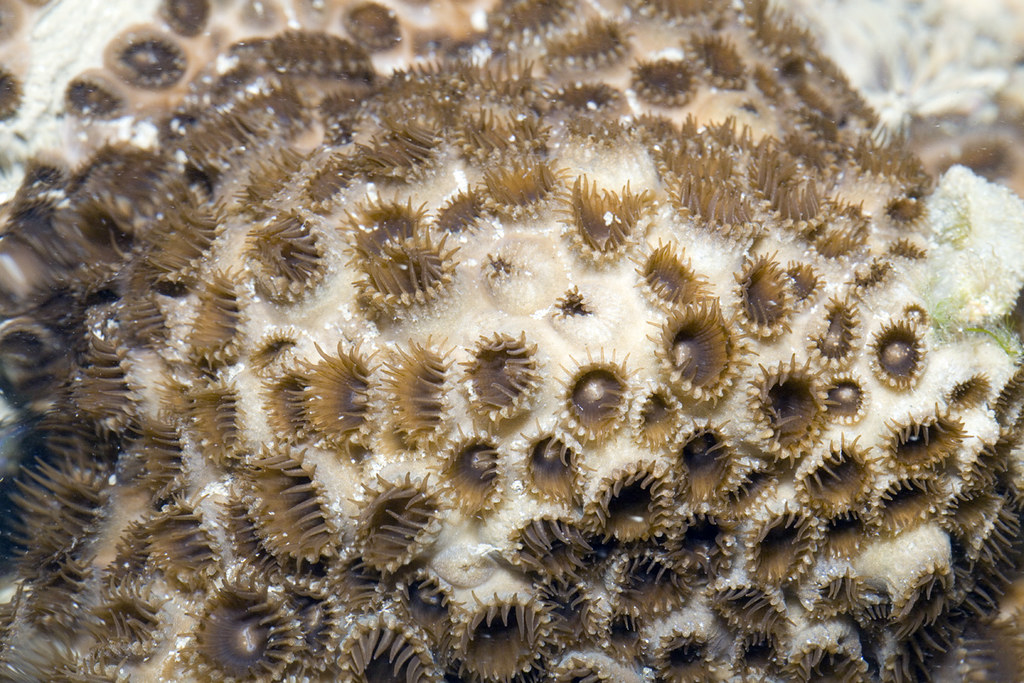
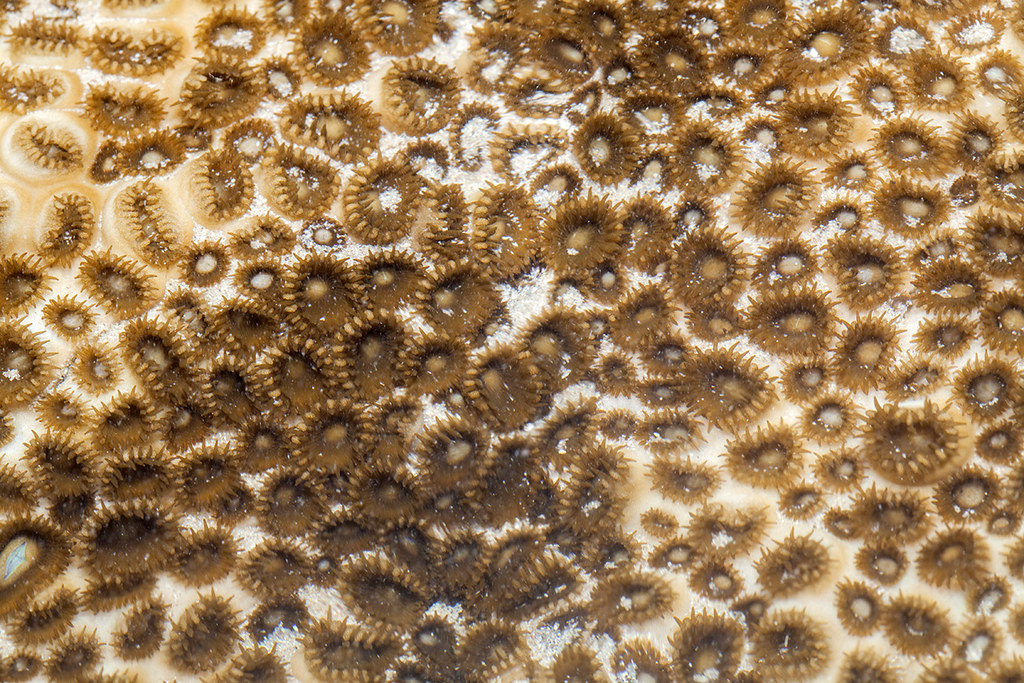
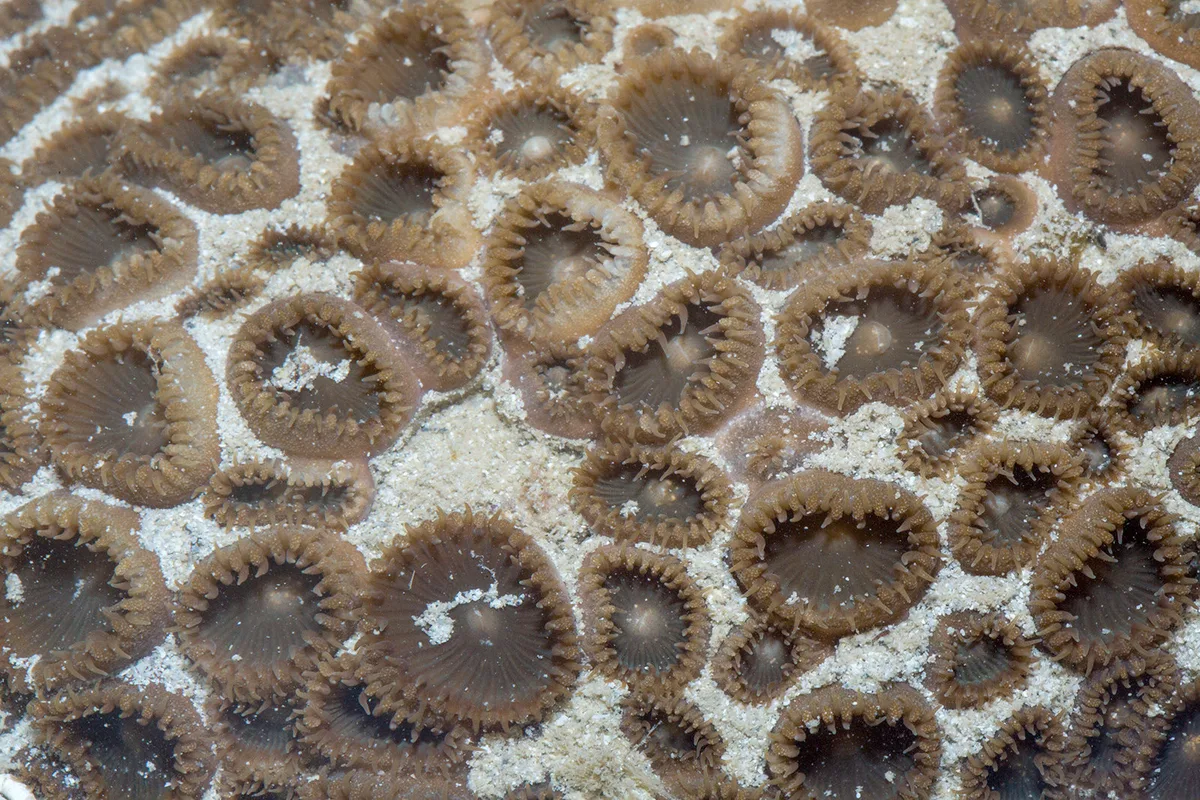
A thick brown carpet of identical polyps covering bare rock in the shallows, each polyp a short column about 1.5 cm (0.6 in) across, joined to its neighbors by a common fleshy base. Whole sheets open and close together, which makes a colony behave like one animal rather than a crowd of small ones, and a single sheet can spread over a meter of reef flat.
The body wall is loaded with sand grains and sponge spicules, and this is what lets the species hold ground where the surge is too strong for softer animals. Food arrives two ways: symbiotic algae in the tissue make sugars in the bright shallow light, and the tentacles take plankton on top of that. New polyps bud from the shared base, so a colony grows outward as a spreading mat rather than as separate individuals.
This is one of the animals to admire without touching. Species of Palythoa can contain palytoxin, among the most poisonous non-protein substances known, and documented poisonings come from handling colonies with bare or cut hands, or from scrubbing them in an aquarium at home. In the water, looking and photographing costs nothing; picking at it is a genuinely bad idea.
- thick brown mat of identical polyps carpeting bare rock
- polyps joined by a common fleshy base, all opening at the same height
- body wall gritty with sand grains built into it
- colonies over a meter across on wave-washed reef flats