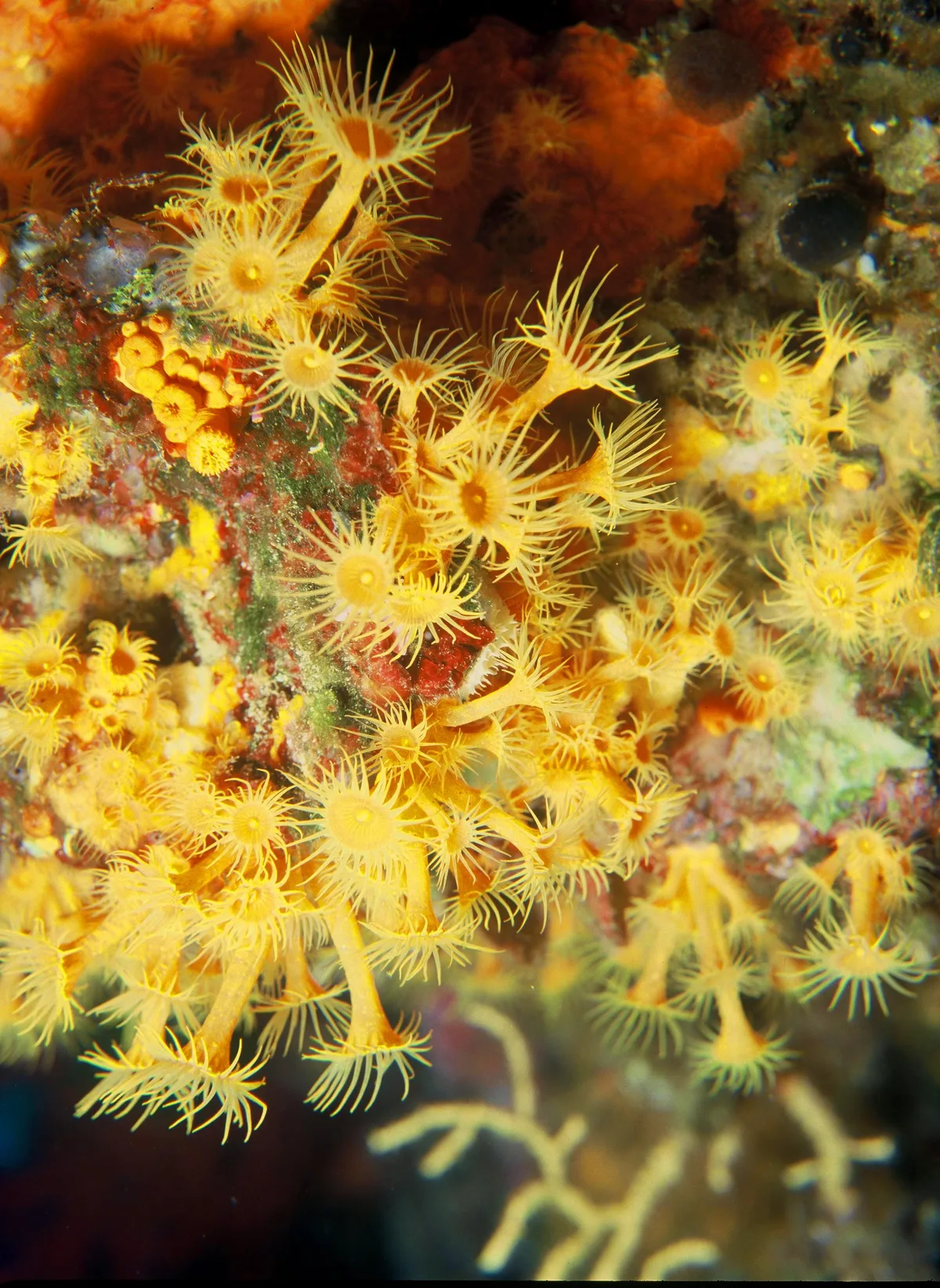
ZoanthidsZoantharia
A zoanthid builds its own body out of sand. It has no skeleton and nothing hard of its own, so it takes grains of sand, fragments of shell and the glass needles it strips out of sponges and cements them into its own body wall. The animal ends up feeling like fine sandpaper and tough enough to hold a place in the surge zone, on rock that is washed twice a second, where anything soft would be torn off.
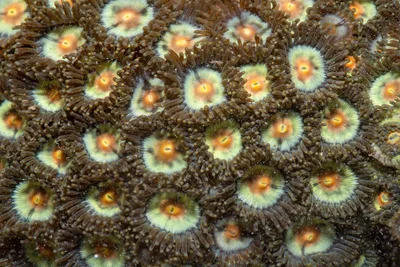
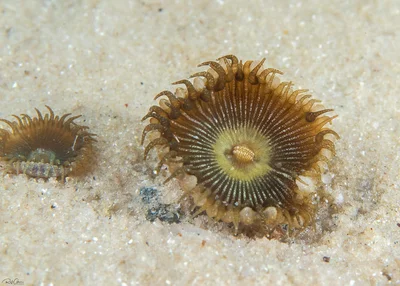
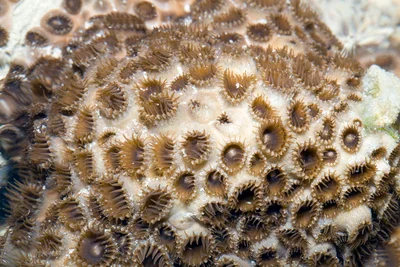
They are colonial relatives of the anemones, and they grow as a paving rather than as individuals. Each polyp is a short column with a crown of tentacles set in two rings around the rim of its disc, and all of them are joined at the base by a shared sheet of tissue, so the colony pulls in as one thing when a shadow crosses it. That is the tell. An anemone sits by itself. A corallimorph is a flat lid with knobs on it. A zoanthid is hundreds of identical small polyps tiled across the rock, opening and closing together.
The group carries a warning that is worth knowing before you handle one. Some of them contain palytoxin, among the most poisonous substances known that is not a protein, and Hawaiian tradition holds that a particular colony in a particular tide pool was the source of a poison put on spear points. The modern cases are duller and closer to home: they come from people handling colonies bare-handed with cuts on their fingers, and from aquarium keepers scrubbing or boiling live rock in a kitchen and breathing what comes off it, which has put whole households in hospital.
In the water none of that applies. Zoanthids will not sting a diver going past, there is nothing here to avoid, and the gray-brown mats of Palythoa that cover the shallowest reef flats on this coast are among the least dramatic things on the reef until you know what you are looking at. They are simply not animals to pick up, and they are a good argument for leaving live rock in the sea rather than carrying it home.
- flat mats of small polyps carpeting rock, all the same height
- polyps joined by a common fleshy base, not standing separately
- body wall stiff with sand grains built into it
- a ring of short tentacles around a slit mouth
3 species in Zoanthids
Other groups in Stinging
Nearby in the catalogue.


Last Update: August 23, 2026