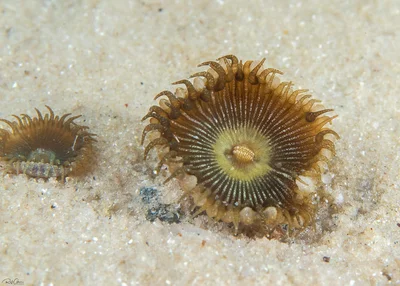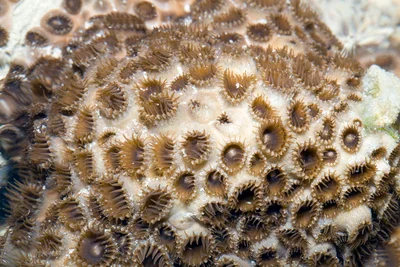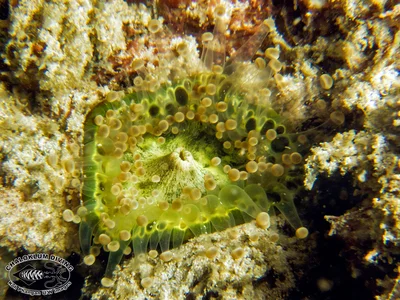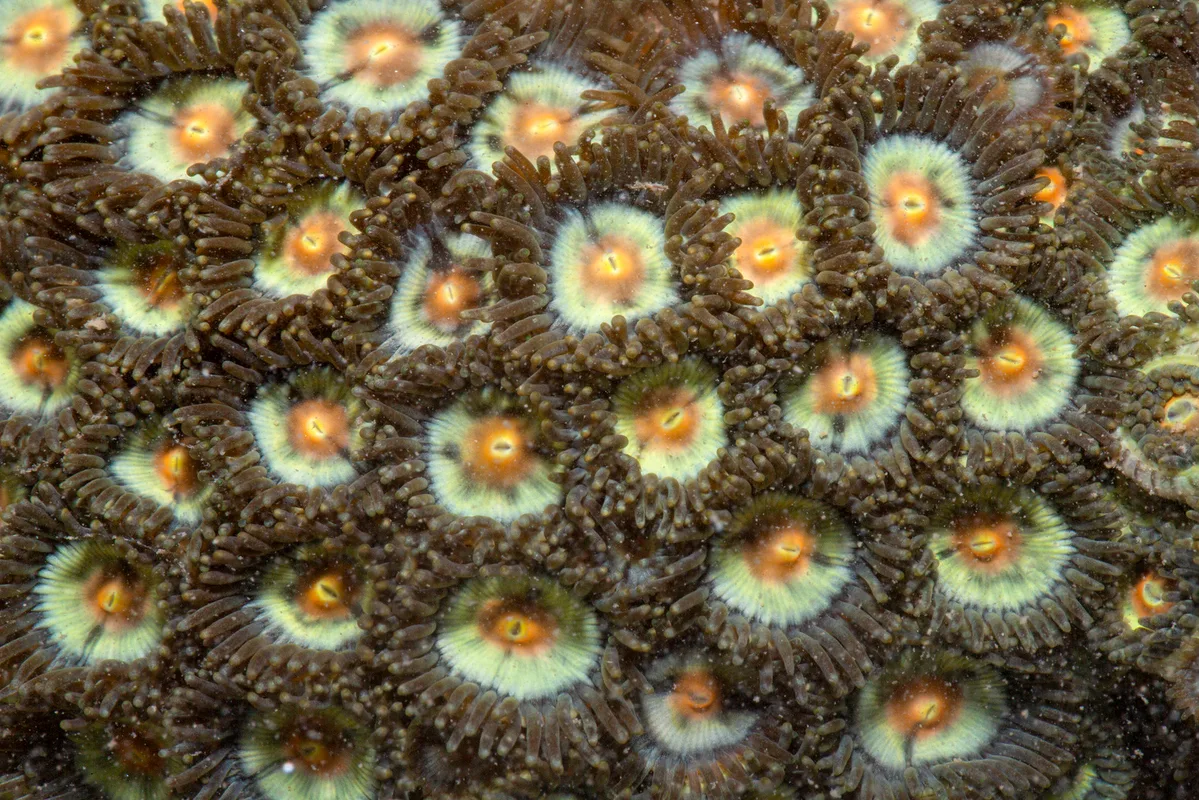
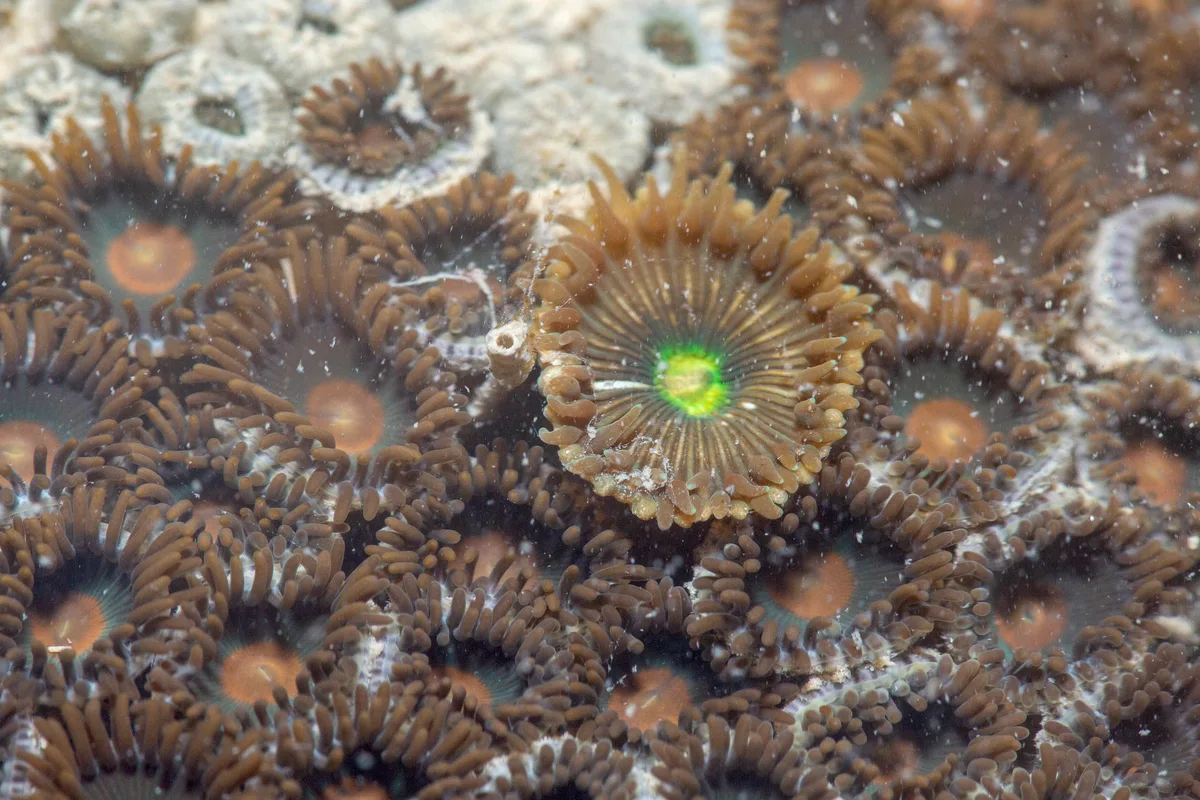
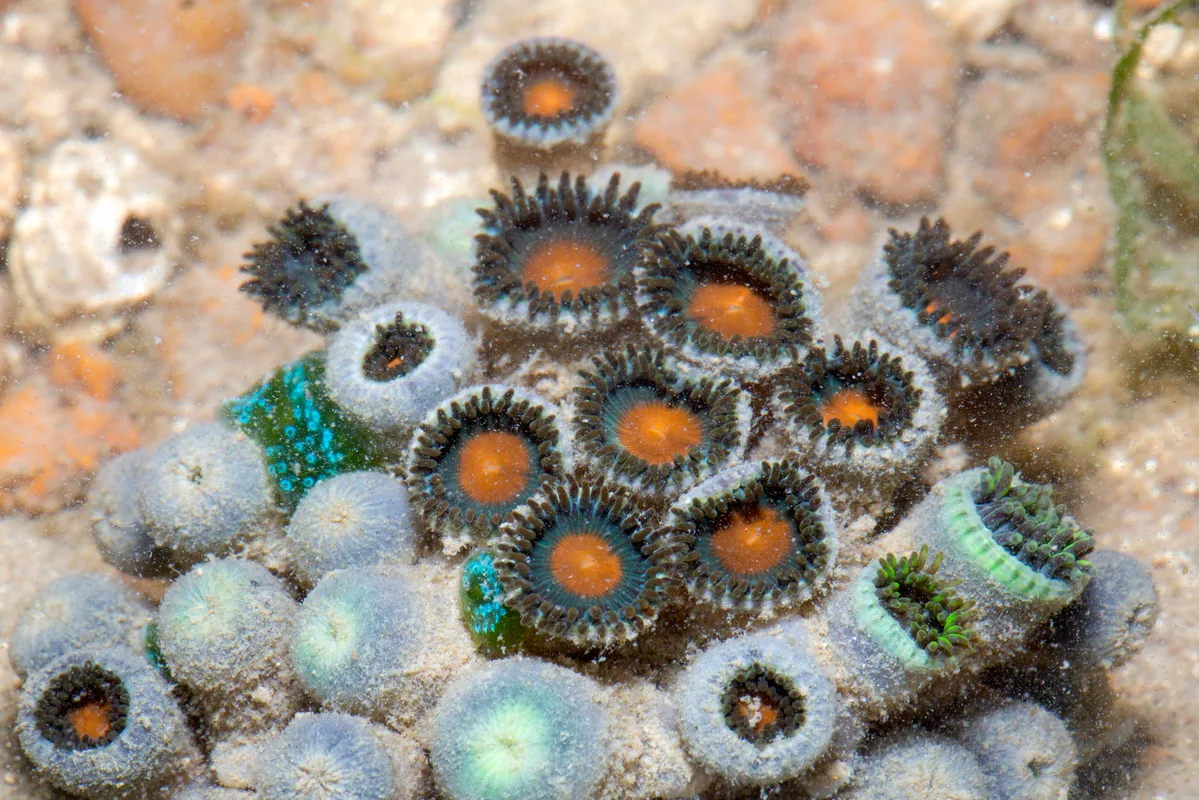
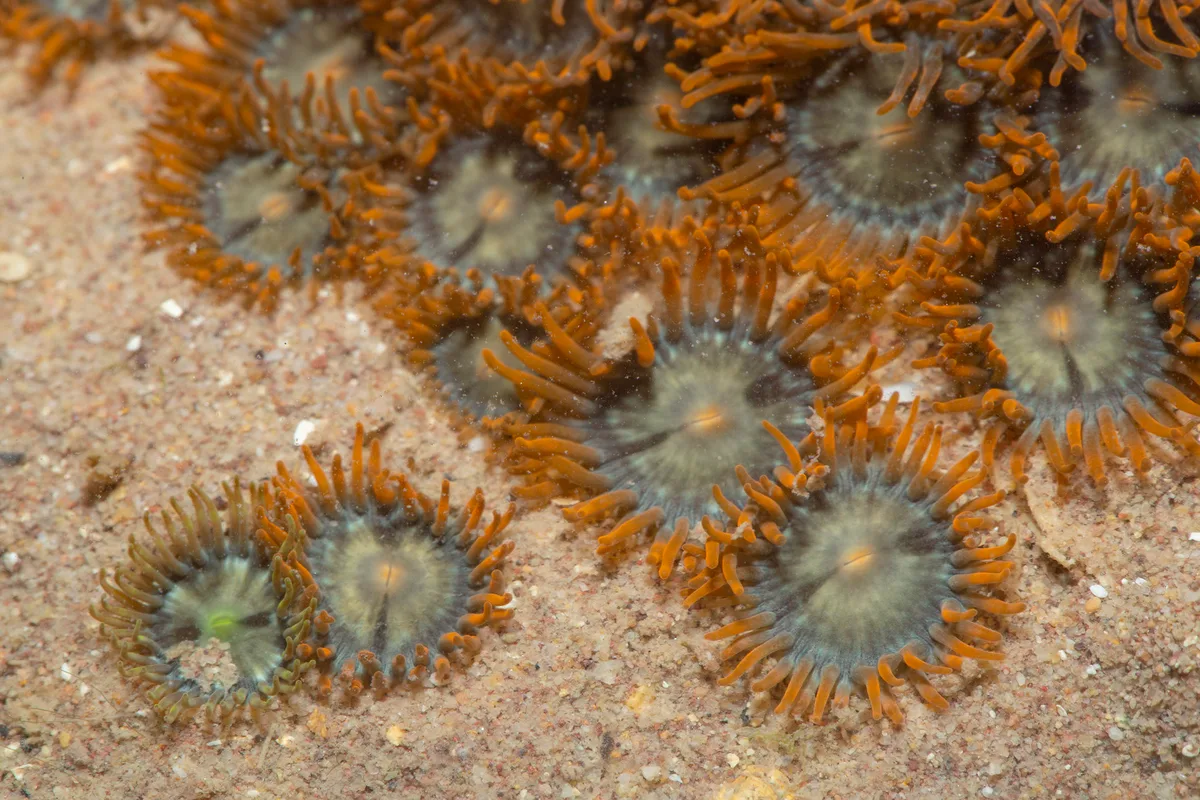
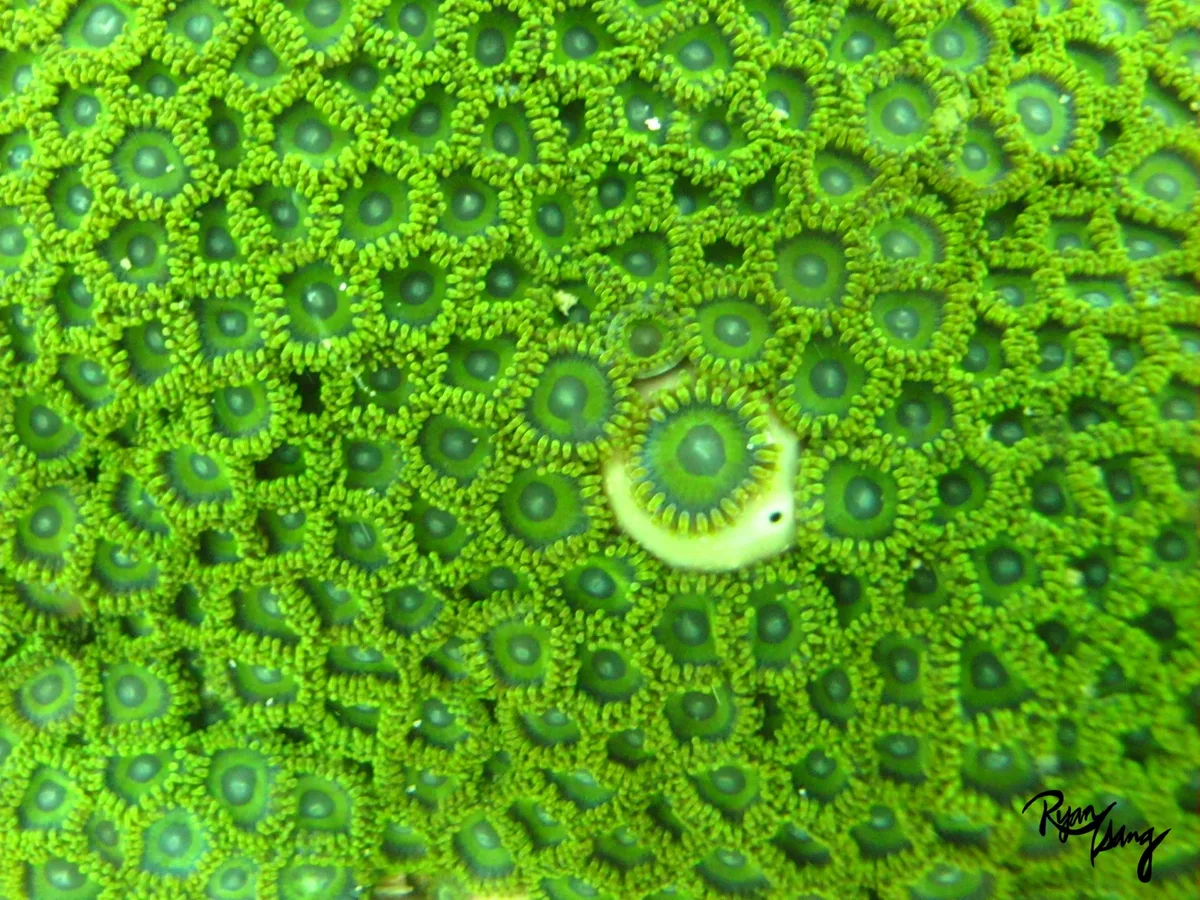
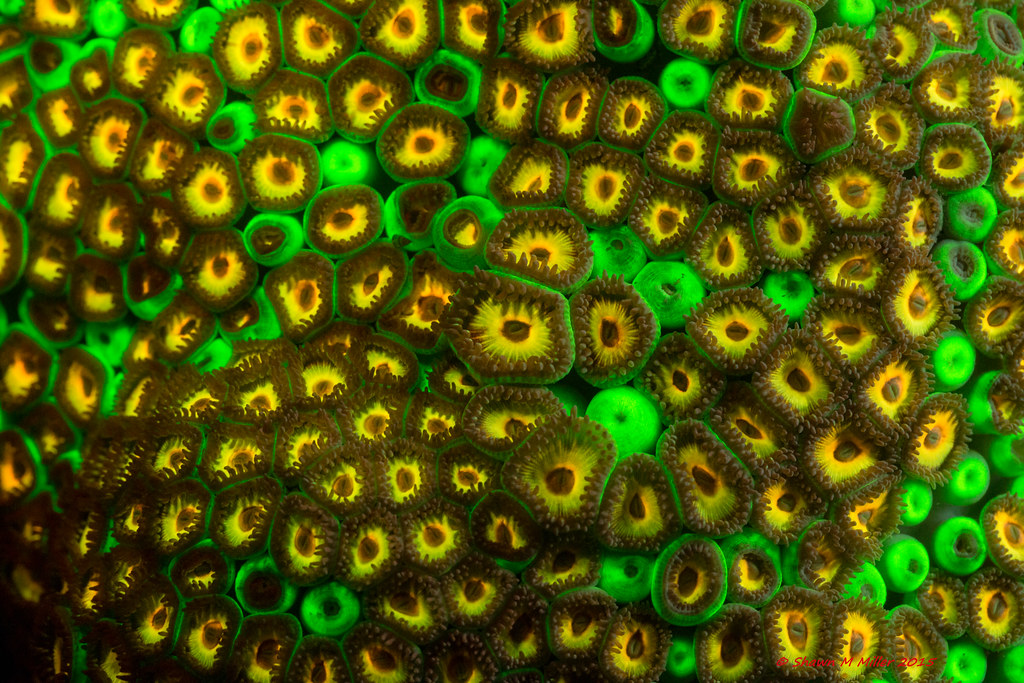
A dense carpet of small polyps pressed against one another like buttons on a cushion, green through brown to blue-green, each with a contrasting slit of a mouth at the center. Unlike the sand-stiffened zoanthids next to them on the same rock, these have smooth body walls, and the colony feels soft rather than gritty.
They hold ground in the surgiest, brightest water on the reef flat, where corals are broken and macroalgae are grazed off. Growth is by budding along the shared base, so a colony spreads outward as a widening mat and can cover a square meter of rock with what is, genetically, one animal repeated a thousand times.
Aquarium keepers know them better than divers do: these are the reef tank trade's "zoas", sold in a hundred color morphs with names to match. What the trade rarely mentions is the palytoxin the family can carry, which is why the same species is both a beginner's coral and a recurring case in poison-center reports.
- dense carpet of small button-like polyps touching one another
- green, brown or blue-green discs with a contrasting mouth
- no sand grains in the body wall, so the surface looks smooth
- reef flats in shallow, surgy water