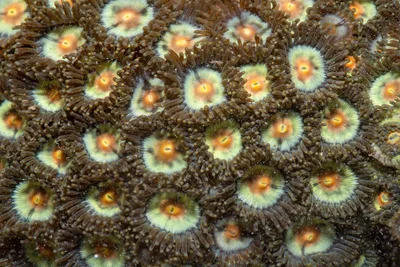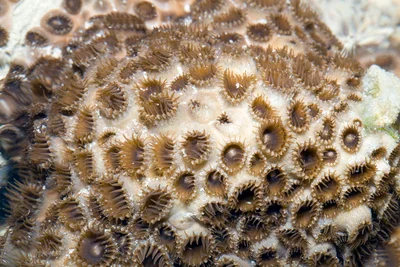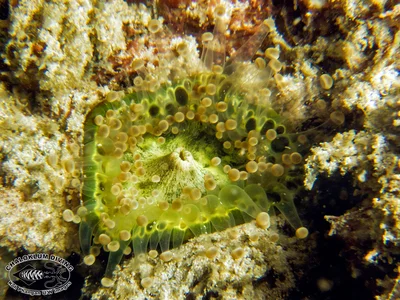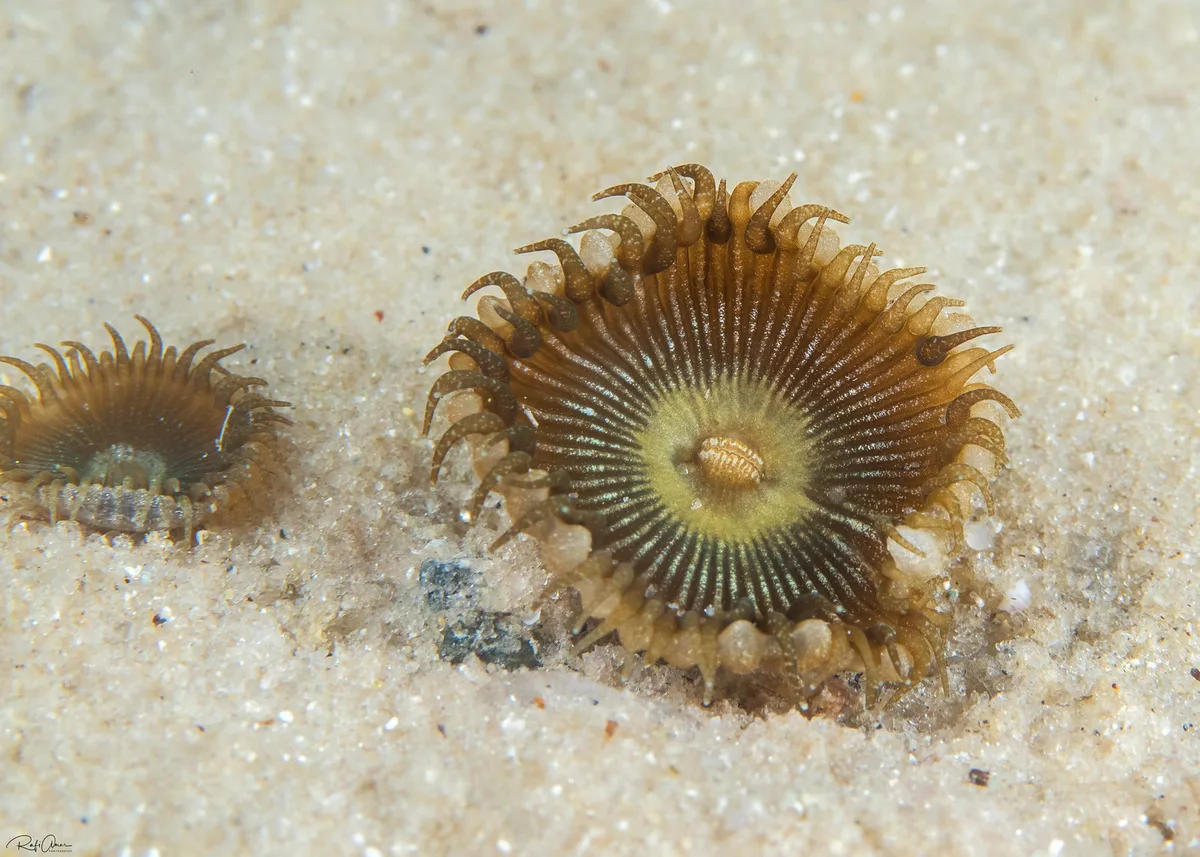
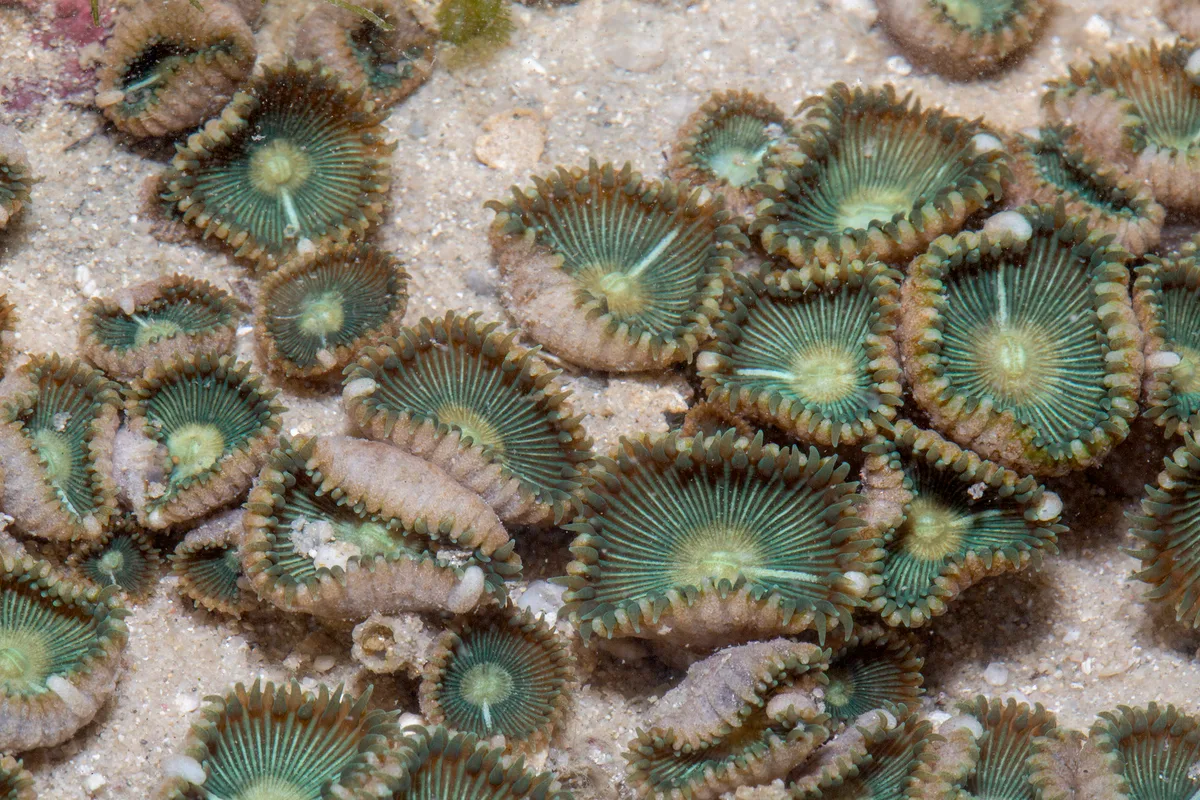
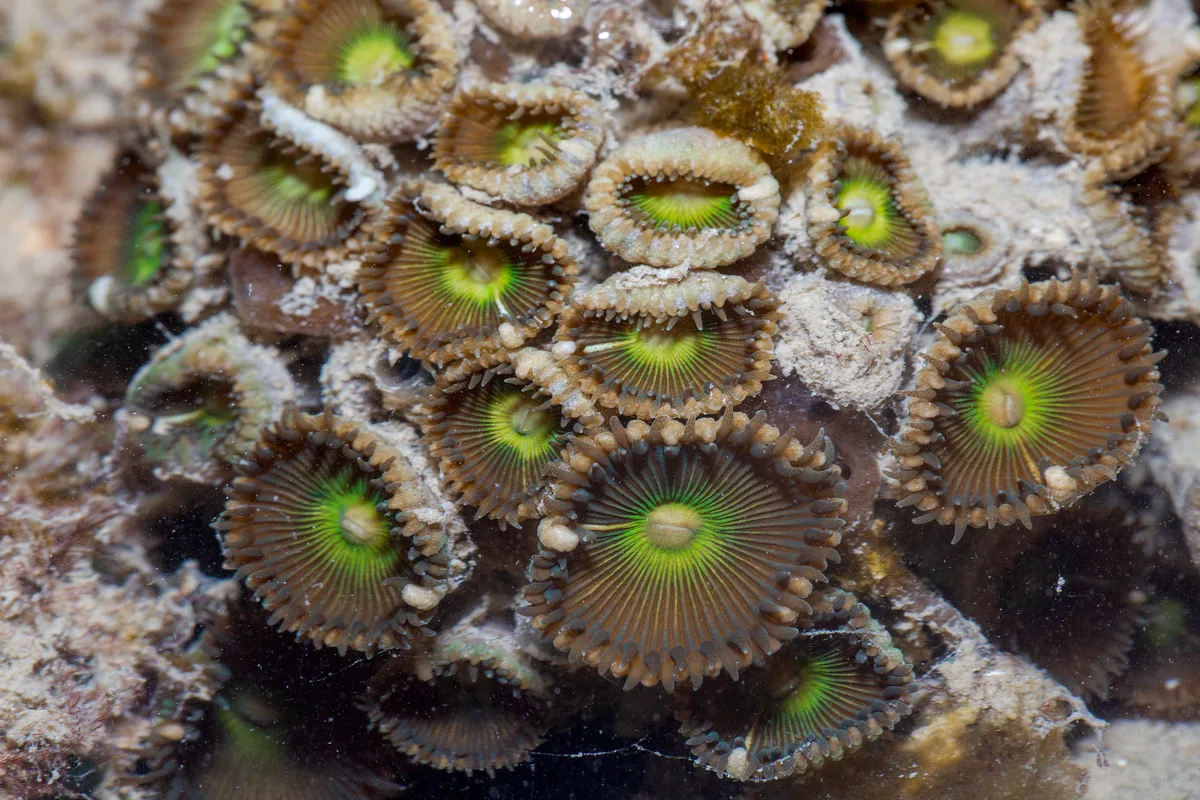
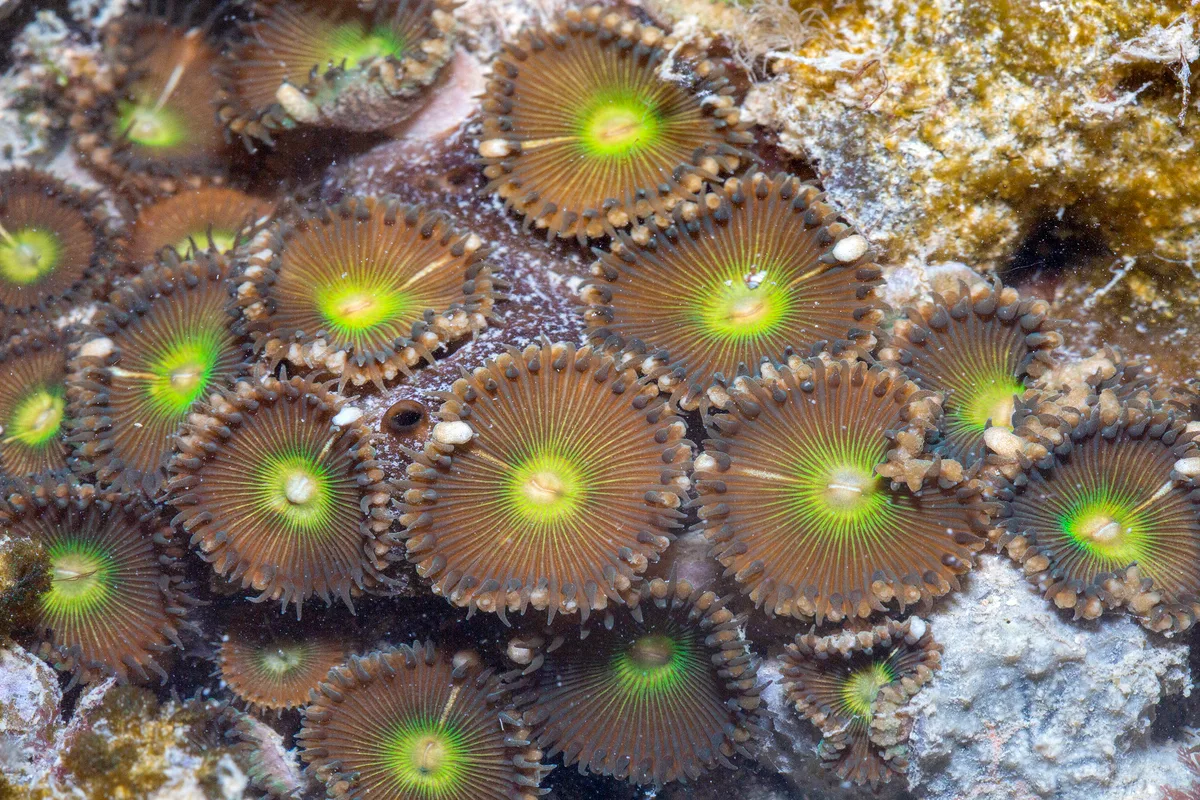
Brown to olive polyps, each about a centimeter across, standing slightly apart on short columns and joined by a thin shared base - looser than the solid carpets its relatives form, so the rock shows between them. Open polyps look like flat discs fringed with short tentacles.
Most of the food comes from inside. Symbiotic algae packed into the tissue photosynthesize and pass over sugars, which is why colonies grow where light is strong and why they close up and look like nothing much when the sun goes. Plankton caught by the tentacles is a supplement rather than the meal.
The genus is the one to know about for the wrong reasons. Palythoa gave its name to palytoxin, one of the deadliest non-protein compounds known, discovered in a Hawaiian species used to poison spear tips. Poisonings today come from aquarium keepers scrubbing colonies in warm water and breathing the aerosol, not from divers - in the sea it is simply a mat on a rock, and looking costs nothing.
- polyps standing slightly apart, each on its own short column
- brown to olive, opening as flat discs with short tentacles
- sandy, gritty body wall
- shallow rock in bright light