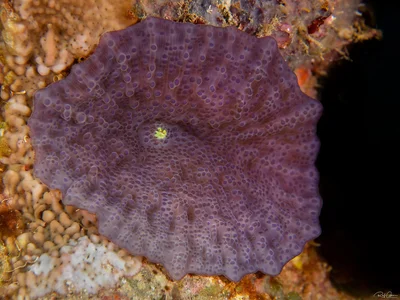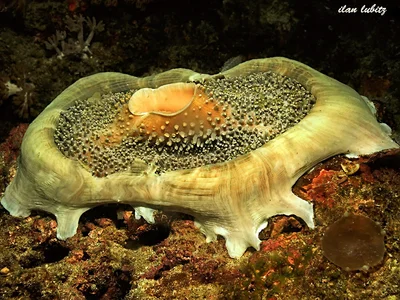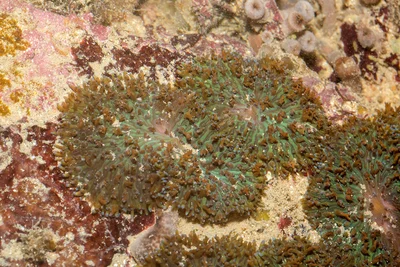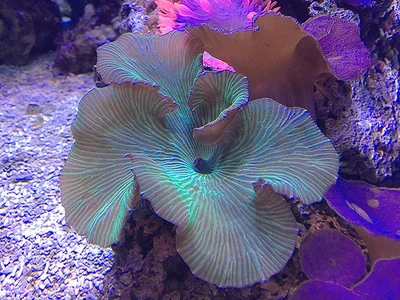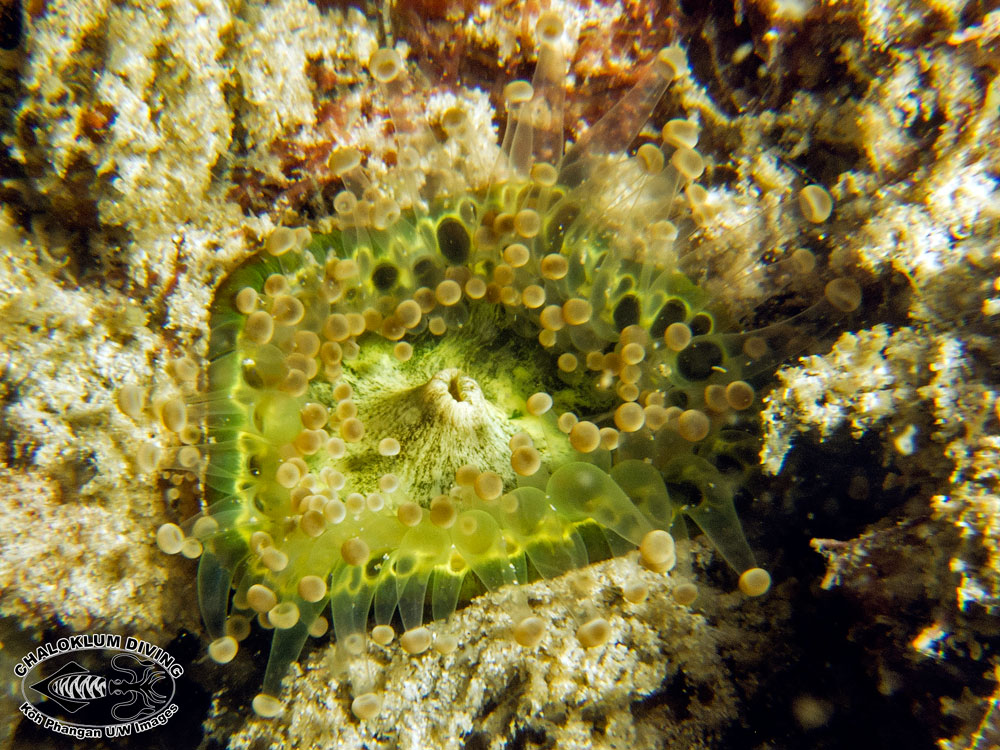
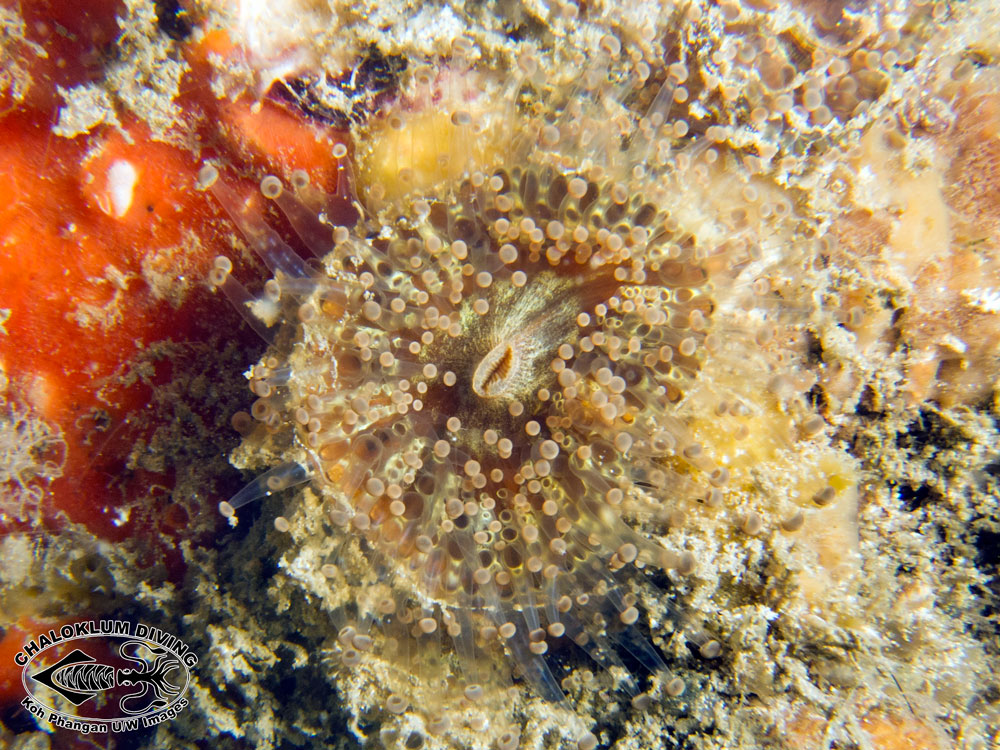
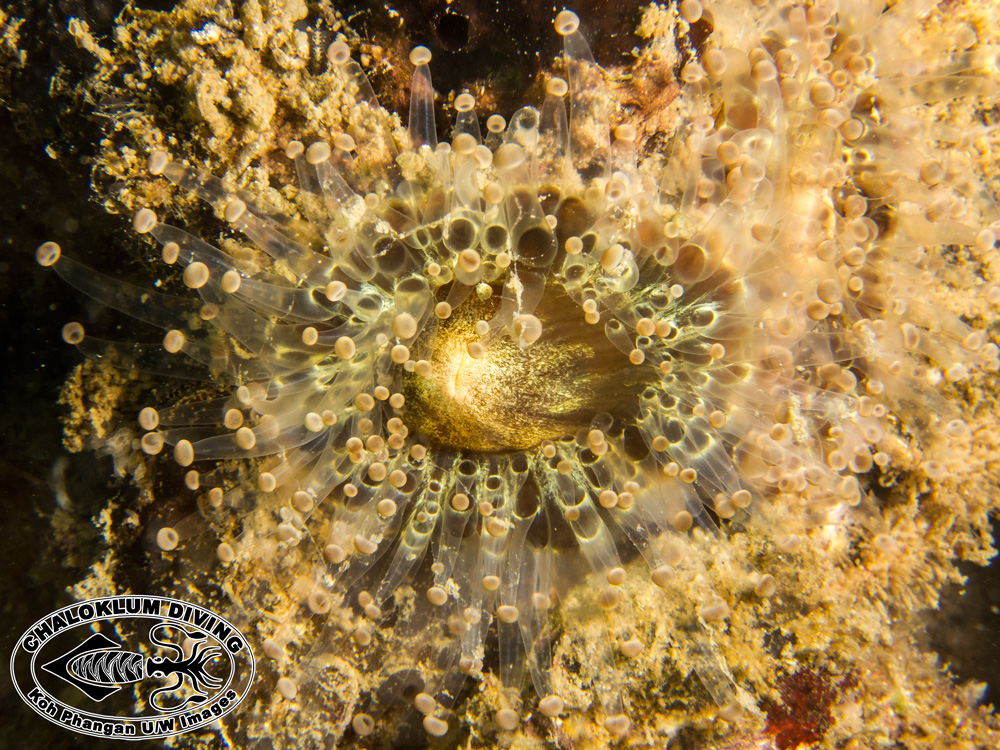
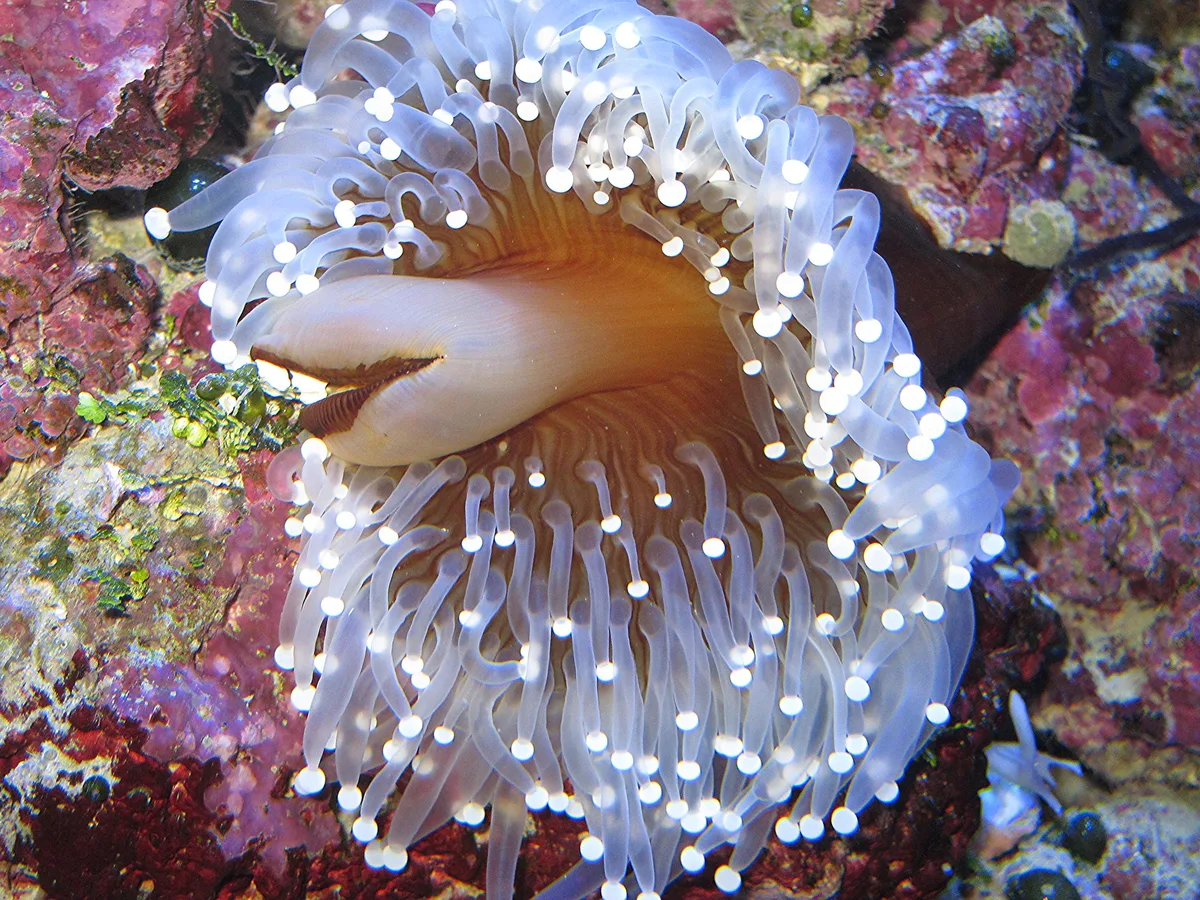
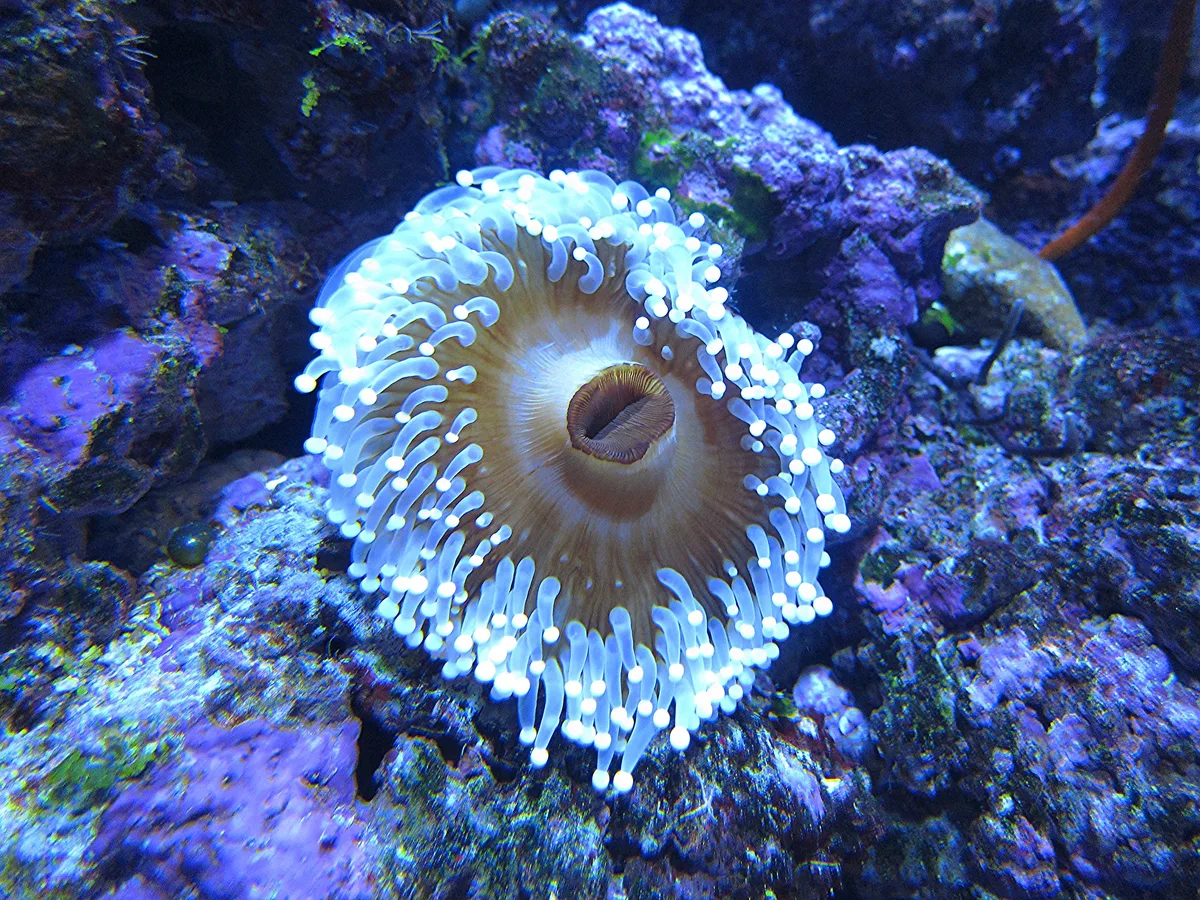
A tiny corallimorph, the disc barely 1 to 2 cm (0.4 to 0.8 in) across, recognized by its tentacles: each ends in a small round knob, so a cluster looks like a patch of beaded pins. Every knob is a cluster of stinging cells - the same equipment carried by any coral or anemone, sized here for plankton rather than for anything that might touch it. The species name records the shape: globulifera, bearing little globes. Color is often vivid where the light reaches, running to pink, orange and translucent white against dark rock.
Unlike the mushroom corallimorphs it avoids sunlight and carries no symbiotic algae, so it must catch everything it eats: clusters sit on shaded walls, cave roofs and the undersides of overhangs between about 3 and 40 m (10 and 130 ft), tentacles extended into passing current for zooplankton. Animals multiply by splitting and form patches of genetically identical individuals, which is why they appear as tight colonies of matching color. Hemprich and Ehrenberg described the species from 🌊 Red Sea material in 1834. Size is what makes it easy to miss: a colony covers no more than a palm, and on an unlit wall it reads as a patch of texture until a torch picks out the beaded tentacles - the same reason it is far better represented in photographs of cave walls than in dive logs.
- tentacles ending in tiny round knobs
- very small - disc barely 2 cm across
- clustered on shaded rock, often brightly colored