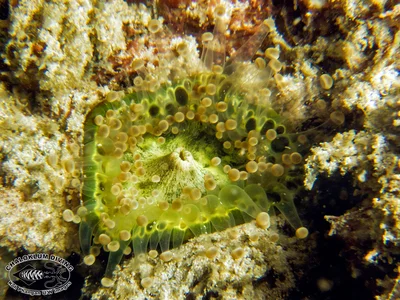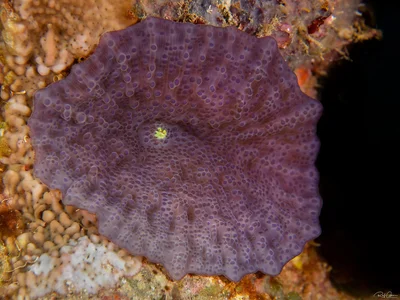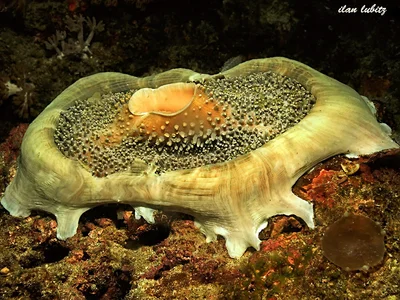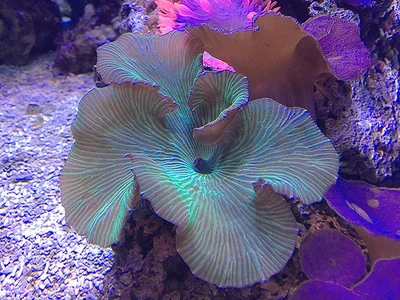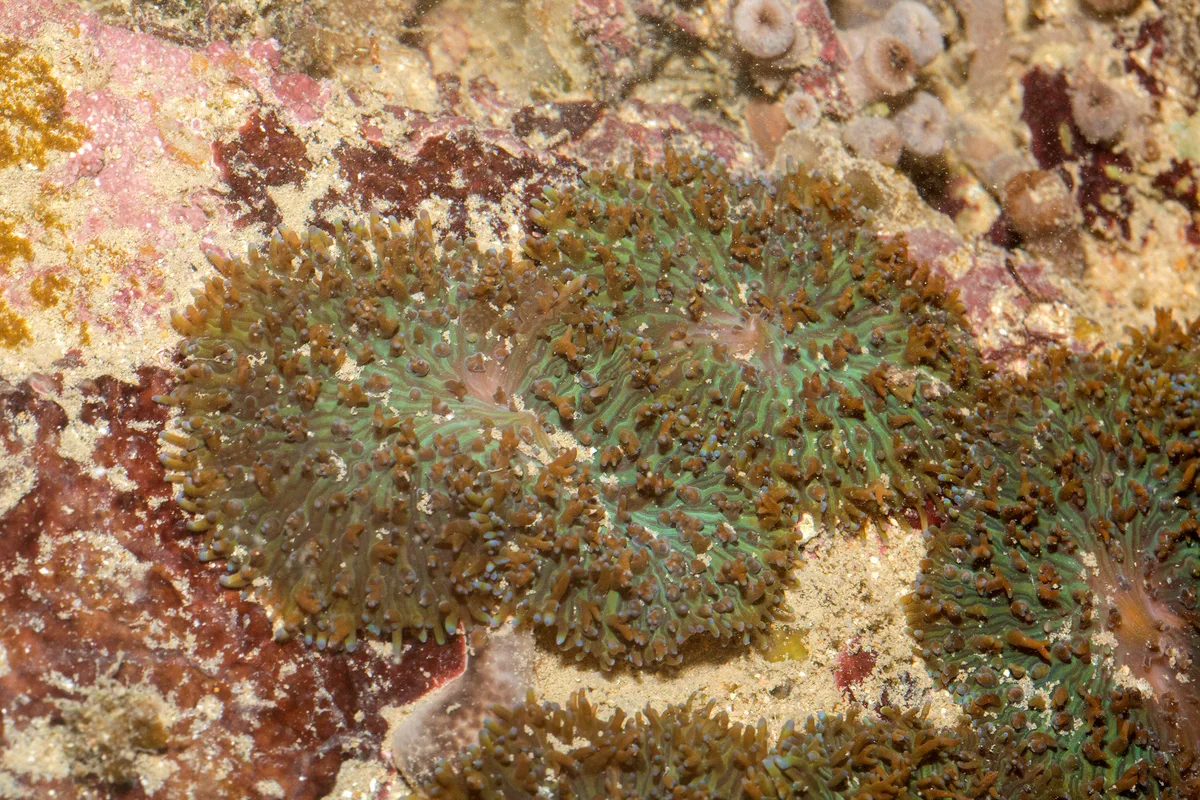
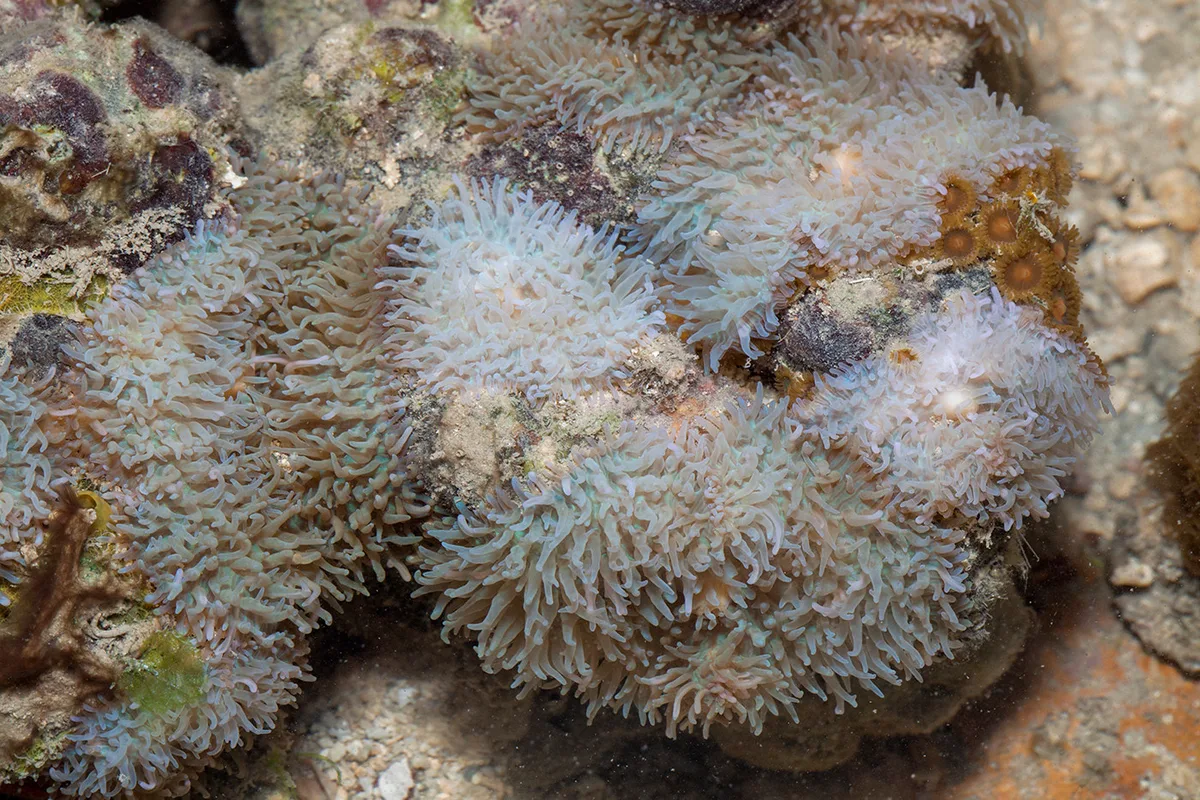
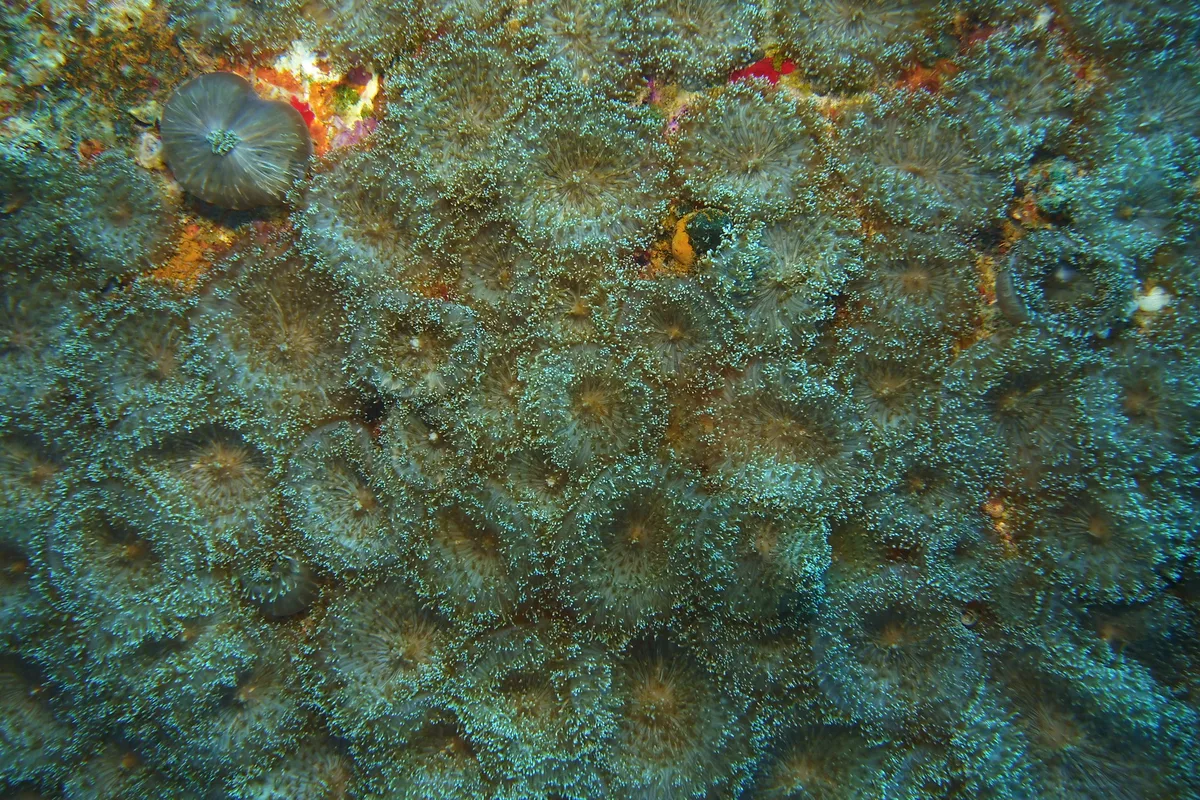
A corallimorph - an anemone-like animal that sits between true anemones and stony corals, with the anatomy of a coral polyp but no skeleton at all. The disc is circular and flattened, 5 to 10 cm (2 to 4 in) across, and its whole upper surface is covered in short branched outgrowths that give a furry or warty texture. Color runs from bright green through olive to gray-brown, usually with a paler mouth at the center. Neighboring animals spread until their discs touch, so a colony reads as a continuous carpet rather than as separate individuals.
It occupies shallow reef flats, lagoon rock and the tops of boulders from the surface to about 15 m (50 ft), preferring bright light: like reef corals it hosts symbiotic zooxanthellae and gets much of its food from them. The rest it catches. The disc folds inwards like a closing purse to trap whatever settles on it, and animals of this genus have been recorded taking fish that way. Multiplication is mostly by splitting, which is why one 🌊 Red Sea boulder can carry dozens of identical clones.
The genus is also poisonous to eat, and seriously so. In American 🇼🇸 Samoa these corallimorphs are gathered as food under the name matamalu; boiled they are harmless, but raw they have killed. Edgar Martin of Berkeley documented three such poisonings in the 1960s, all fatal: the victims fell into a stupor resembling anaesthesia, losing reflexes with pupils wide, while pulse and blood pressure stayed normal - then, eight to thirty-six hours later, went into shock and died of fluid filling the lungs. The toxin has never been fully characterised, though it behaves like the palytoxin of related zoanthids, which has poisoned aquarium keepers through cuts and even through fumes from a heated tank. Touching the animal underwater is harmless; the danger begins in a kitchen.
- disc covered in short branched outgrowths - looks furry
- spreads in dense carpets over rock, discs touching
- green to olive brown, mouth often paler