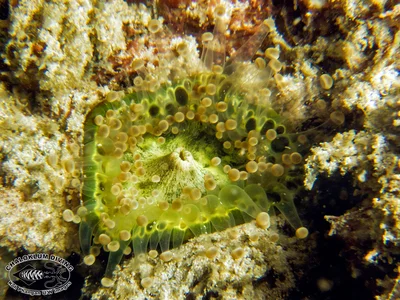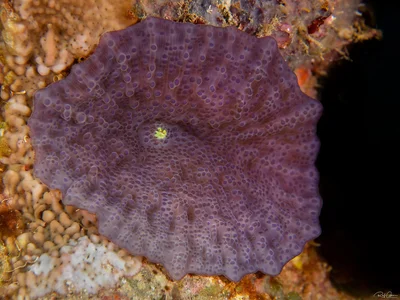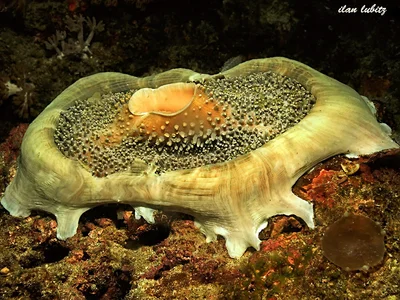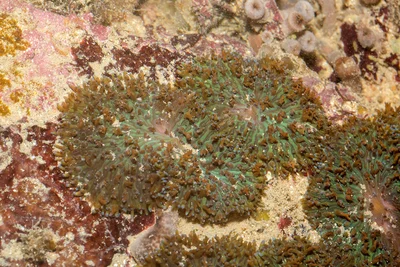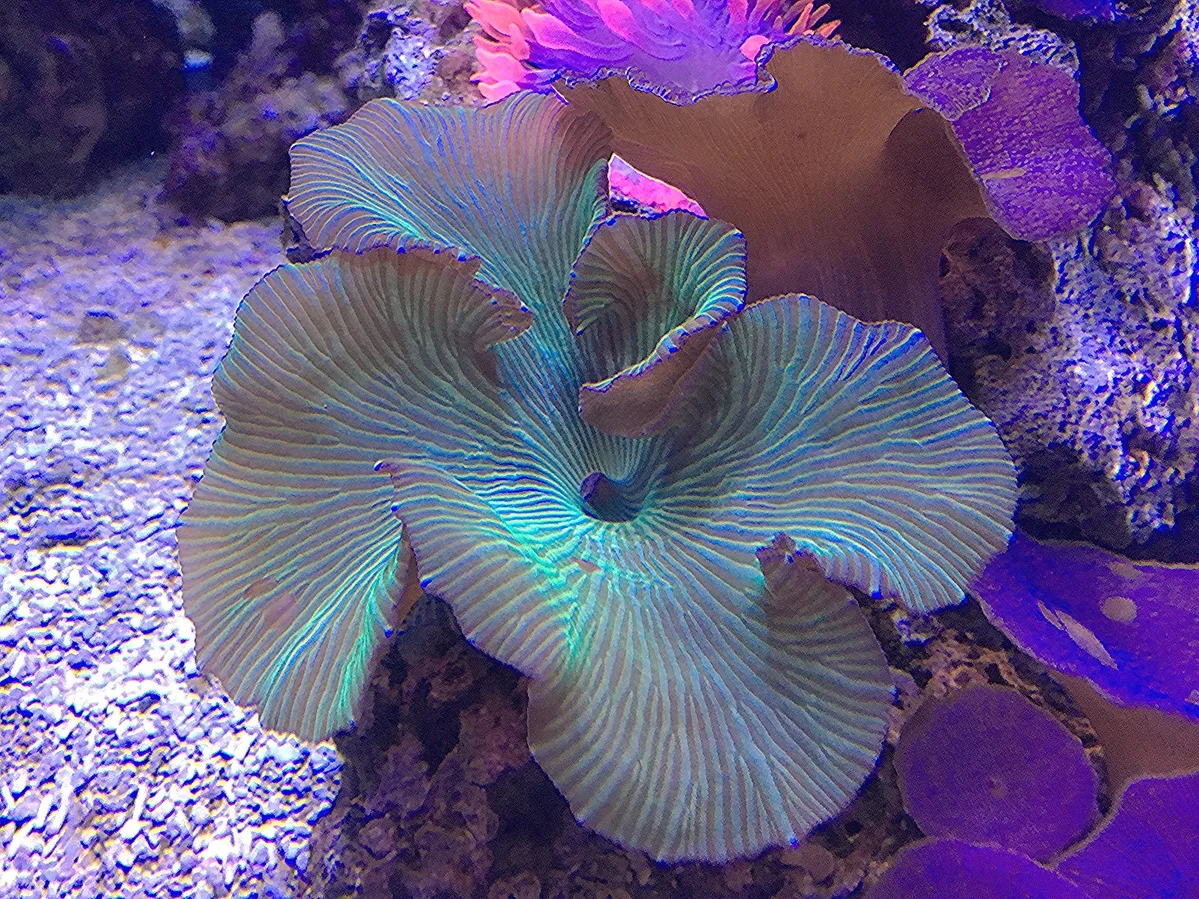
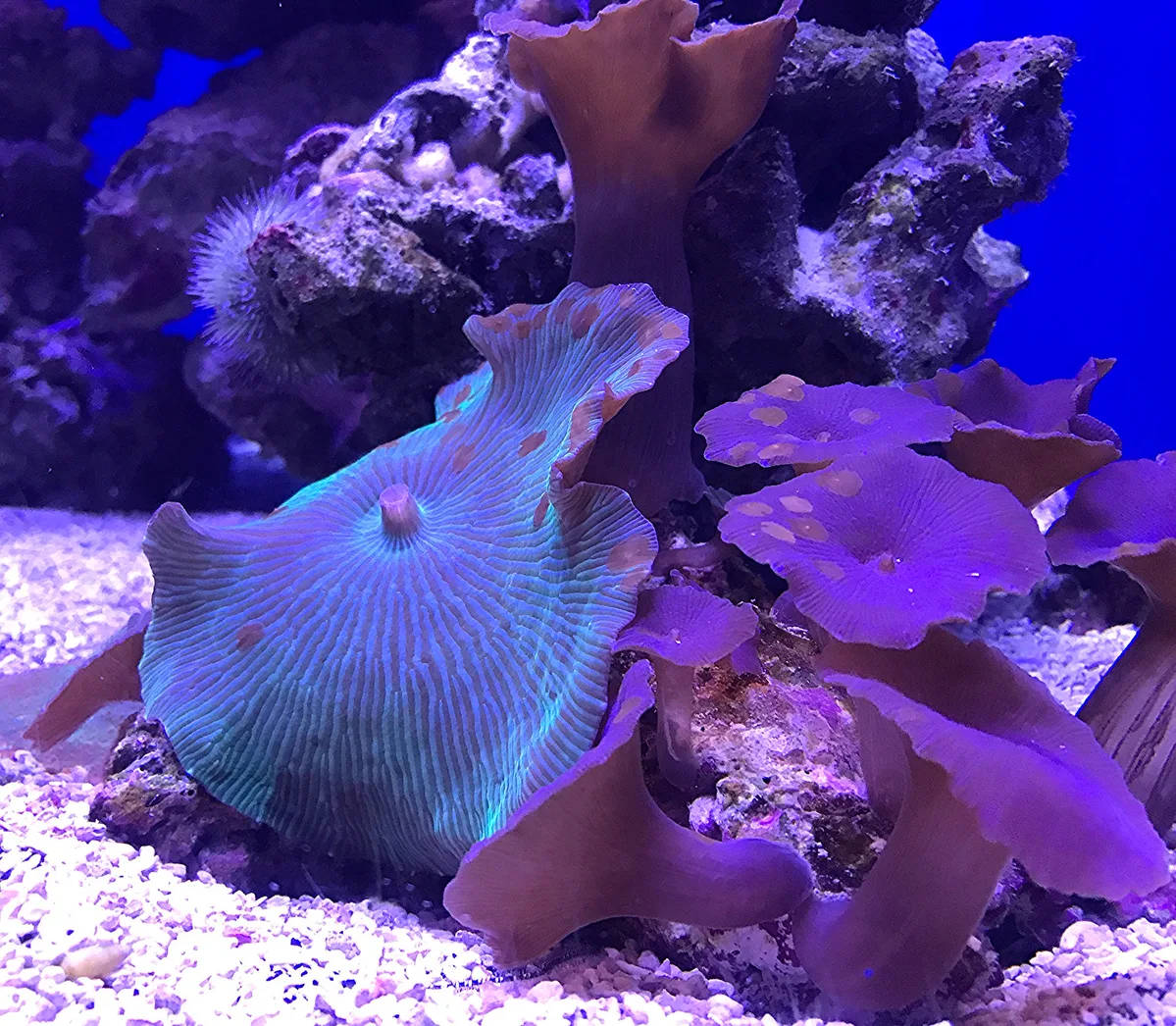
The palest corallimorph on these reefs: the disc is whitish, cream or very light gray, smooth-surfaced, with a distinct mouth at the center that often shows as a darker slit. Diameter reaches about 5 cm (2 in). The pale coloring is the identifying feature - its relatives run to green, brown and purple, and nothing else in the group looks bleached while perfectly healthy.
It favors shade: crevices, undercuts and the sides of boulders down to about 20 m (65 ft), and turns up as single animals or small scattered groups rather than the dense mats other corallimorphs form. Like all of them it has the anatomy of a coral polyp without the skeleton, and captures small prey with the disc while also drawing on symbiotic algae. Forsskål described it in 1775 from material gathered on the Danish expedition to this sea, making it one of the earliest named animals in the region - the same expedition, and the same naturalist, behind a long list of local firsts. Pale coloring in a shaded animal is not bleaching: species that live out of the light carry fewer symbiotic algae to begin with, and this one is simply built that way.
- pale disc - whitish, cream or very light gray
- smooth surface with a distinct central mouth
- usually single animals in shade, not in carpets