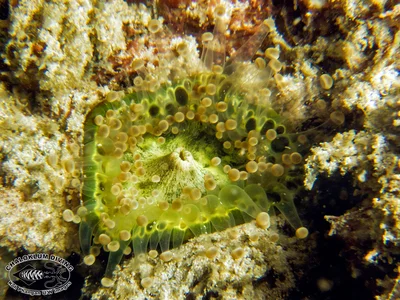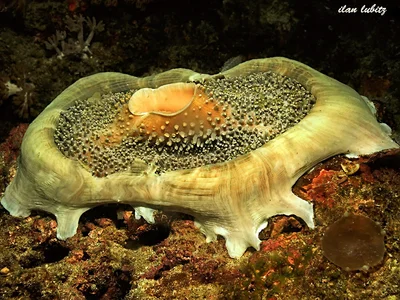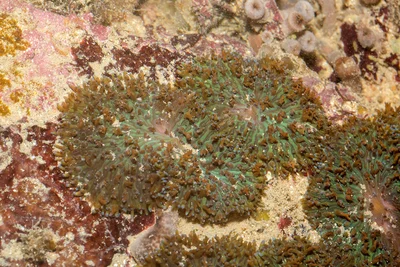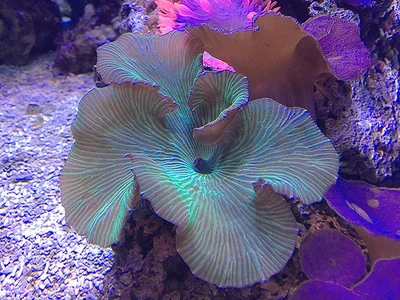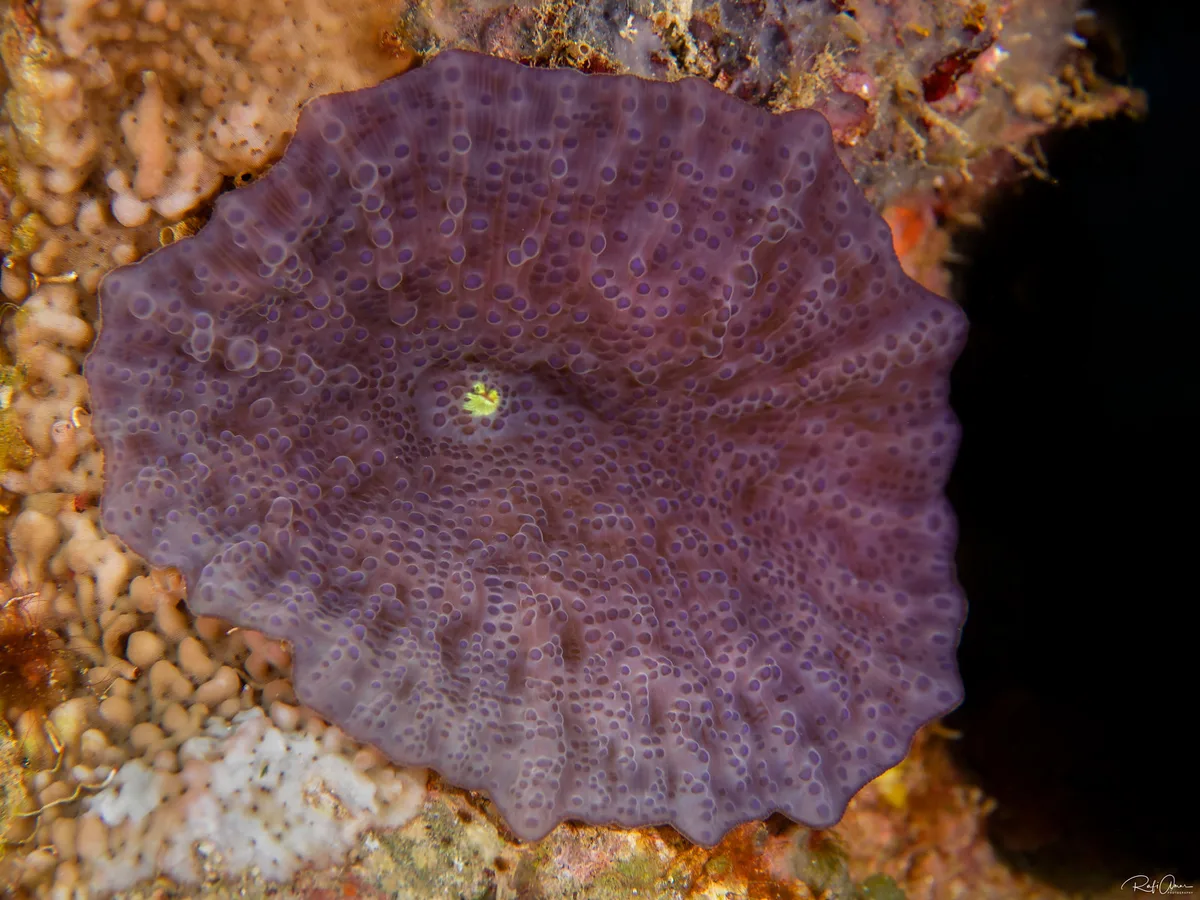
A small corallimorph with a smooth, flat, coin-shaped disc - the shape behind nummiforme, from the Latin for coin. Unlike the hairy species it carries no branched outgrowths: the surface is finely warted at most, and the rim is only slightly ruffled. Diameter runs from 3 to 6 cm (1 to 2.5 in). Color is variable and often striking - brown, olive, blue-gray or purplish, sometimes with radiating streaks running out from the central mouth.
Animals attach to reef rock, boulders and the ceilings of overhangs from the shallows down to about 20 m (65 ft), usually in loose groups of a few individuals rather than the continuous mats their relatives form. They carry zooxanthellae and sit with the disc spread flat to the light, contracting into a low knob when touched. Rüppell and Leuckart described the species in 1828 from material collected in this sea, and it remains one of the corallimorphs most often met on shallow rock here. Corallimorphs are worth a second look precisely because they are so easily walked past: no skeleton means no coral shape, and a group of flat discs on a boulder reads as staining on the rock until you notice the mouths.
- smooth flat disc, no branched outgrowths
- surface finely warted, edge slightly ruffled
- small groups on rock, discs rarely touching