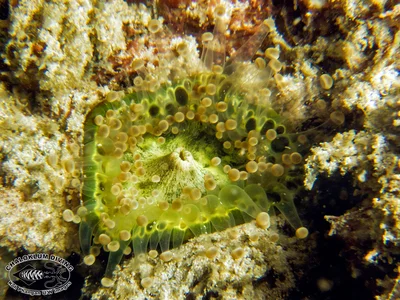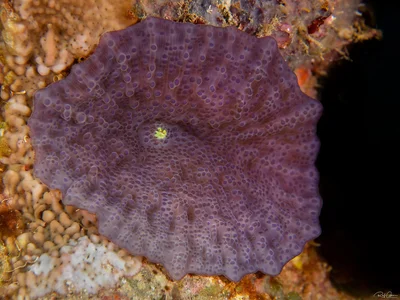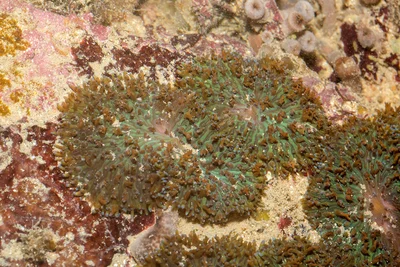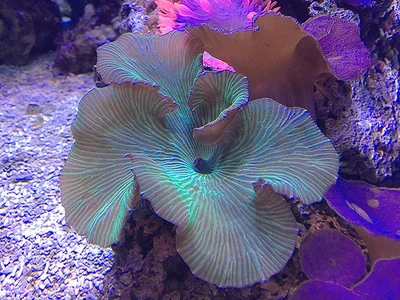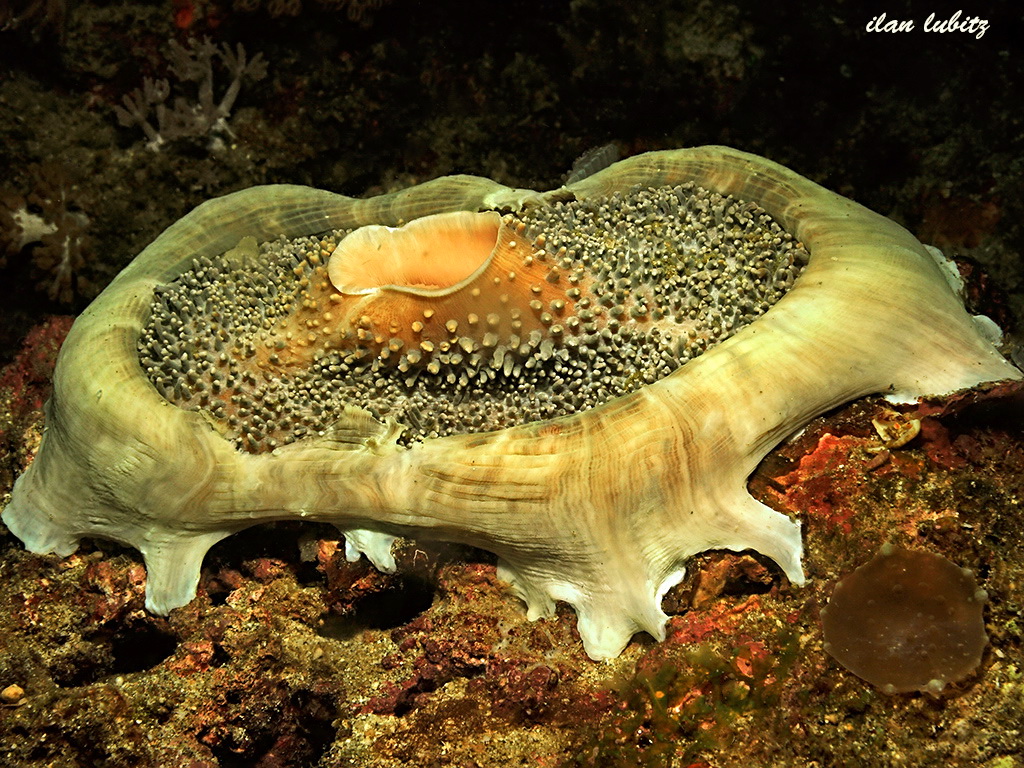
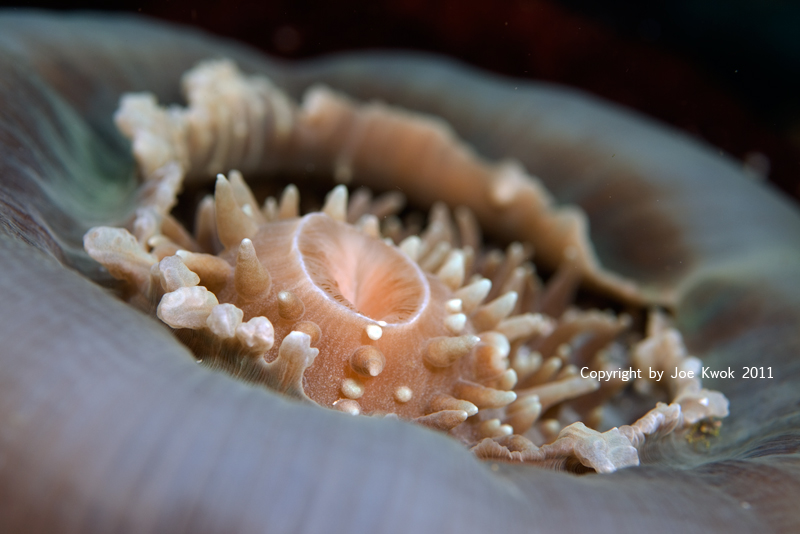
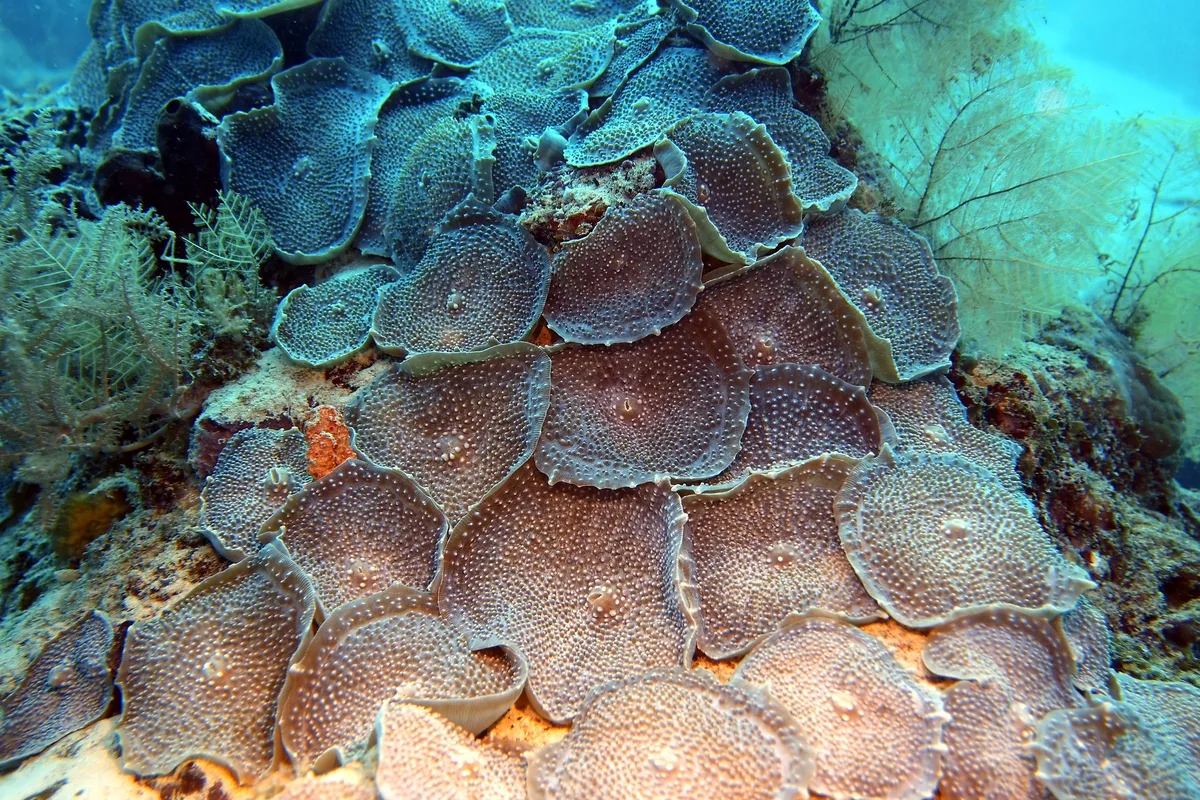
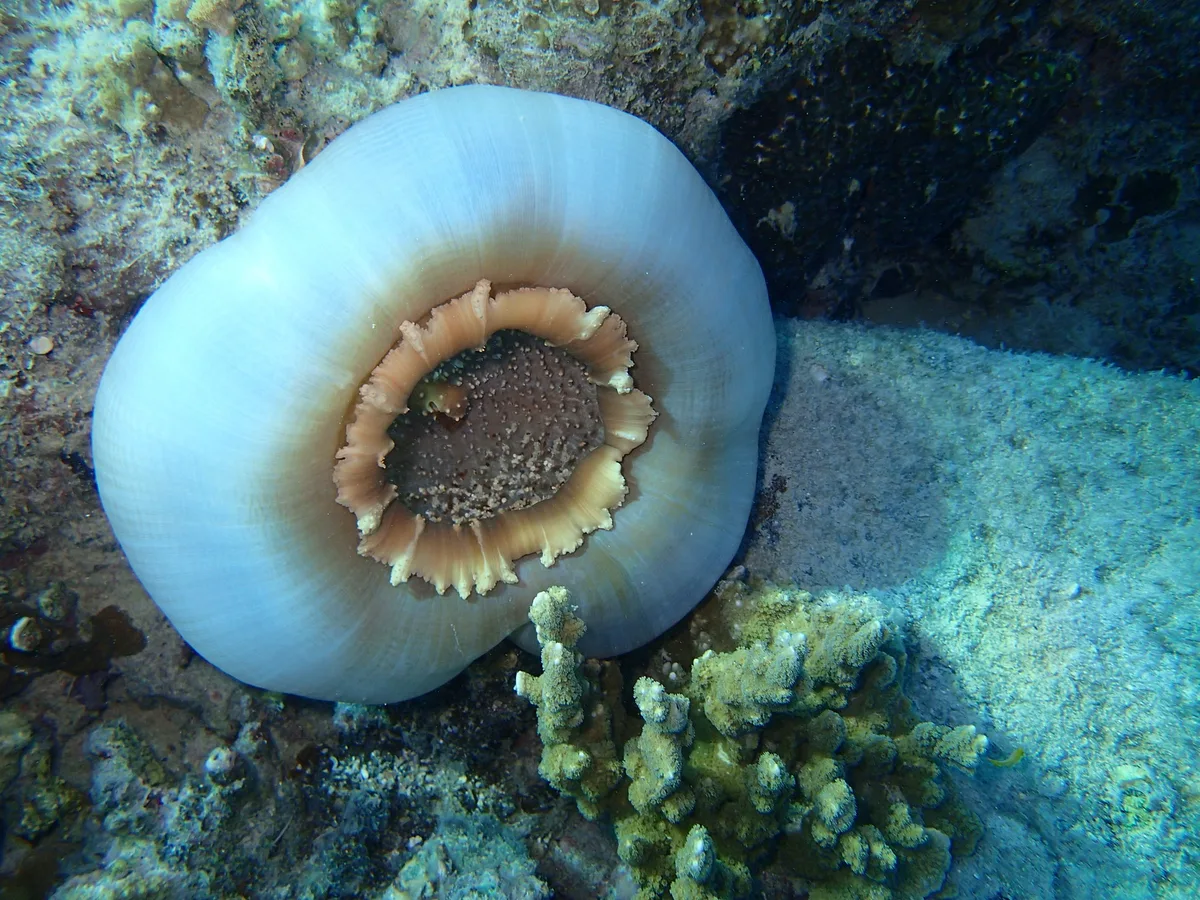
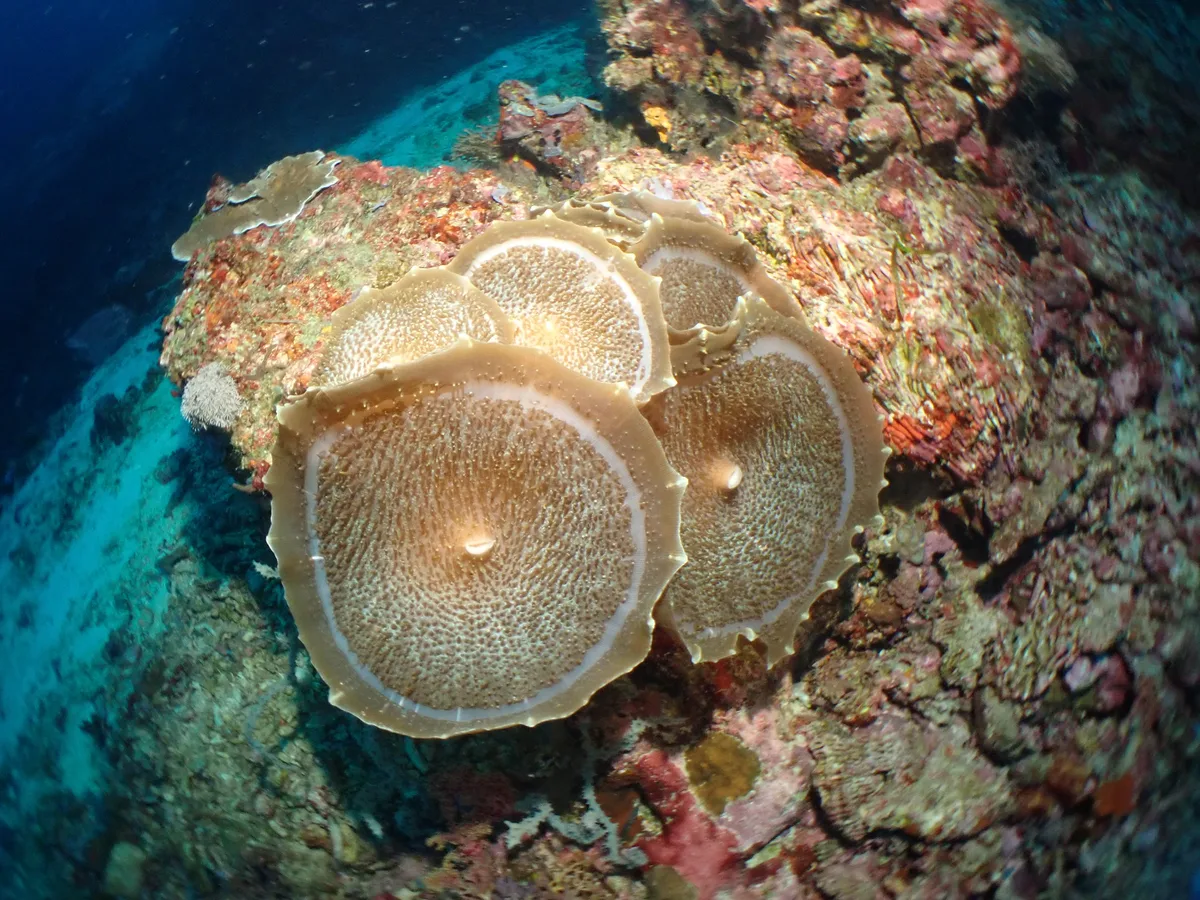
A flat disc up to 40 cm (16 in) across, brown to gray-green, its surface covered in short blunt tentacles that give it the texture of felt, with a pale ring around the central mouth. Corallimorphs sit between anemones and stony corals - the anatomy of a coral polyp without the skeleton - and this is by far the largest of them here.
The innocent look is a trap. When a small fish settles onto the disc, the margins fold inward and close over it like a purse being drawn shut, and the animal digests what it caught. Aquarium keepers know the behavior well, because a tank with one of these acquires it as a permanent hazard for anything small enough to fit.
It spreads by splitting rather than spawning: a disc grows, stretches and tears into two, and a rock can end up carpeted by identical clones of one founder. That is also why a colony looks so uniform - it is not a crowd, it is a single animal that kept dividing.
- huge flat disc up to 40 cm across, far larger than other corallimorphs
- surface covered in short blunt tentacles like felt
- pale ring around the mouth, body brown to gray-green
- edges can fold inward like a closing purse