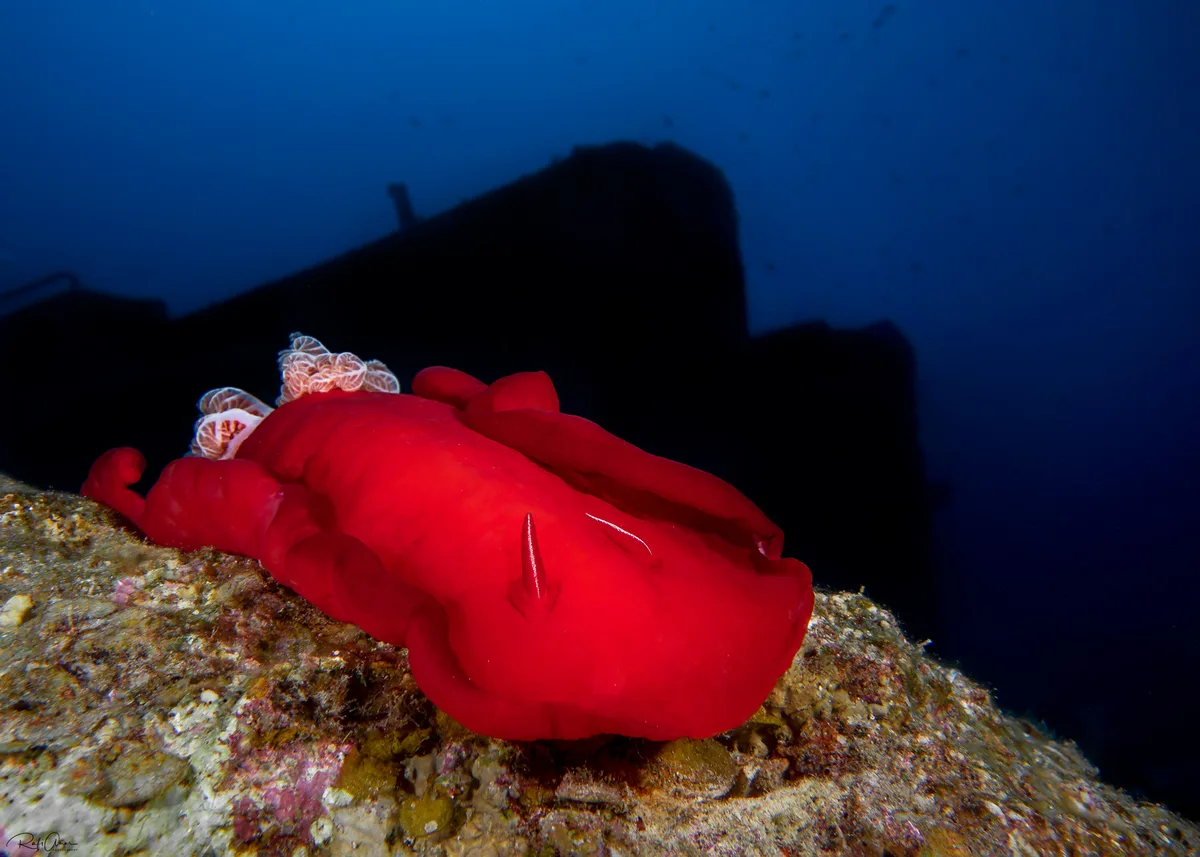
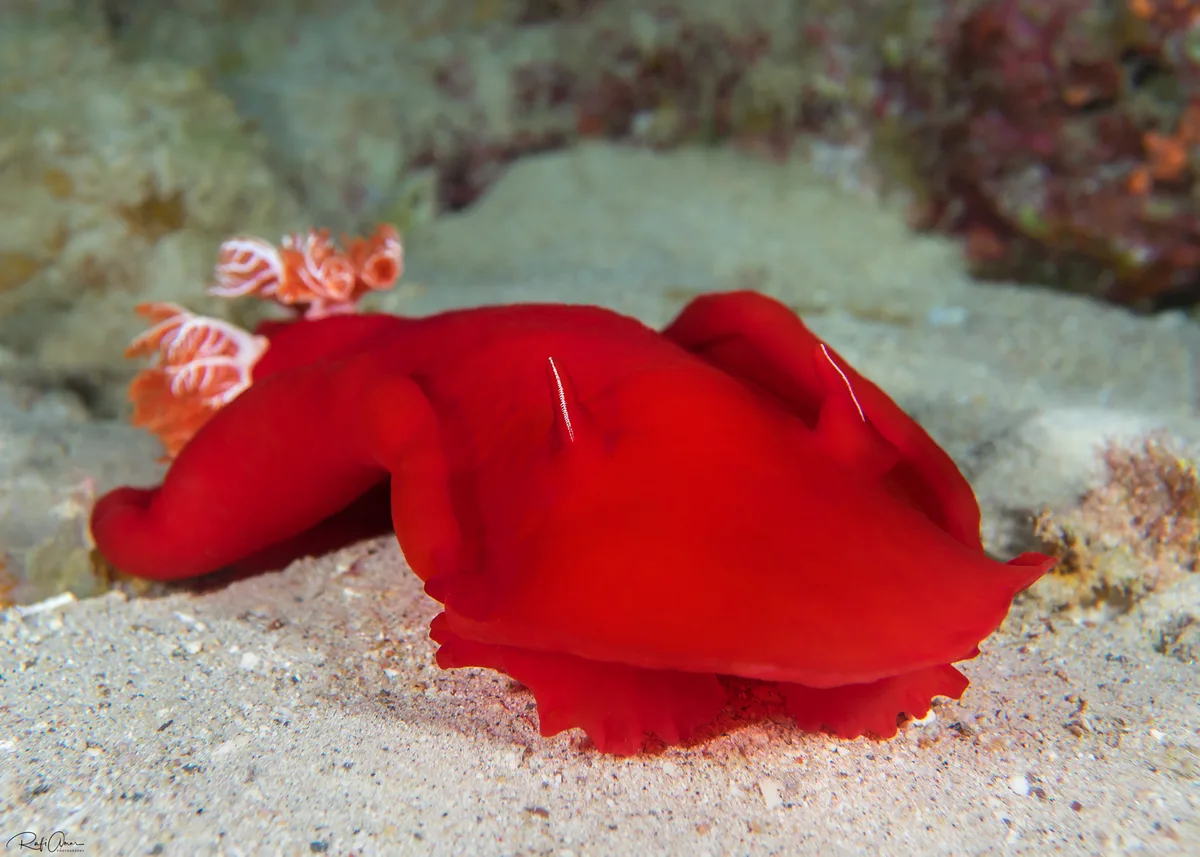

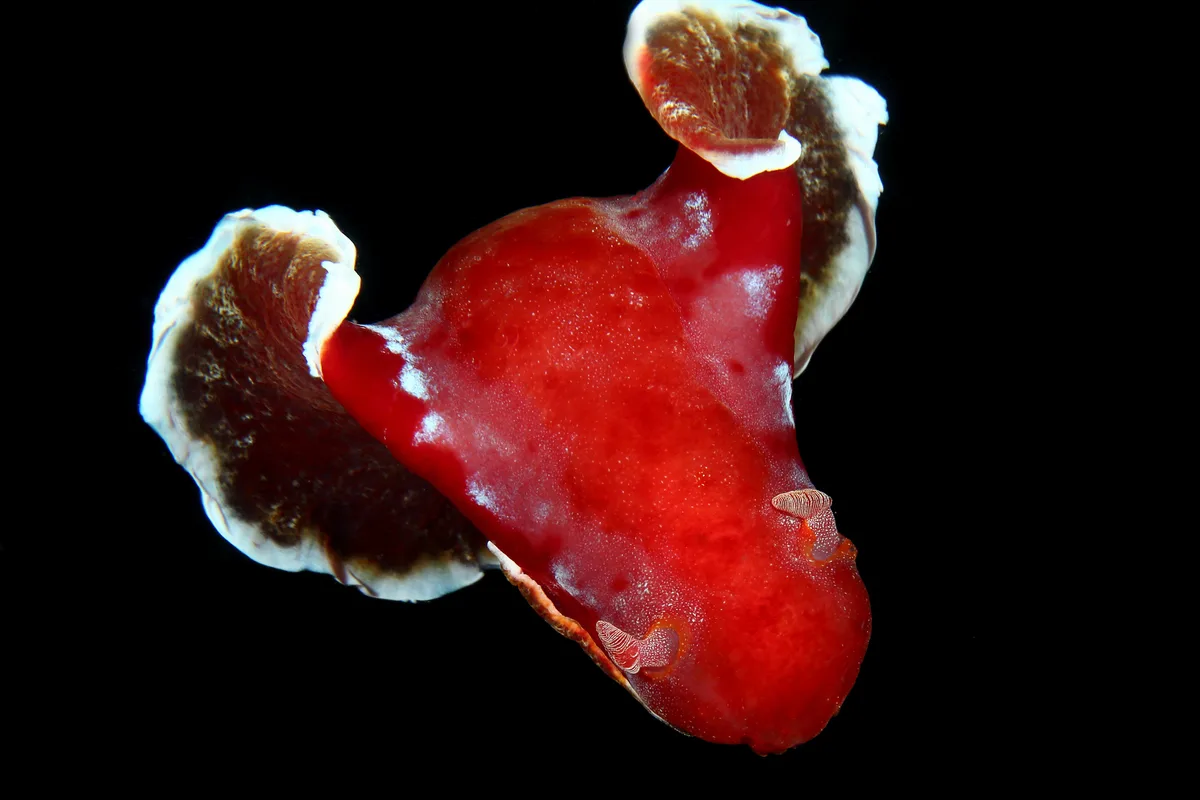

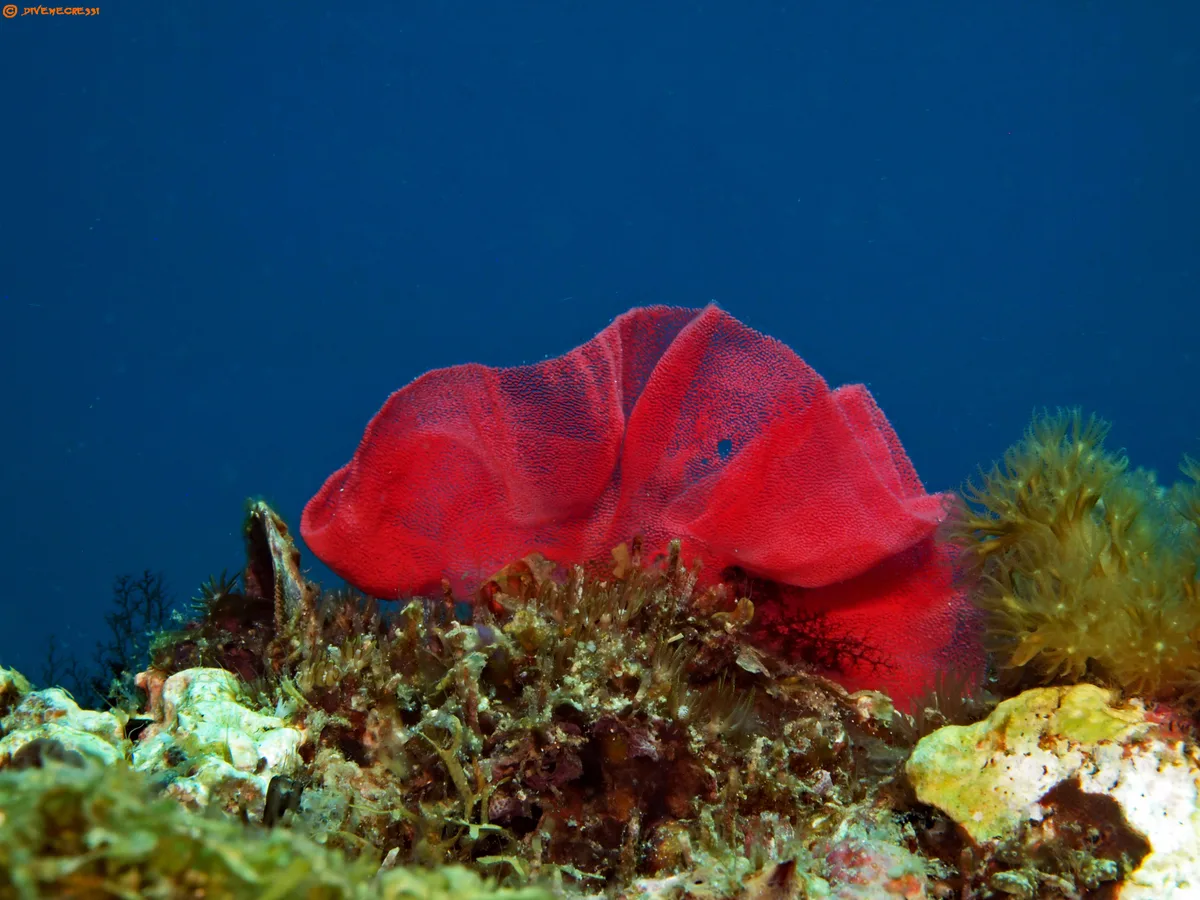
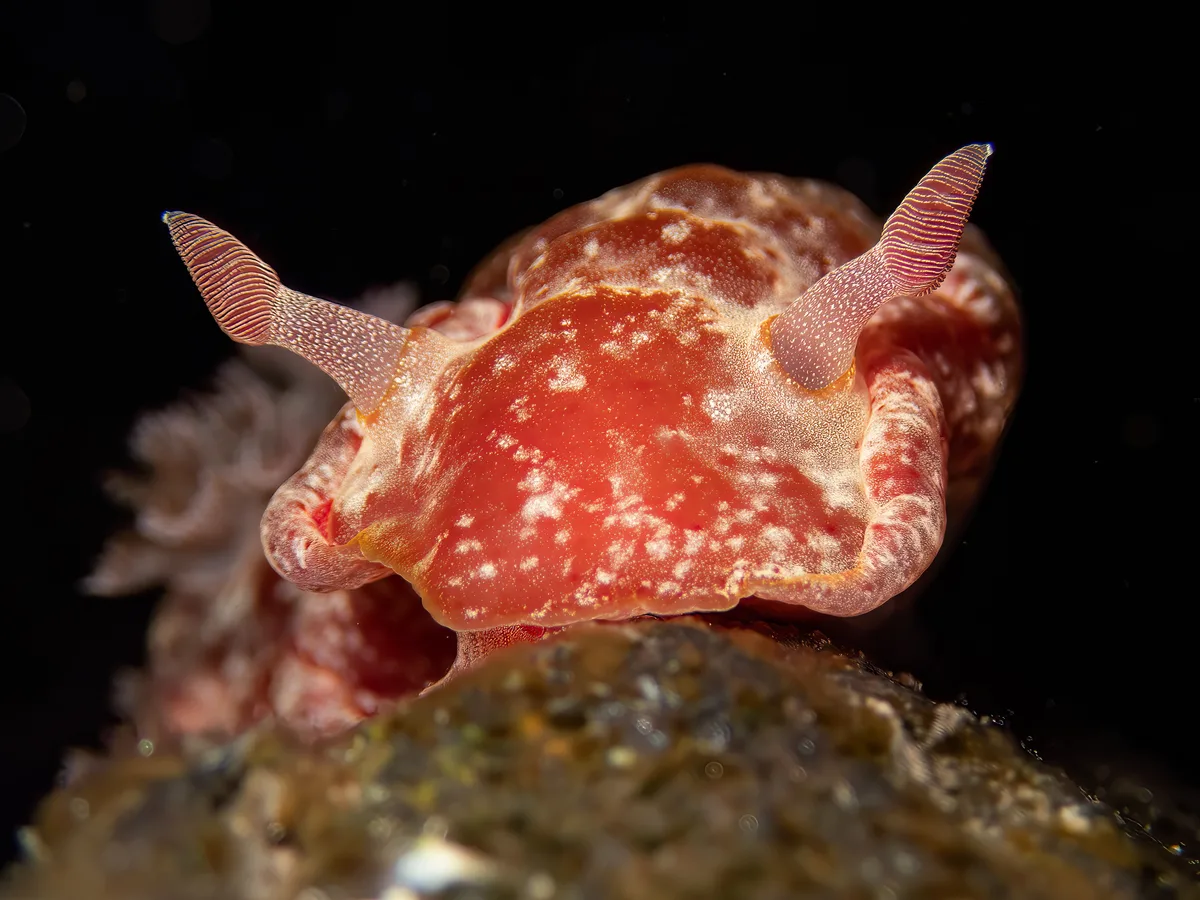
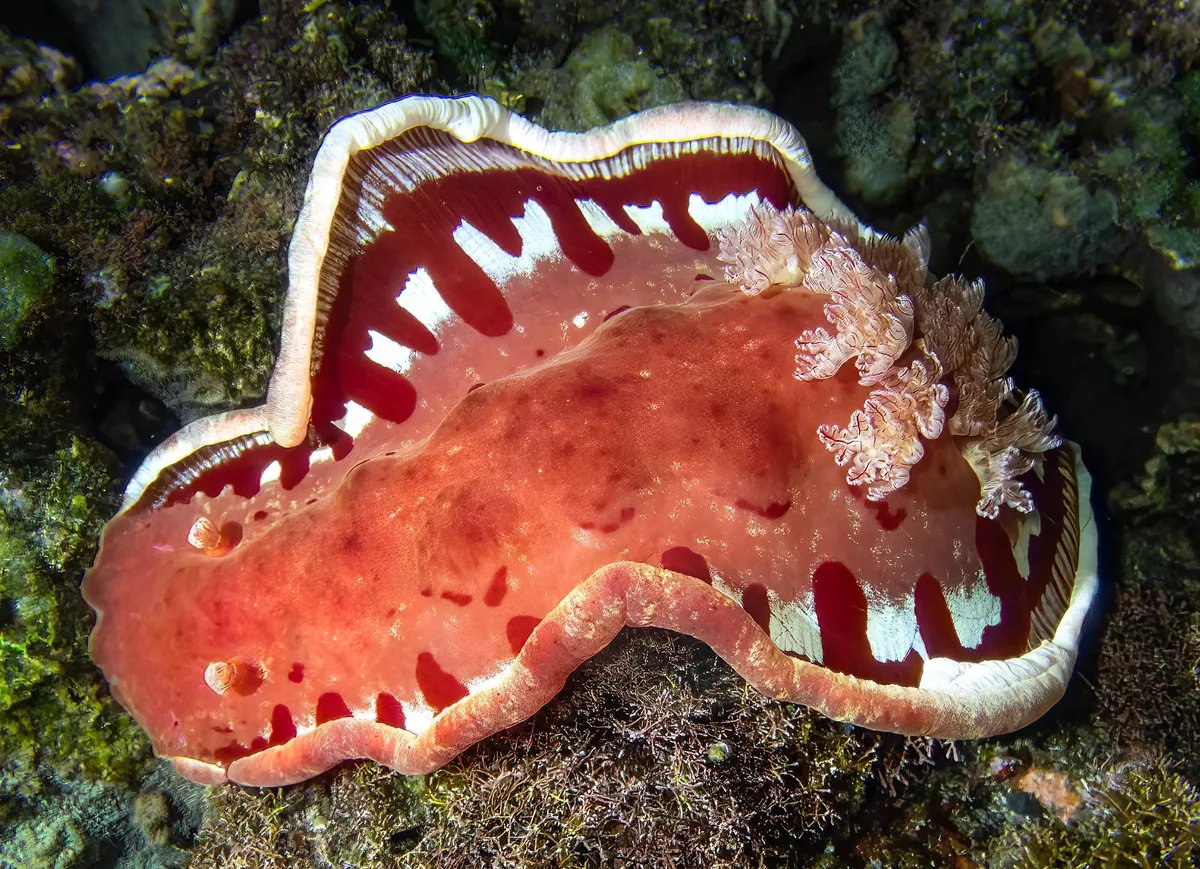
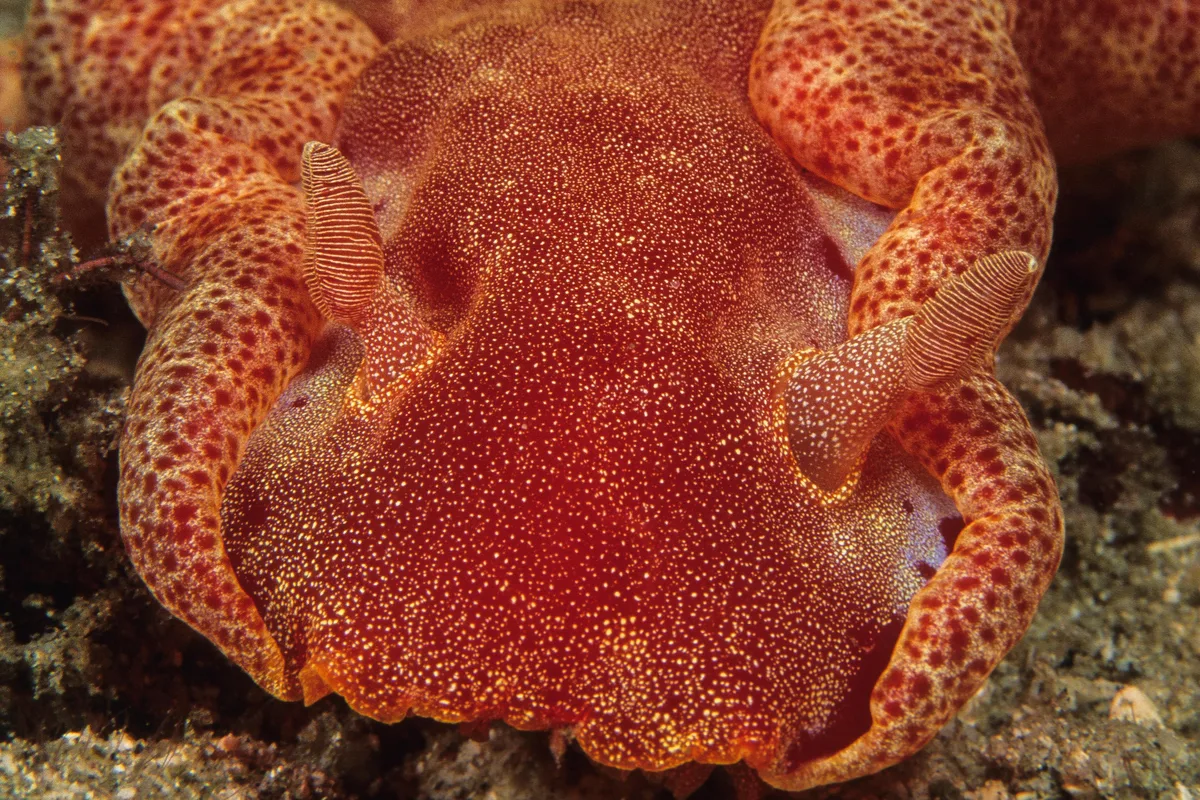
The largest sea slug on the reef, up to 40 cm (16 in) here, red to orange mottled with white, with six feathery gills standing in a rosette at the rear that cannot be pulled in. At rest the mantle edges are rolled up and the animal reads as a lump; disturbed, it unrolls them and swims, flexing the whole body in slow waves. The Victorian naturalists who named the effect saw a flamenco dress, and the name stuck in every language.
Swimming is unusual enough in sea slugs to be worth understanding: it is an escape from bottom predators, not a way of getting around, and an animal in the water column is one that has decided the reef is more dangerous than the open water above it.
The defense is borrowed. It feeds on a sponge that produces macrolide toxins, concentrates them, and lays them into its own tissue and - at far higher strength - into its eggs. The pink egg ribbon coiled like a rose is more poisonous than the adult that laid it.
And it comes with tenants. A small commensal shrimp lives on the mantle of most large individuals, colored to match its host exactly, feeding on its mucus. Photograph the slug, then look again at the photograph.
- very large red to orange slug with white mottling, mantle edges rolled up at rest
- six feathery gills in a rosette at the rear, not retractable
- unrolls the mantle and swims with slow undulations when disturbed
- length up to 40 cm