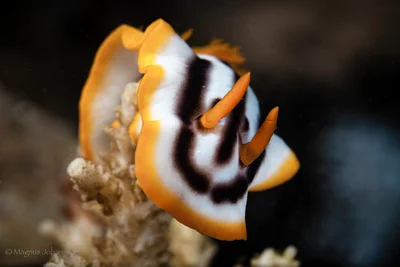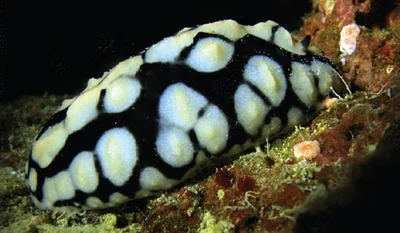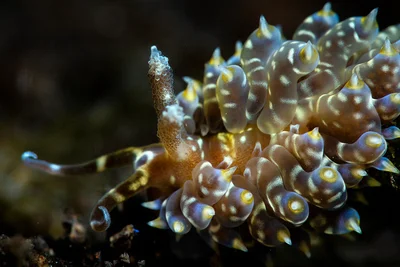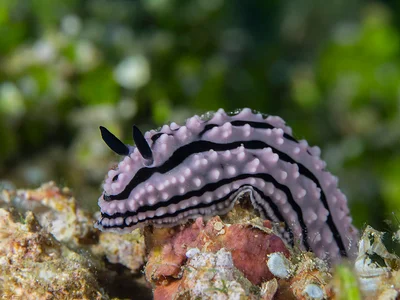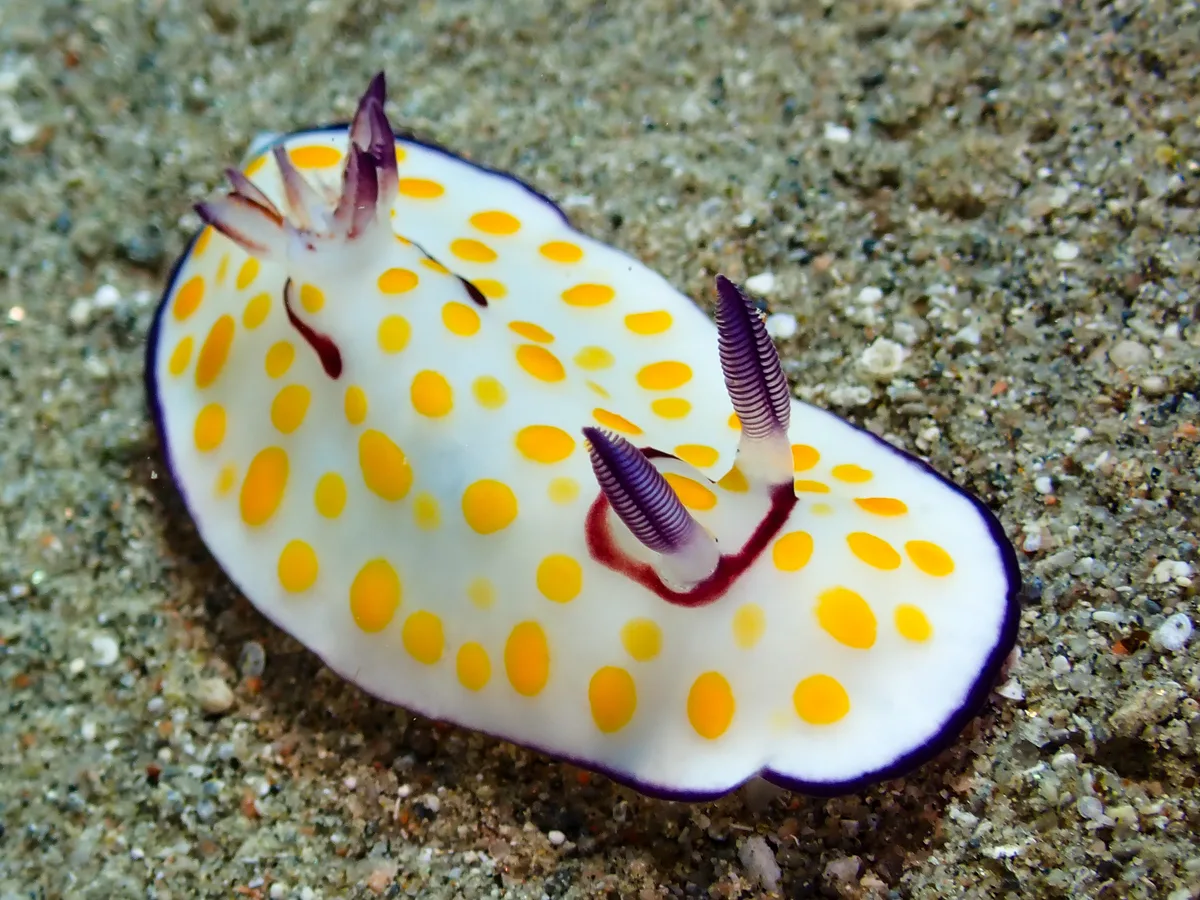
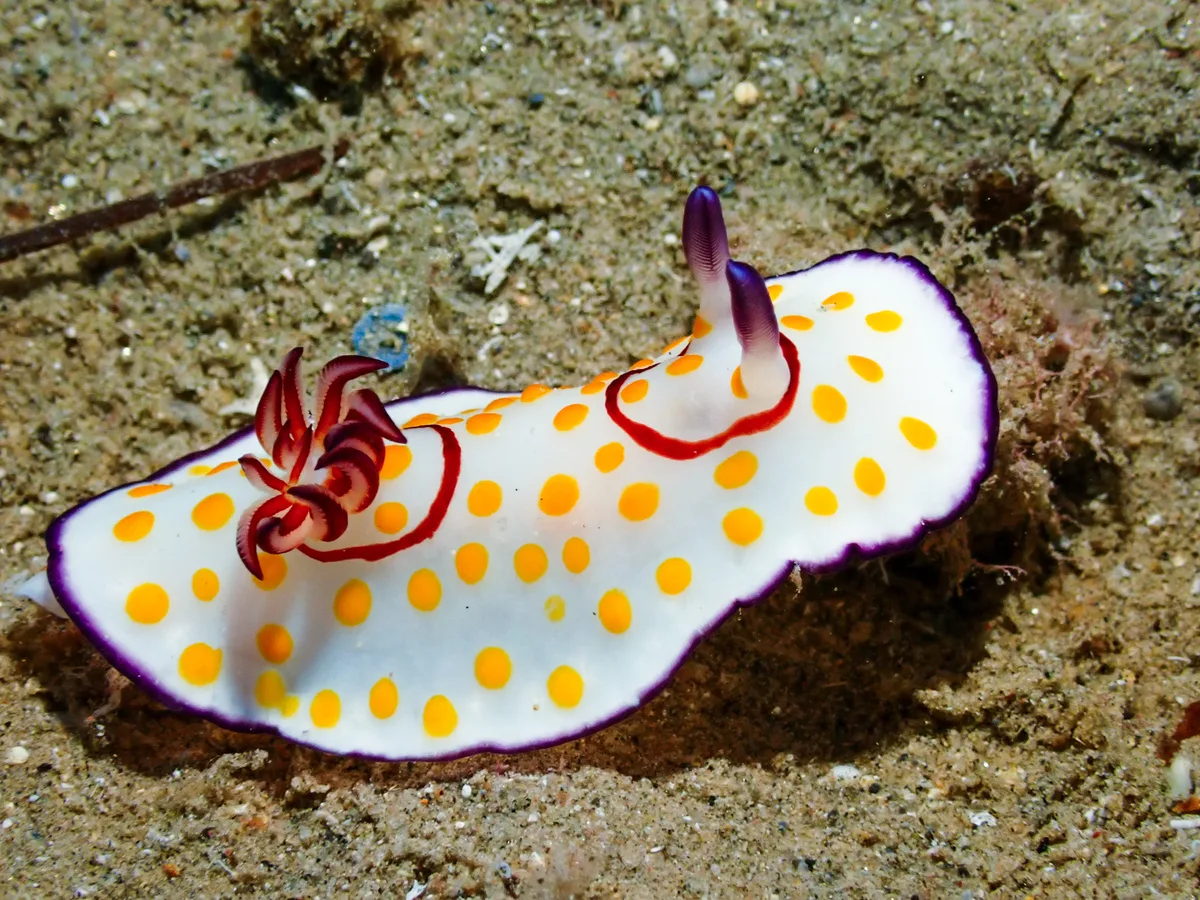
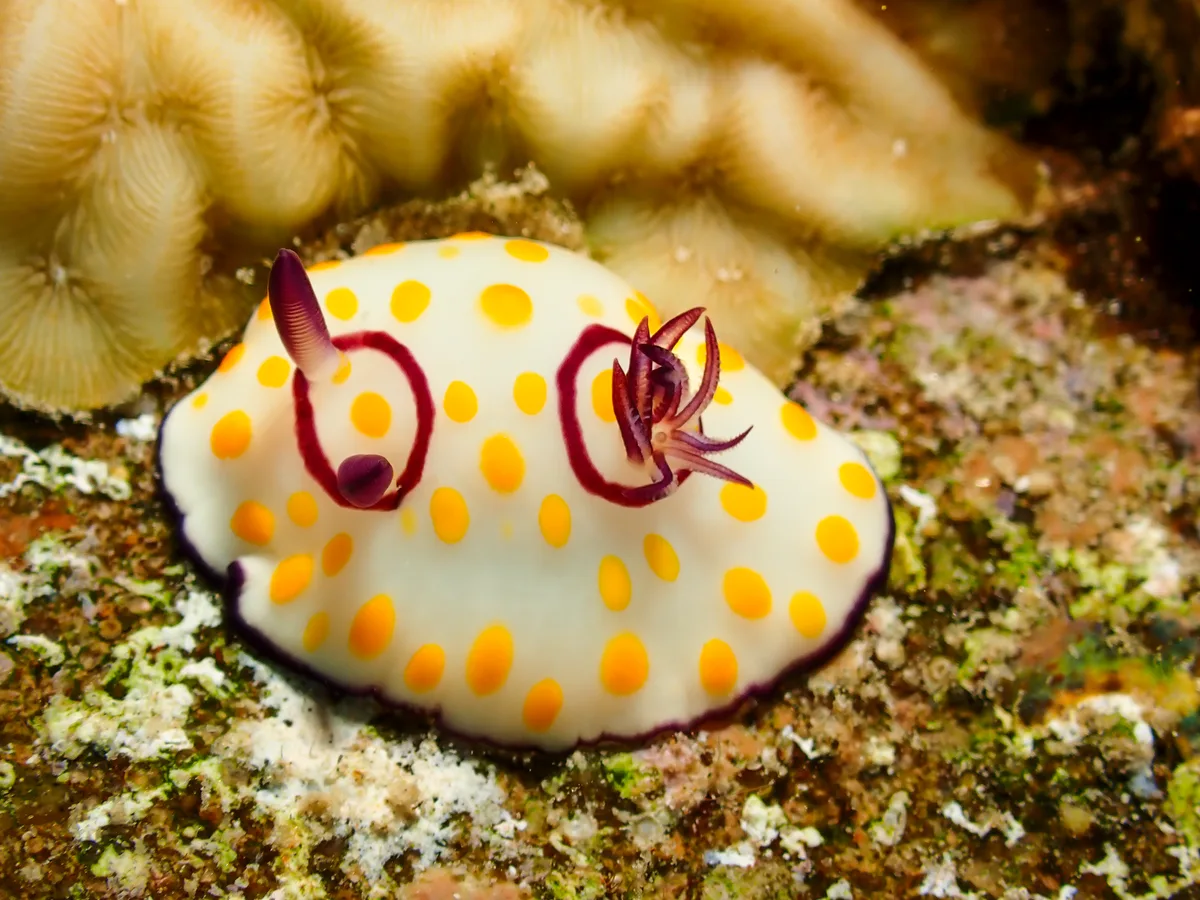
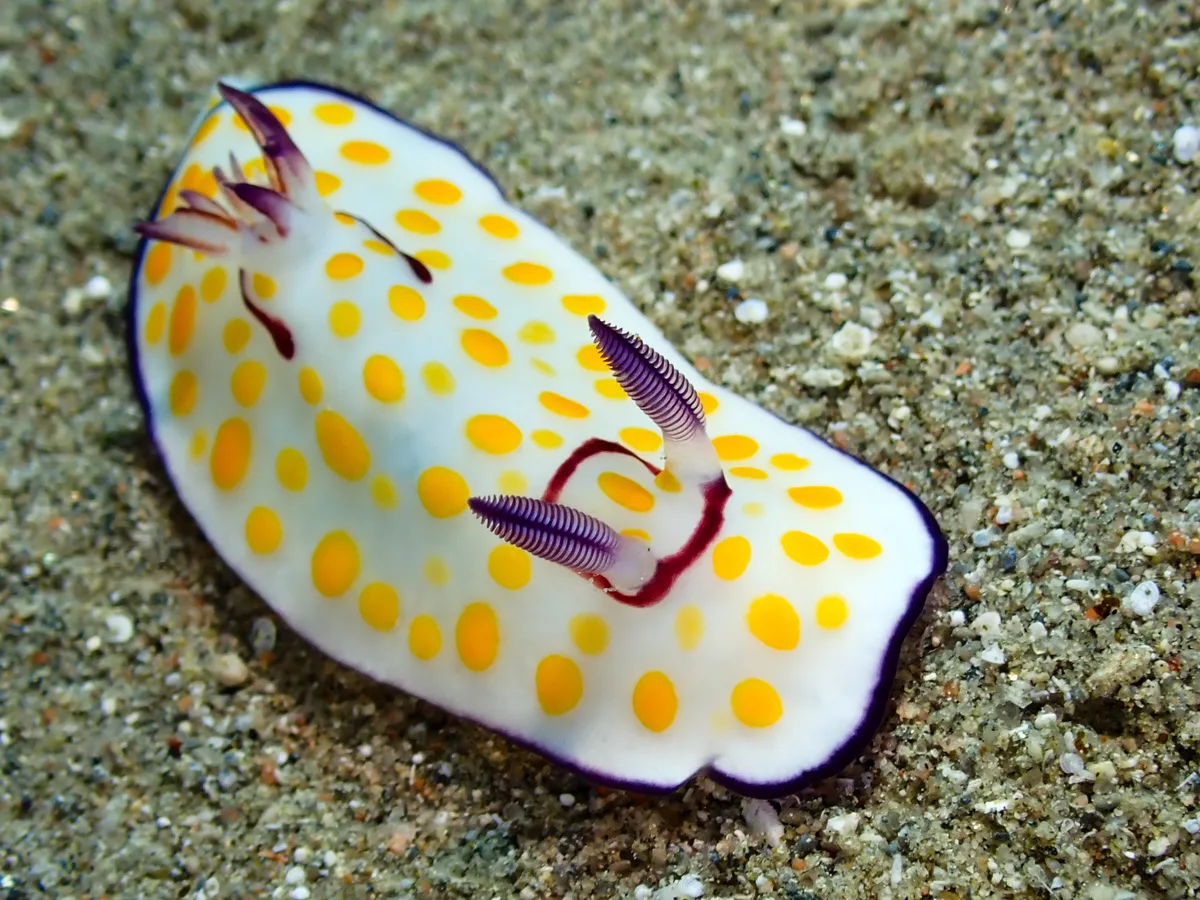
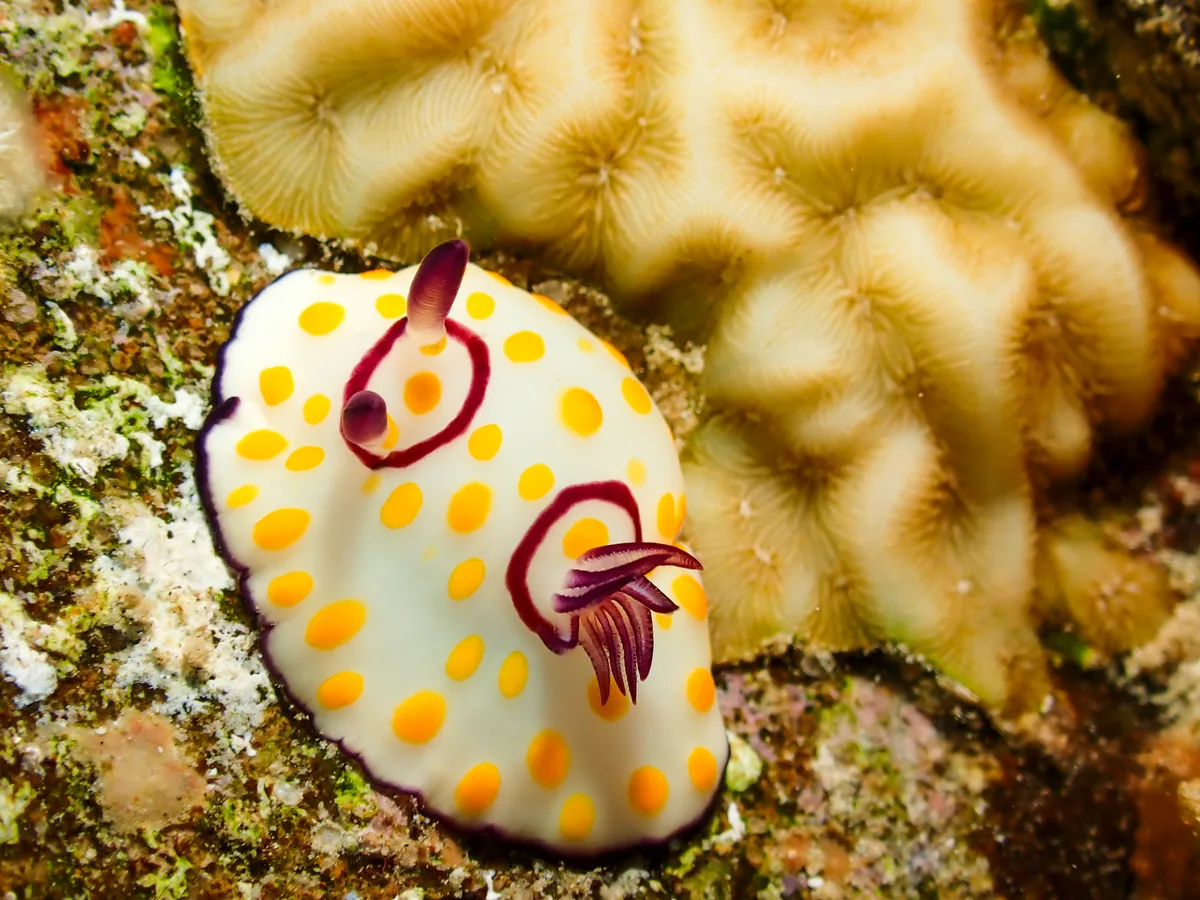
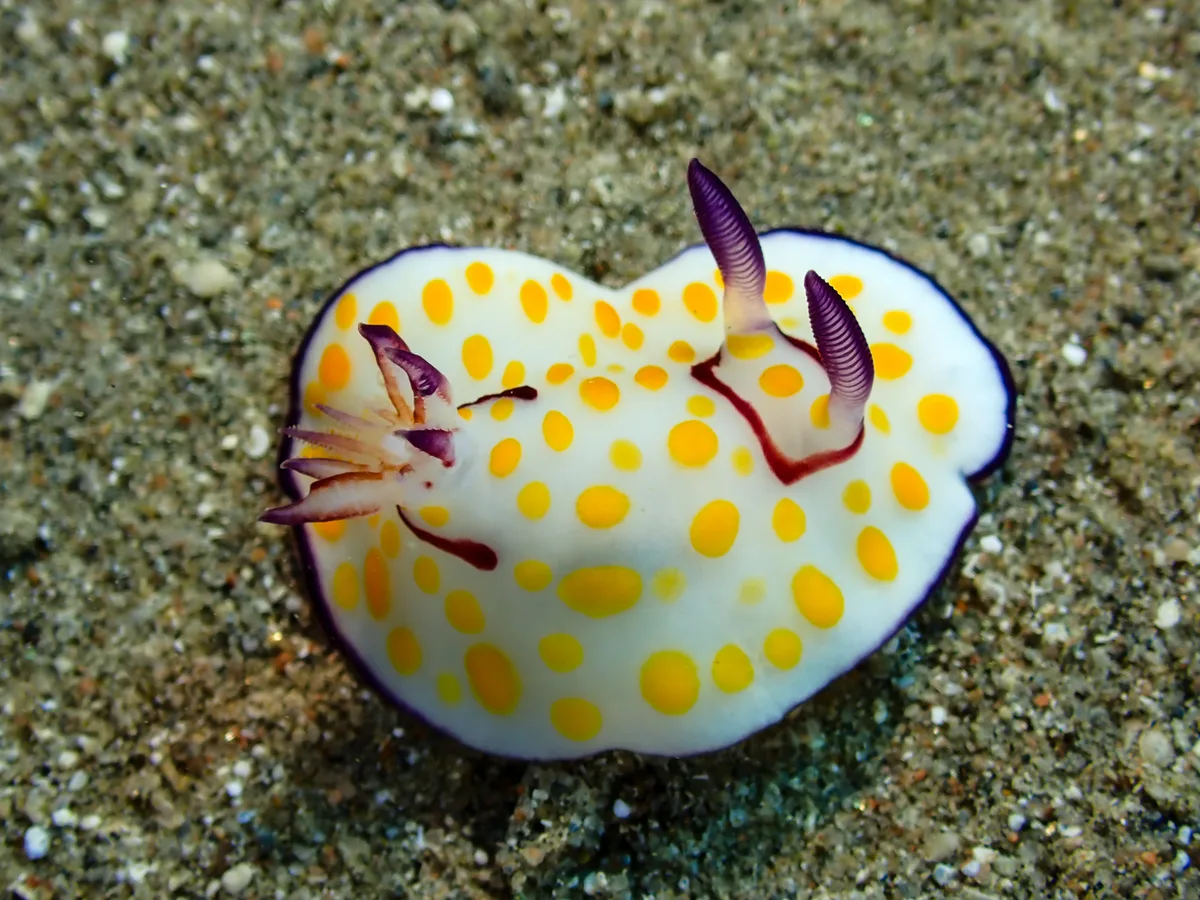
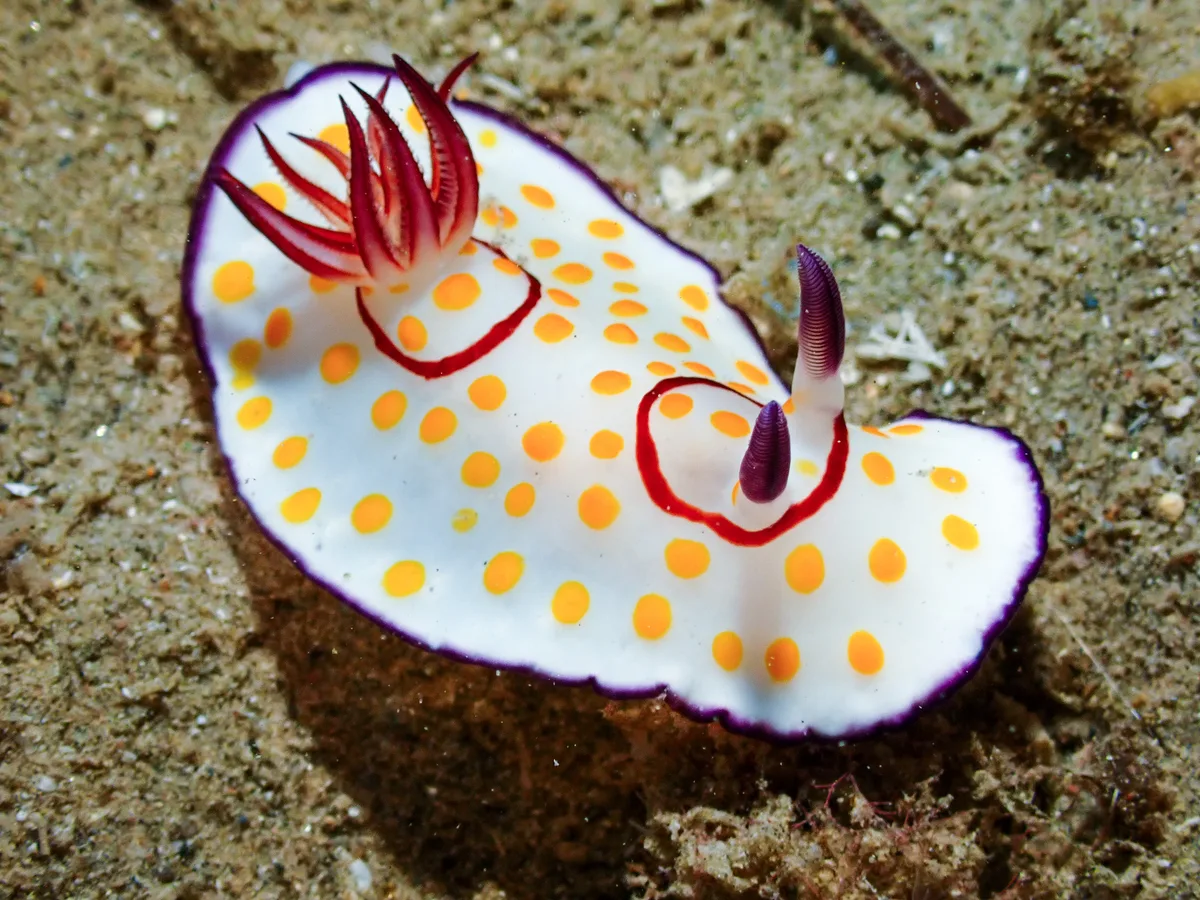
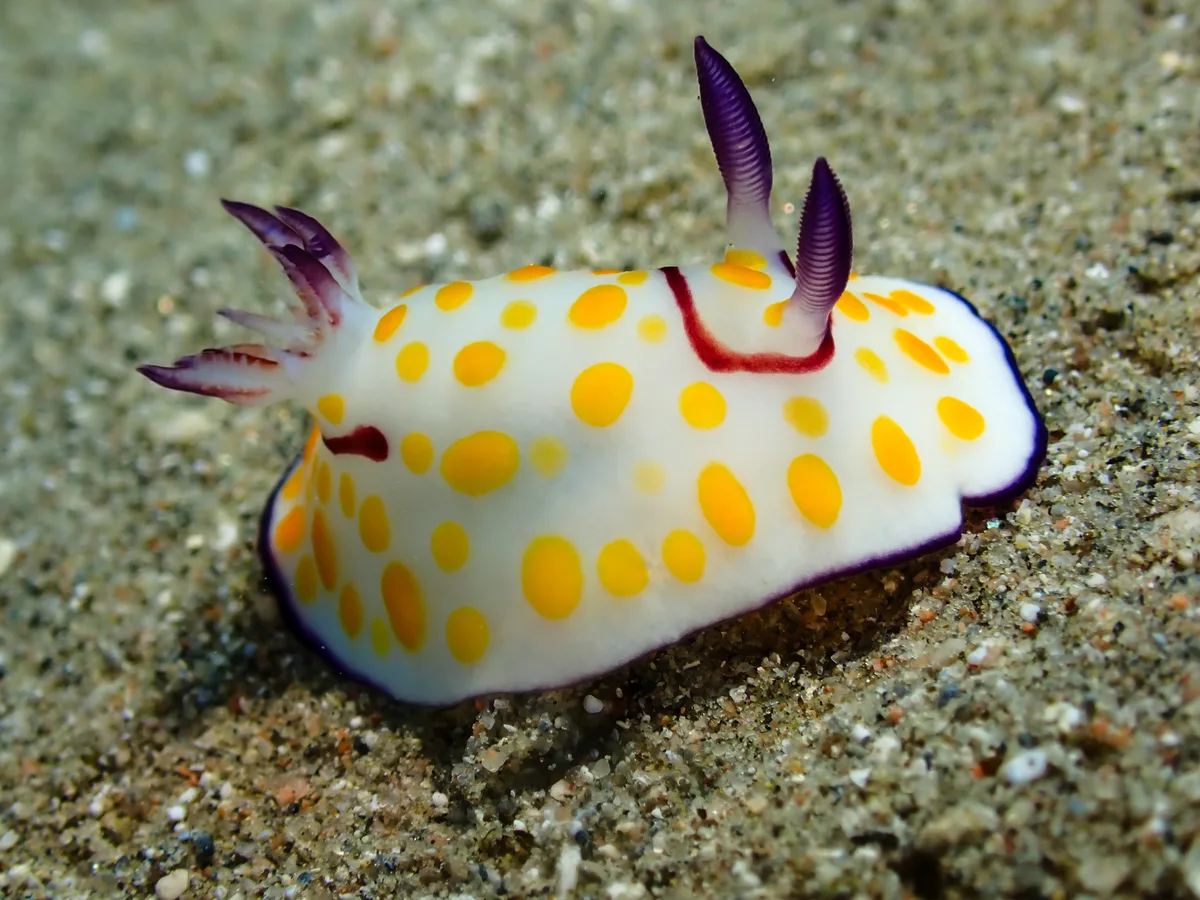
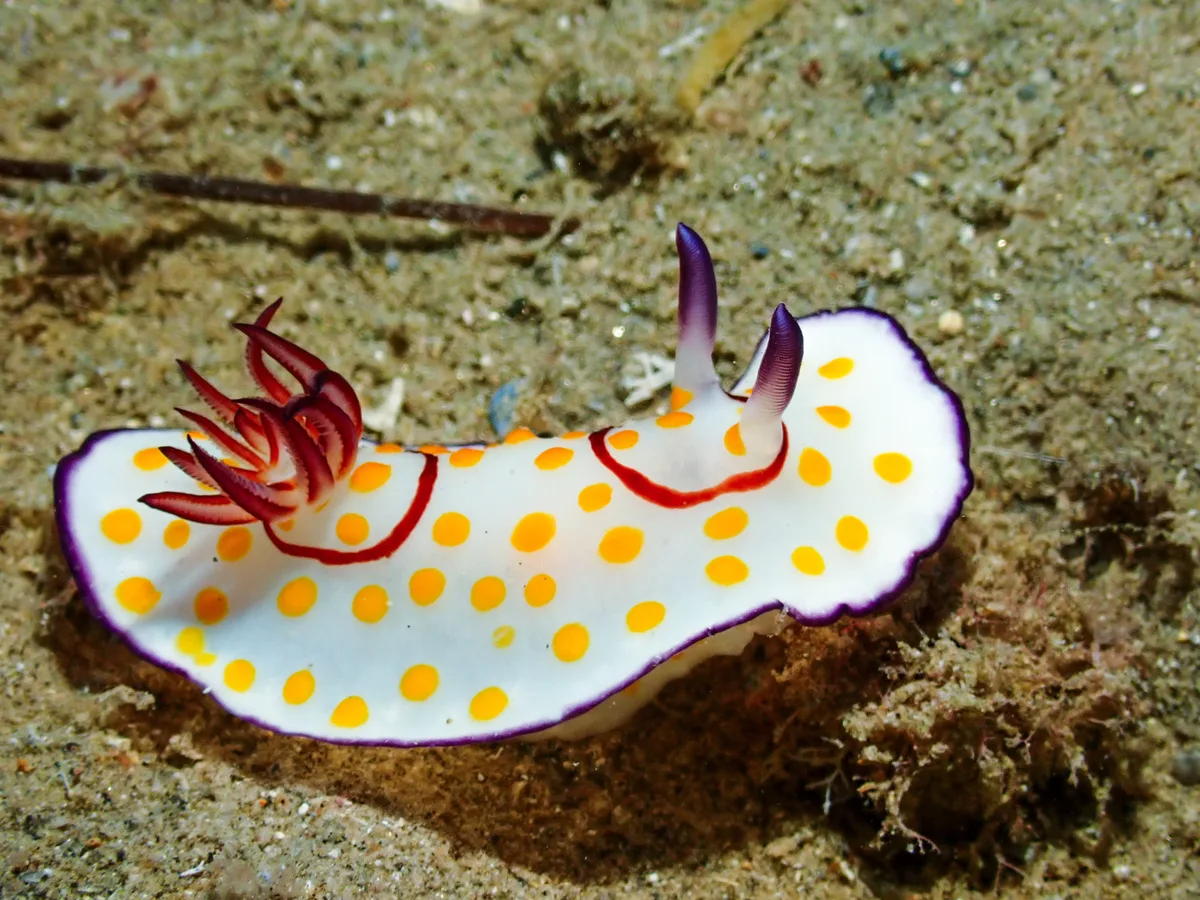
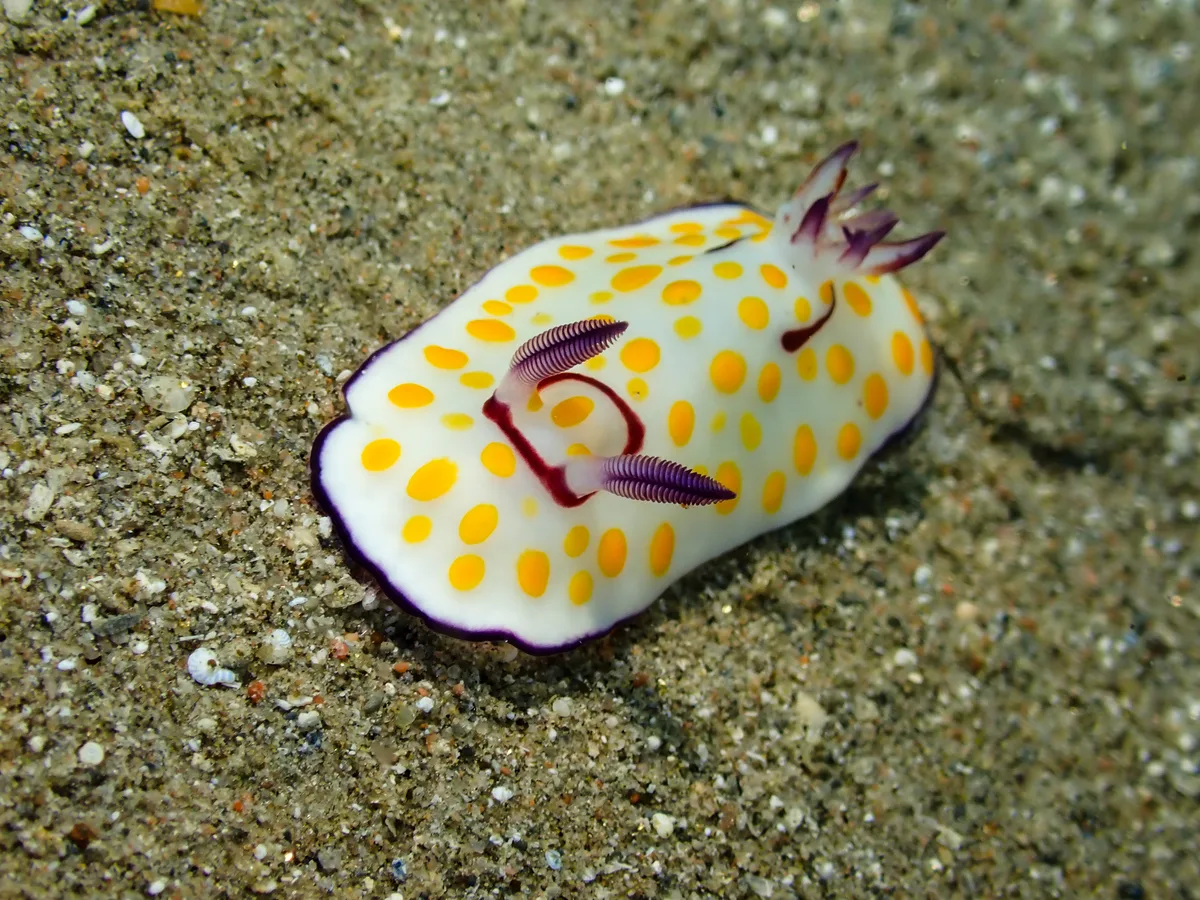
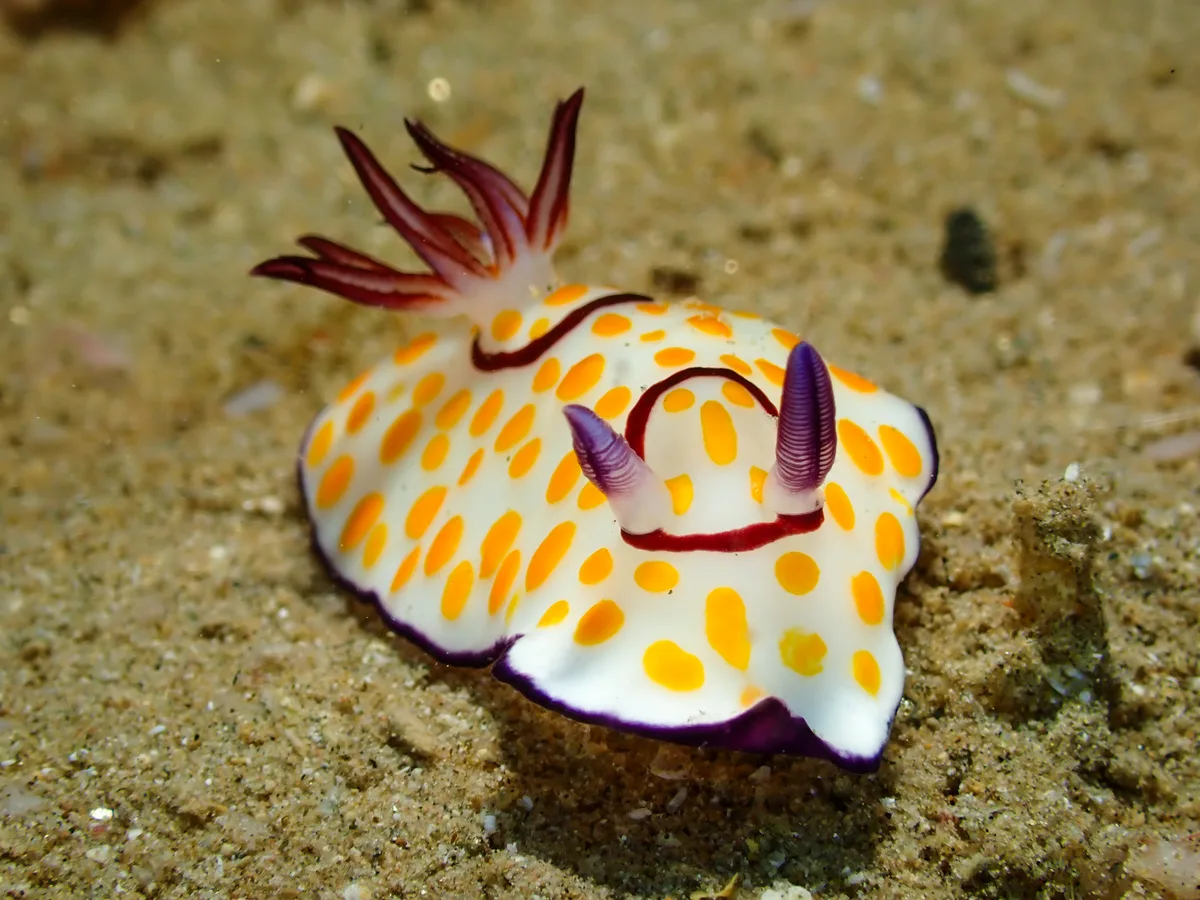
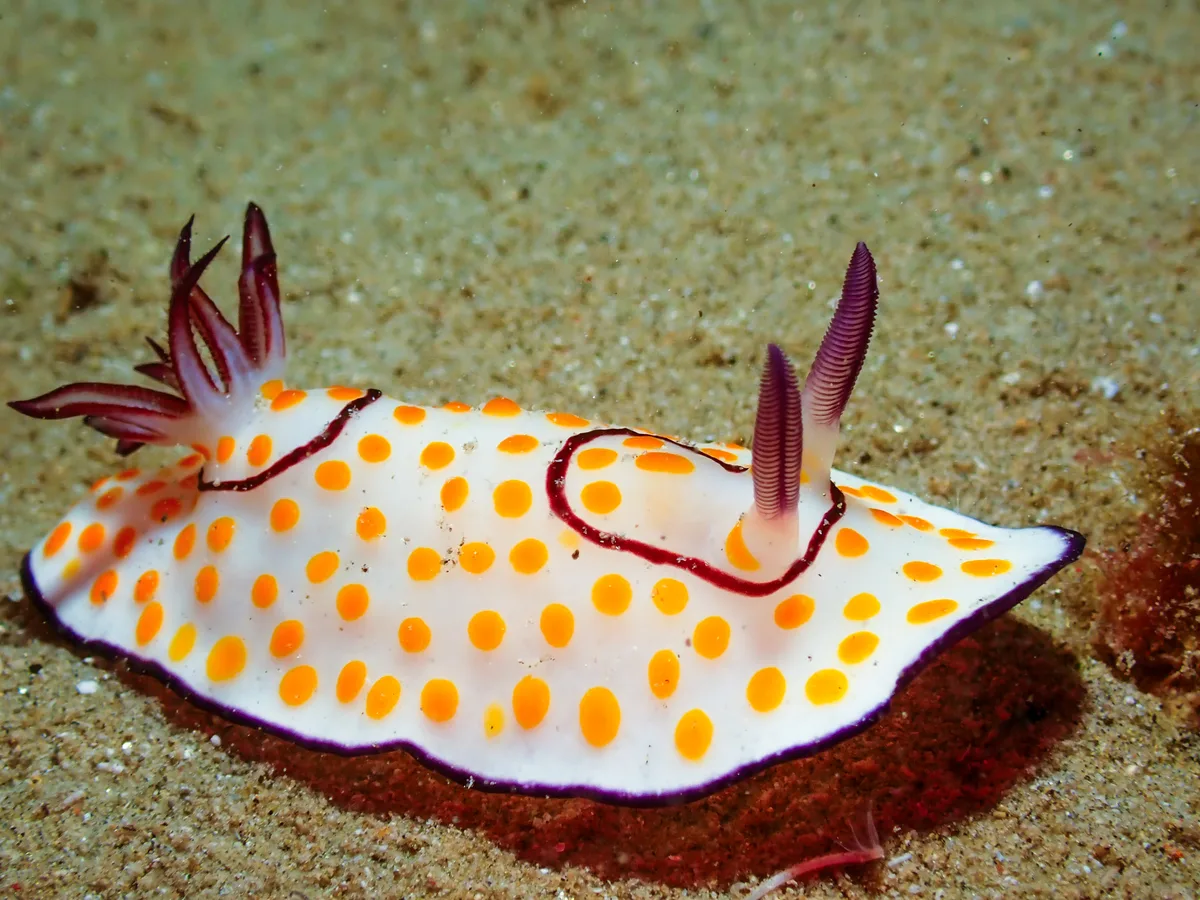
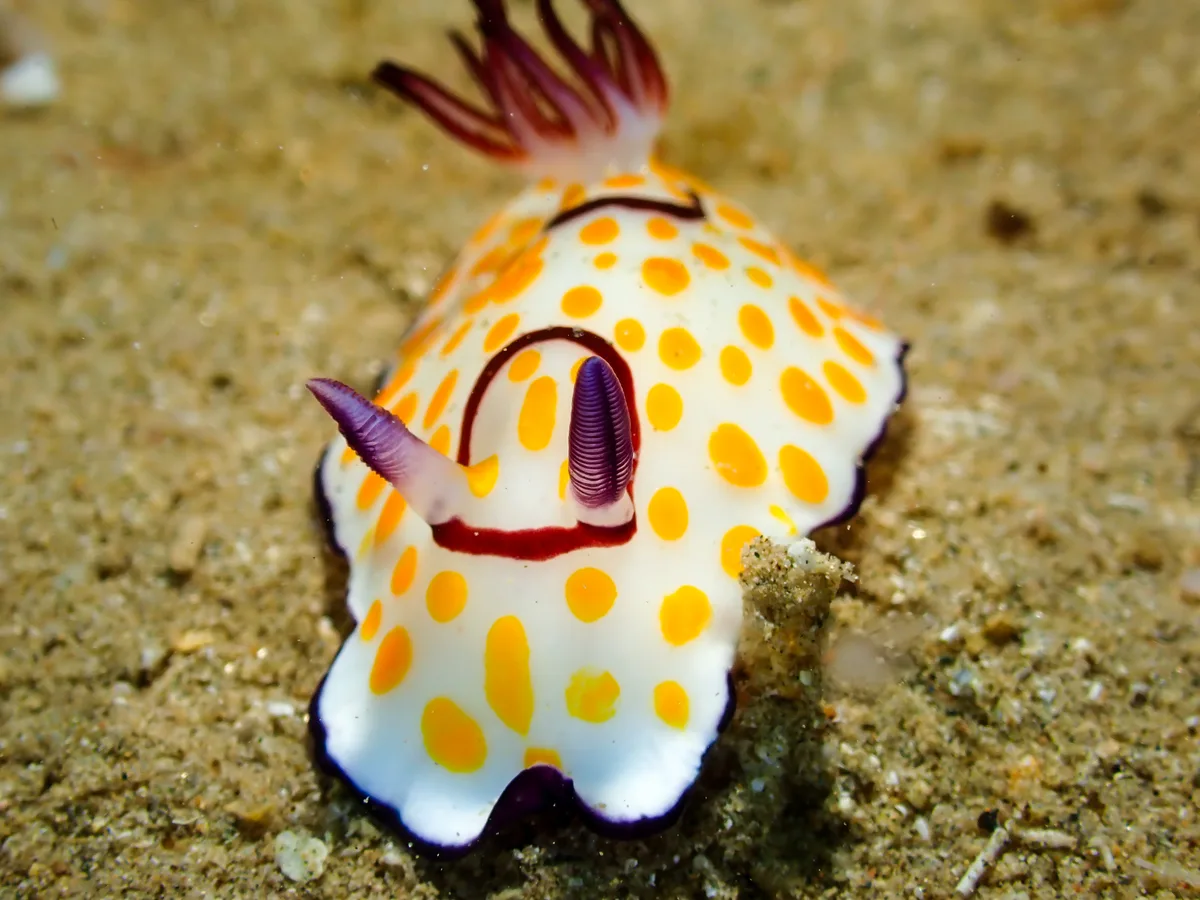
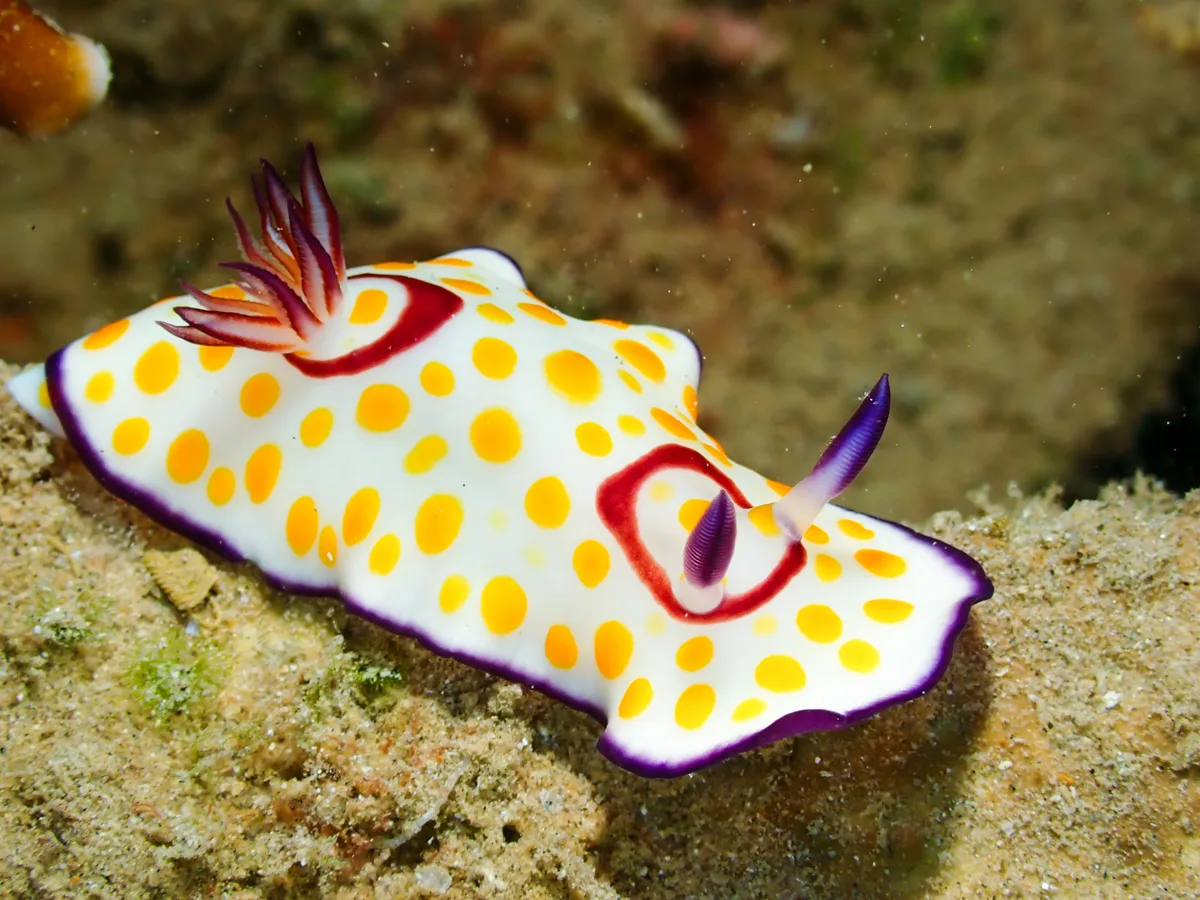
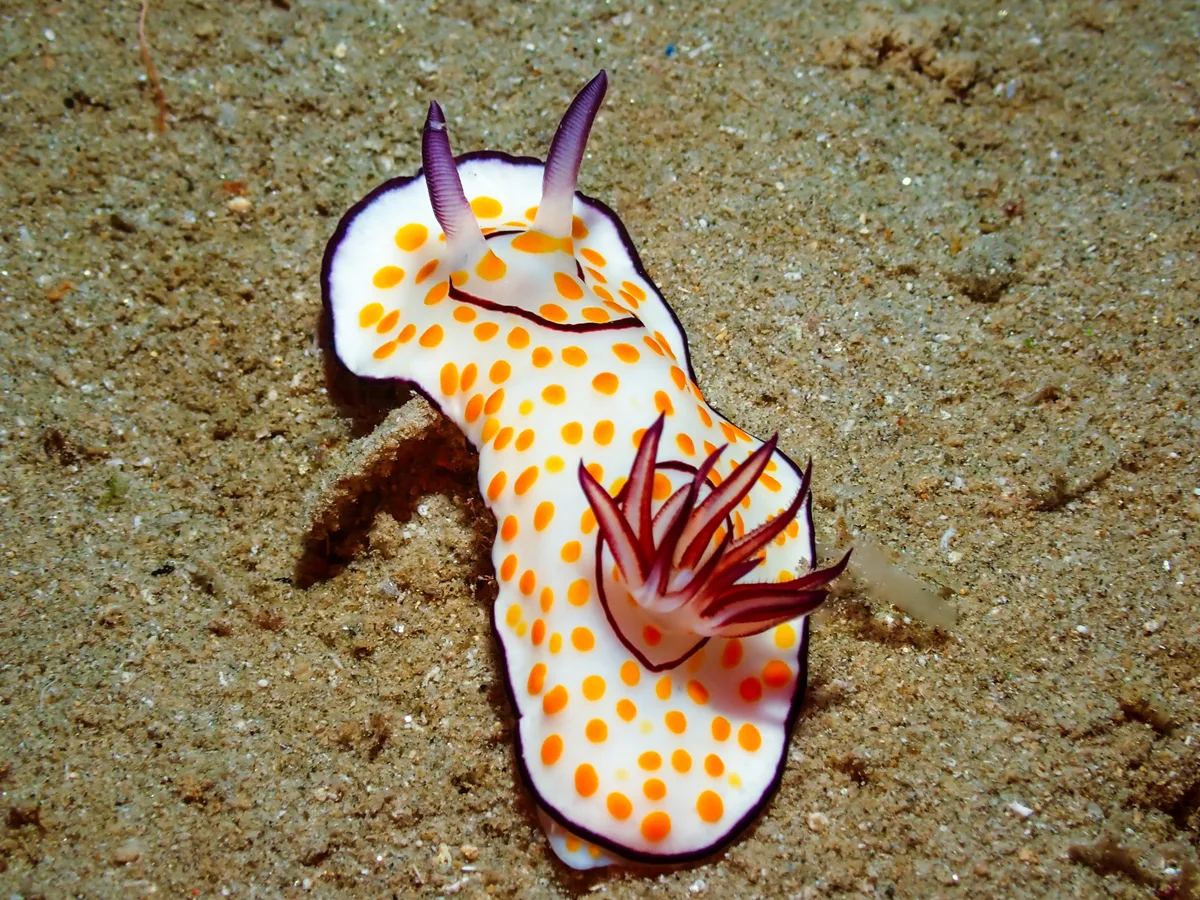
White with a purple-pink band and a yellow-orange rim, ten centimeters (4 in) at its largest, and one of the more striking sea slugs on any 🌊 Red Sea wall.
The rim is the interesting part, and it is visible in a good photograph: the whole outer margin of the mantle is a ring of glands. A chromodorid nudibranch eats sponges, extracts their defensive chemistry undamaged, and concentrates it in that ring - so the border a fish would bite first is the most poisonous part of the animal. Some species go further and release the compounds into the water when they are harassed.
Everything else follows from being unpalatable. It crawls in the open in daylight, it moves slowly, and it is brightly marked - the exact opposite of every other soft-bodied animal on the reef, and only possible because the advertisement is true.
The gills on its back are the actual gills, exposed rather than tucked away, and they retract into a pocket the moment something touches them. So do the rhinophores, the two sensory clubs at the front that smell the water and find both food and mates.
- white body with a broad purple-pink band and a yellow-orange outer margin
- dark ring markings around the gills and the rhinophores
- gills and rhinophores pale with darker edges
- length up to 10 cm