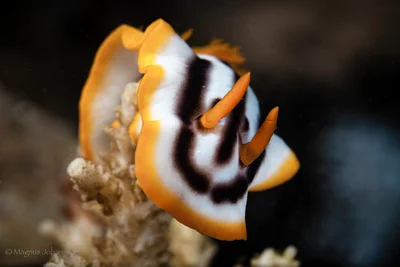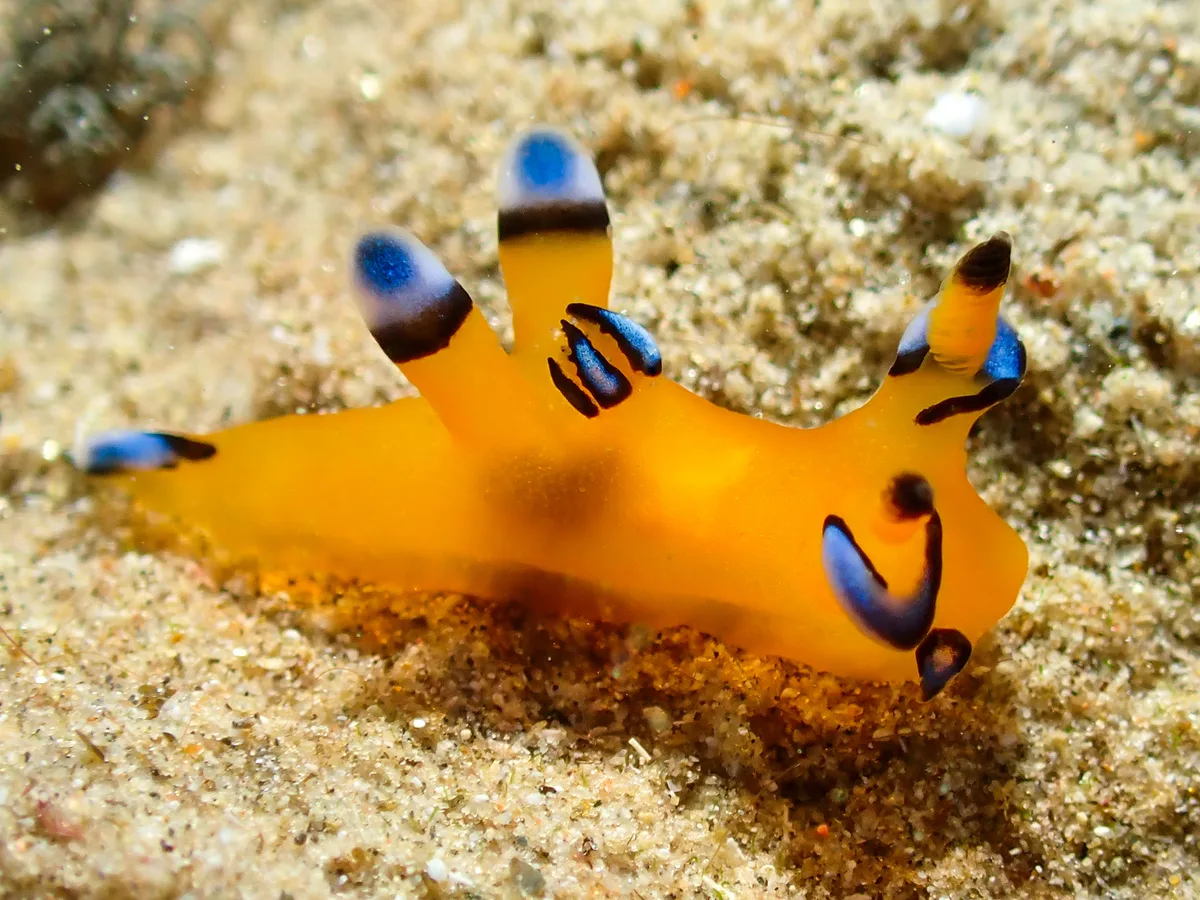
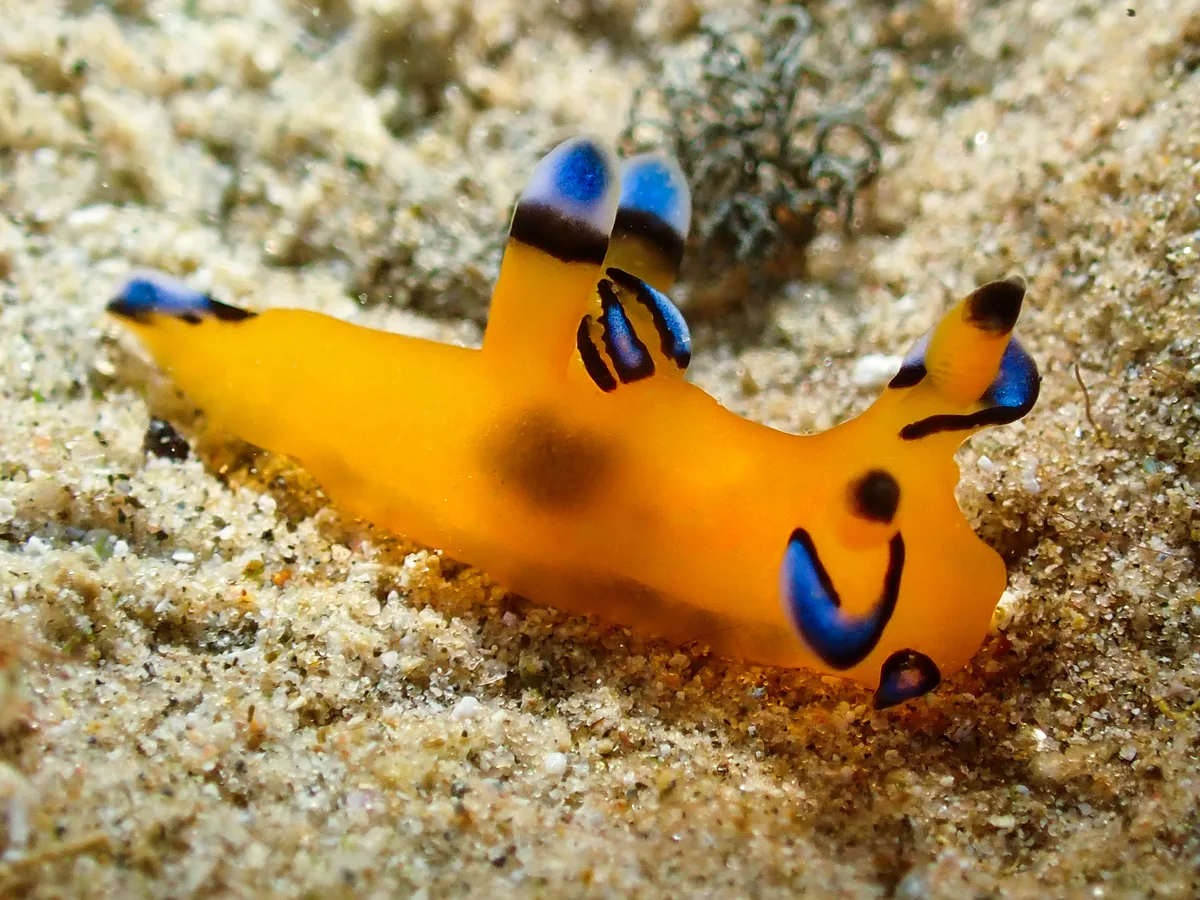
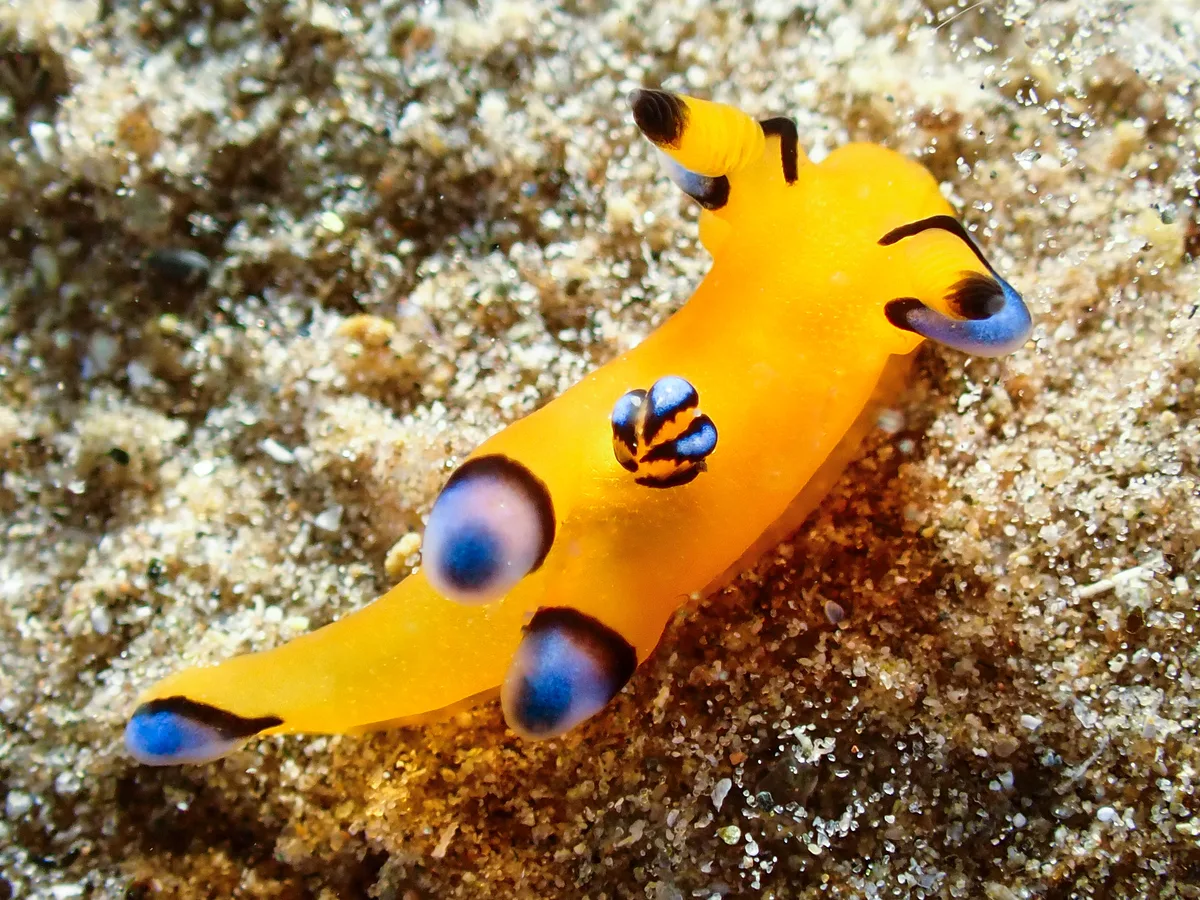
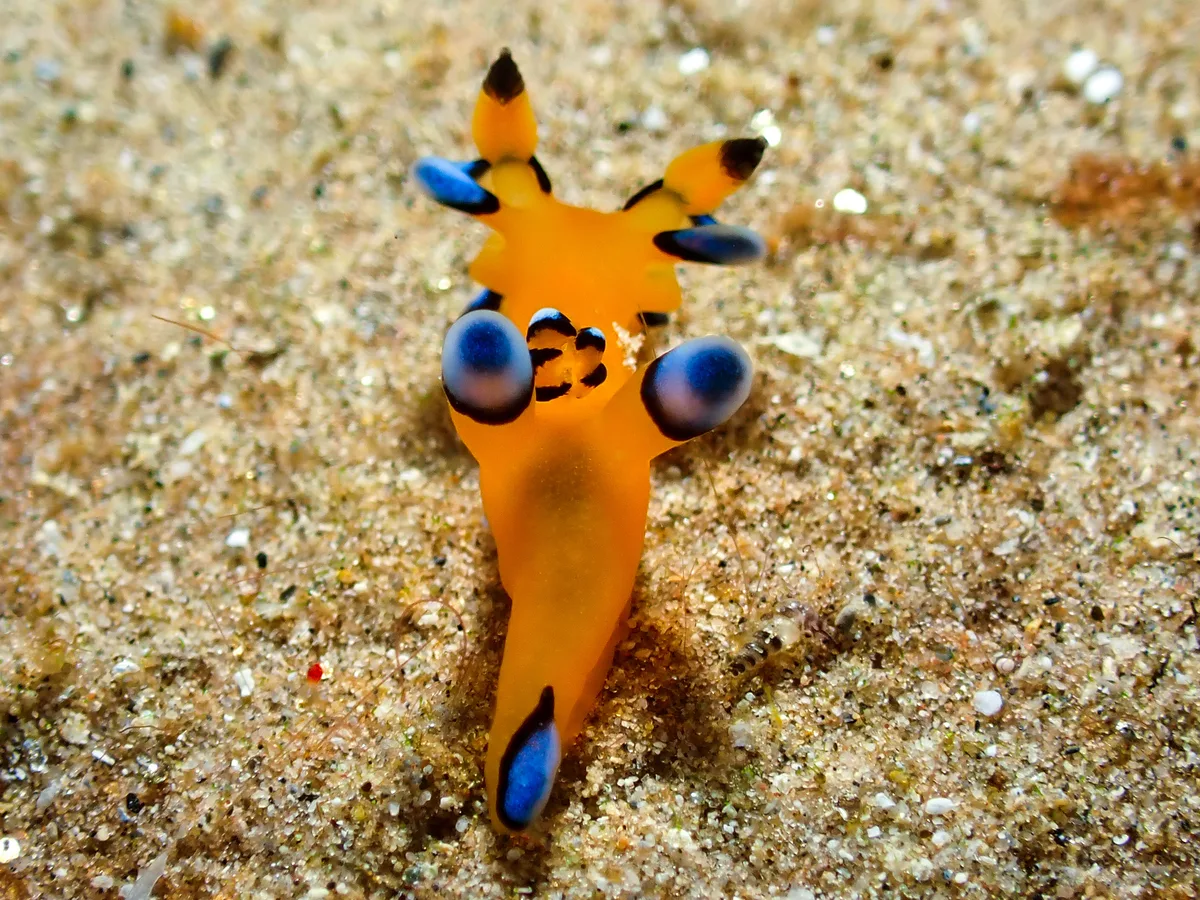
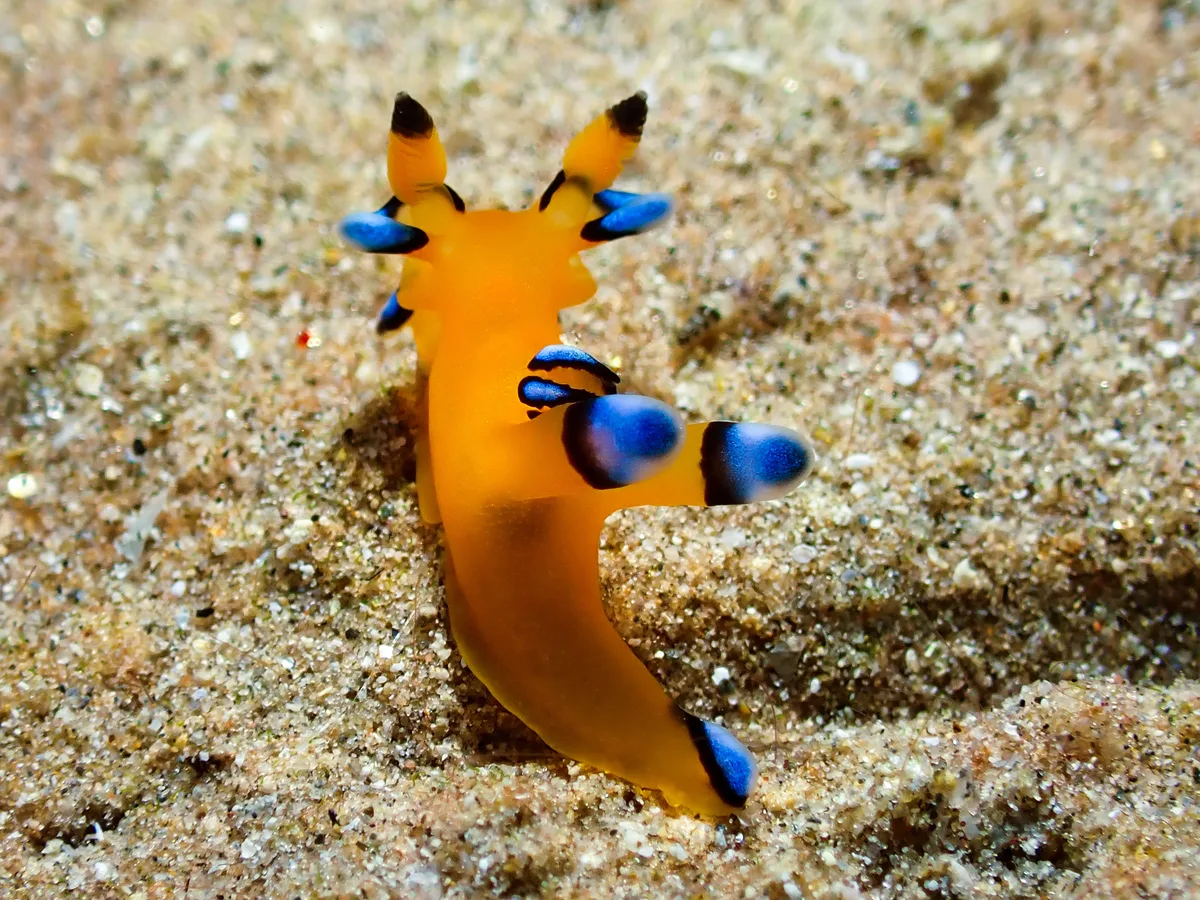
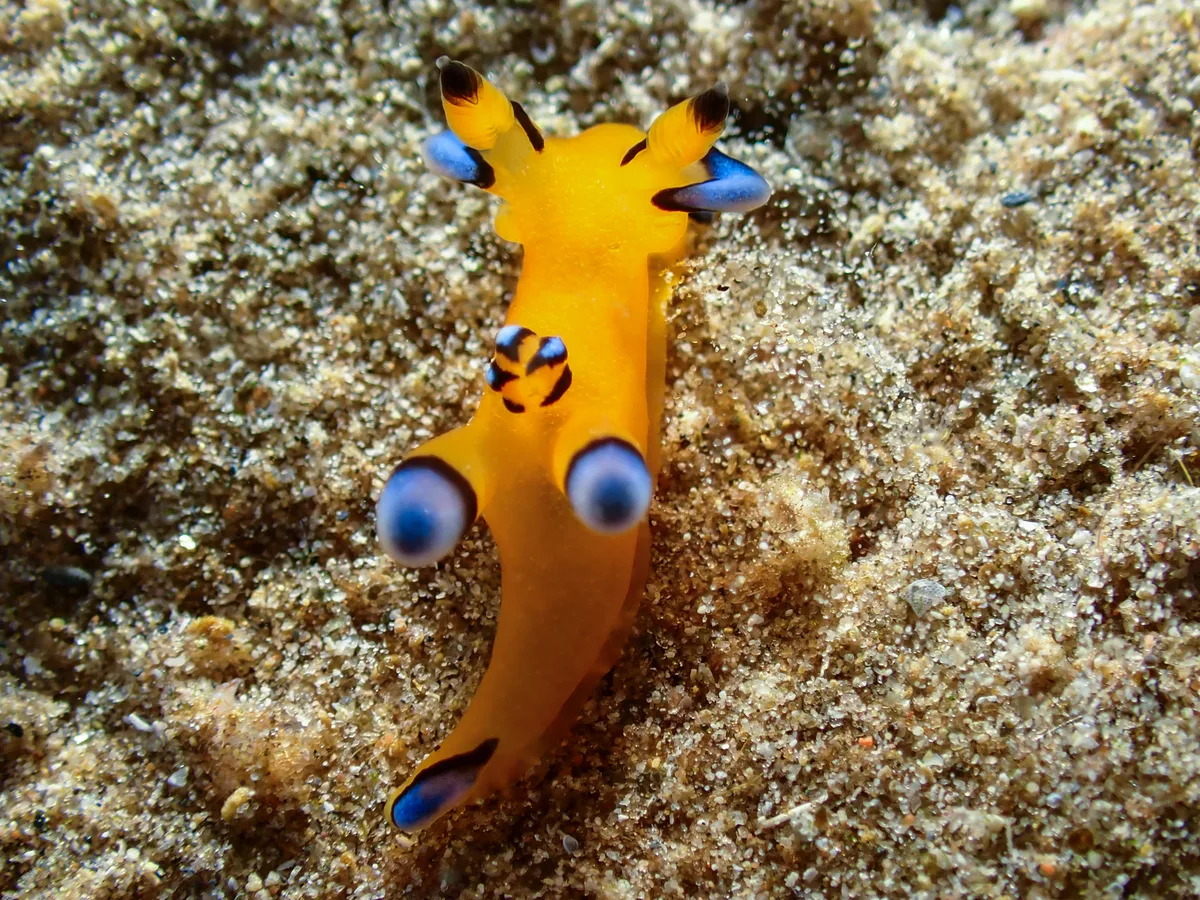
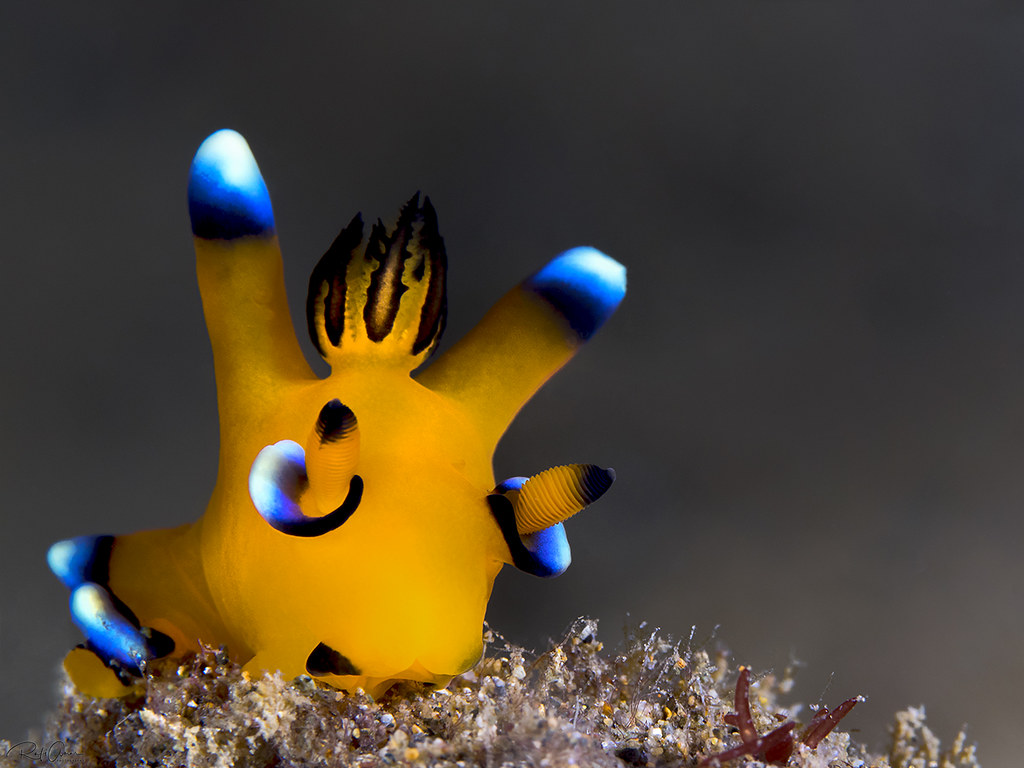
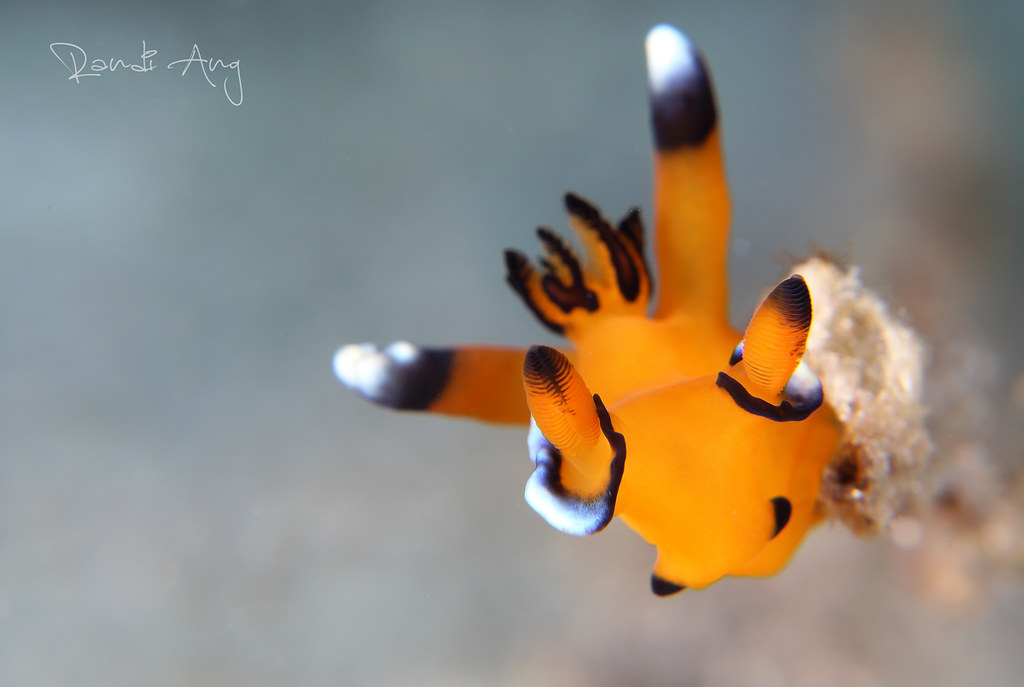


Bright orange, spotted black, with two black-tipped rhinophores standing up at the front and a pair of raised lobes at the back. The resemblance to a cartoon mouse is close enough that the nickname has effectively replaced the scientific name, and dive guides sell trips on it.
Underneath the marketing it is a bryozoan specialist. Those lobes flanking the gills are extensions of the mantle that protect the gill plume, and the animal grazes the fine encrusting colonies growing on rubble and dead coral - not corals, not sponges, but the thin lacy mats most divers never look at twice.
The color is a warning rather than a costume. A soft-bodied animal that crawls in the open in daylight is advertising, and chromodorid-style aposematism works even when the chemistry behind it has not been analyzed.
It is uncommon, small and easy to miss, and its distribution is genuinely patchy - a site can produce several in a week and then none for a year, which tracks the boom and bust of the bryozoan colonies it depends on.
- bright orange body with round black spots and blue at the base of each appendage
- two black-tipped rhinophores standing up like ears
- a pair of raised lobes flanking the gills at the rear
- length up to 5 cm