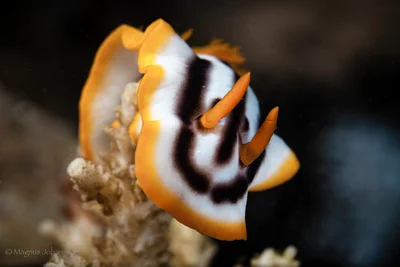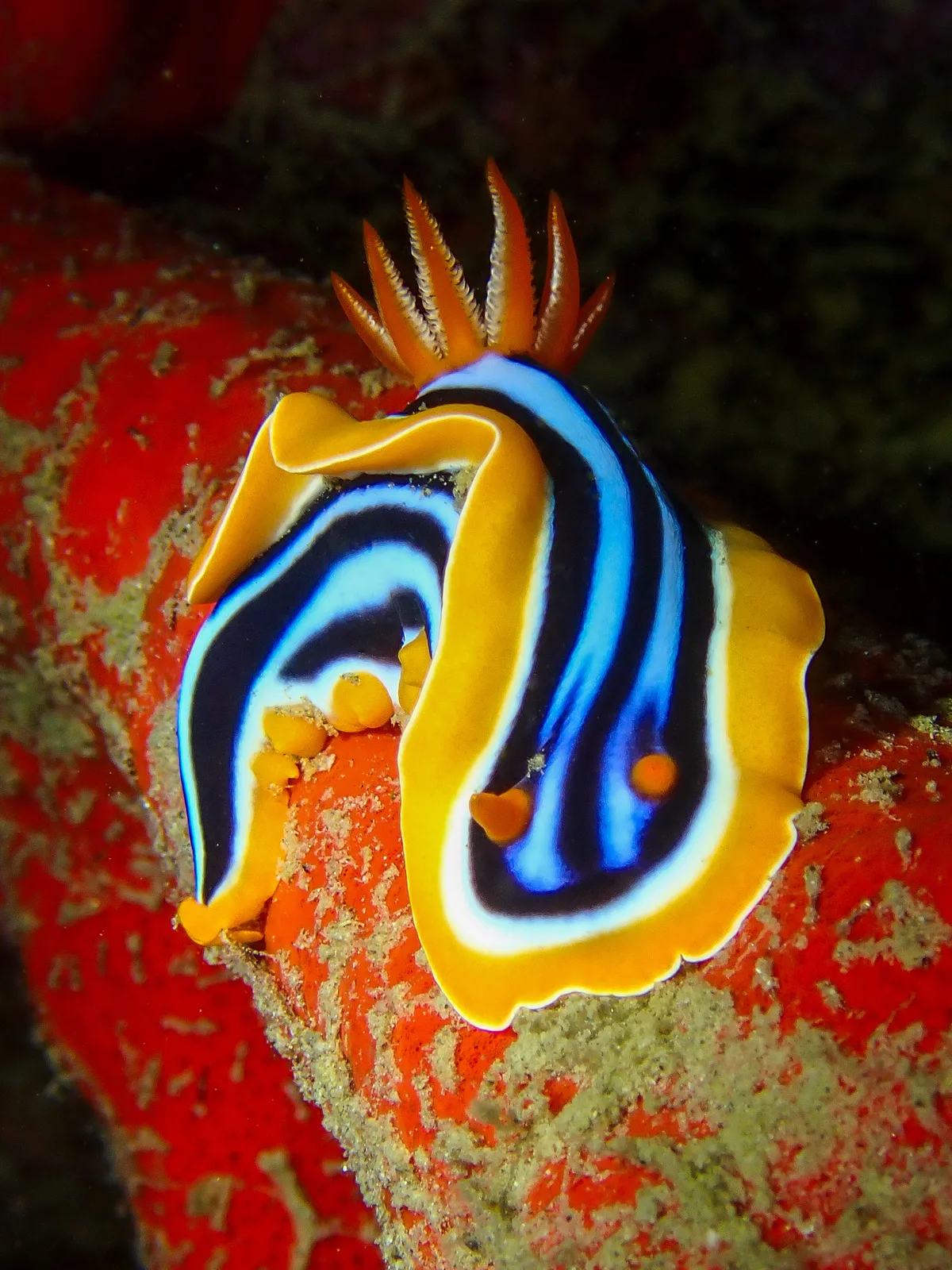
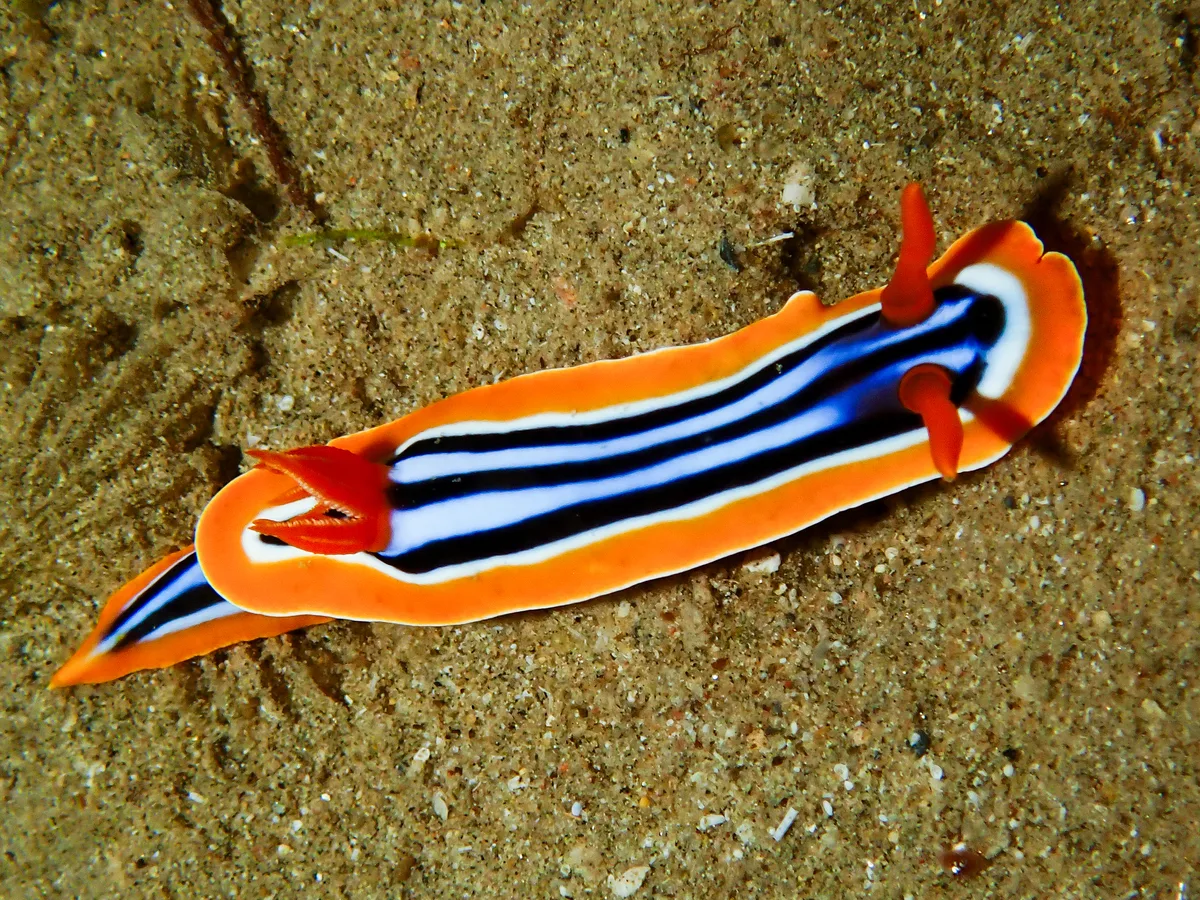
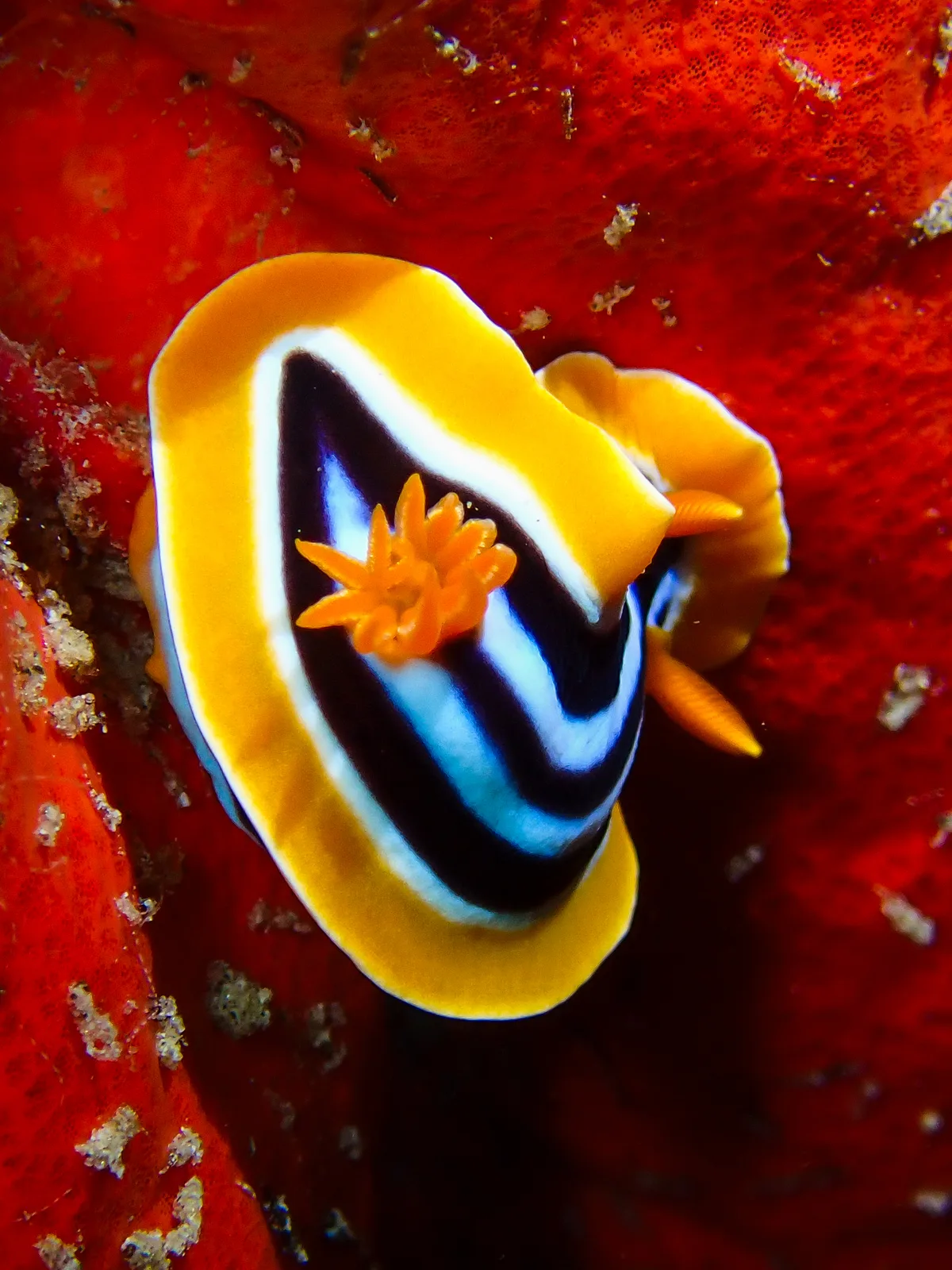
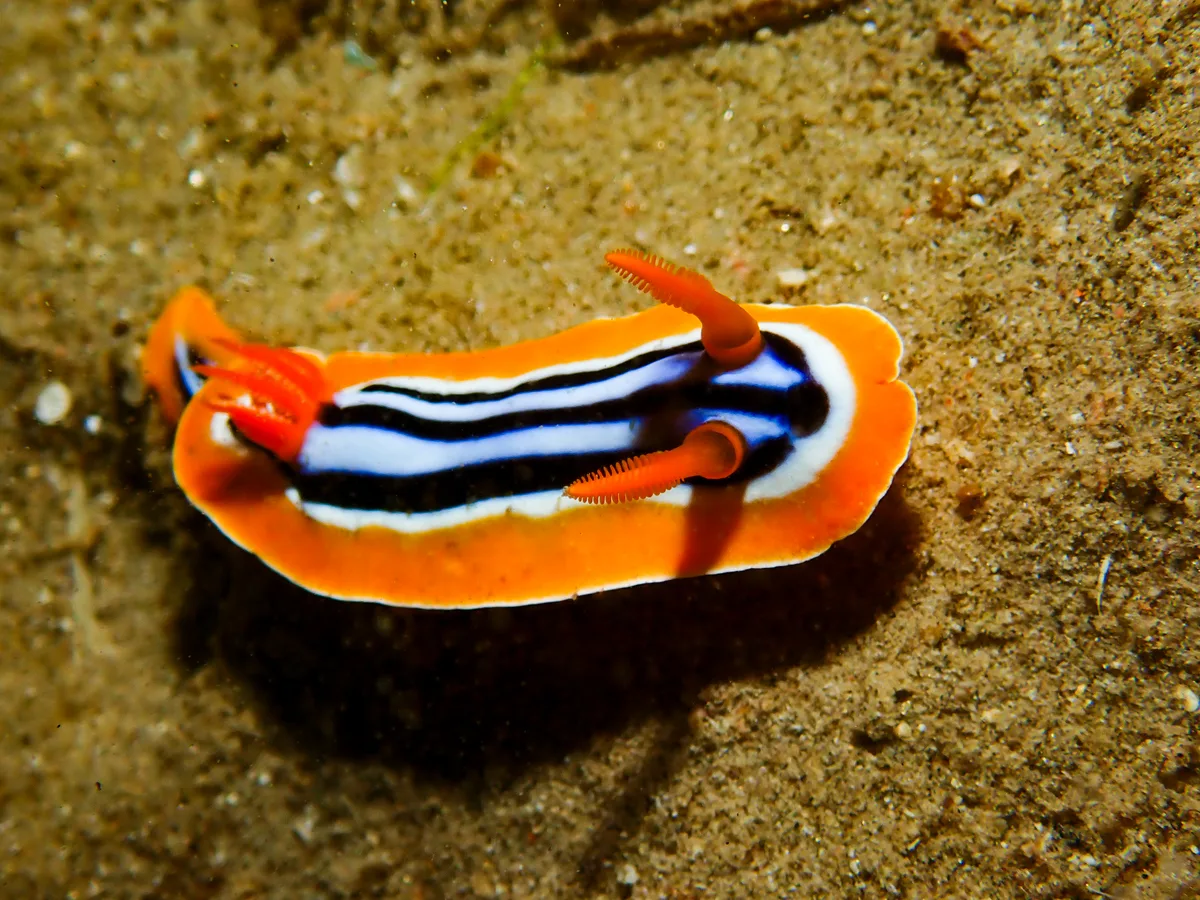
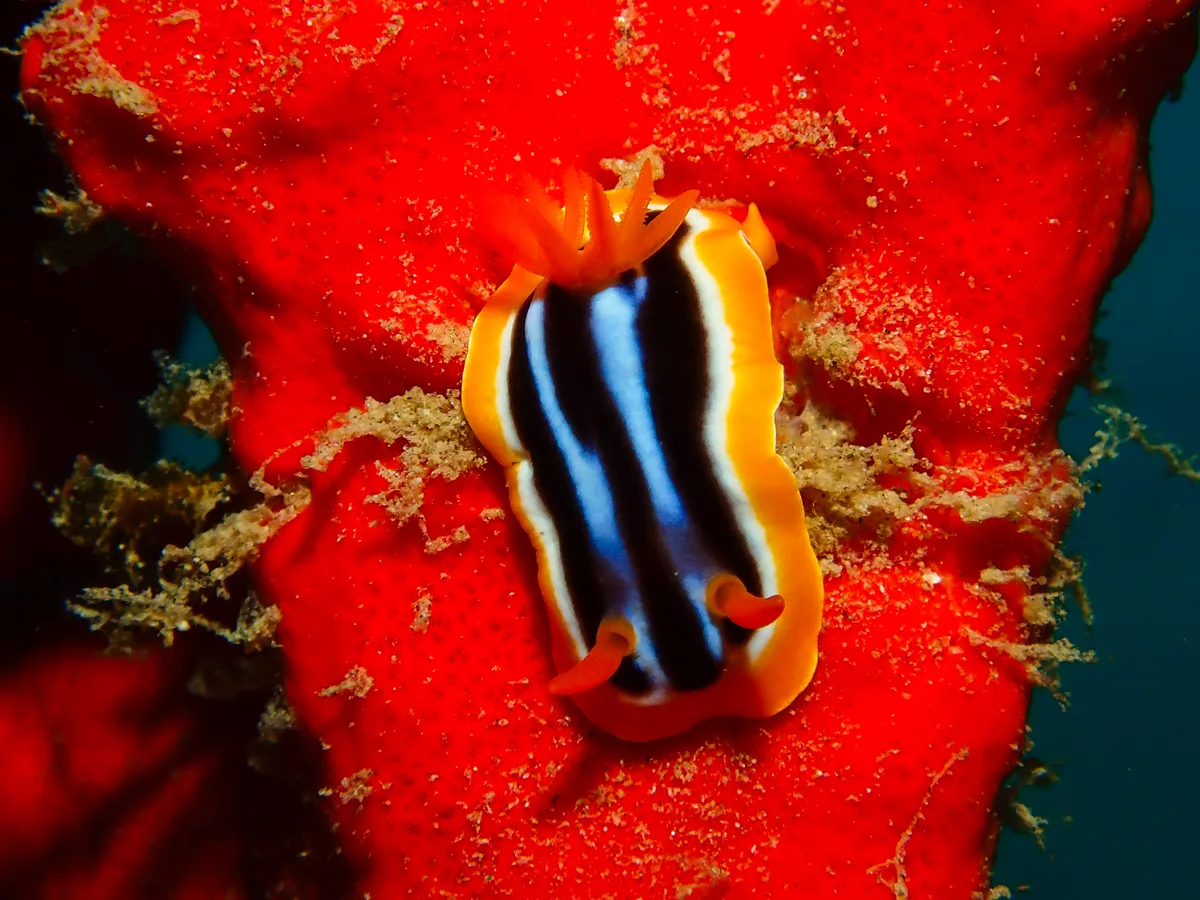
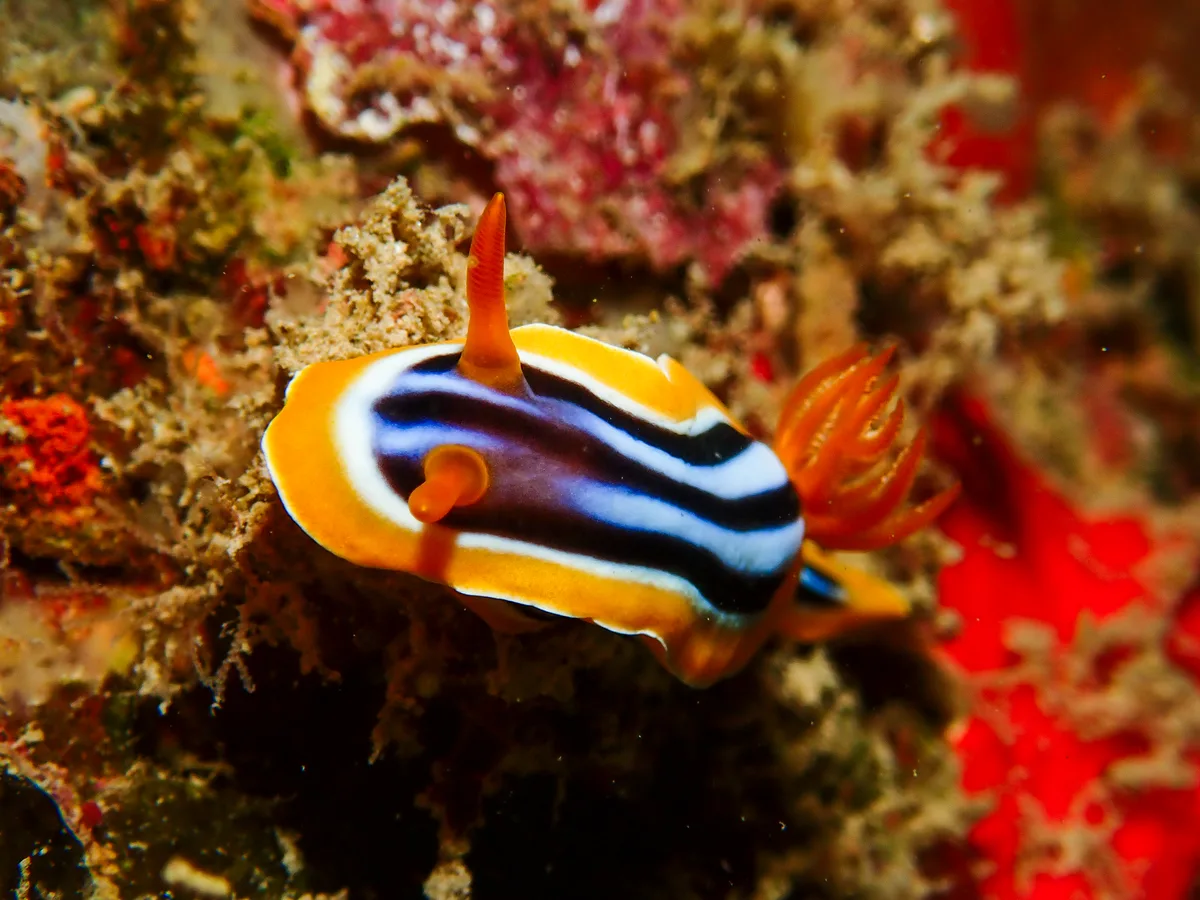
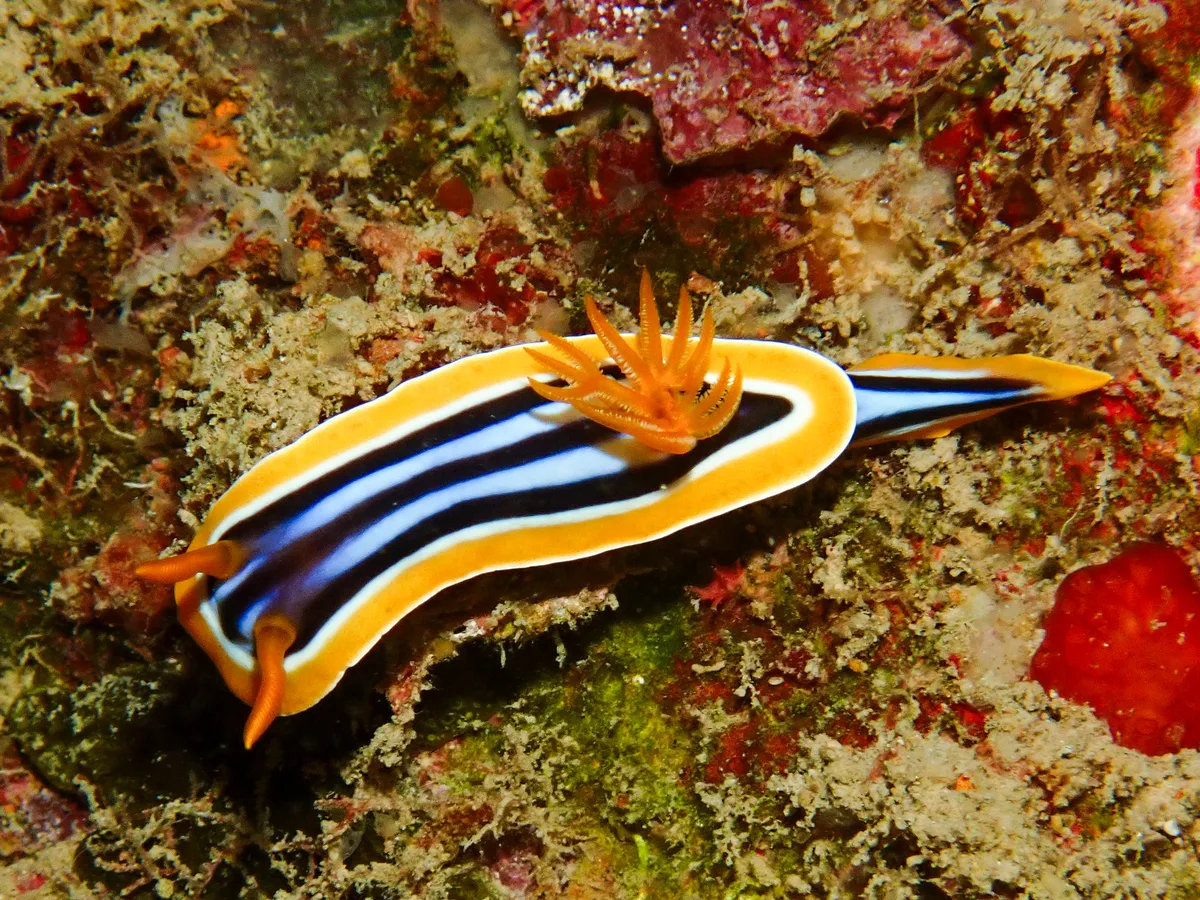
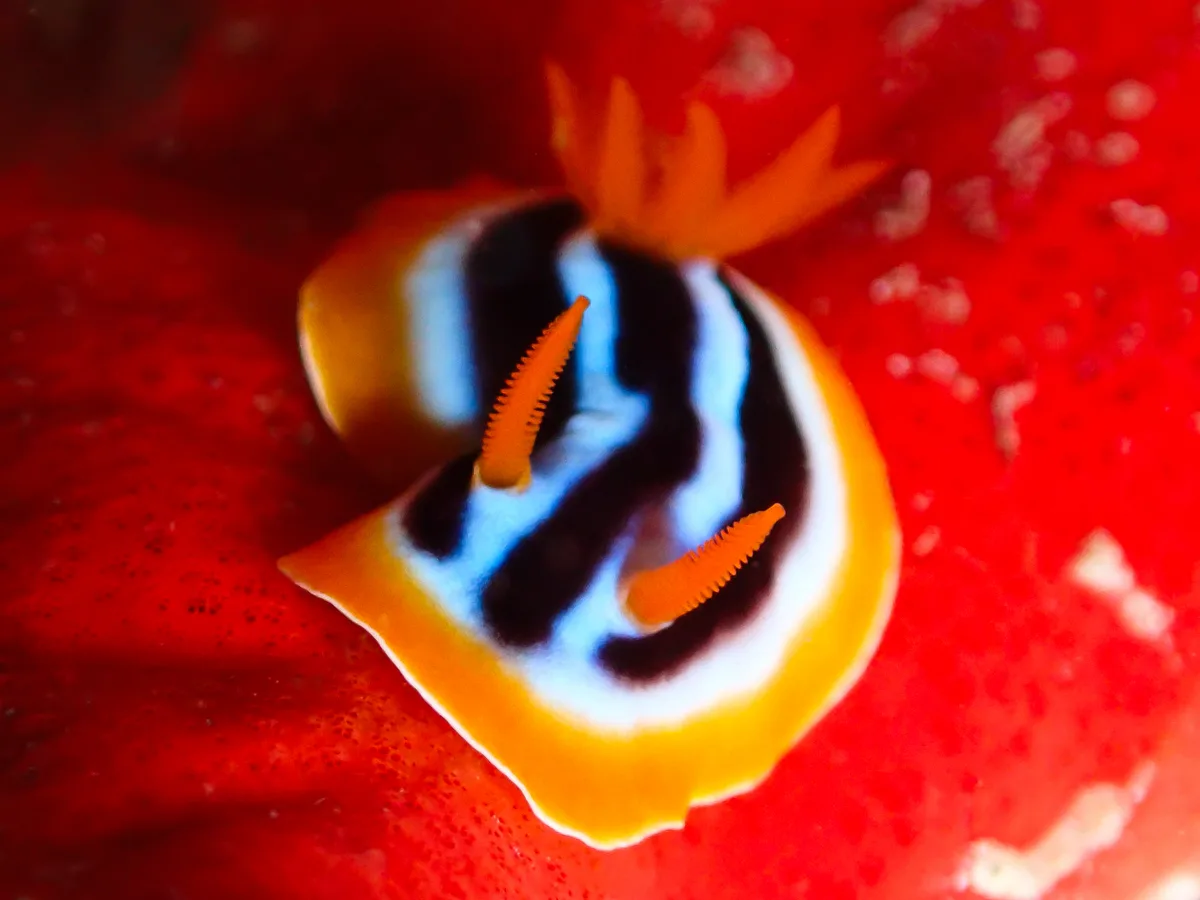
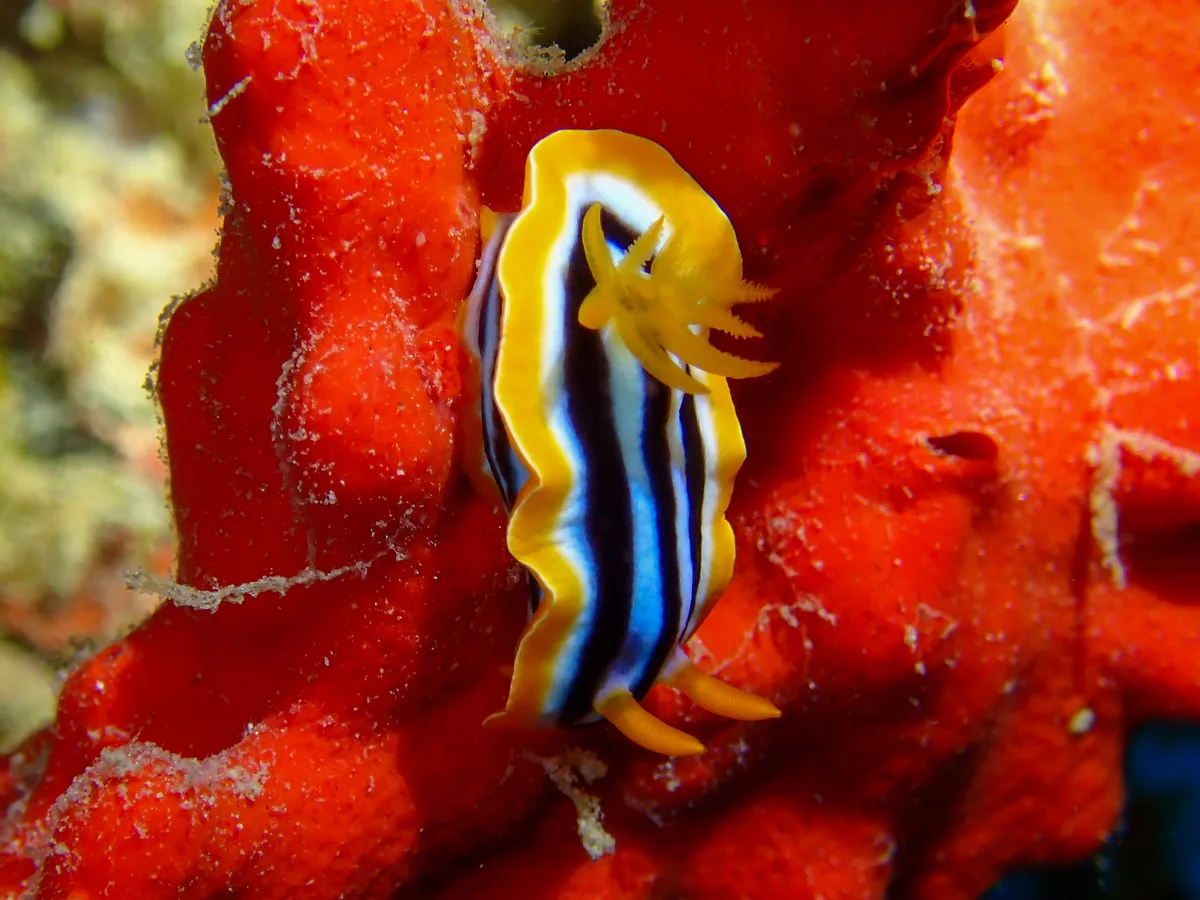
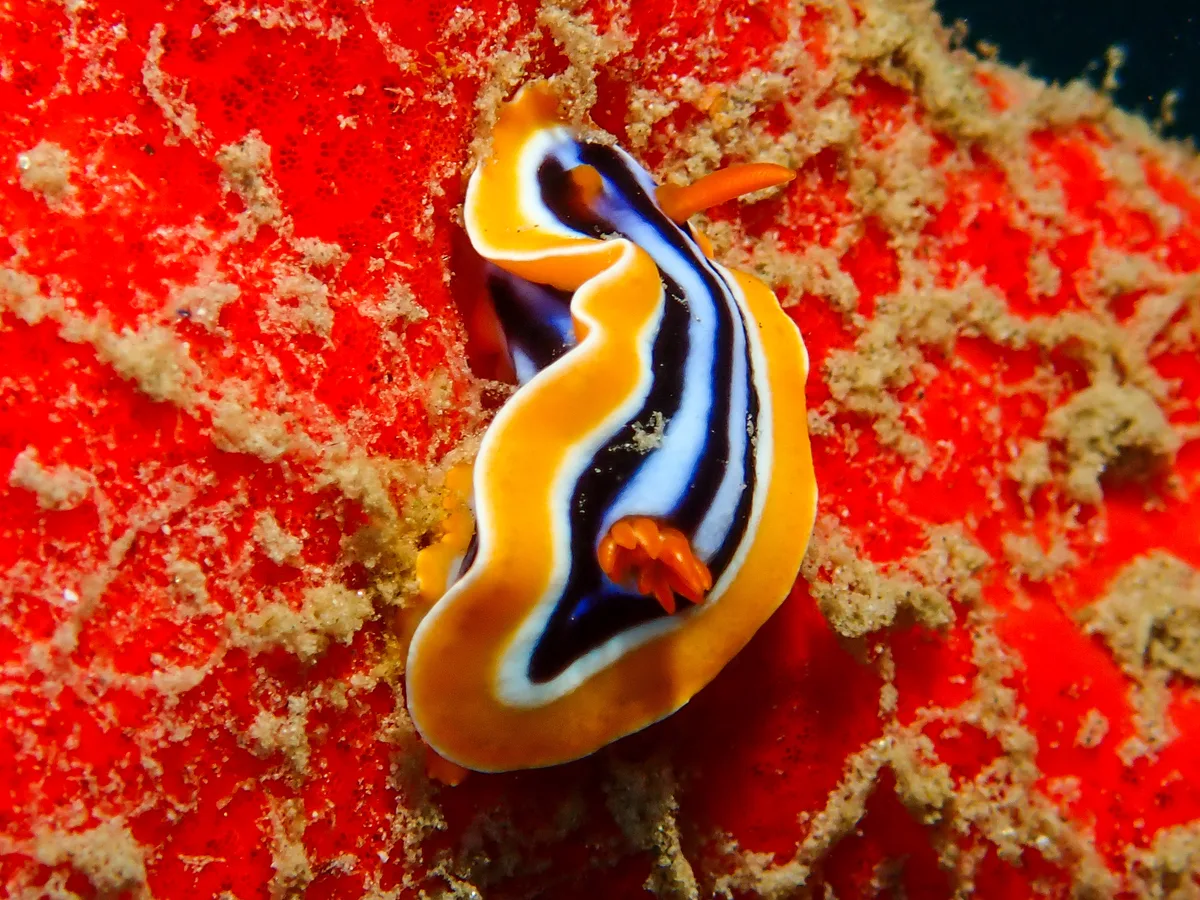
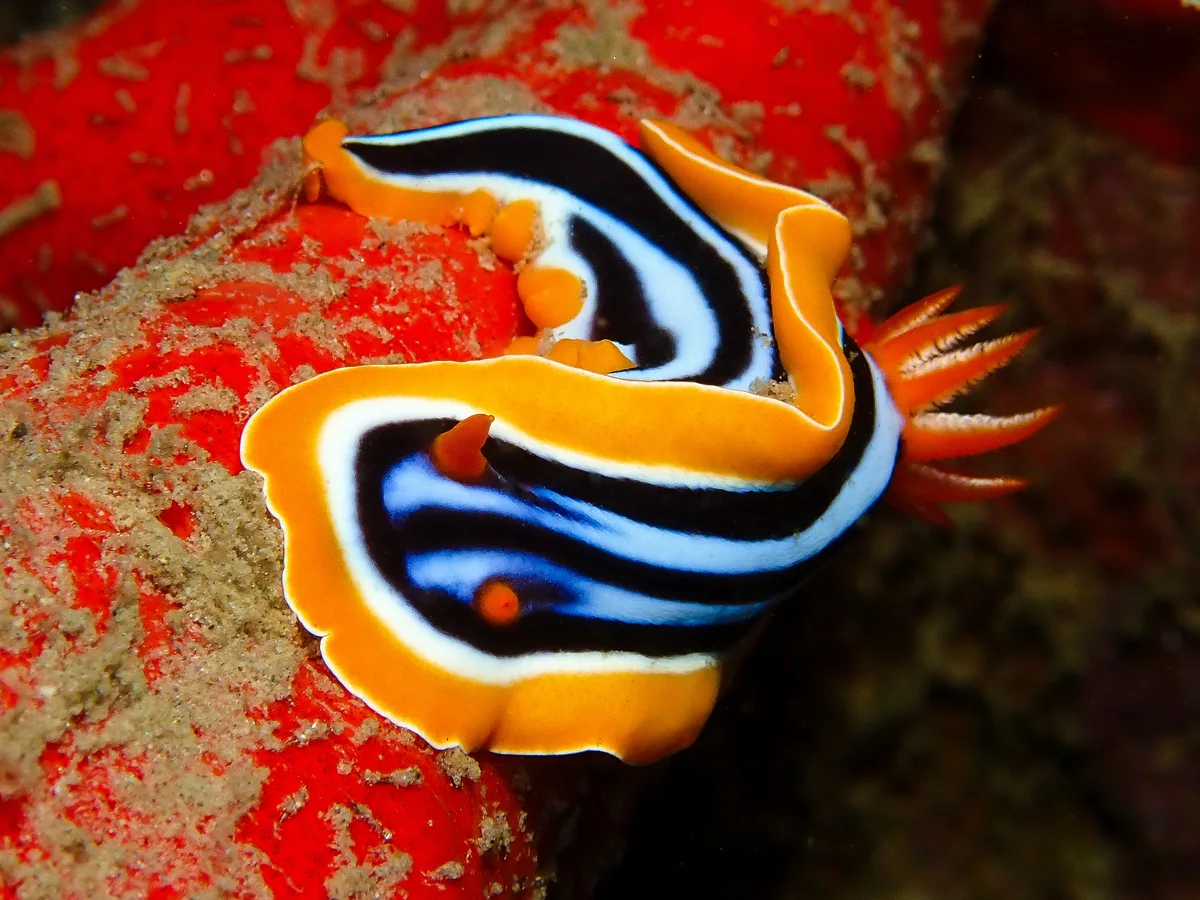
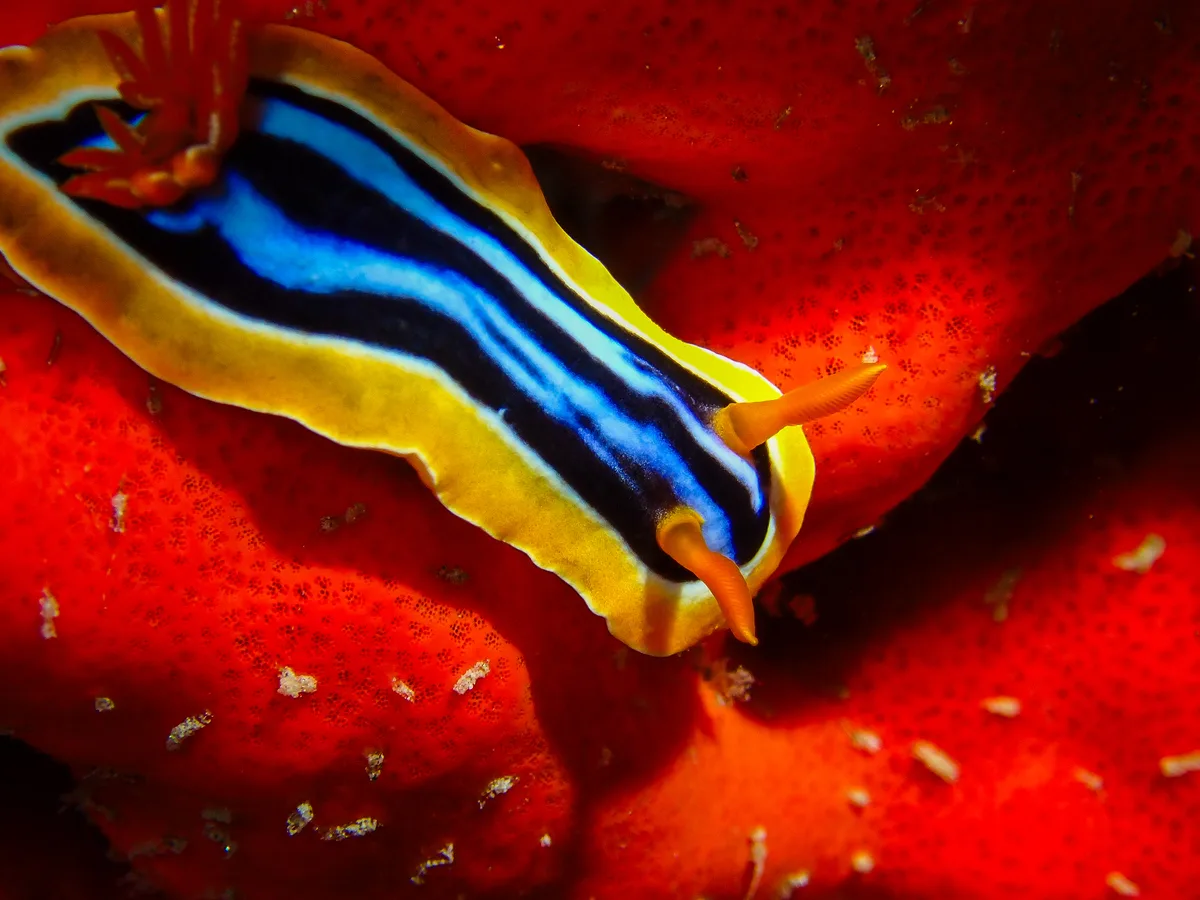
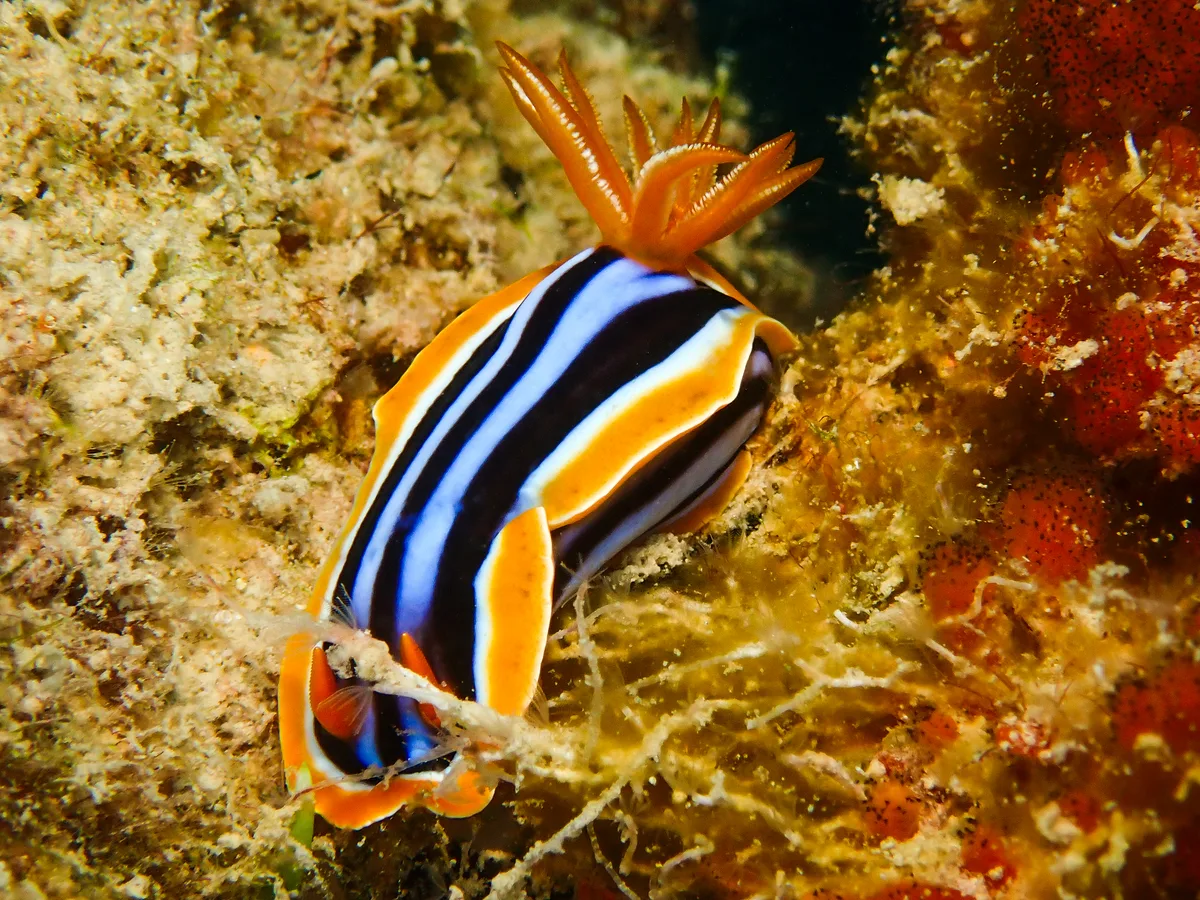
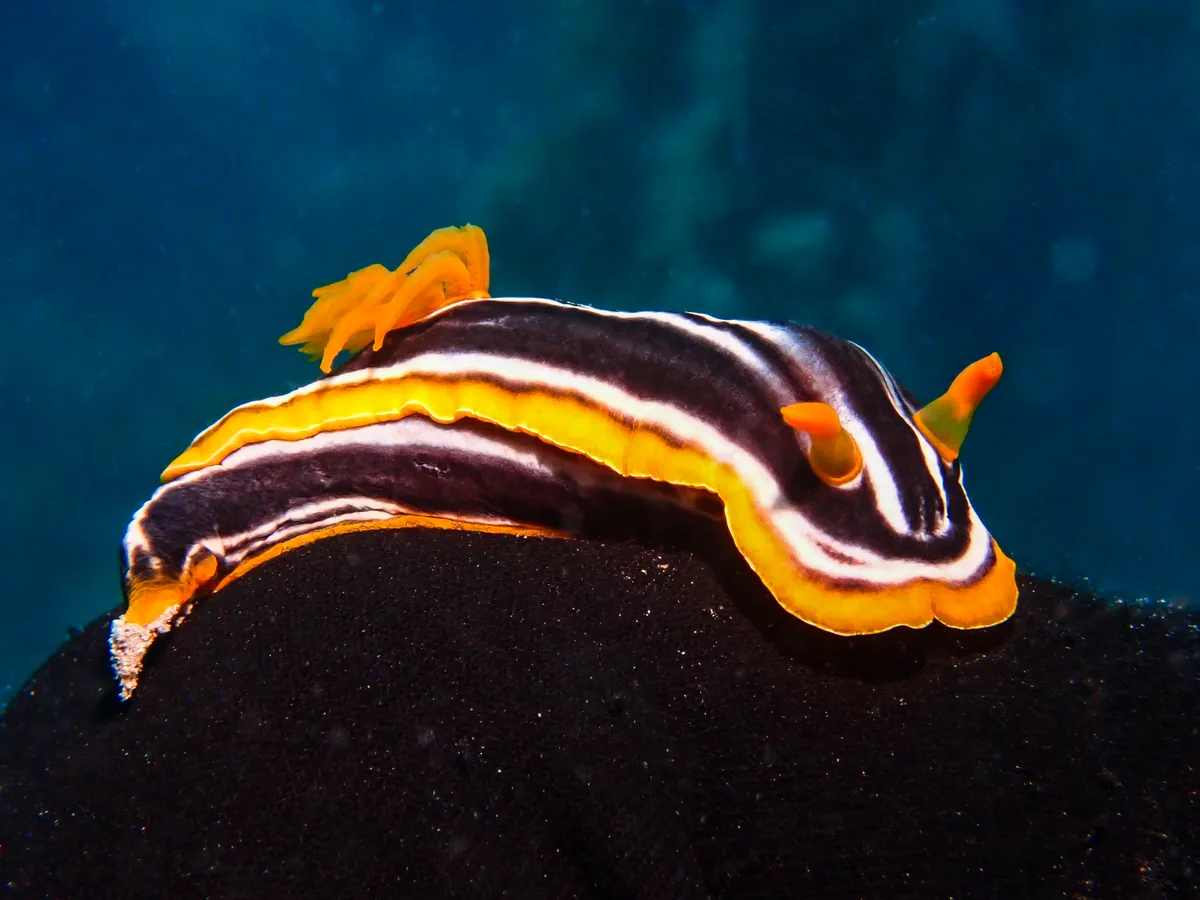
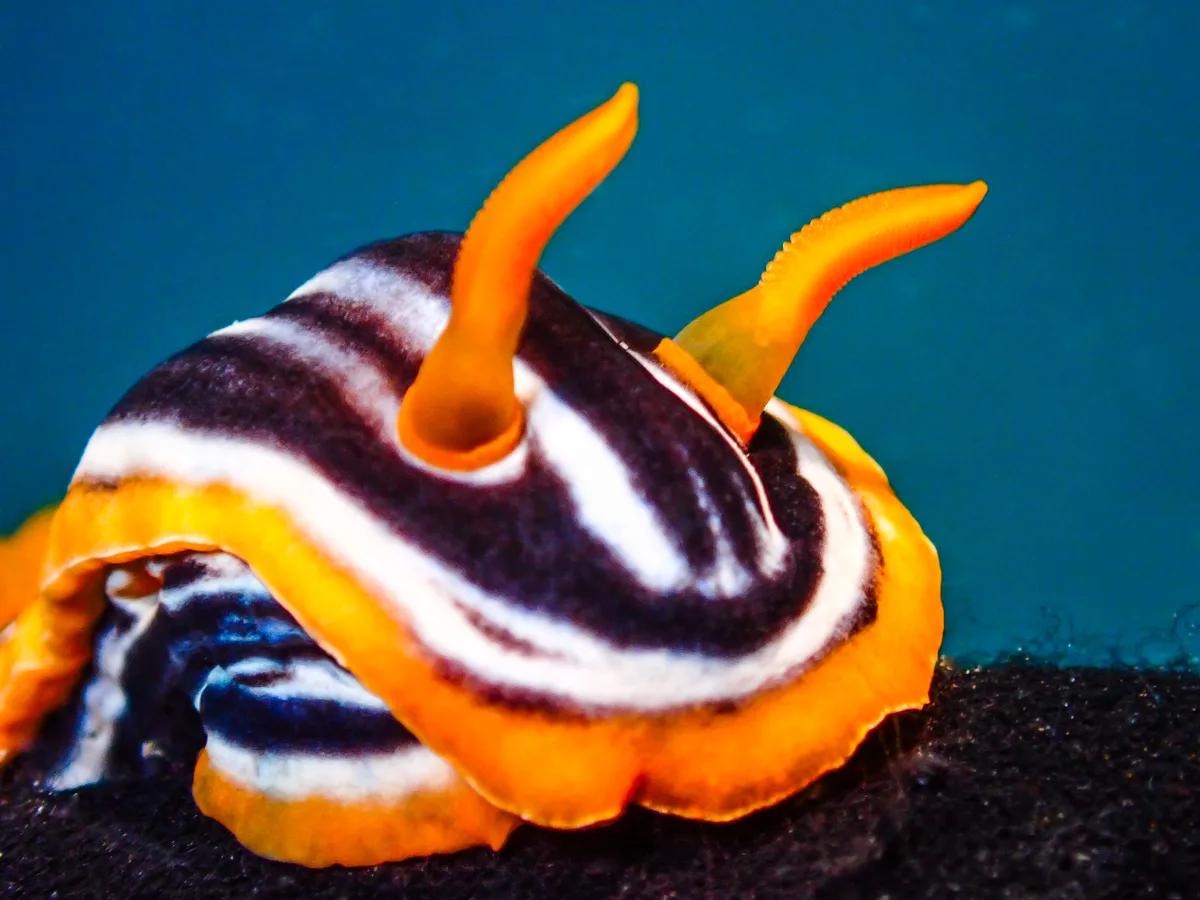
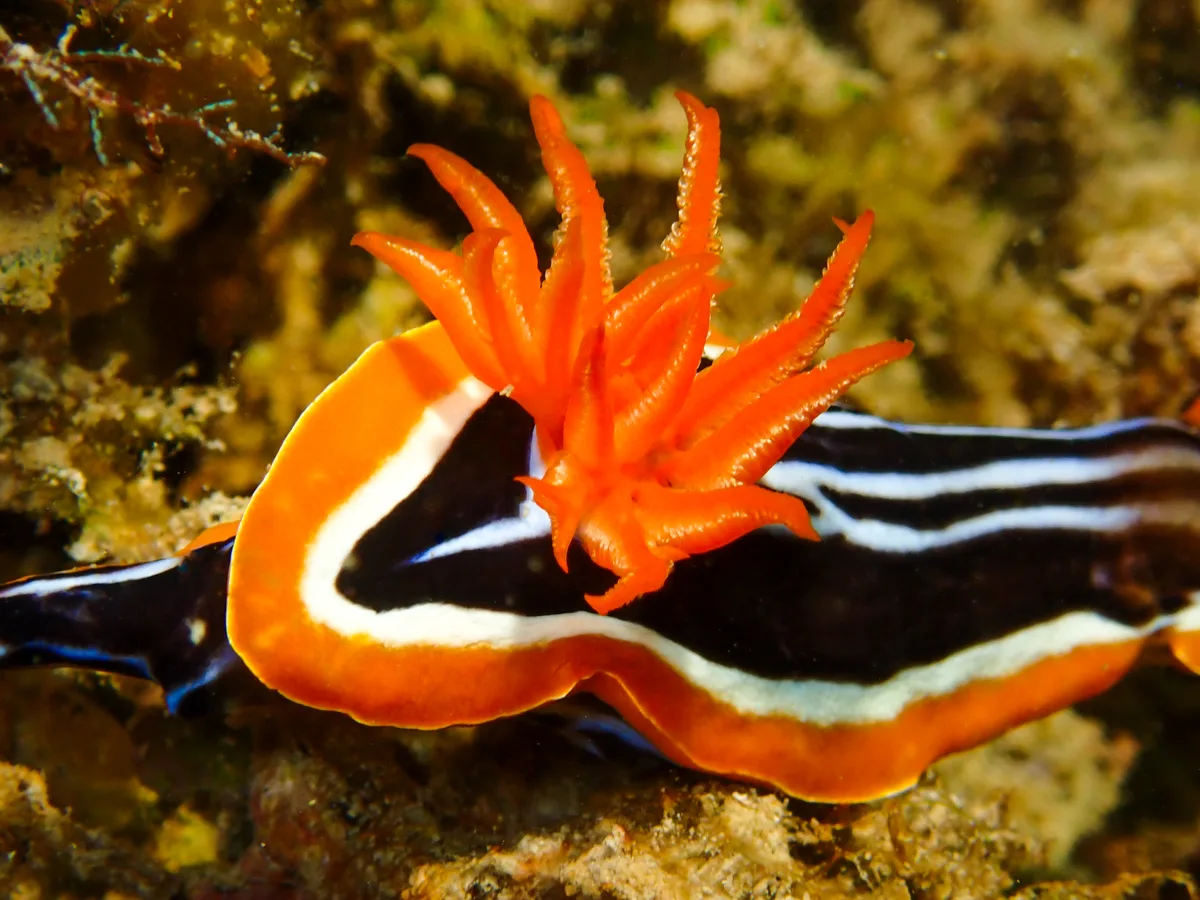
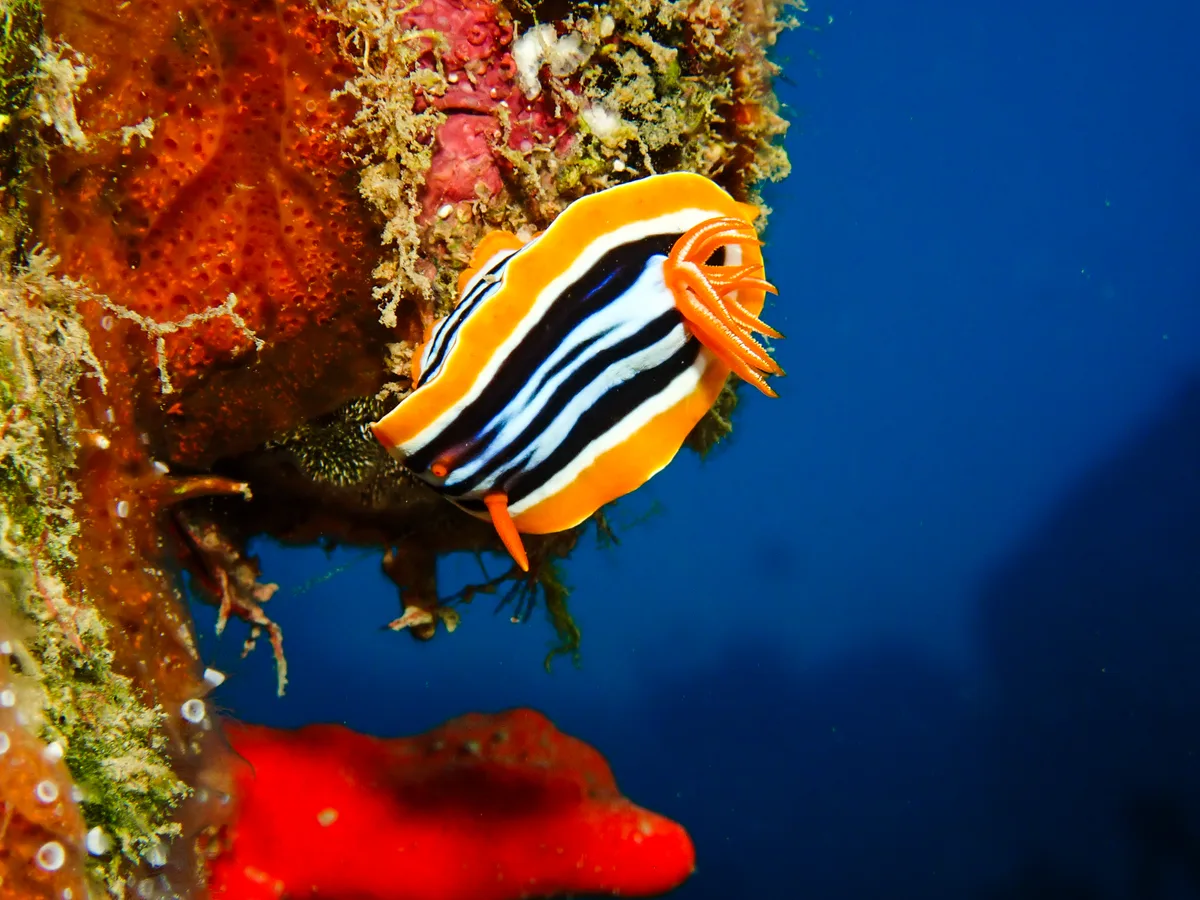
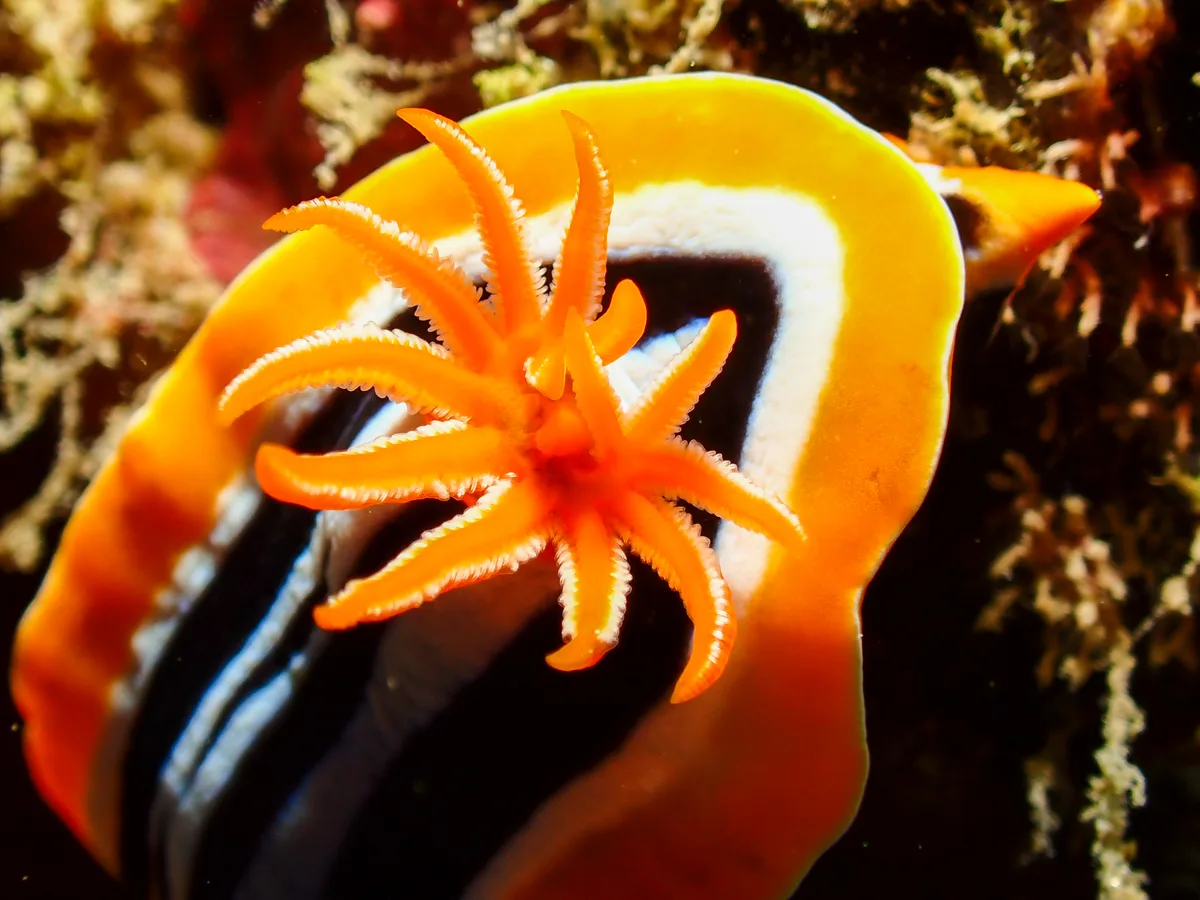
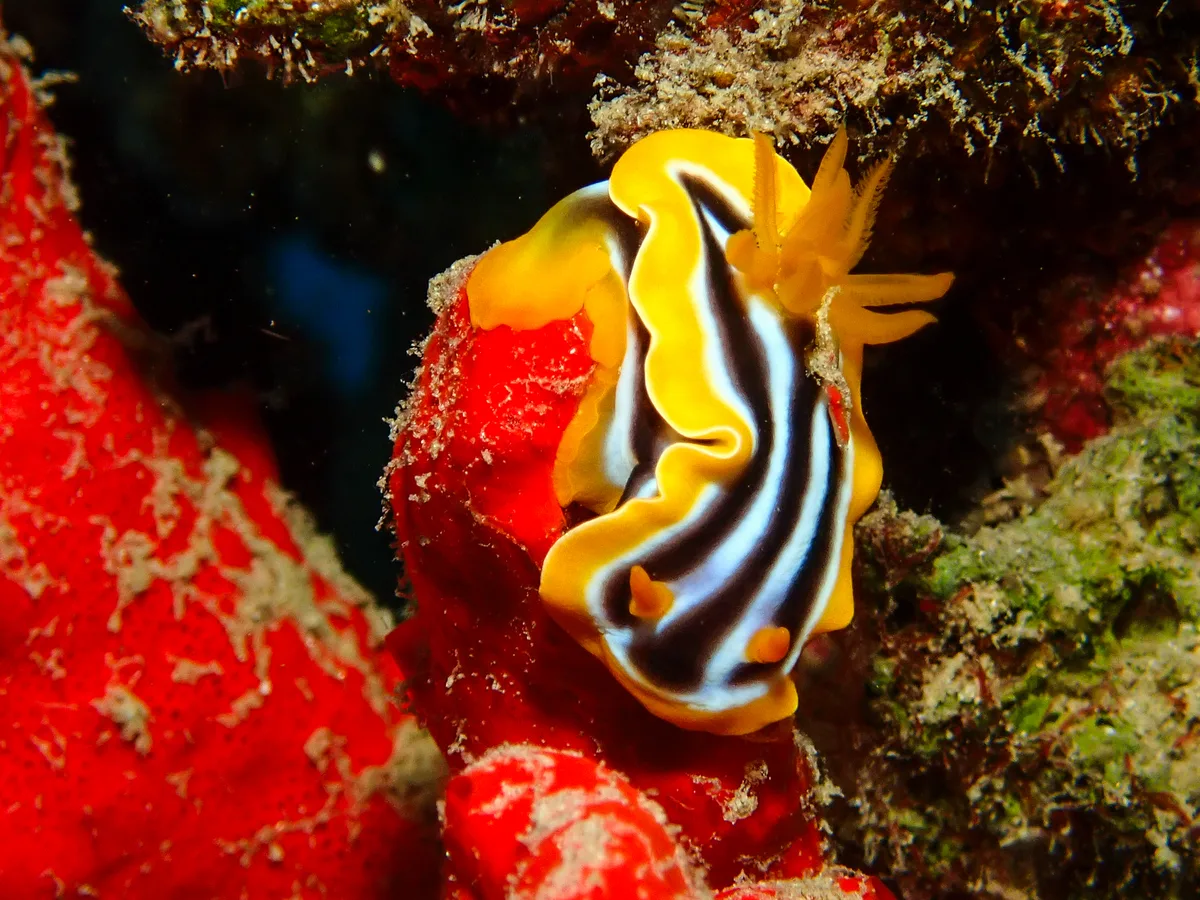
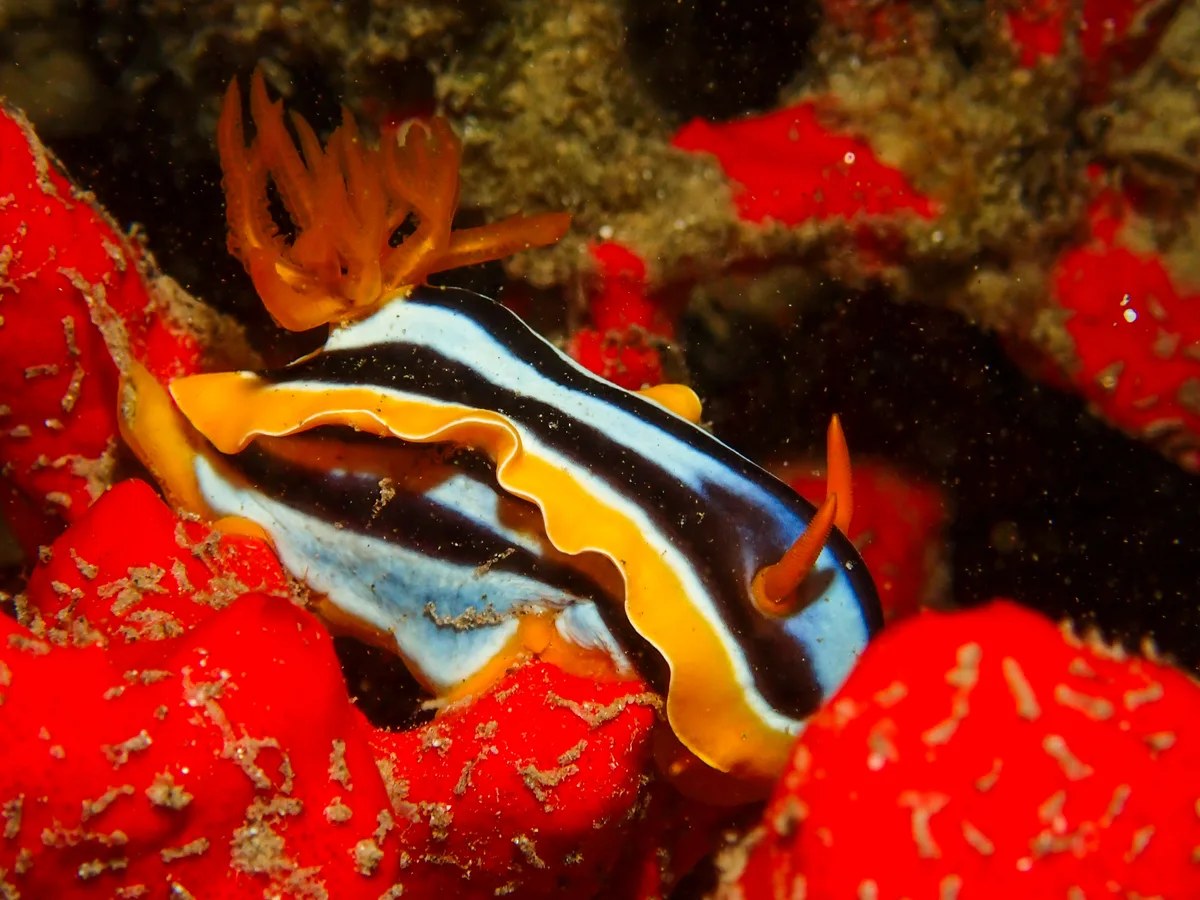
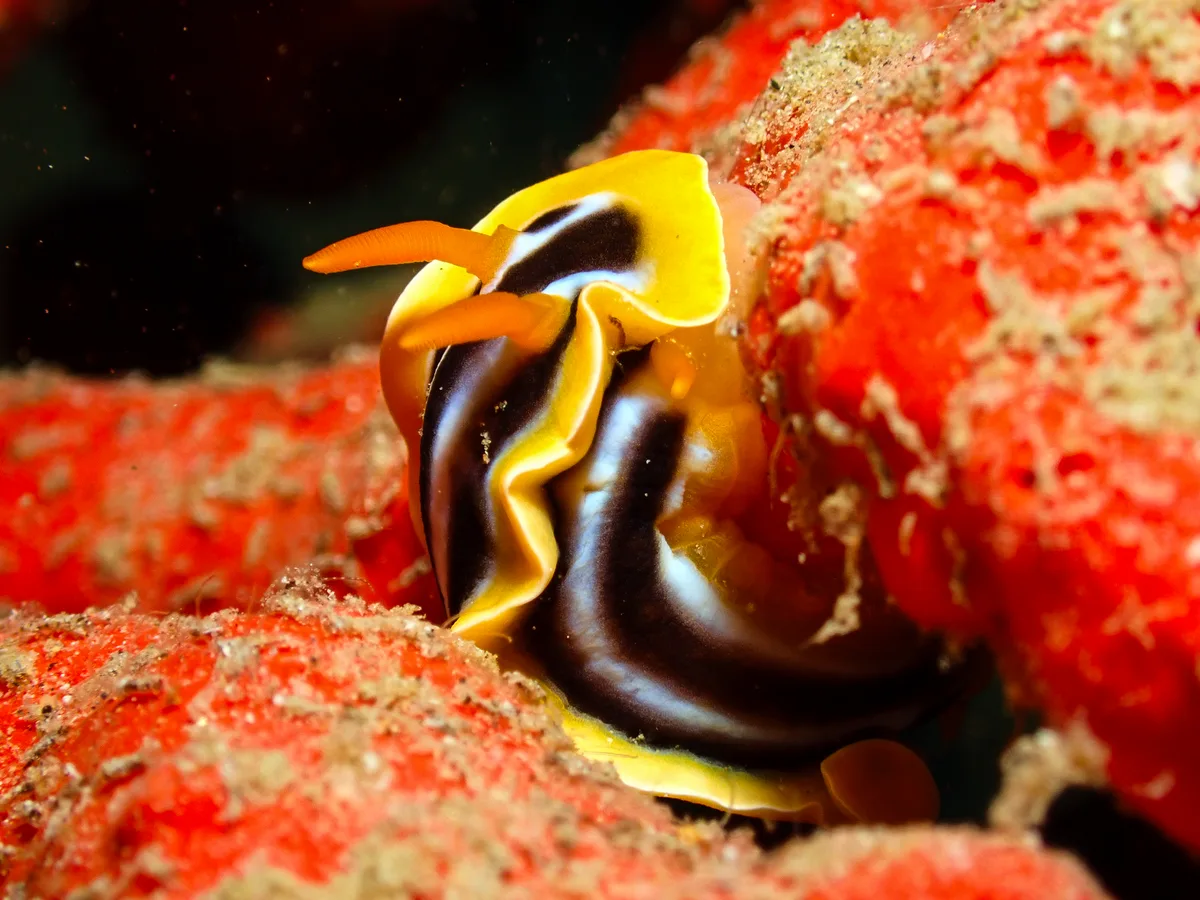
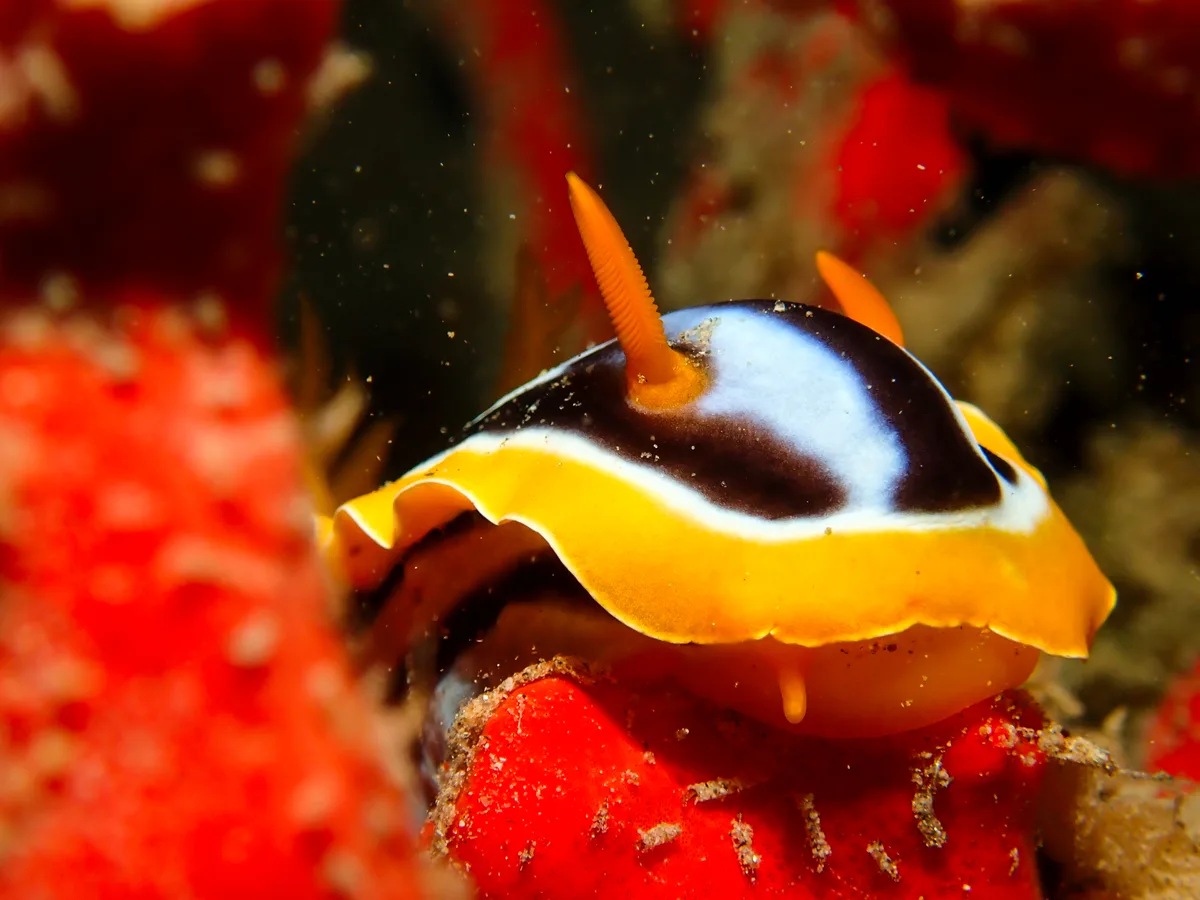
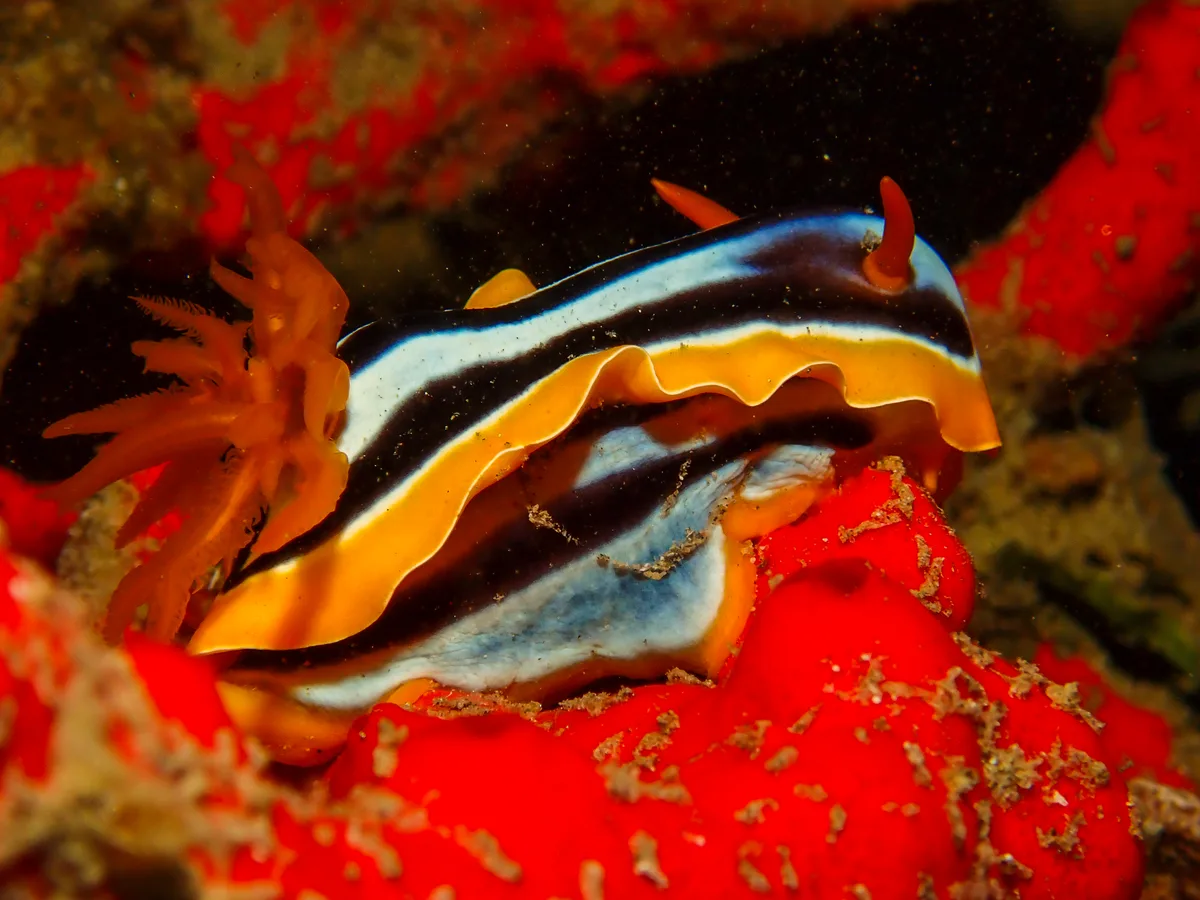
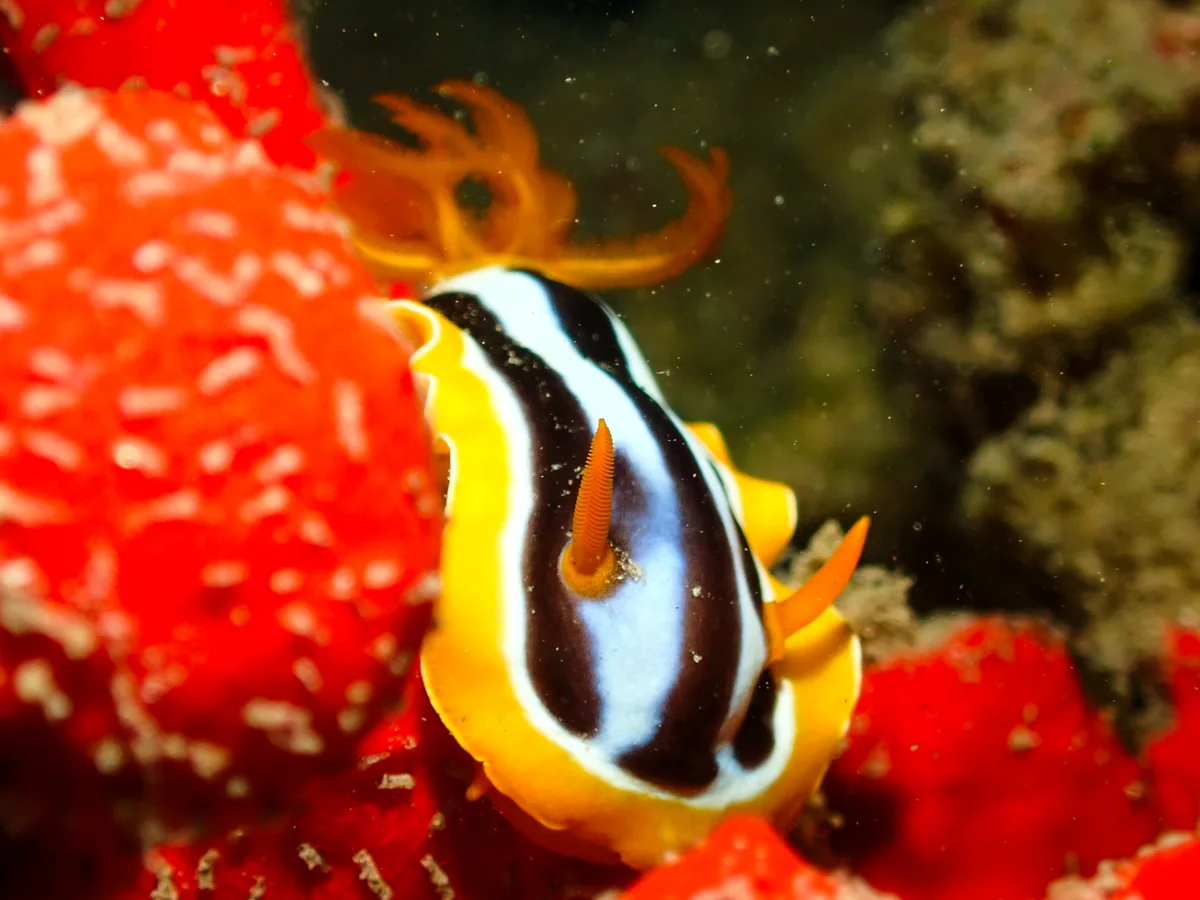
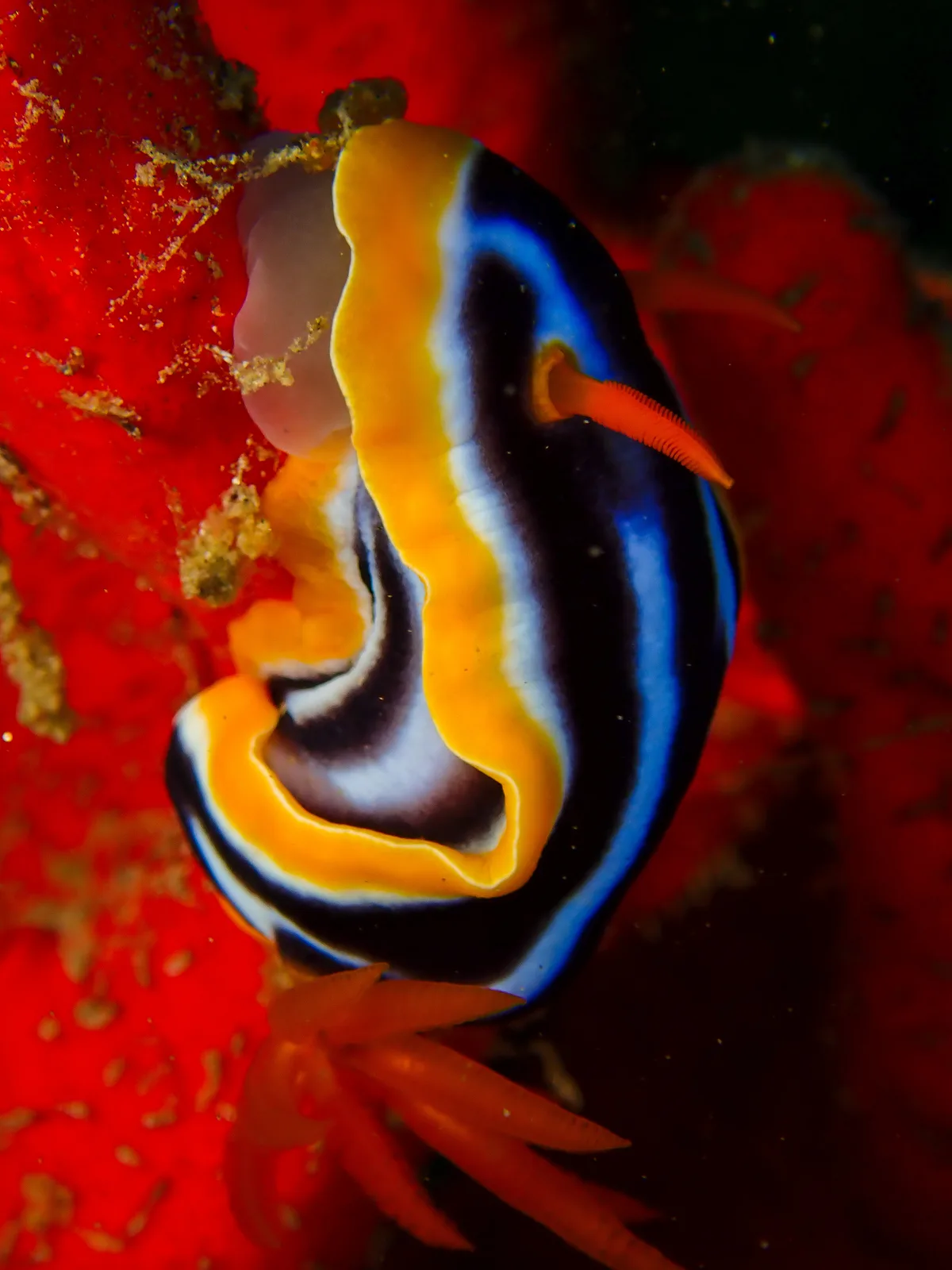
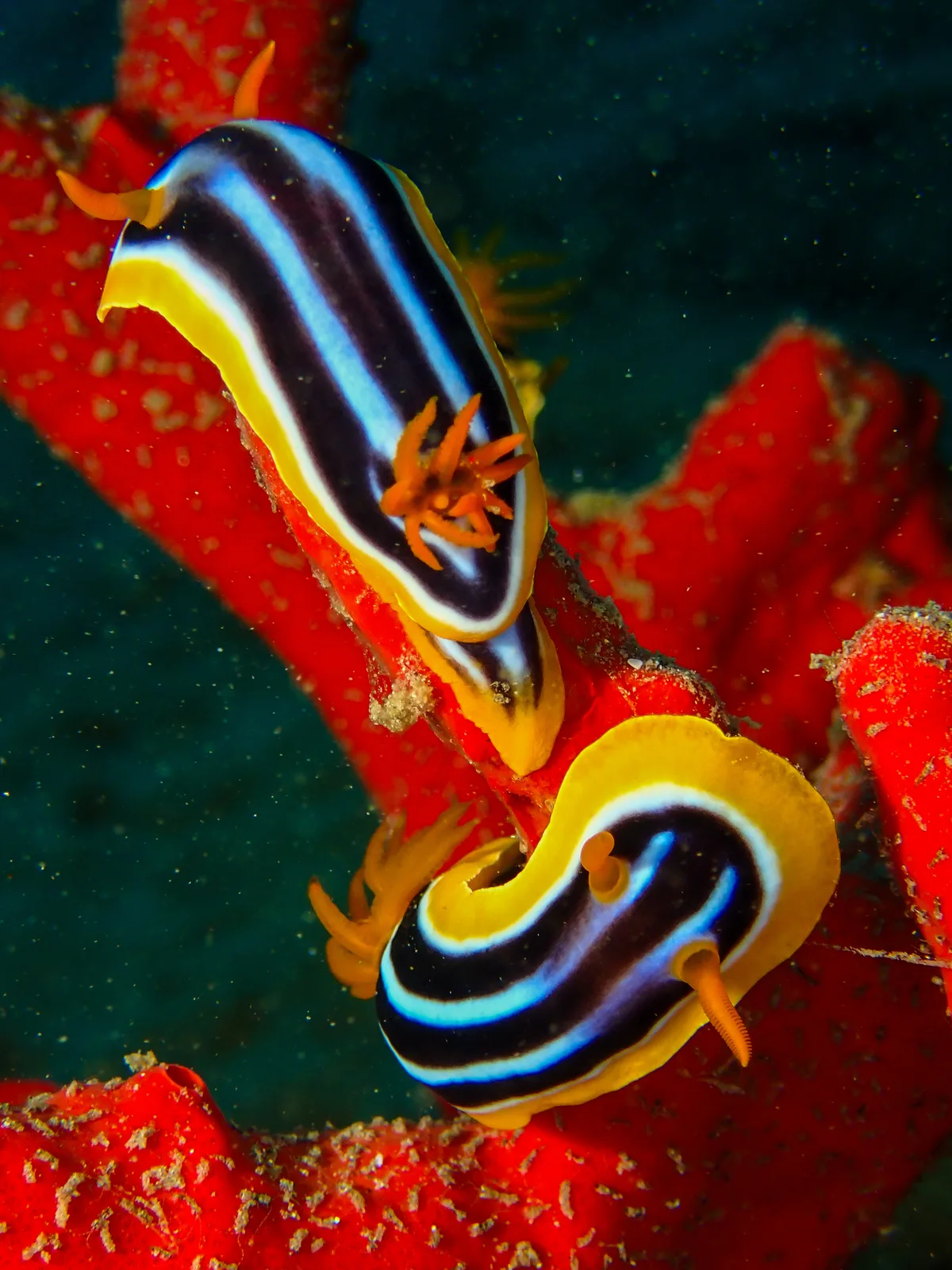
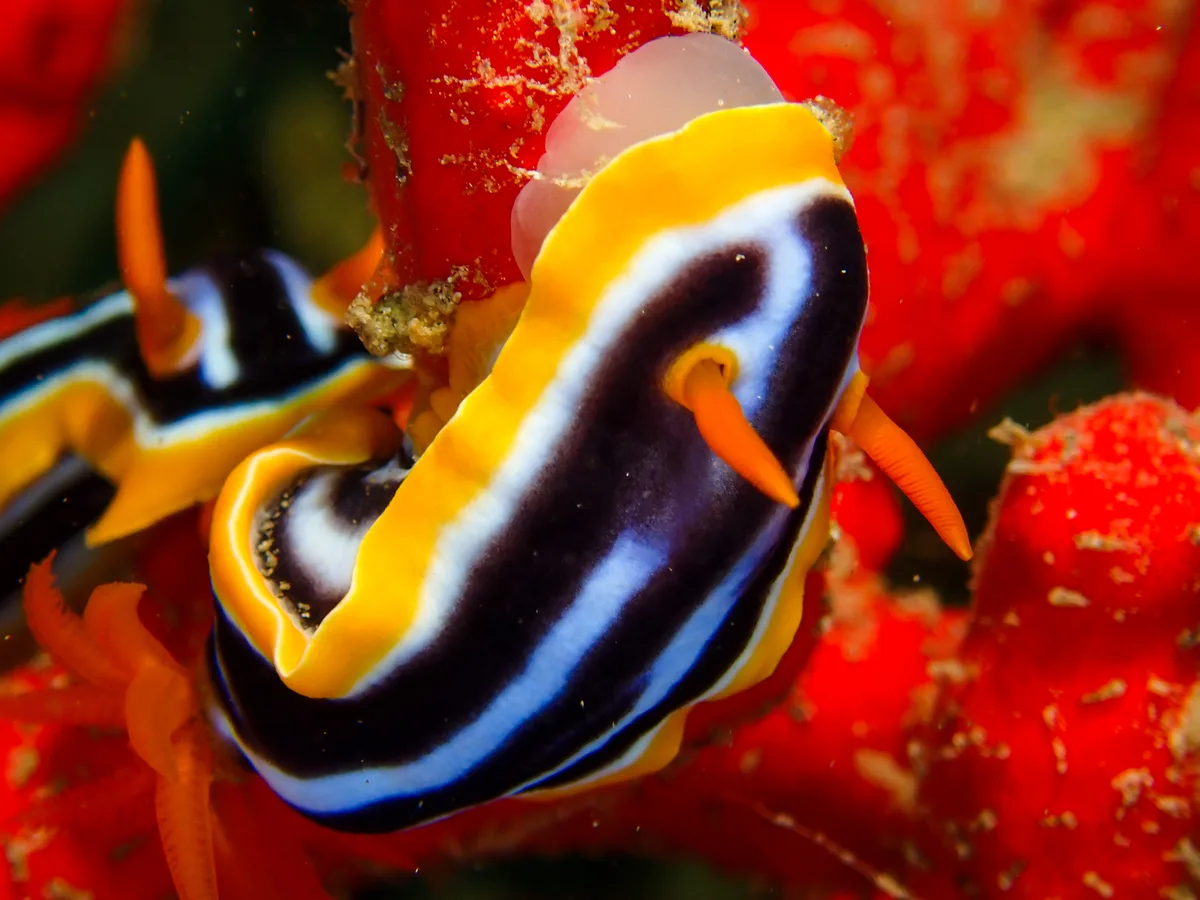
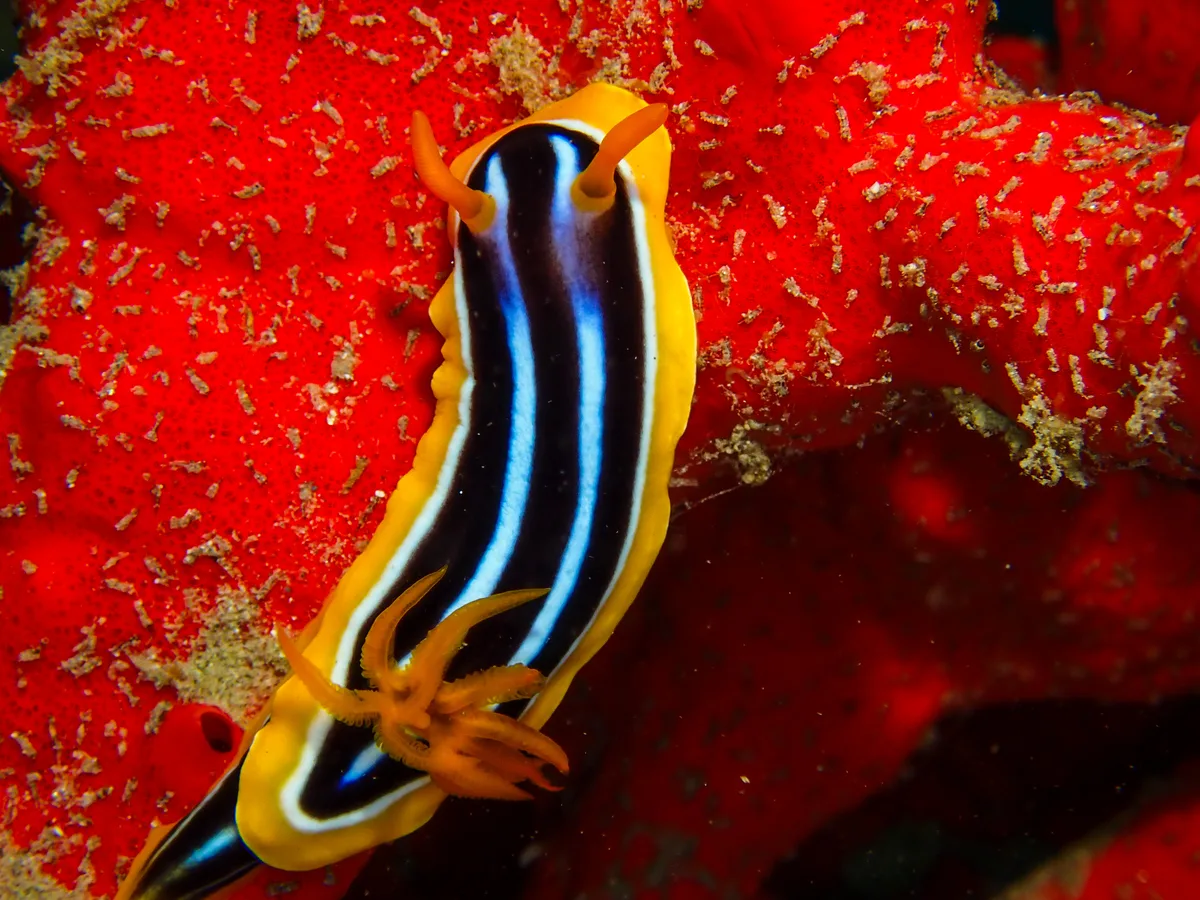
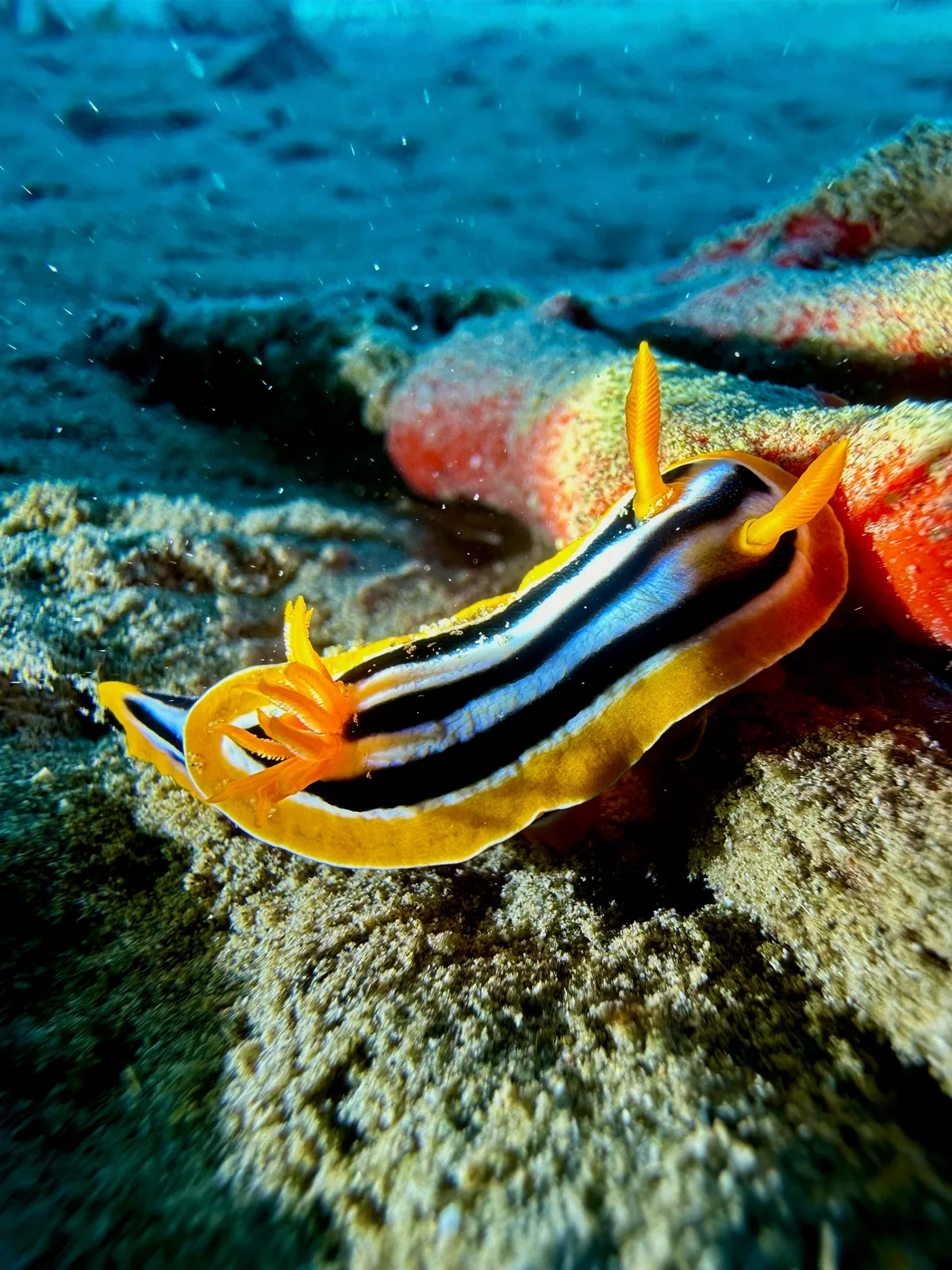

White, striped in black, edged all round in bright orange, with orange rhinophores and gills. Up to 4.5 cm (1.8 in), and the nudibranch that ends up on the cover of 🌊 Red Sea guidebooks - it is common here and scarce elsewhere.
It eats one thing. The red encrusting sponge Latrunculia is its food and effectively its address; the slug rasps it, sequesters the sponge's toxins - latrunculins, which disrupt the internal scaffolding of animal cells - and stores them in the mantle rim, exactly where a fish would bite. Those compounds are now standard laboratory reagents in cell biology, taken from a sponge found by following a sea slug.
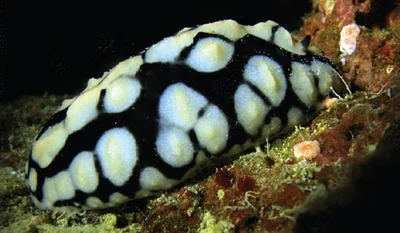
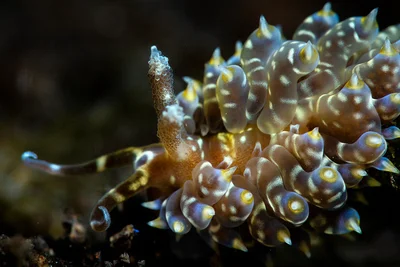
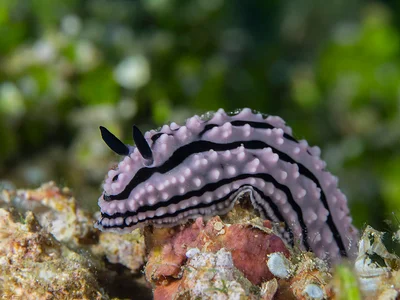
The orange edge is the warning label, and it works well enough to be worth copying: several unrelated 🌊 Red Sea slugs wear a similar pattern, and predators that learn on one avoid the rest.
Eggs go down as a flat spiral ribbon of pink-orange, usually stuck to the sponge itself, so the hatchlings settle where the food is. The adult lives less than a year.
- white body with broad black stripes and a bright orange rim all round
- orange-red rhinophores and gill plume, both retractable
- usually on or beside a red encrusting sponge
- length up to 4.5 cm