
LobstersAchelata
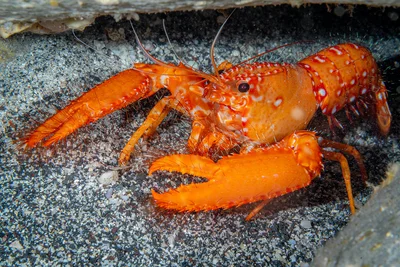
The lobsters on this coast have no claws. Achelata, the group name, means exactly that, and it separates the spiny and slipper lobsters under these ledges from the clawed lobster of cold northern water, which sits on a different branch entirely. One small red reef lobster filed here does carry true claws, and it is the exception that makes the rest obvious at a glance.
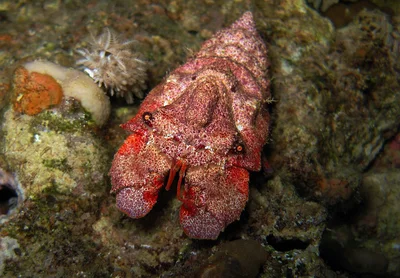
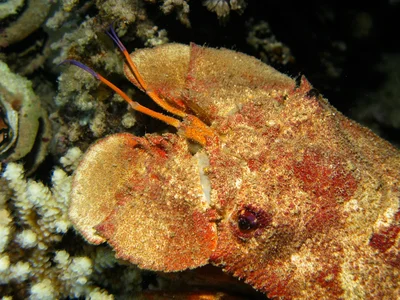
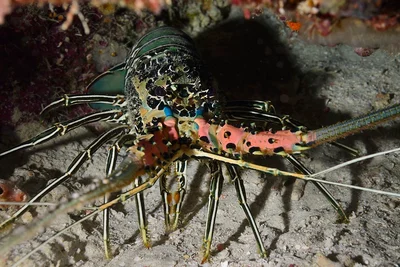
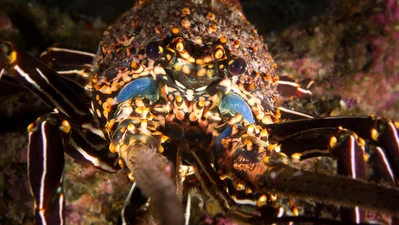
What stands in for claws is a pair of antennae as long as the body, spined down their length and swung like poles, behind a shell built as armor and a tail that fires the animal backward out of reach. A cornered spiny lobster turns to face the threat and fences with them. Slipper lobsters took the other road: the whip antennae are flattened into two broad plates, and the animal shoves through sand and rubble with them instead.
The part nobody sees is how they arrive. A lobster hatches as a phyllosoma, a flat transparent larva that is mostly legs, thin enough to read print through, and it does not settle for months. It drifts in open water, well offshore, in some species hitching a ride on a jellyfish, and only at the end of that swims down to a reef and turns into something recognizable. The lobster in that cave very likely did not come from that reef, which is also why protecting a single site does not restock it.
They feed at night, they share caves rather than defend them, and they are the first animal to vanish from a reef that people can reach easily. A dive site with big spiny lobsters sitting out under a ledge in the open is telling you something about how much pressure that site takes.
- absence of large, prominent grasping claws
- tough, armoured exoskeleton
- antennae either long and whip-like or broad and plate-like
- cryptic colours, often mottled browns, reds, or greens
7 species in Lobsters


Other groups in Crustaceans
Nearby in the catalogue.


Last Update: August 23, 2026