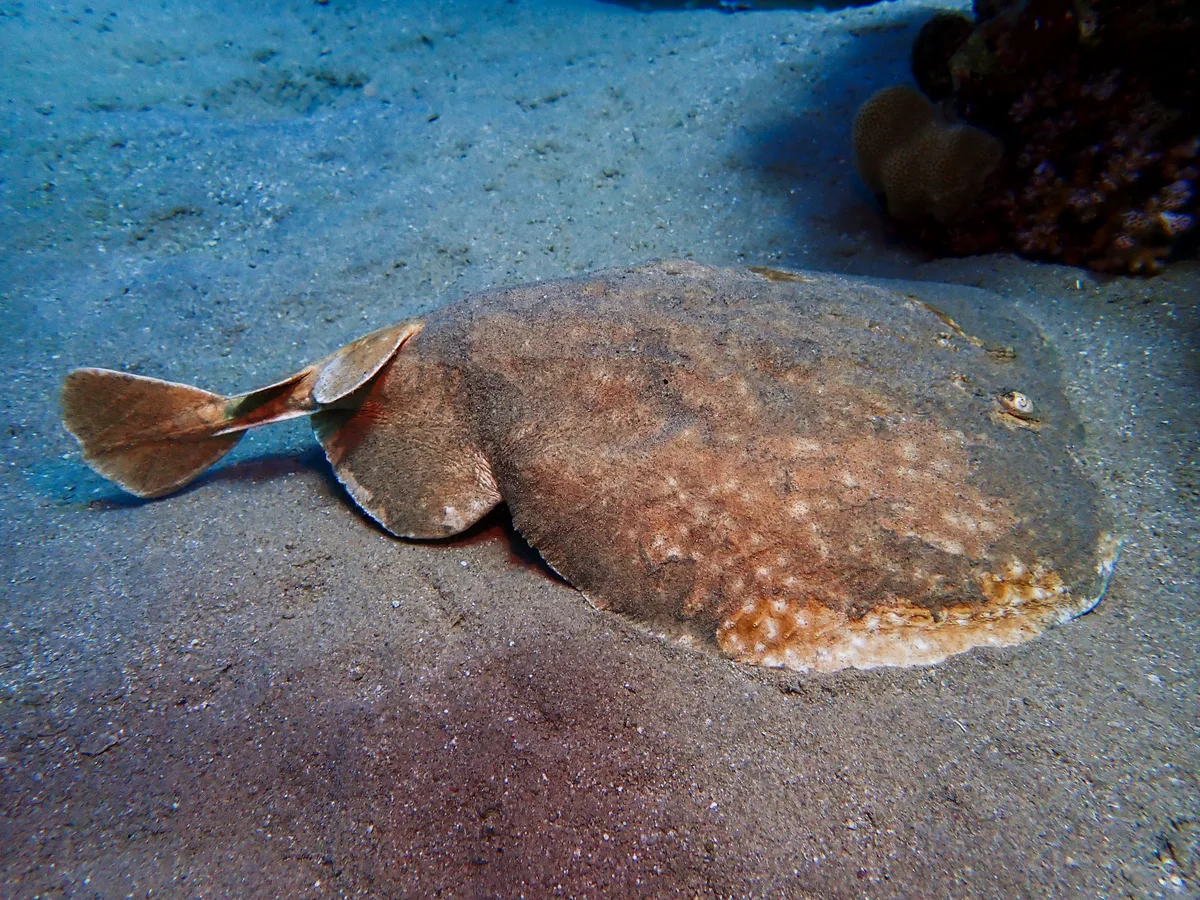
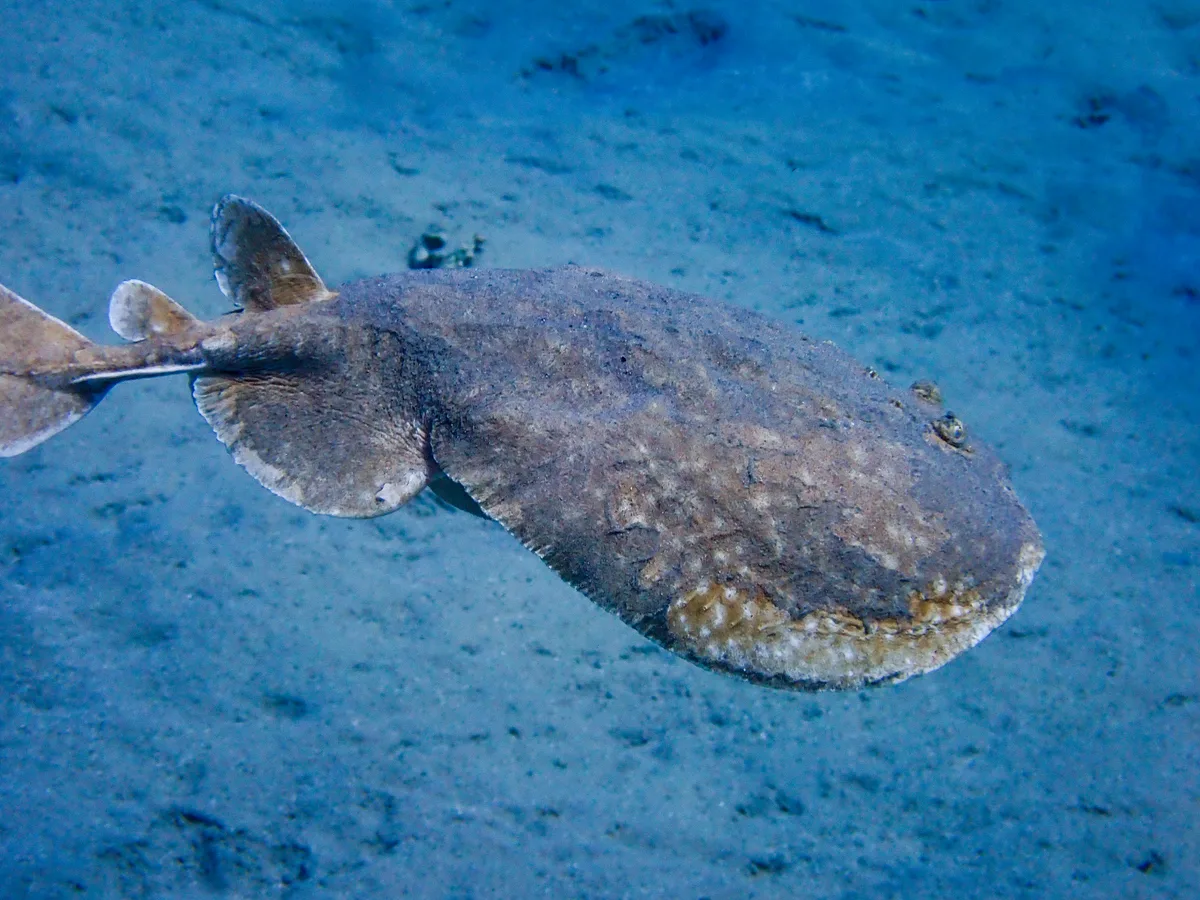
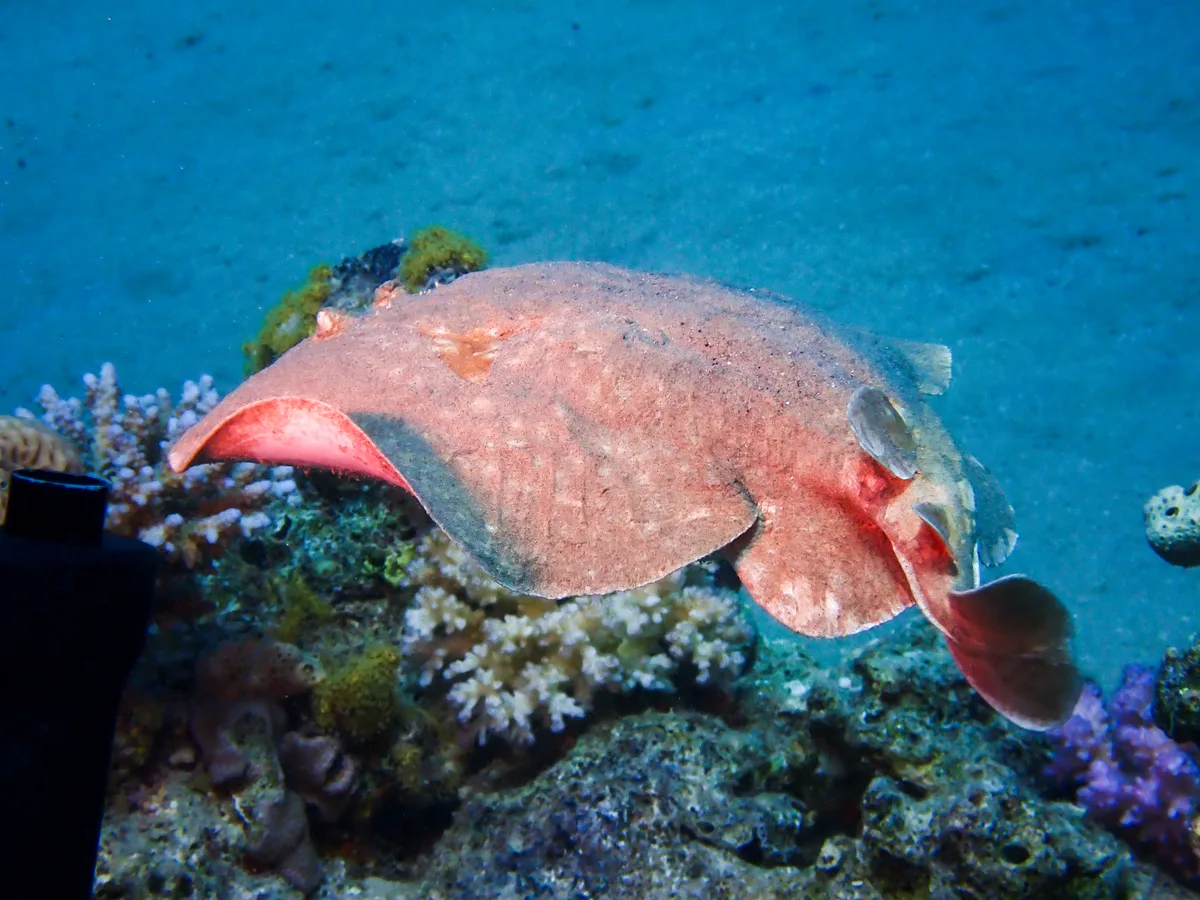
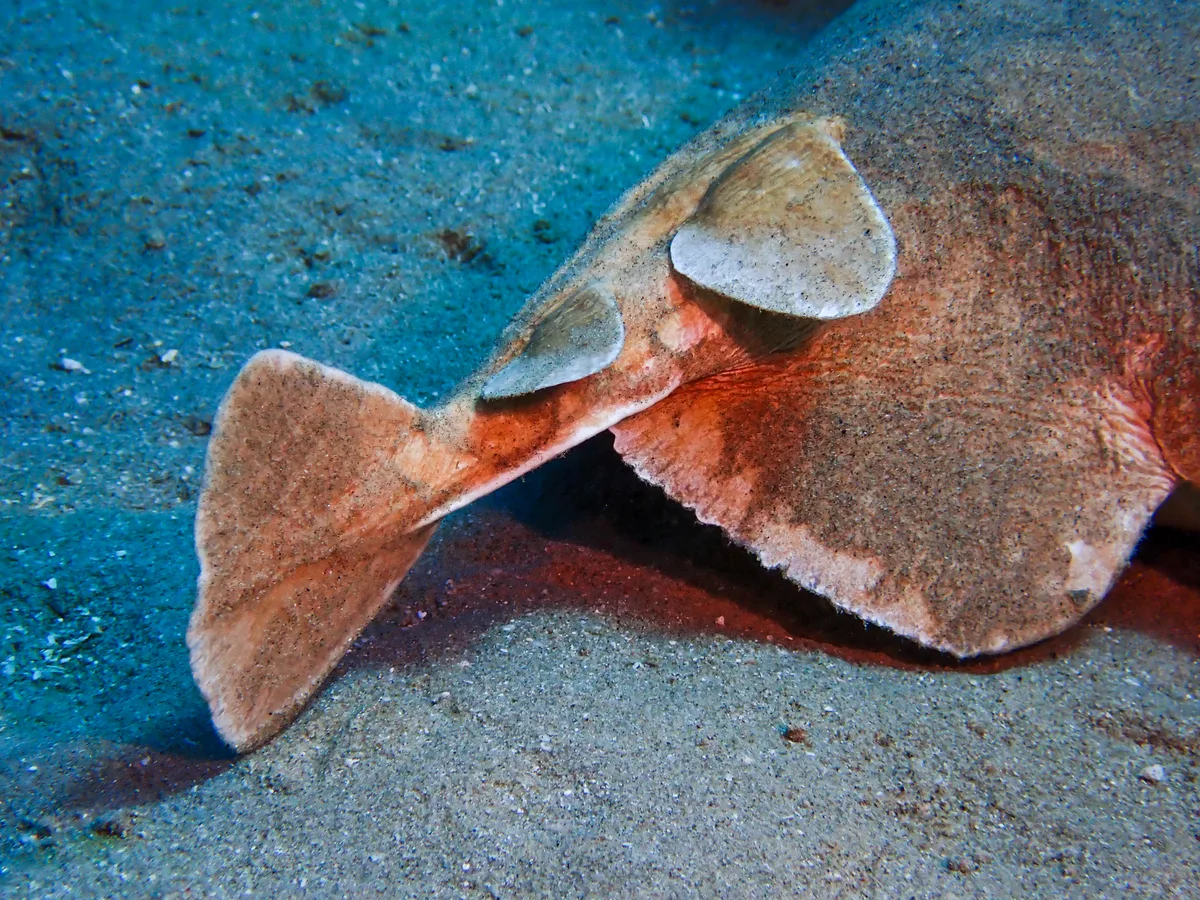
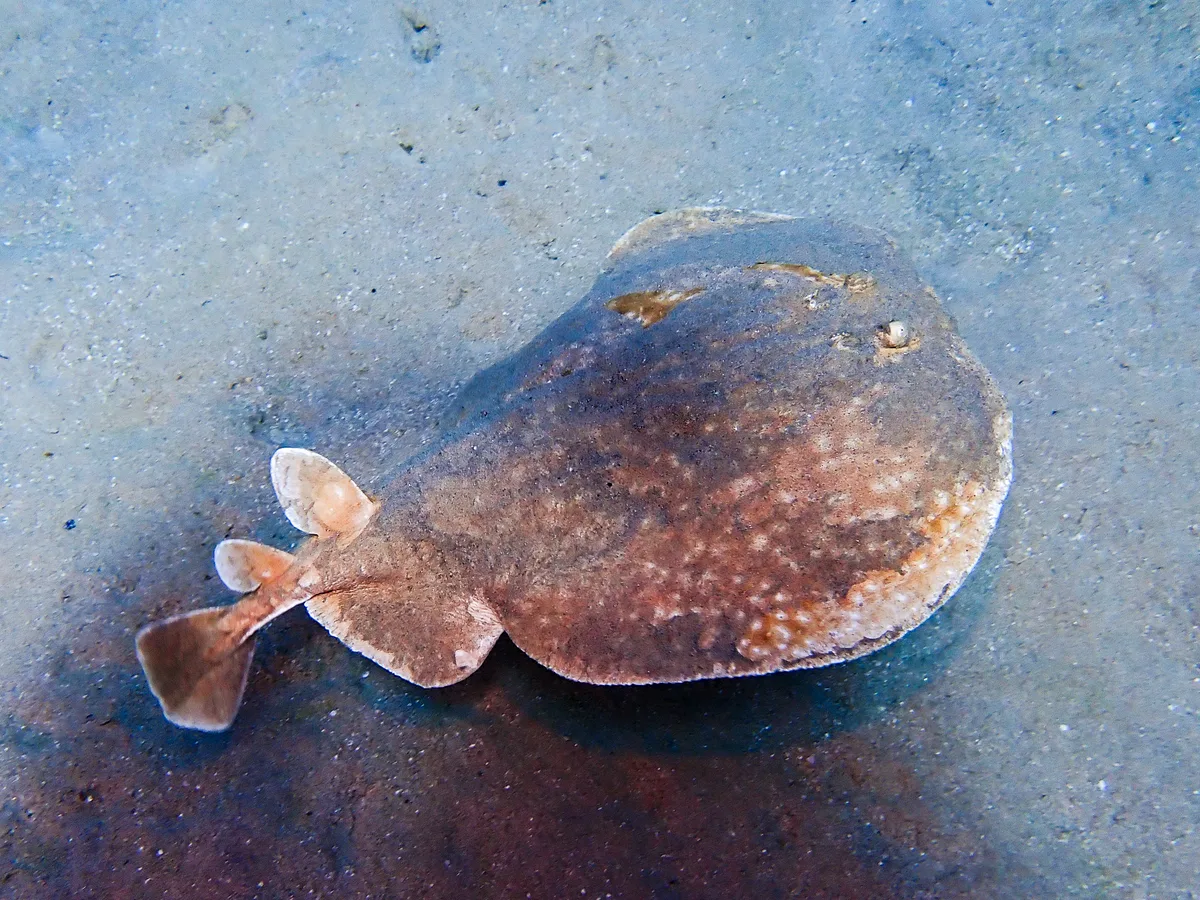
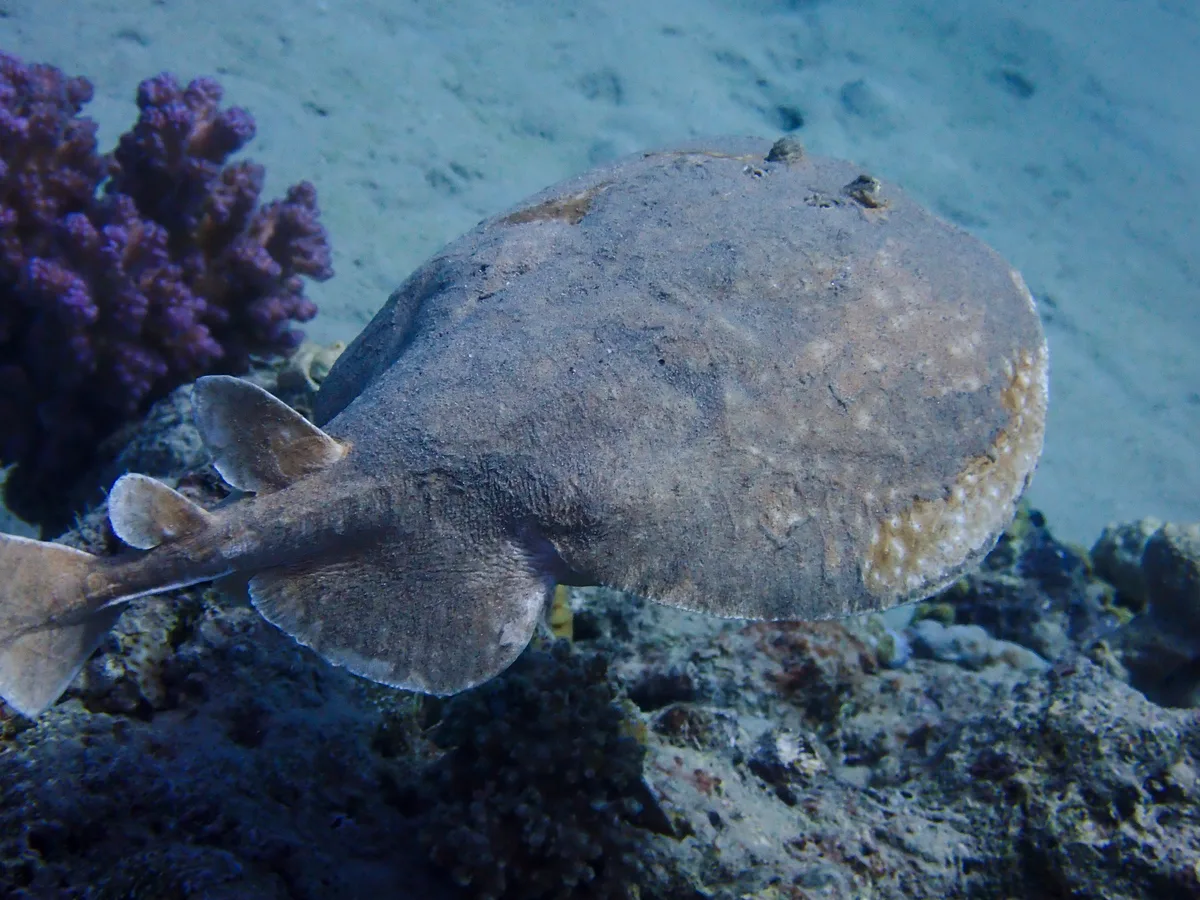
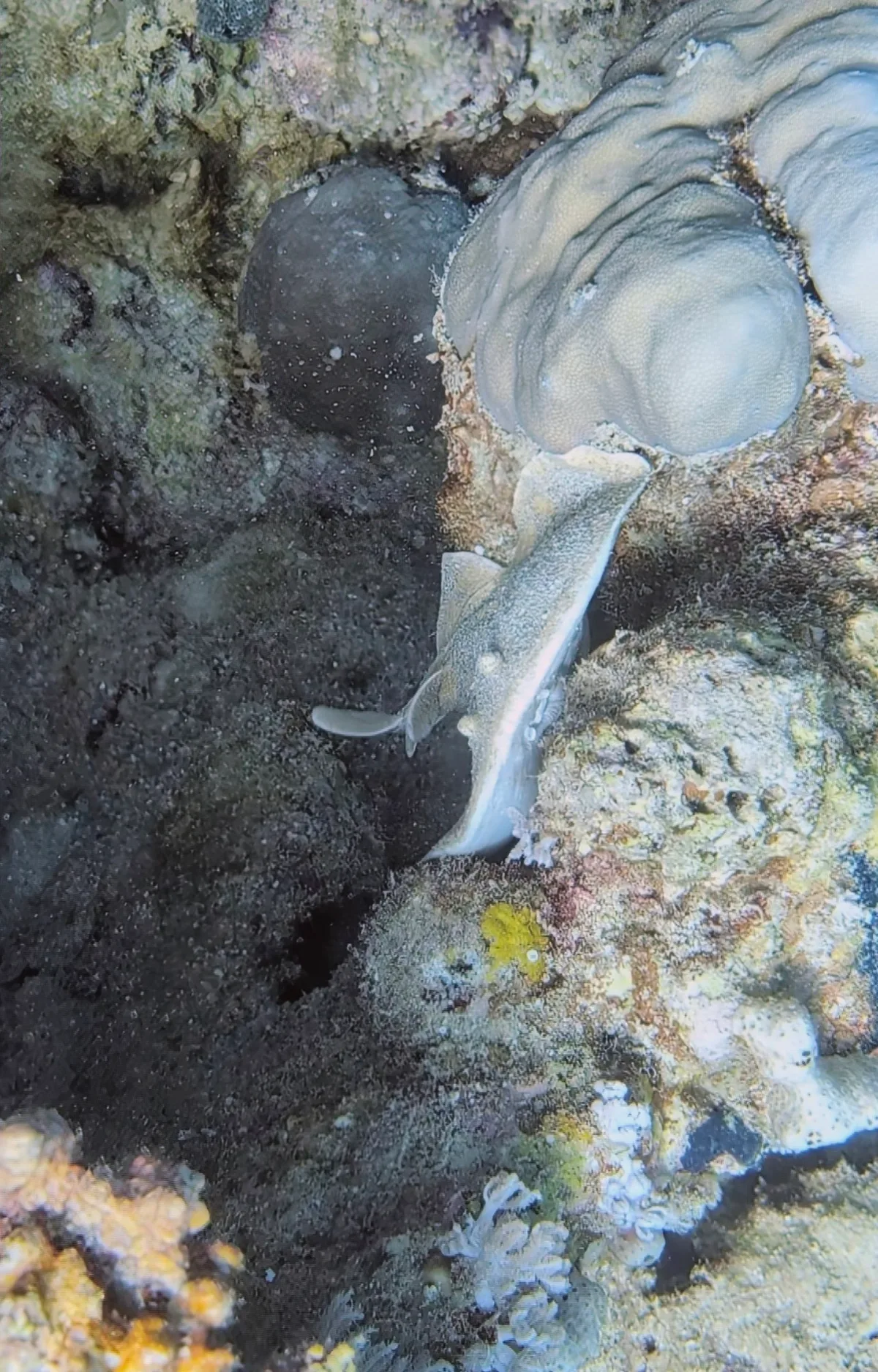
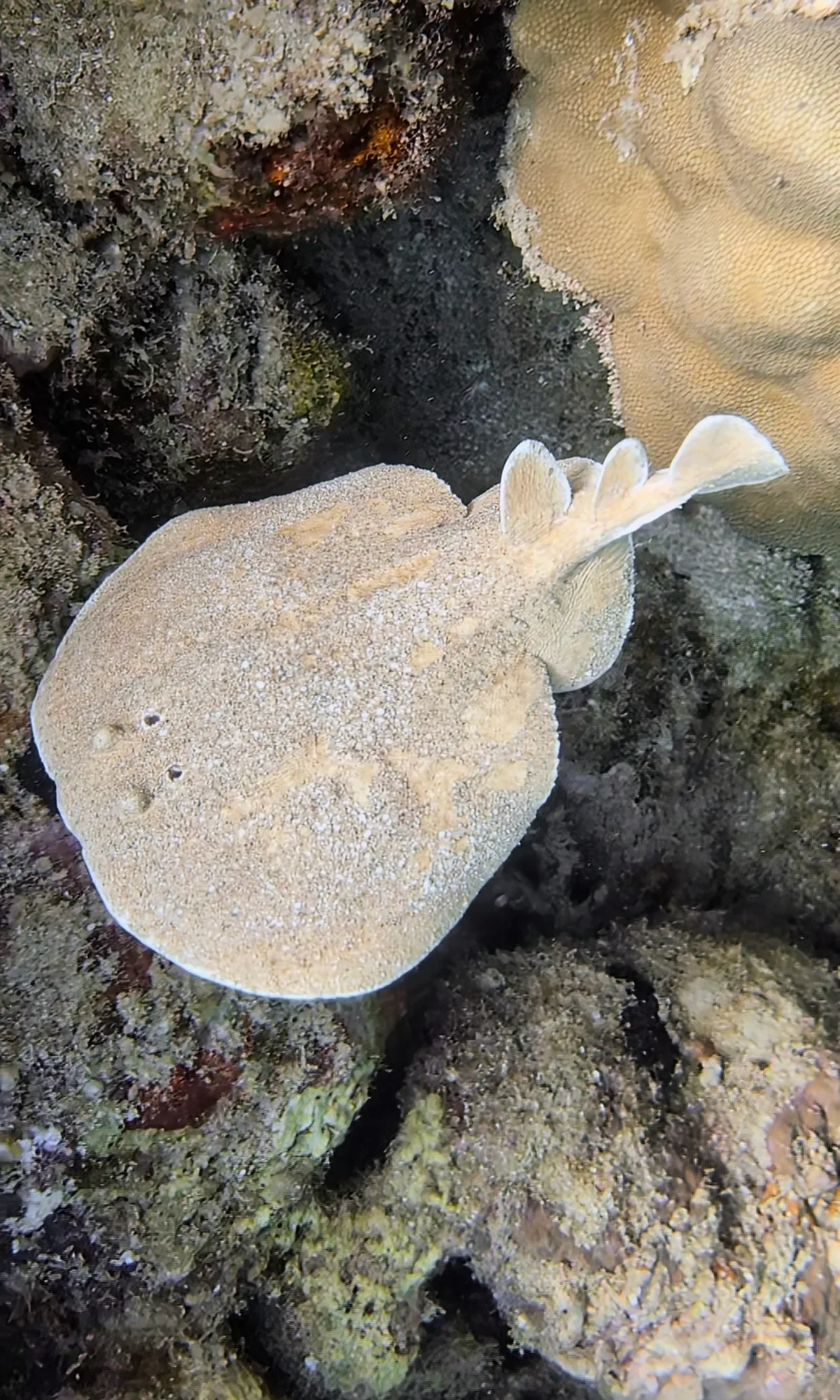
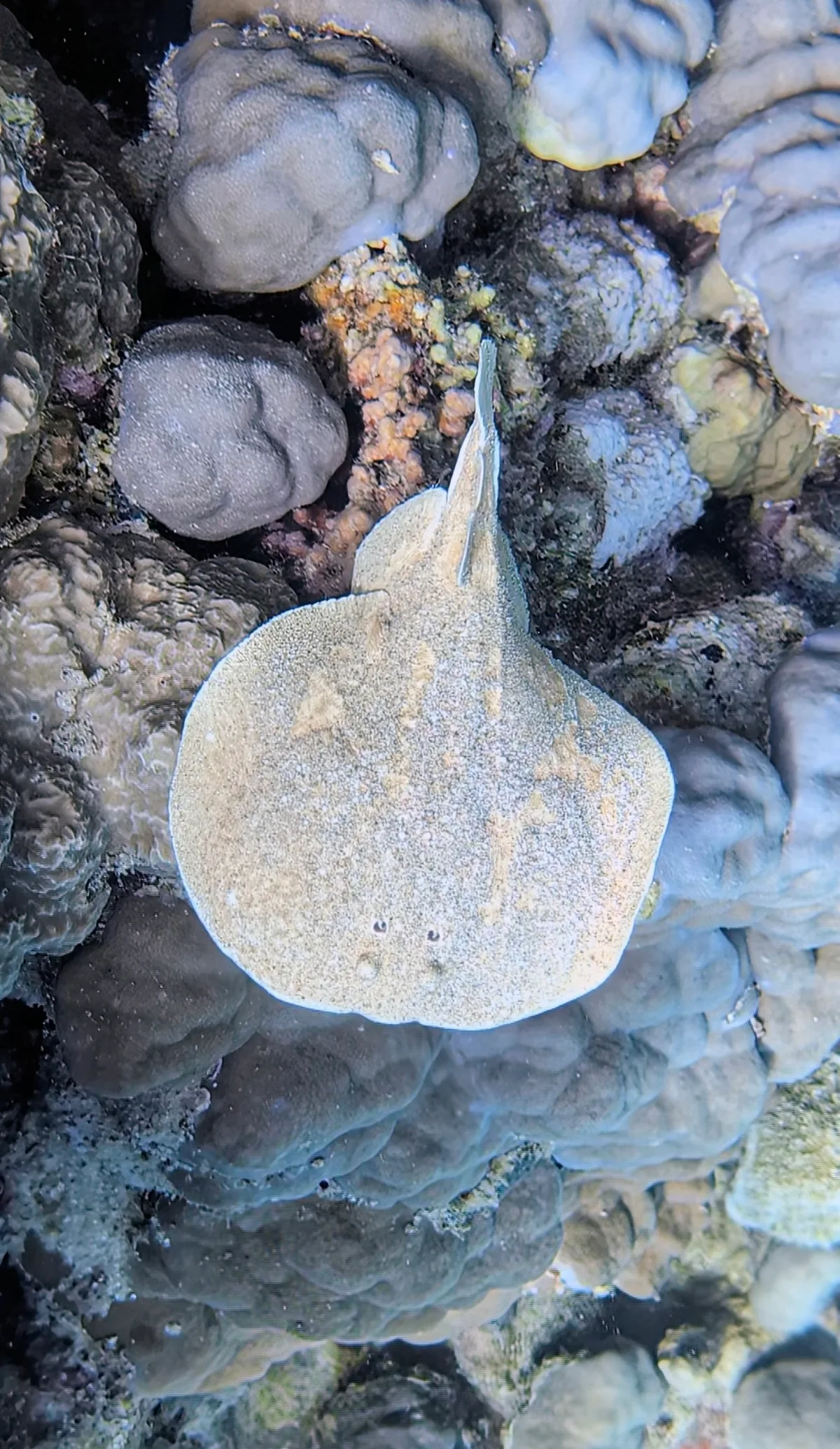
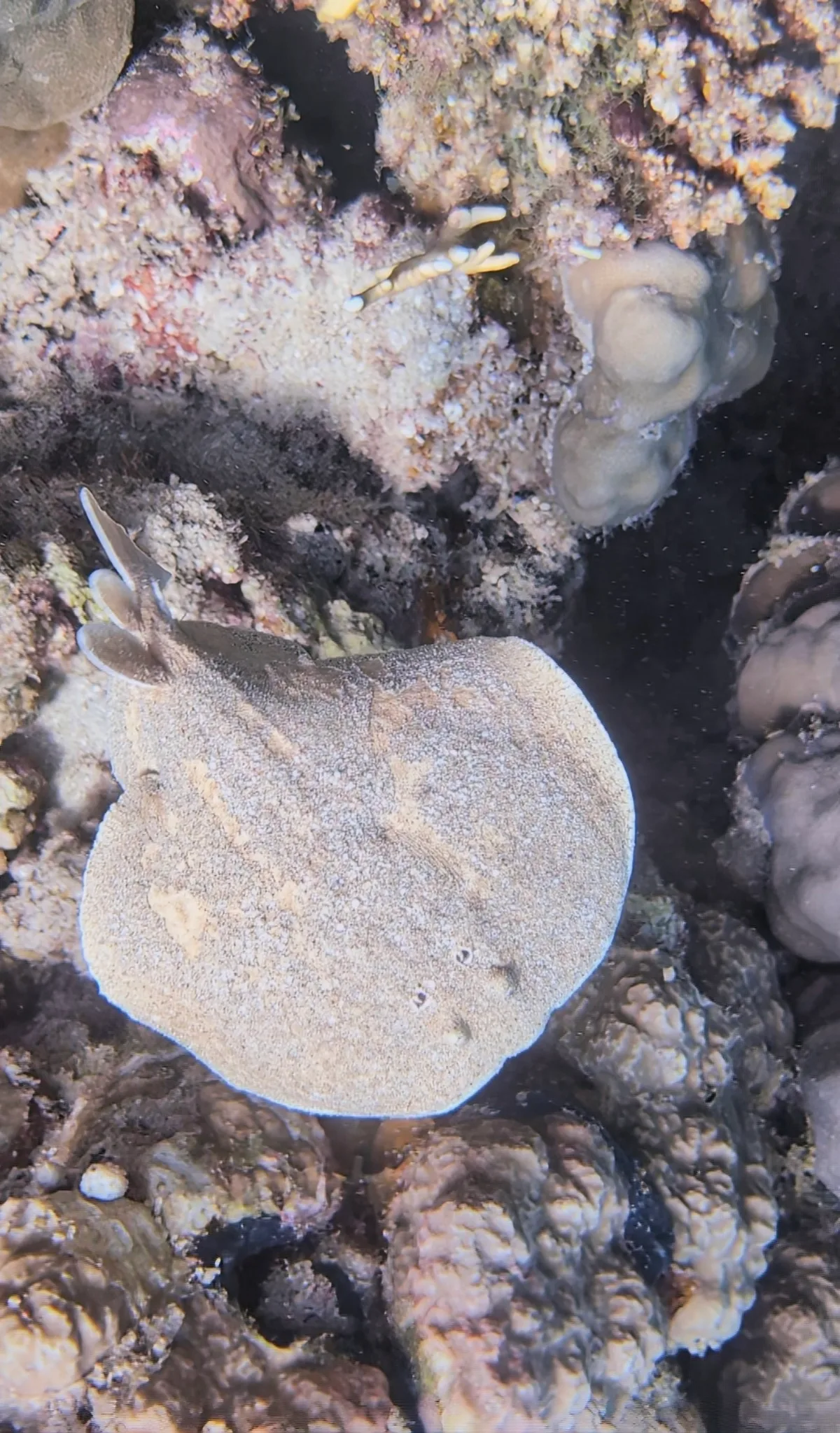
The Panther Torpedo is subject to fishing pressure across most of its spatial and depth range. It is taken as bycatch in industrial and artisanal fisheries with multiple gears, including demersal trawl and gillnets and is retained in some countries and discarded in others. Fishing effort and capacity has been increasing in the Arabian Sea and adjacent waters and is generally unregulated and unmanaged (Anticamara et al_._ 2011, Watson et al. 2013). This has led to a reduction in the number of shark and ray catches in the Arabian Seas region (Mohamed and Veena 2016; Jabado et al. 2018). The sluggish benthic nature of torpedo (electric) rays make them susceptible to trawl capture. Post-release survival of related species is low and the same is inferred for the Torpedo Ray.
Egyptian, Israeli, and Jordanian catches from the Gulf of Aqaba are generally small and represent a small proportion of the catch of each country. It is possible that this species receives refuge at depth in the Gulf of Aqaba, outside of trawl fisheries. However, further details of interactions with these fisheries are needed to accurately assess if they pose a major threat to this species.
In the Red Sea, fishing pressure has been increasing with the number of Saudi Arabian traditional vessels operating having increased from about 3,100 to 10,000 between 1988 and 2006 (Bruckner et al. 2011). In Eritrean artisanal fisheries, catch and effort data showed that total fishing effort as well as total annual fisheries catch increased more than two-fold from 1996 to 2002 although the catch-per-unit-effort of sharks and rays decreased by almost 50% (Tsehaye_et al__._ 2007). In Somalia, illegal and unregulated fishing by foreign trawlers and longliners is rife and impacting elasmobranch populations (Glaser et al_._ 2015). These fishing vessel and effort numbers highlight the intensity of coastal and shelf fisheries across the northern Indian Ocean.
In Yemen, industrial and artisanal trawl fisheries operate across the coast (Morgan 2006, Tesfamichael et al. 2012). Industrial fishing commenced in 1970 with a peak in catches in the late 1990s, and a decline by the end of the 2000s (Tesfamichael et al. 2012). The Yemen shrimp trawl fishery is ongoing, but has varied in terms of effort recently (Tesfamichael et al. 2012), although there have been attempts to further develop Yemeni fisheries (R.W. Jabado unpubl. data 2022). The Panther Torpedo is also potentially caught as bycatch in gillnet fisheries along the Yemeni coast. There is no information on interactions with fisheries in the Gulf of Aden where Bonfil and Abdallah (2004) noted that there were at least 27,900 artisanal fishermen and 6,400 vessels. There has been a considerable increase in fisheries production in that area (Bonfil and Abdallah 2004). Foreign trawlers (Egyptian) currently operate in Somali Gulf of Aden waters, where pressure is high and electric rays are a potential bycatch (M. Ali pers. comm. 06 February 2017).
Oman has a long-established artisanal shark fishery using demersal set longlines, demersal set gillnets and driftnets, which includes landings of rays (Henderson et al. 2007). Market surveys did not report any electric rays (Henderson et al. 2007) which suggests that they are rarely, if at all, taken in this fishery as most of the catch is landed, or is discarded at sea. However, when discarded, this species likely has low post-release survival. Trawling is no longer permitted in Oman.
In Iran, there is increasing fishing effort with the number of fishermen increasing from 70,729 in 1993 to 109,601 in 2002 (Valinassab et al. 2006). If indeed this species does occur in Iran, there is likely increasing catch due to the growing demersal gillnet fishery targeting rays operating in the Gulf of Oman from March to June. Torpedo rays in general are caught as retained bycatch in this fishery and in shrimp trawling fisheries and are sold to fish-meal companies (M. Rezaie-Atagholipour unpubl. data 2022). In over 40 trawl sets in 2017 and 2019, 137 torpedo ray individuals were caught in the eastern Arabian/Persian Gulf and the Gulf of Oman (M. Rezaie-Atagholipour unpubl. data 2022).
Electric rays, including Panther Torpedo, are caught in Pakistan as bycatch in trawl and demersal set gillnet fisheries. About 2,000 trawlers operate in continental shelf waters and fish in outer shelf waters (M. Khan, unpubl. data 2017). Since electric rays are of little commercial value, they are used for fishmeal production. However, small quantities are also discarded at sea with low post-release survival expected.
In India, there is high level of fisheries exploitation with most stocks fully exploited (FAO 2020). Furthermore, reports from India indicate that several shark stocks are either declining or have already collapsed (Mohamed and Veena 2016), likely as a result of dramatic increases in fishing pressure. In Odisha, where the Panther Torpedo is found, fish production doubled from 2010–2018 and is still increasing (Ngasotter et al. 2020).
There is a large amount of Illegal, Unreported, and Unregulated (IUU) fishing in the Arabian Sea and adjacent waters, indicating fishing pressure is even higher than reported (Alabsi and Komatsu, 2014, Jabado et al. 2018). Indirect and sublethal sources of mortality include habitat destruction and degradation, and pollution (e.g. heavy metals) (Heileman and Tang 2009, Heileman 2009, MacKinnon et al. 2012).