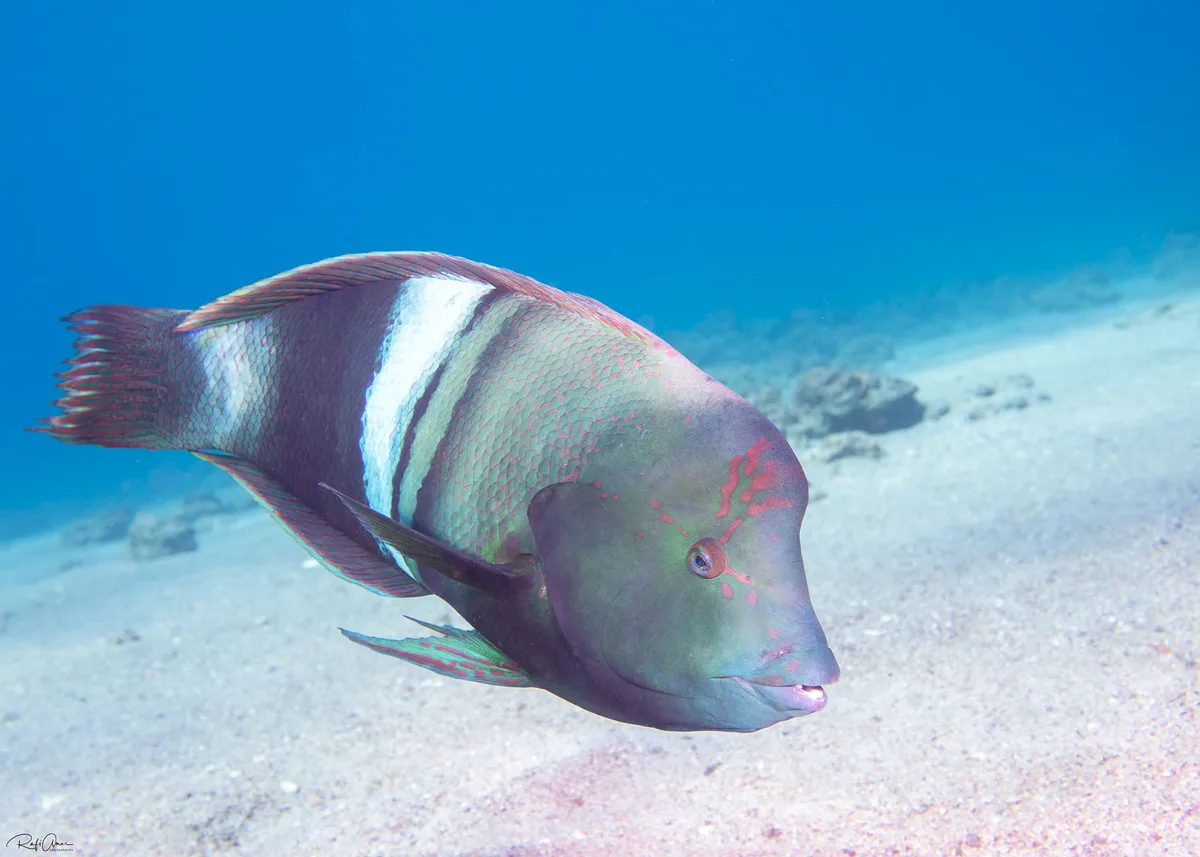
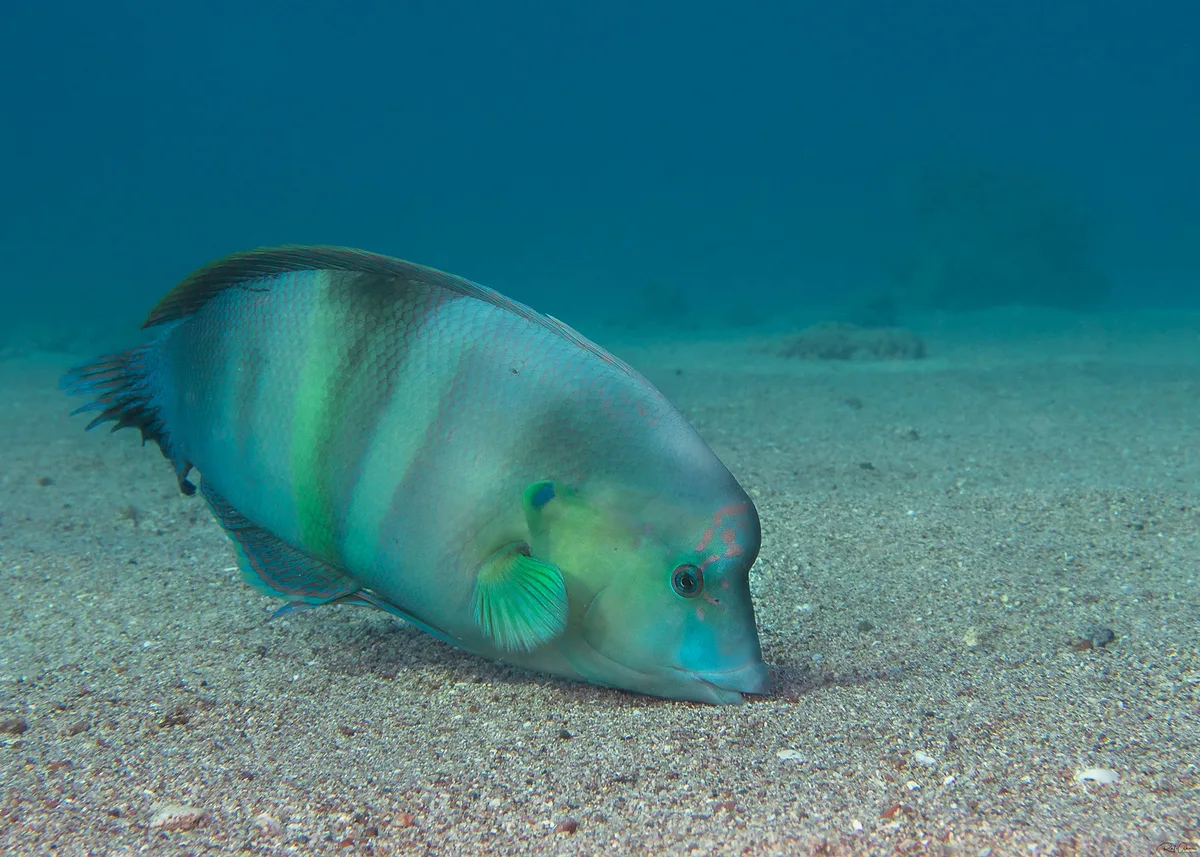
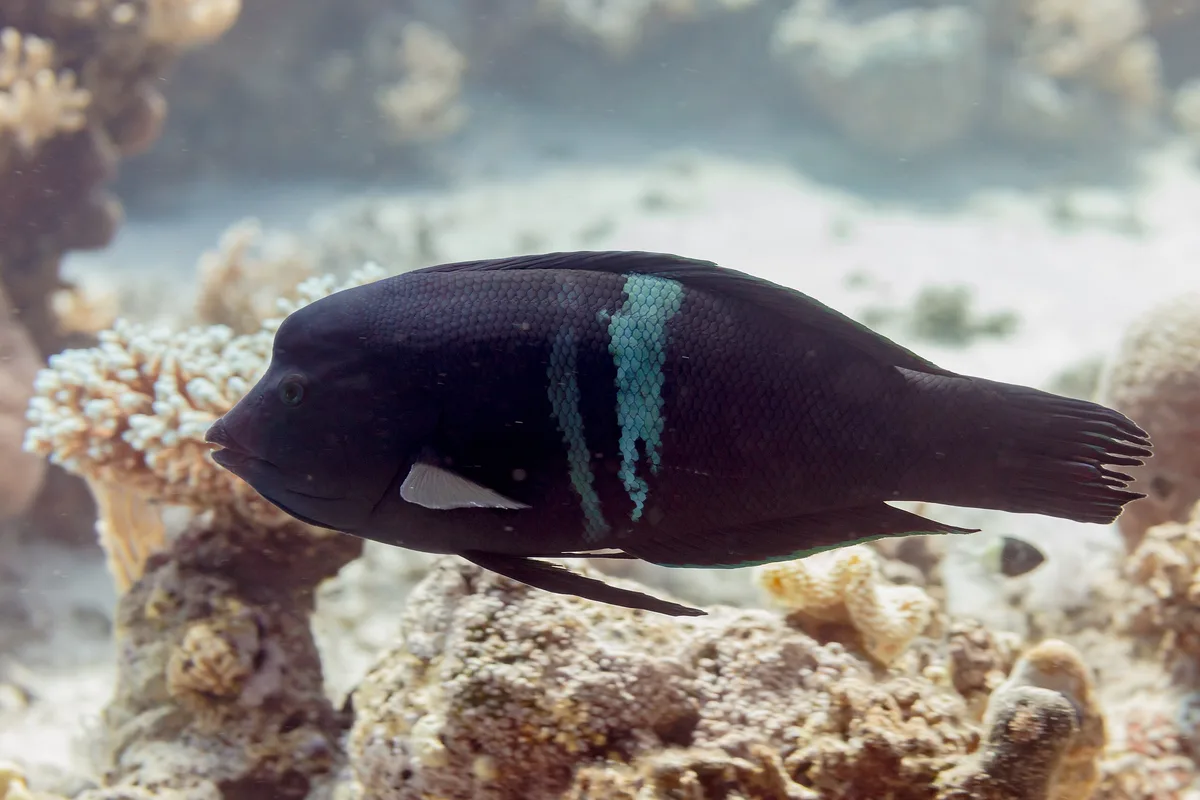
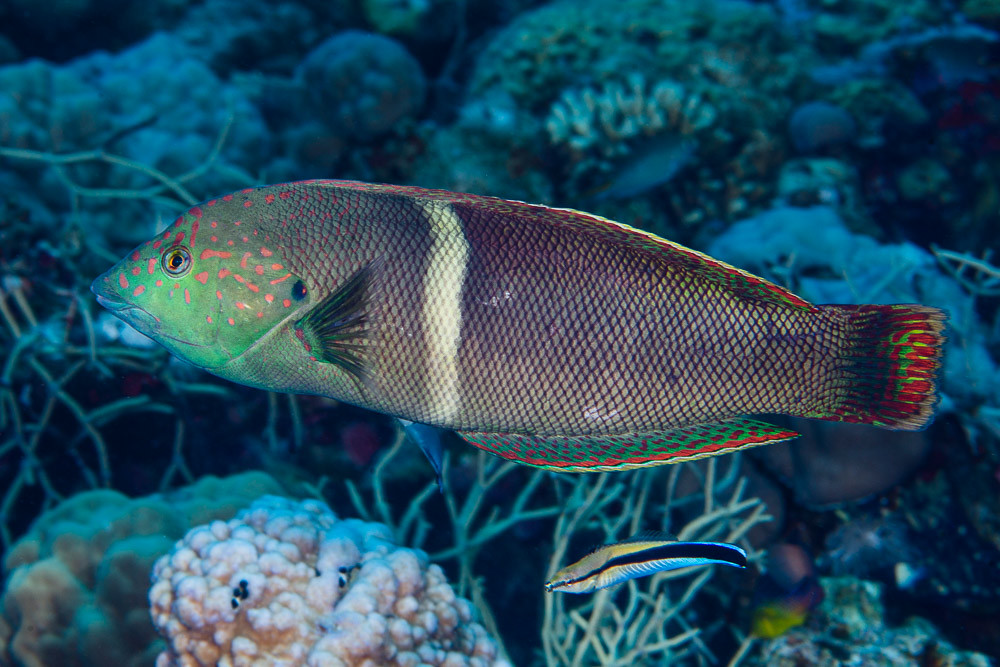
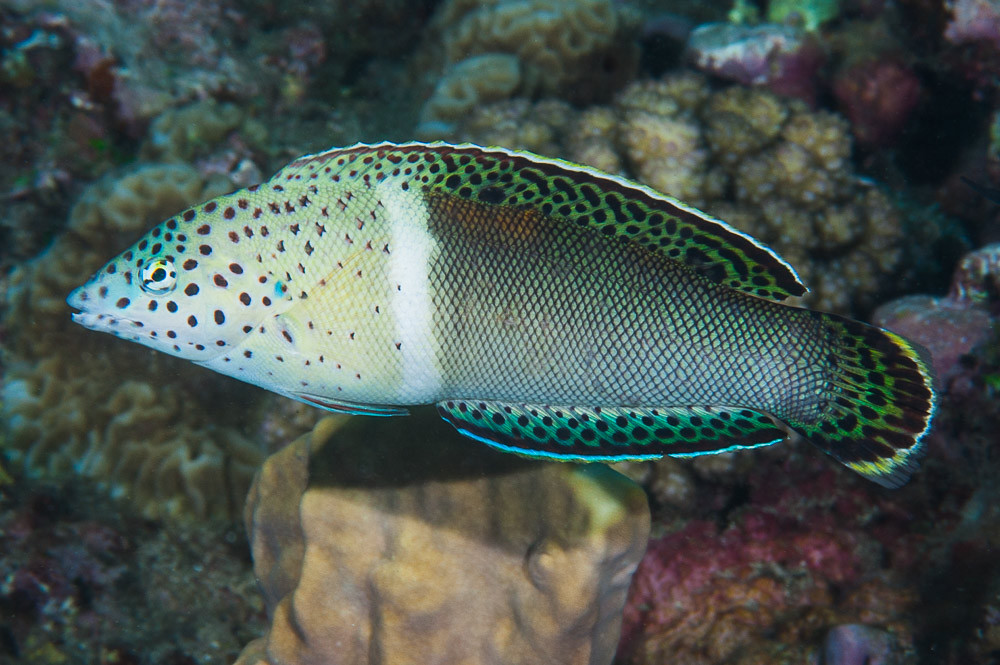
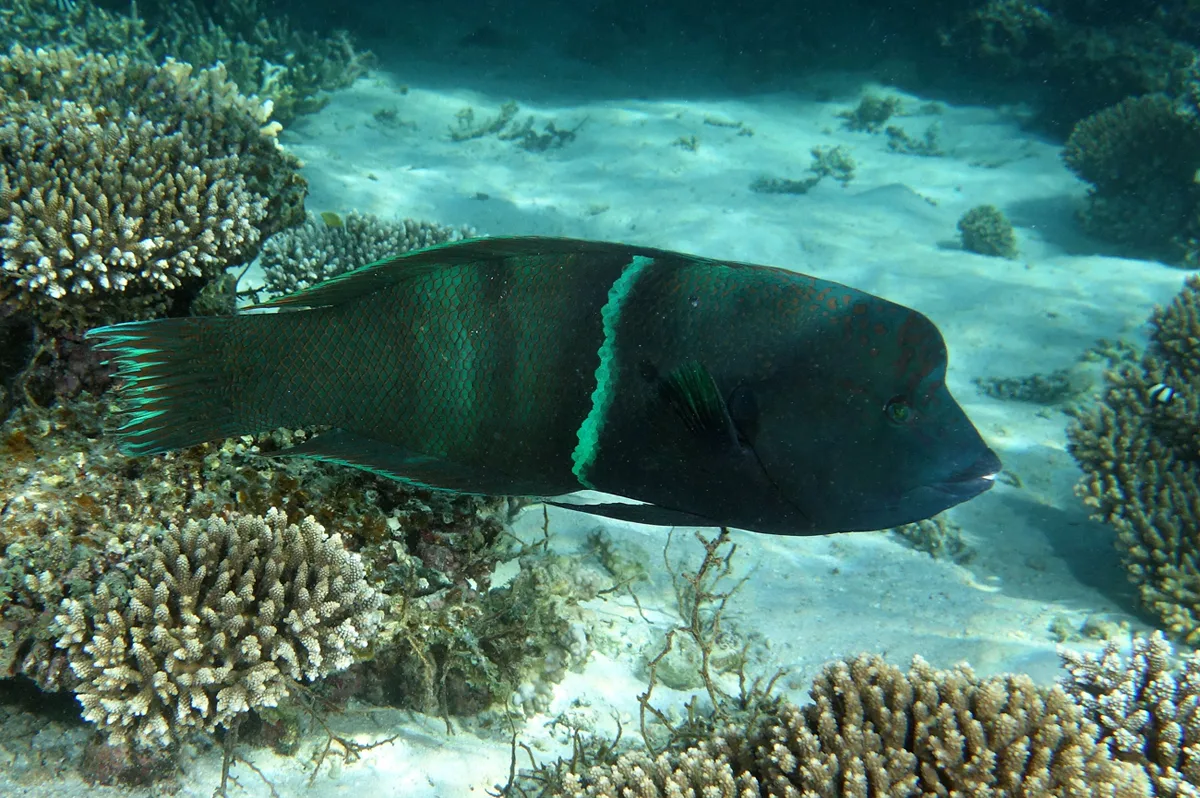
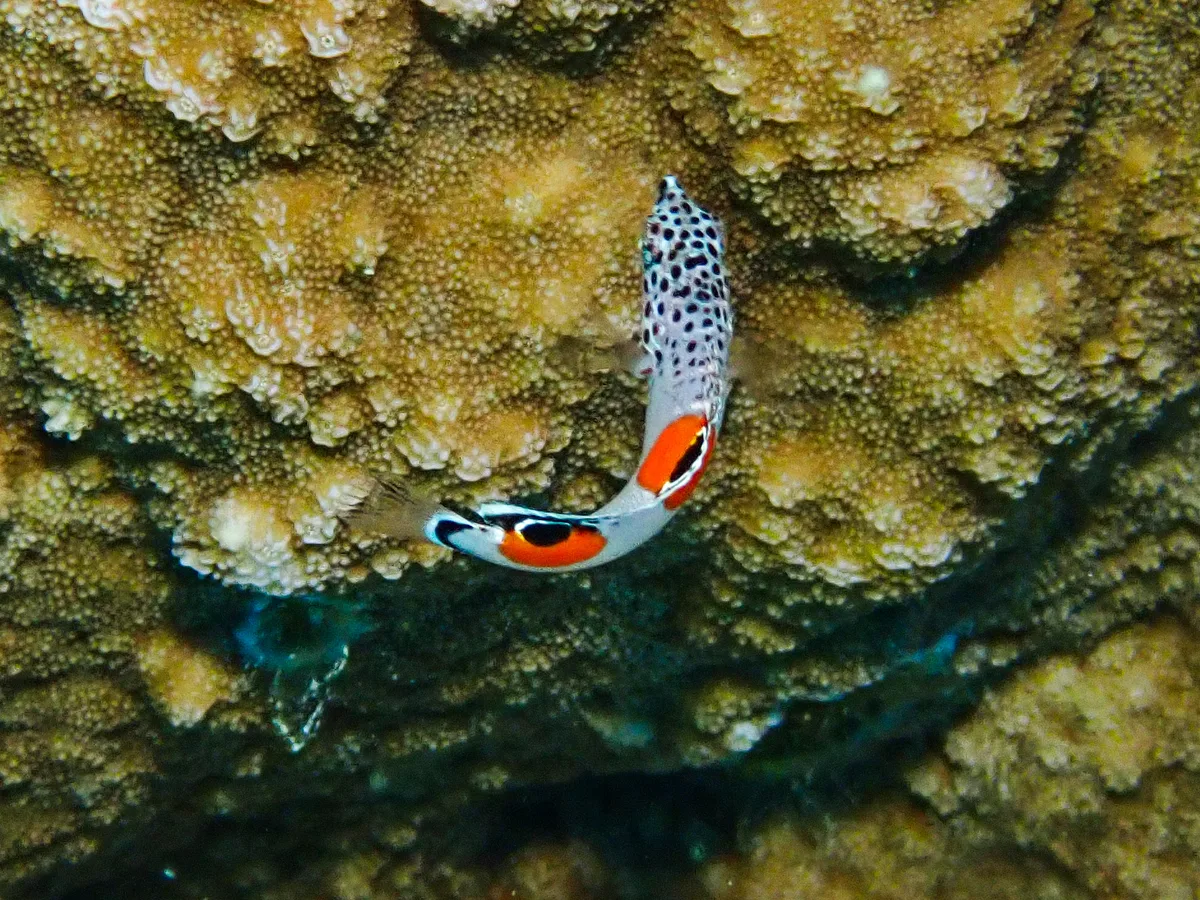
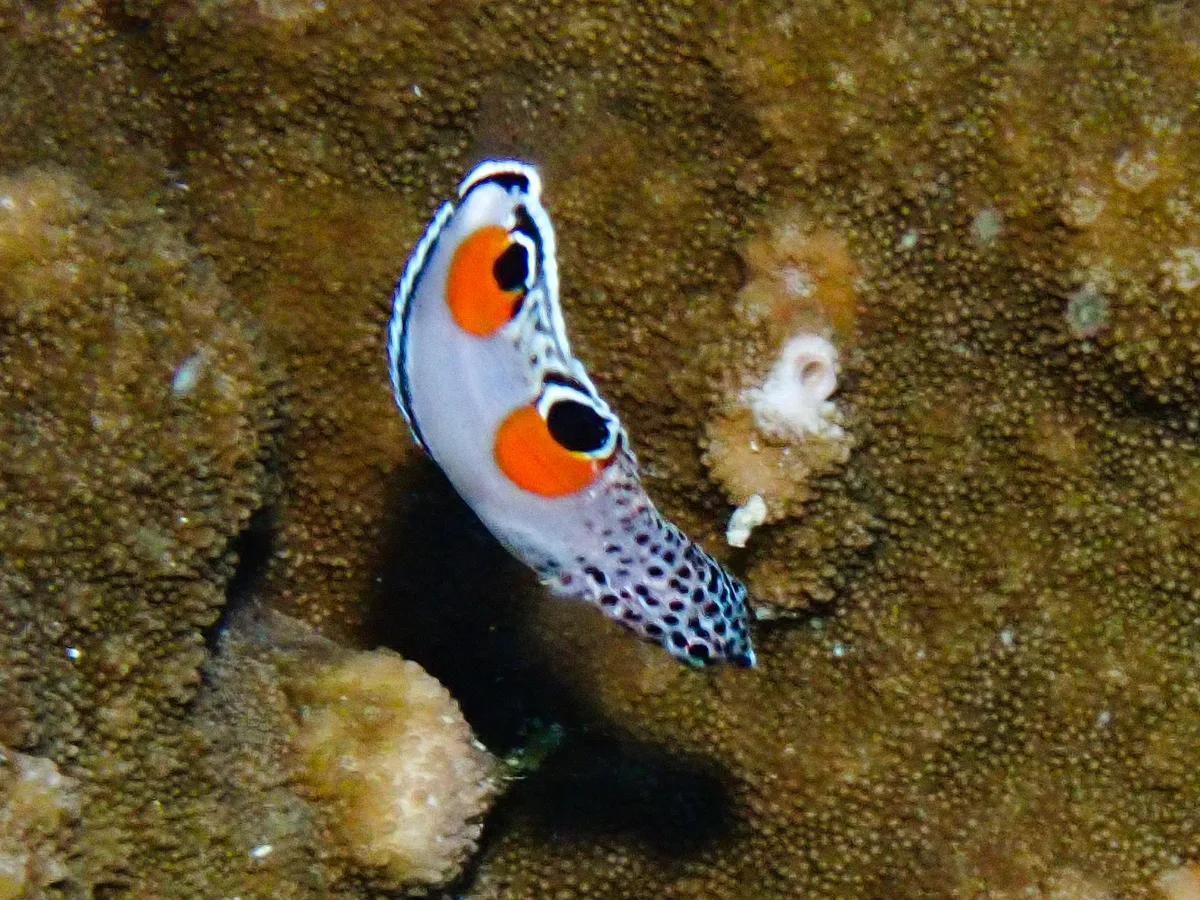
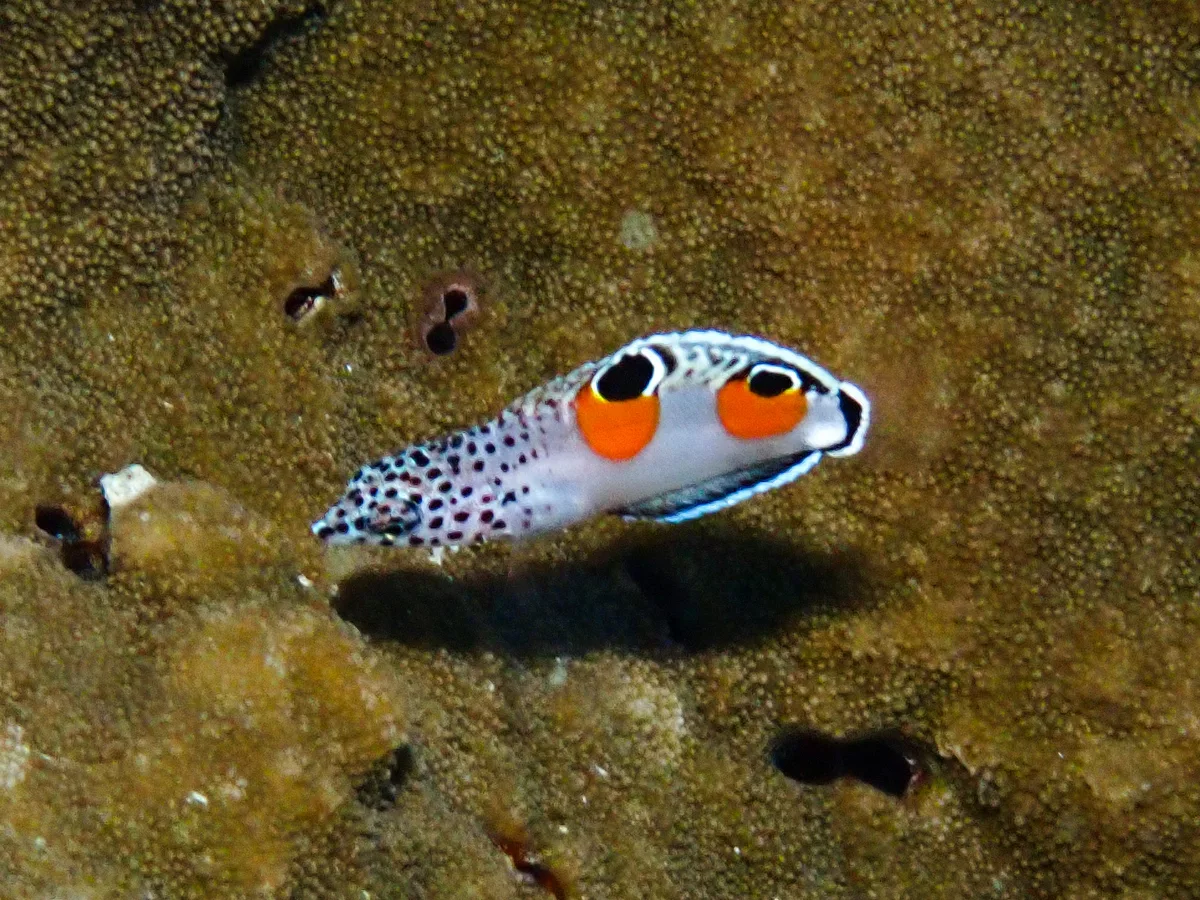
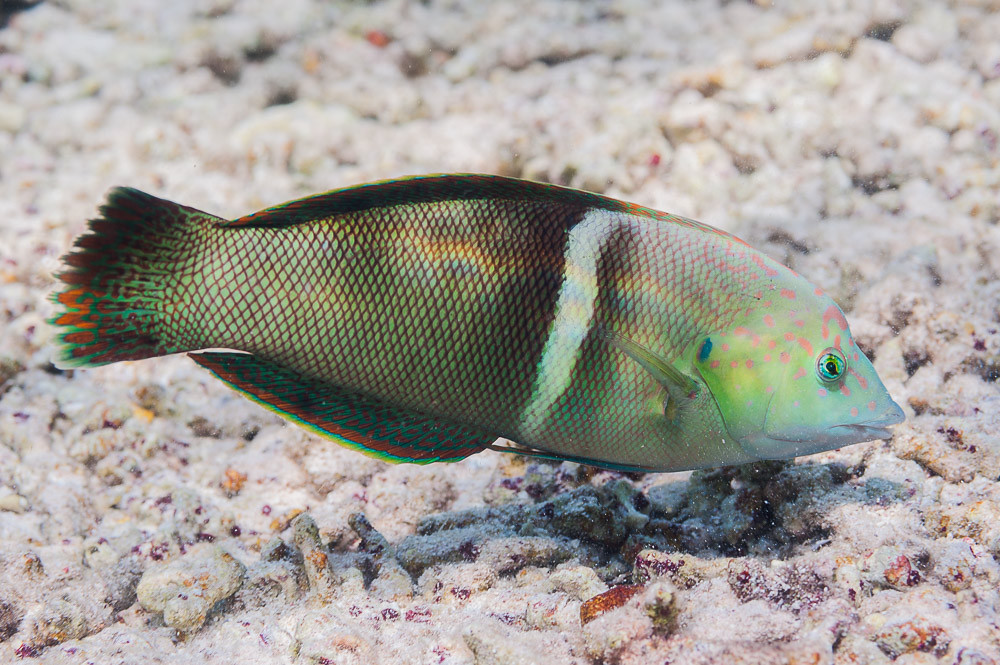
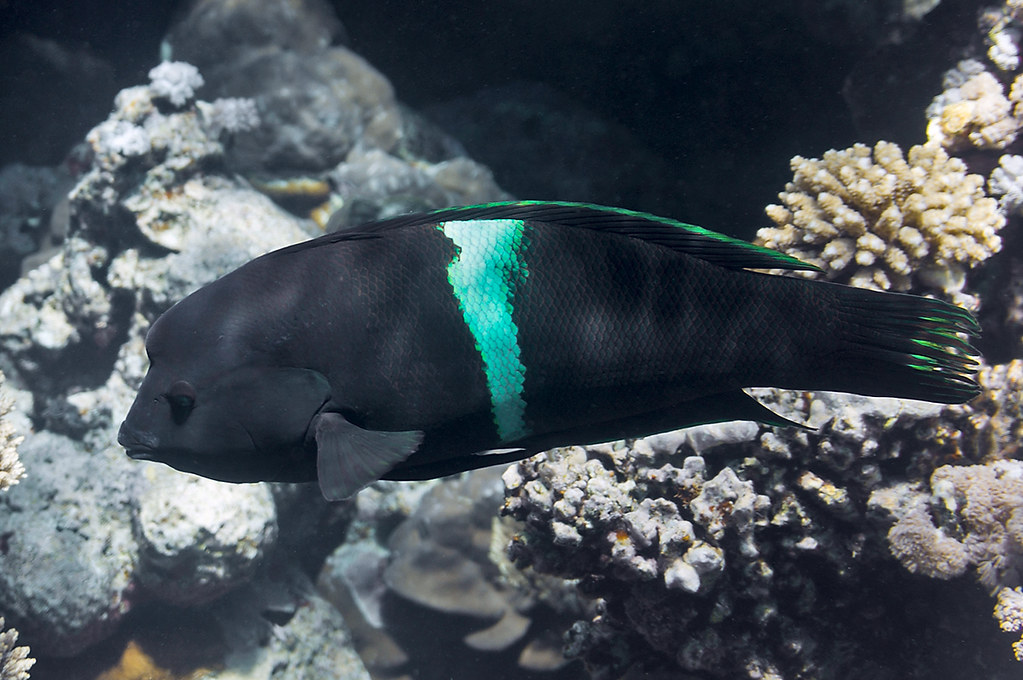
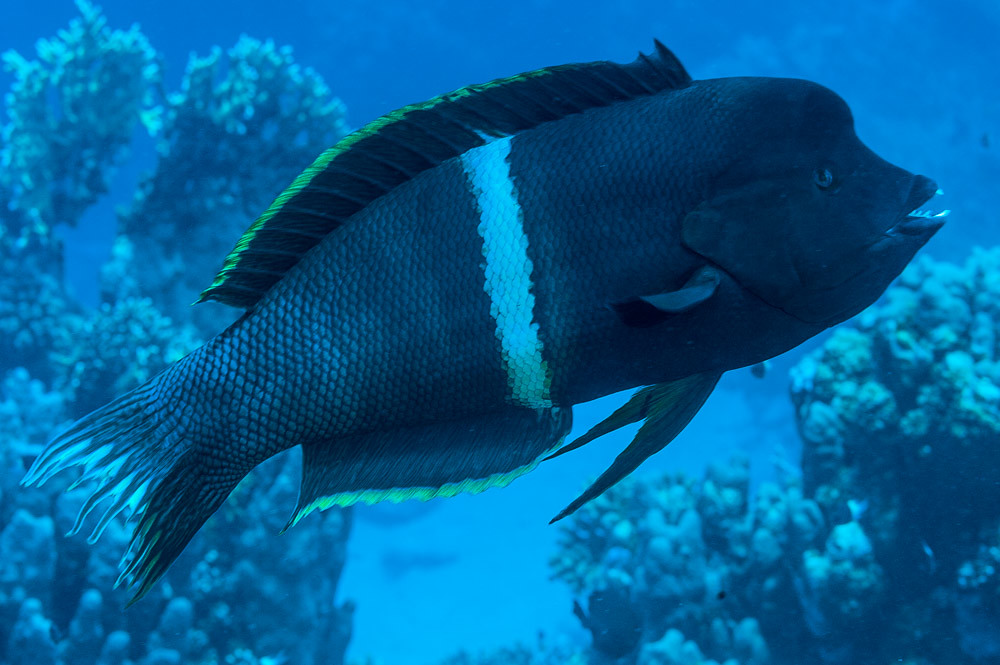
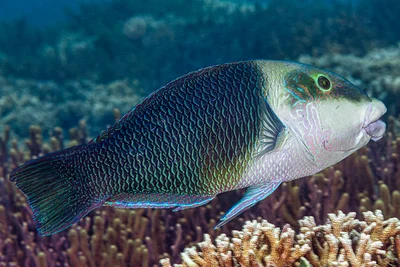
The second largest wrasse in this sea after the Napoleon - a meter and twenty (4 ft) of dark green fish with a bulging forehead, cruising a rubble slope and turning stones over as it goes.
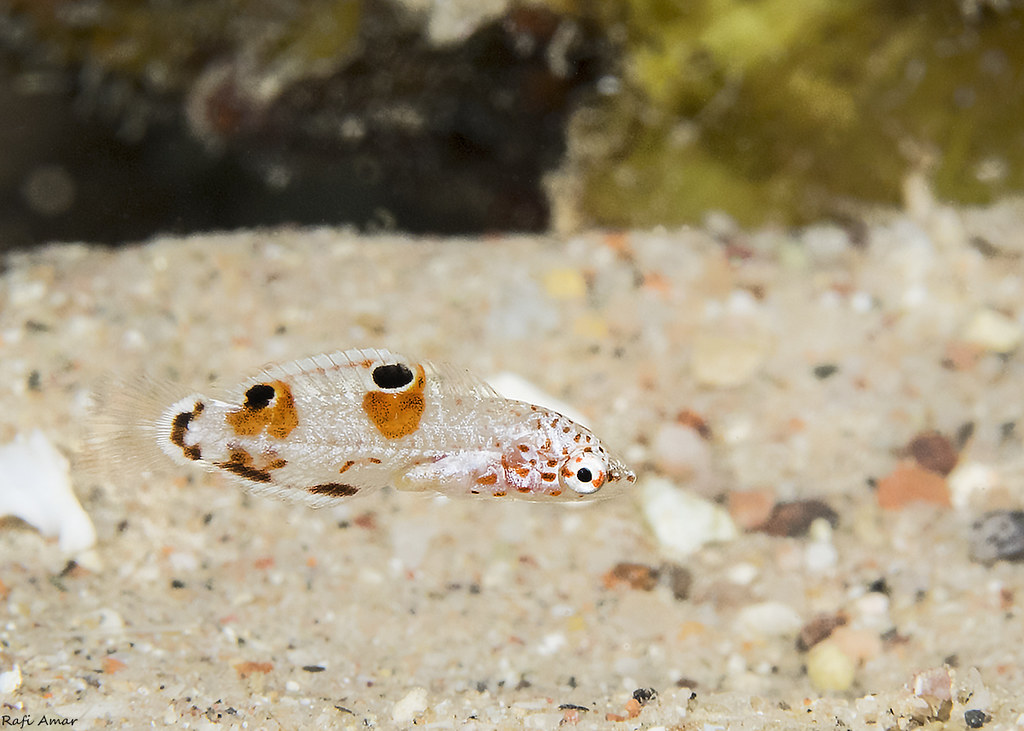
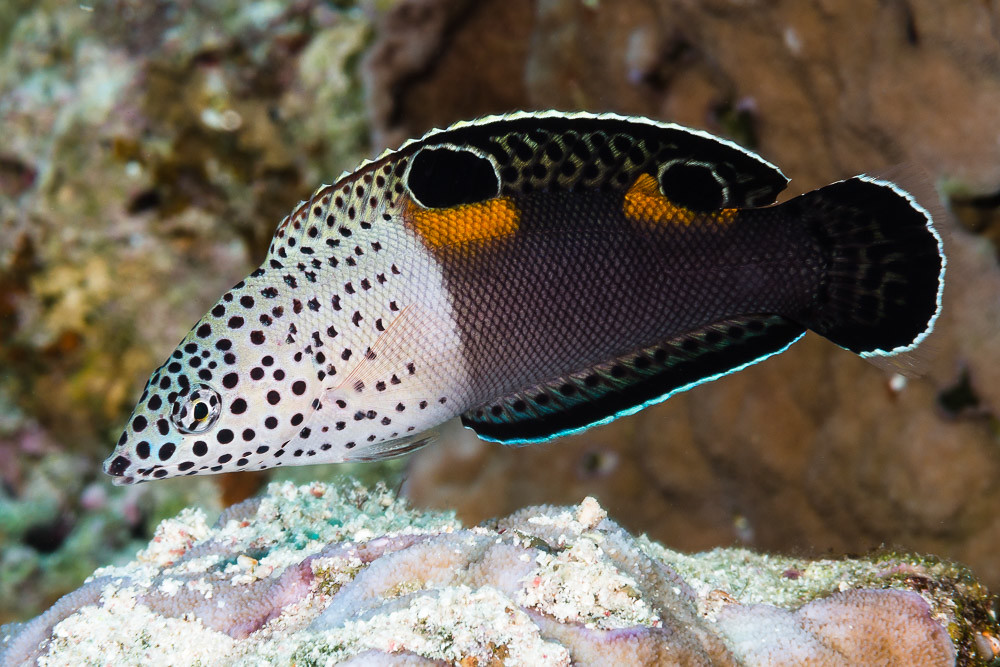
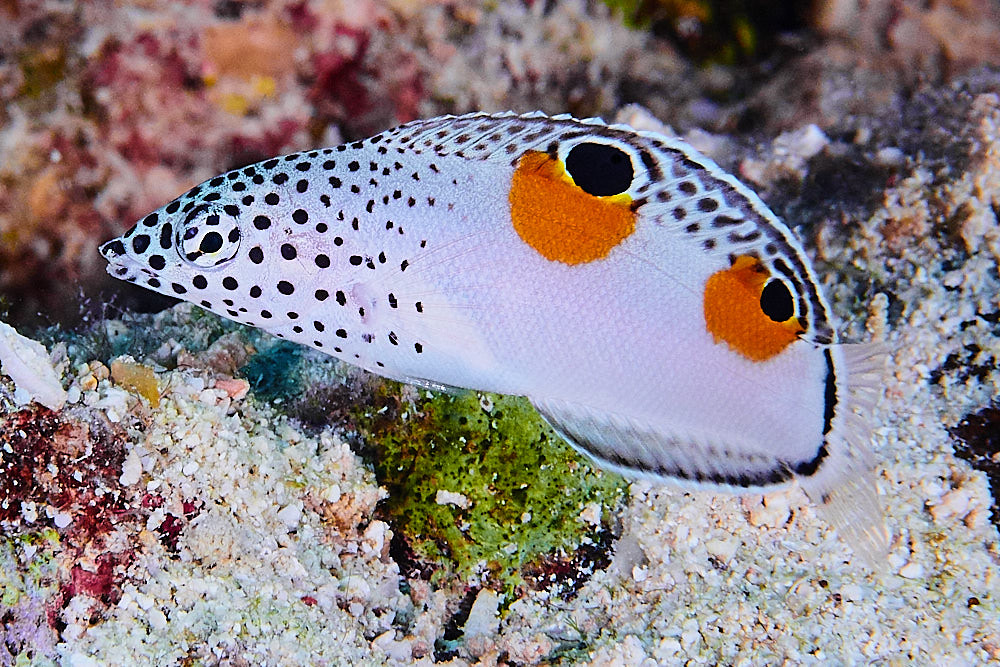
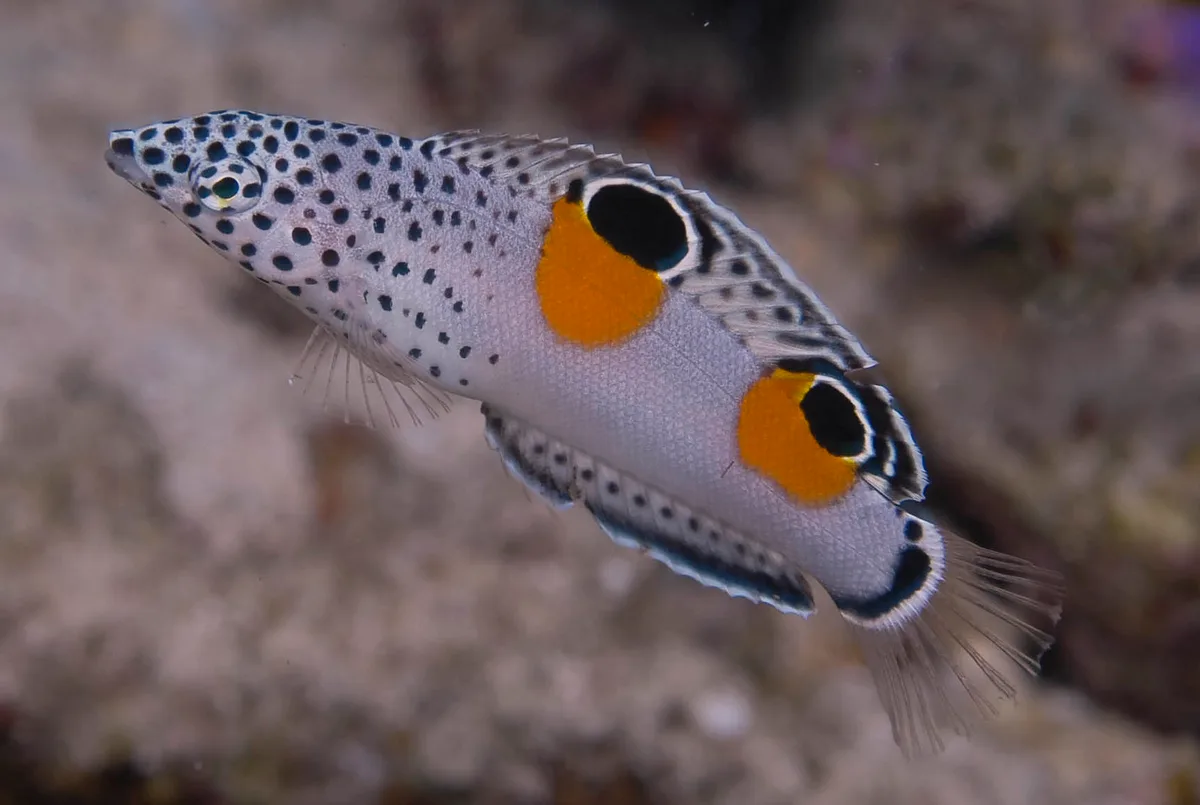
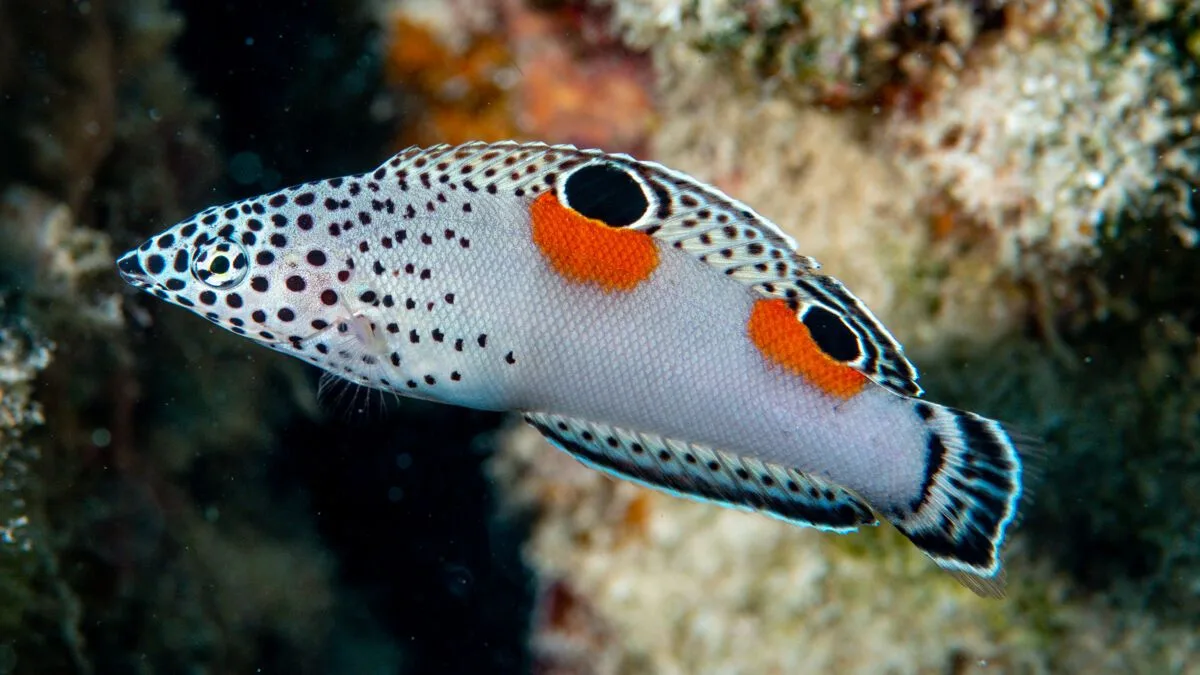
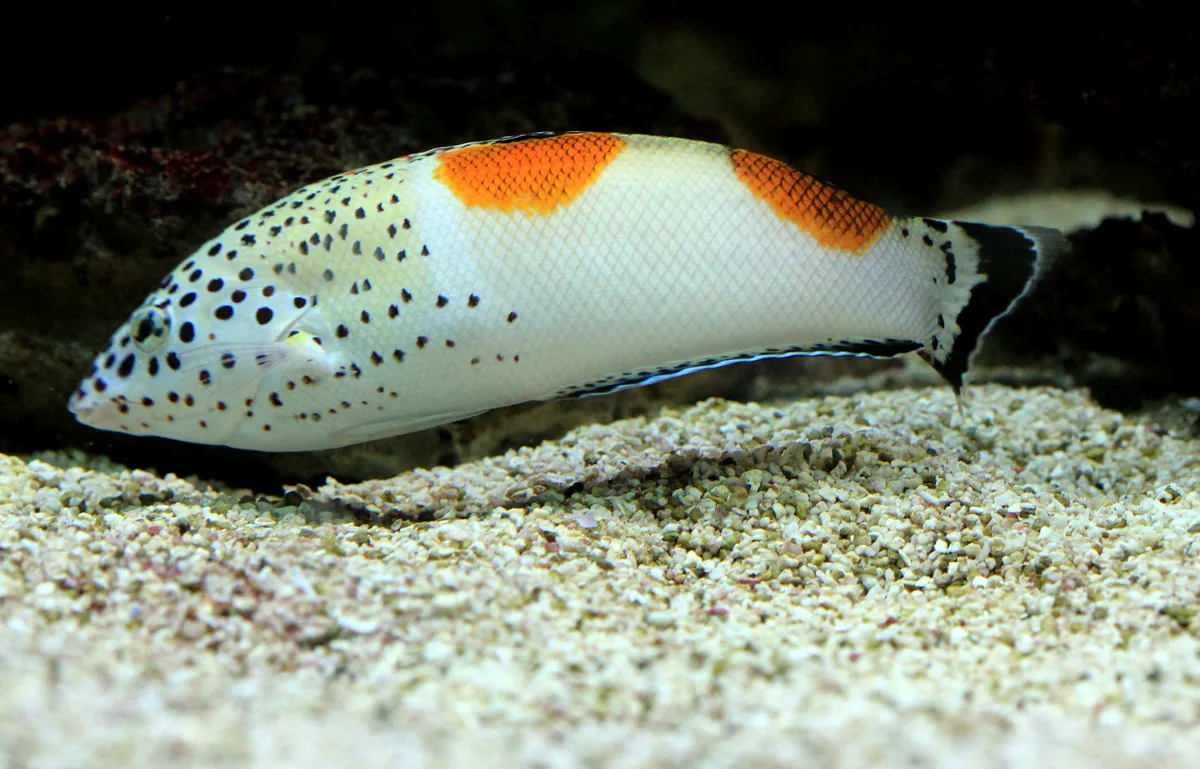
The juvenile is a different animal entirely: white with black blotches and two orange saddles, small, and moving in nervous darts. Divers photograph the young ones constantly and the adults rarely, and few connect the two.
Adults eat armored things - crabs, urchins, molluscs - and deal with them by force. A fish this size can pick up a sea urchin, carry it into open sand, and hammer it against the bottom until it breaks. Rocks are moved the same way, in the mouth, and the excavations are obvious once you know what made them.
It sleeps buried. Like other members of its genus it dives into sand at dusk and stays under until morning, which is also its escape response - a startled coris disappears into the bottom rather than swimming away.
The genus.Coris Lacepède 1801 - korys (helmet). ETYFish
How to recognise it
adult males dark green-black with a pale band and a bulging forehead hump
juveniles white with black blotches and two bright orange saddles
Threats to this species include harvesting of juveniles for the aquarium trade (Wood 2001), artisanal and subsistence fishing in the Indo-Pacific.
For the large wrasses, wide spread tropical species, such as C. undulatus, C. aygula, L. maximus and possibly C. schoenleinii, have been impacted by fishing over much of their ranges. Threats must be considered in the context of local rarity but widespread distribution (J.H. Choat pers. comm. 2008).
This species consistently shows up in subsistence and recreational fisheries in Guam (every year since 1985 -2007), caught mainly by hook and line and spear (R. Myers pers. comm. 2008, Guam Division of Aquatic and Wildlife Resources data, unpublished annual reports).
Threat classification from the IUCN Red List.
Comments
Please, sign in to leave a comment
Continue with a social account - yours will be created automatically.