A Japanese relative of this fish glows with a protein it did not build. Parapriacanthus ransonneti carries light organs near its throat, and when the enzyme running them was purified it proved identical to the luciferase of Cypridina noctiluca, the ostracod crustacean the fish eats. A genome sequence has since answered the obvious question: the fish has no luciferase gene at all. It swallows sea fireflies, moves their intact working protein out of its gut and into its light organs, and shines with it. It was the first known case of an animal running on a functional protein taken from its food.
The goldhead sweeper is in that genus and carries light organs of the same kind. The chemistry has not been worked out for this species, so take the story as the genus's rather than this fish's own.
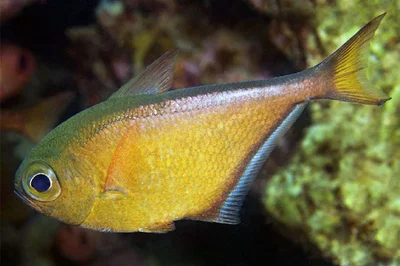
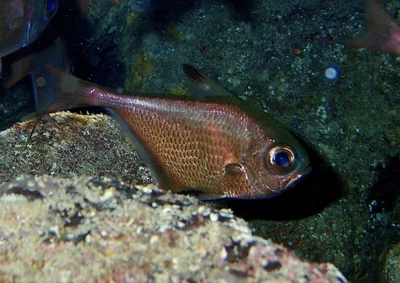
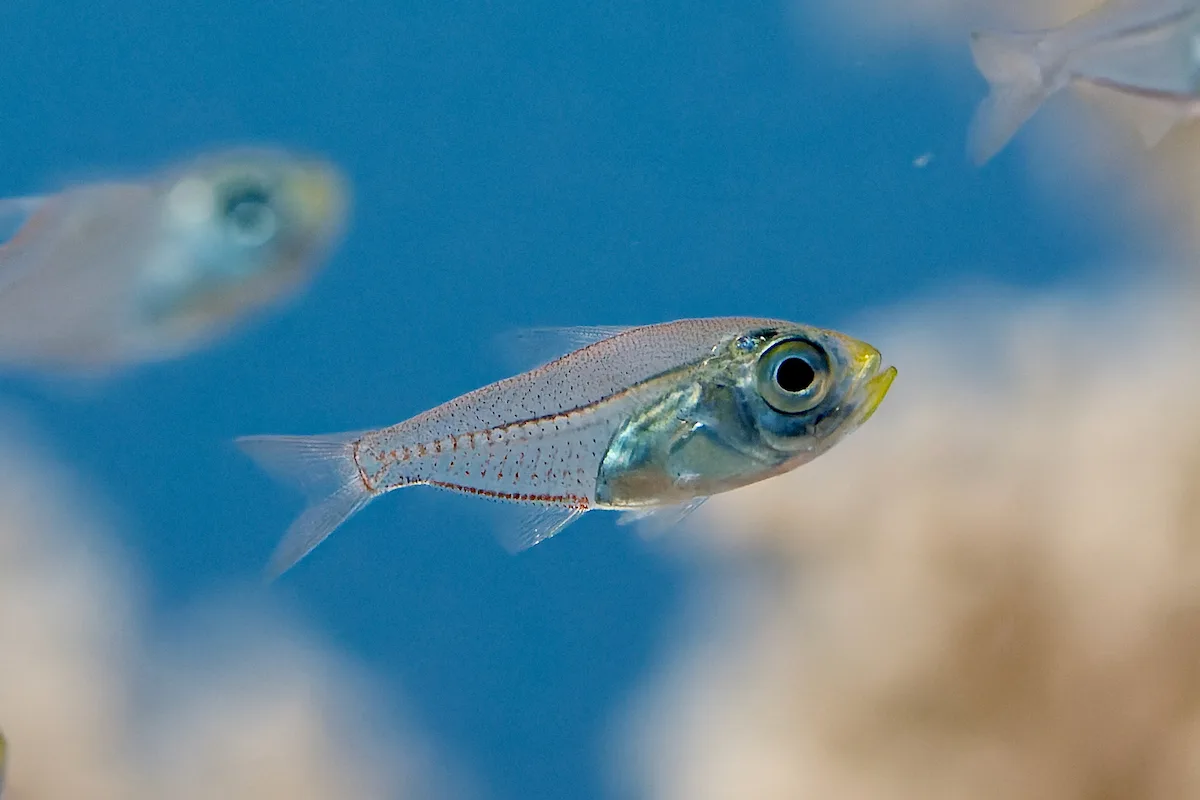
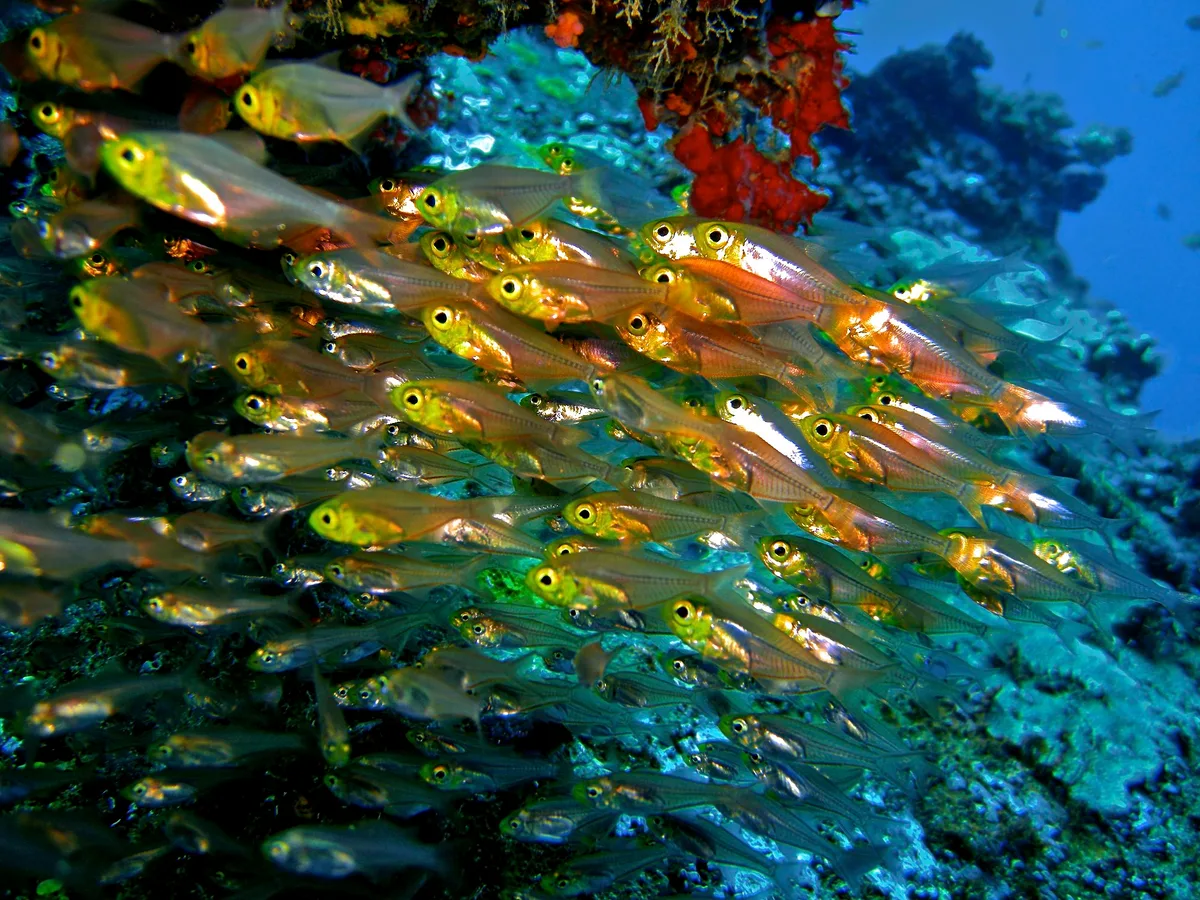
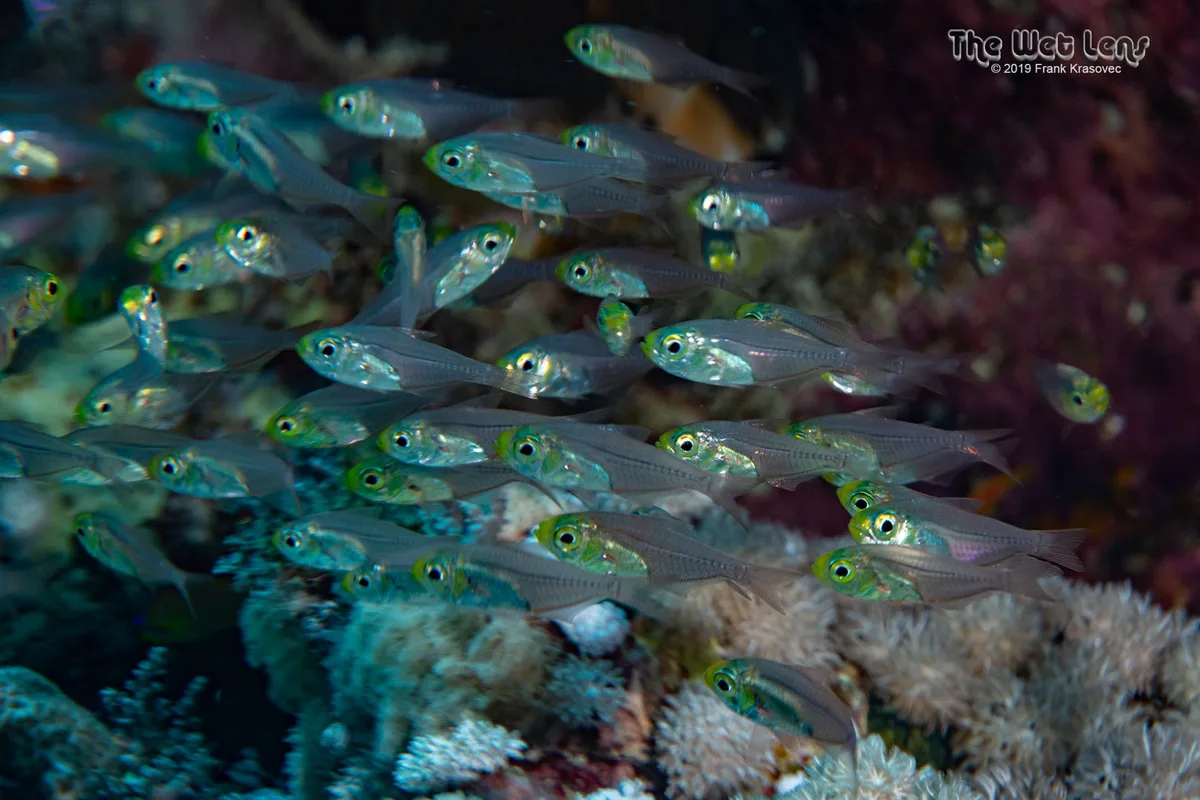
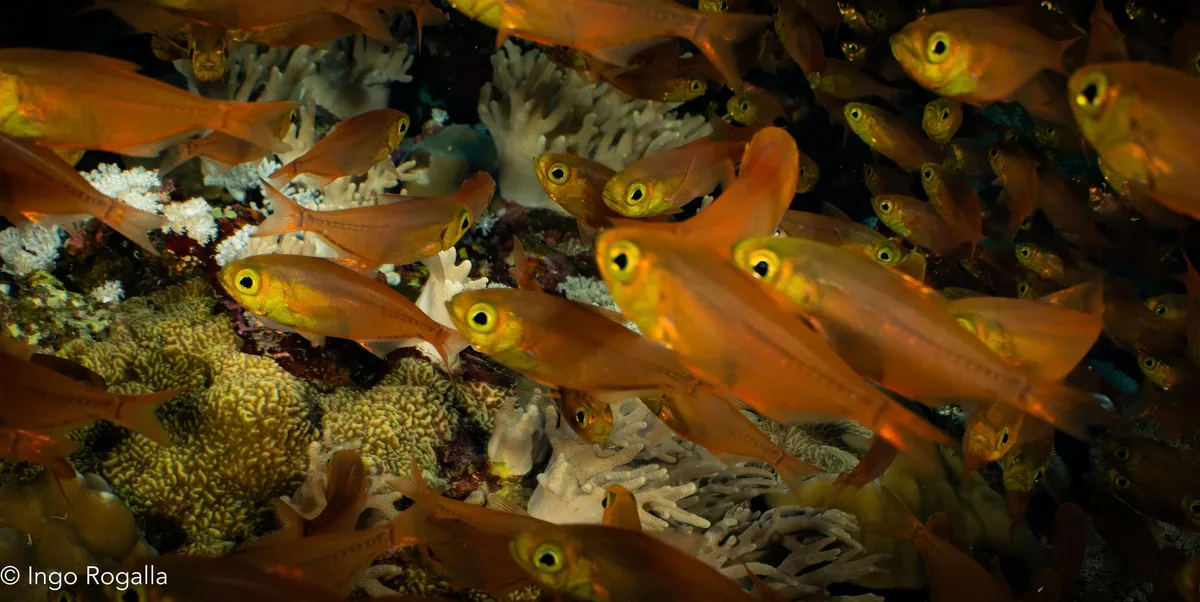
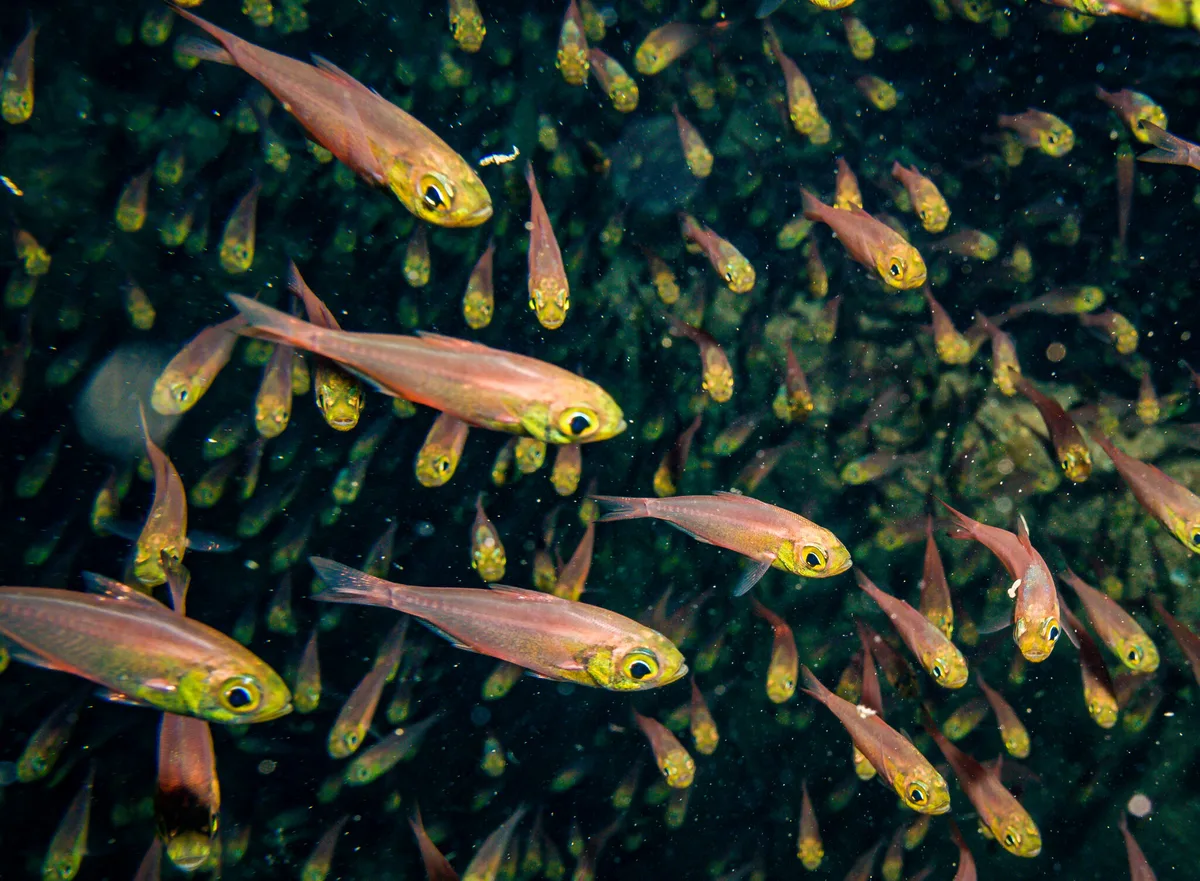
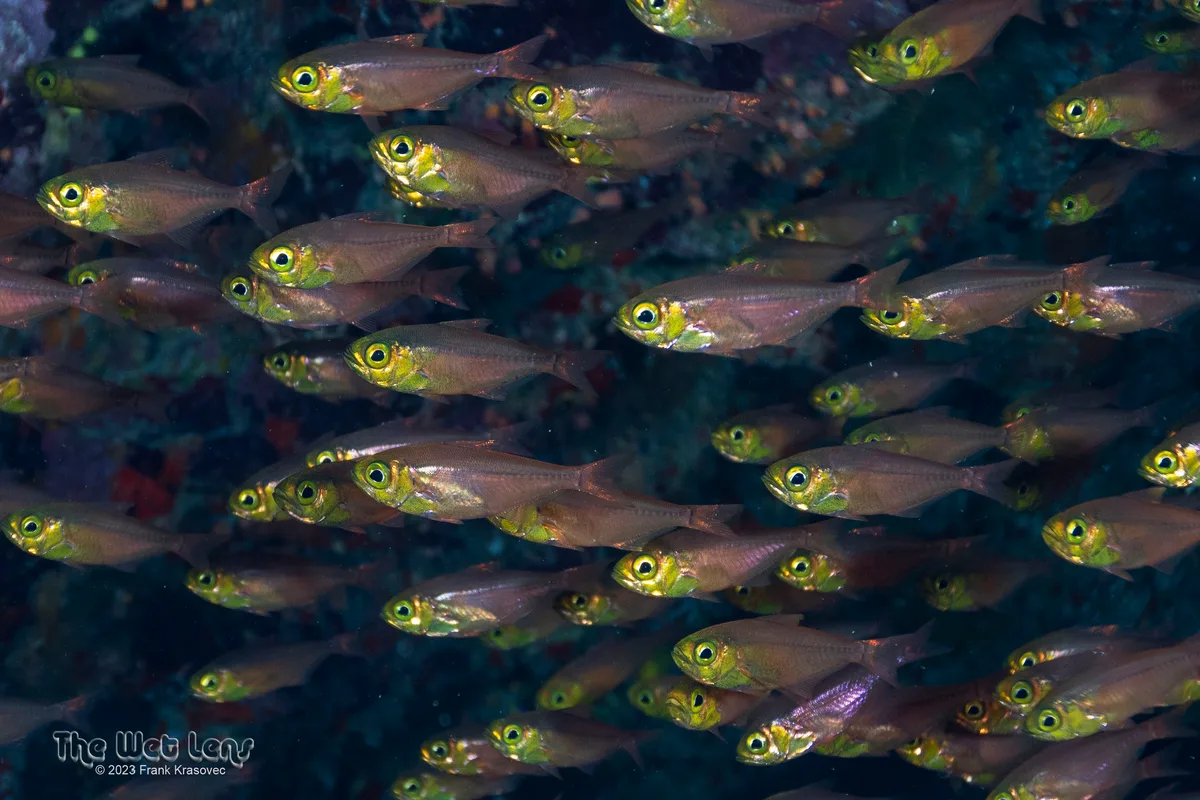
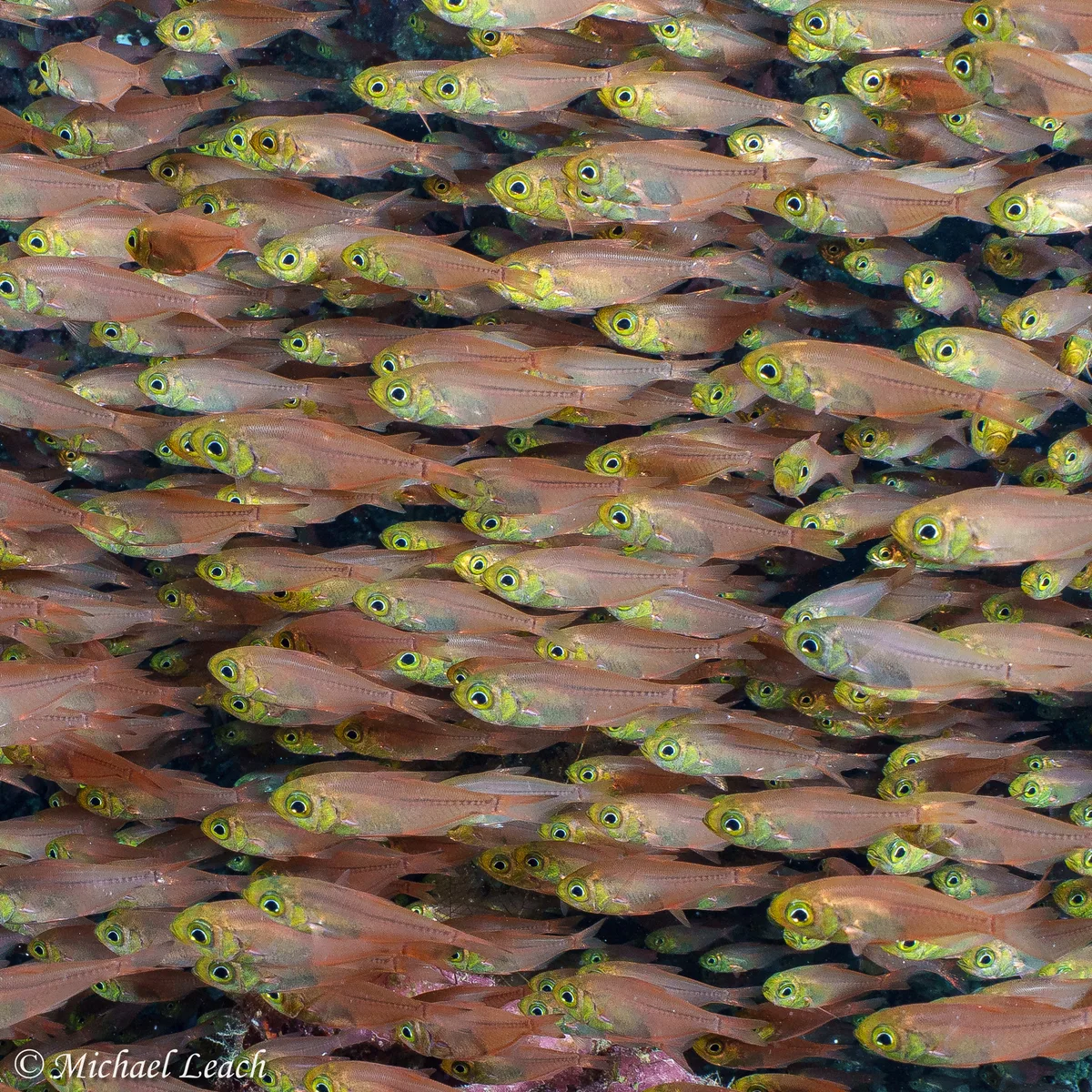
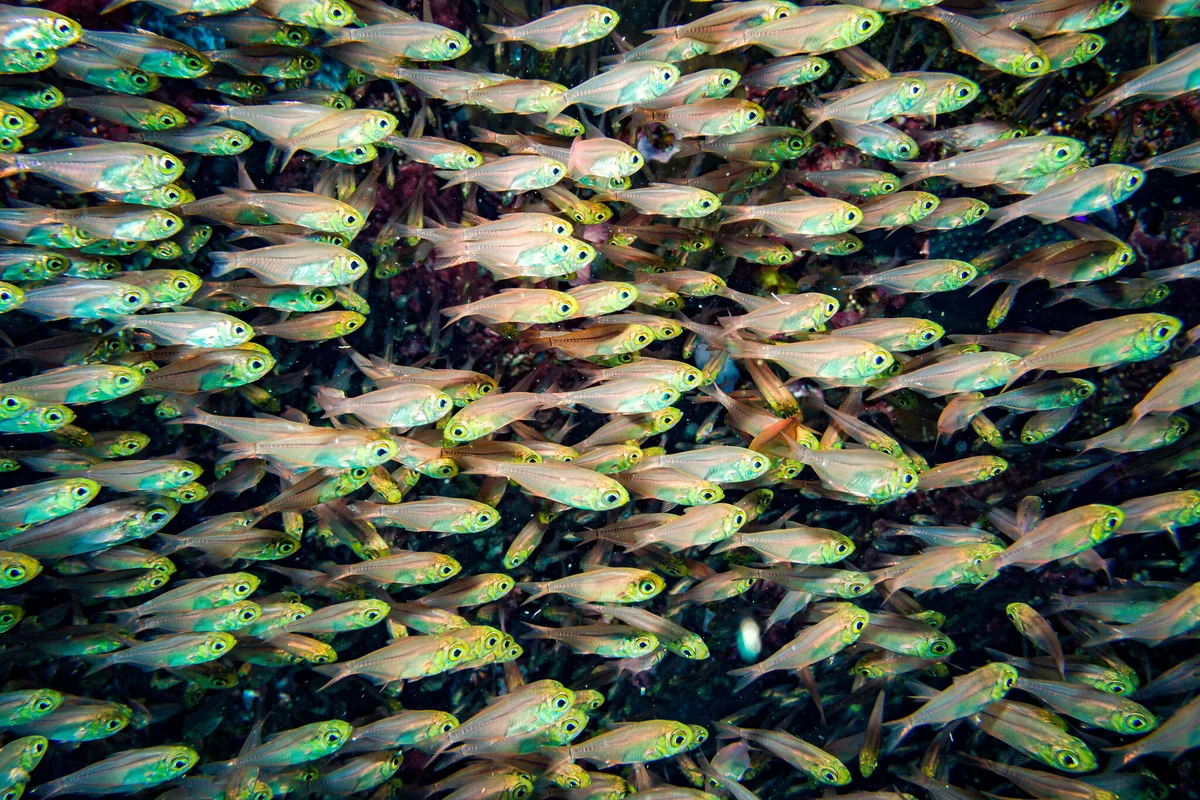
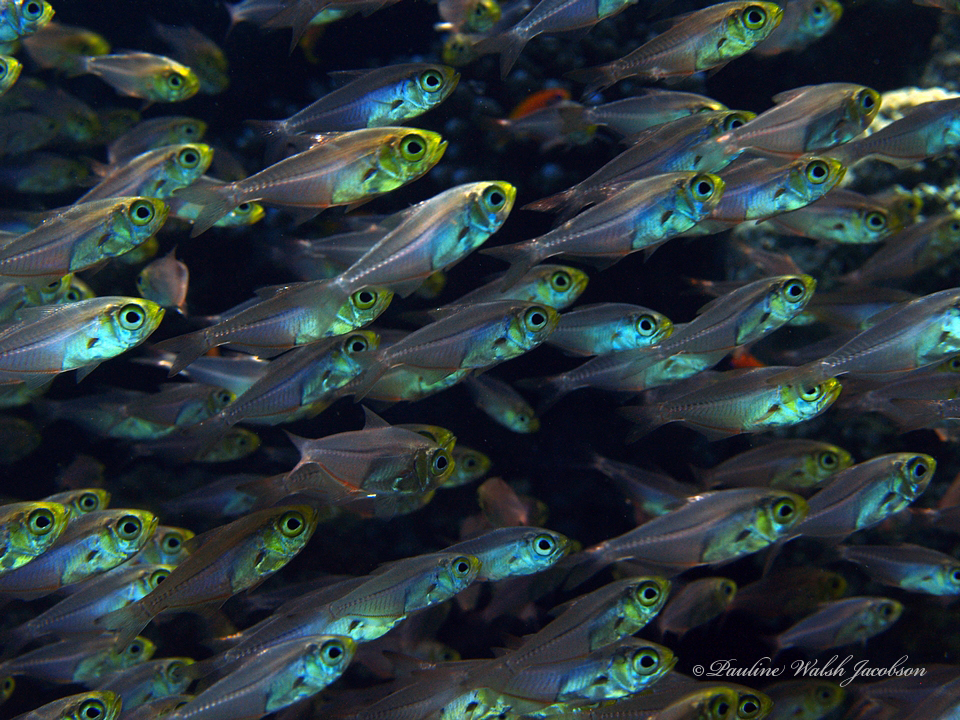
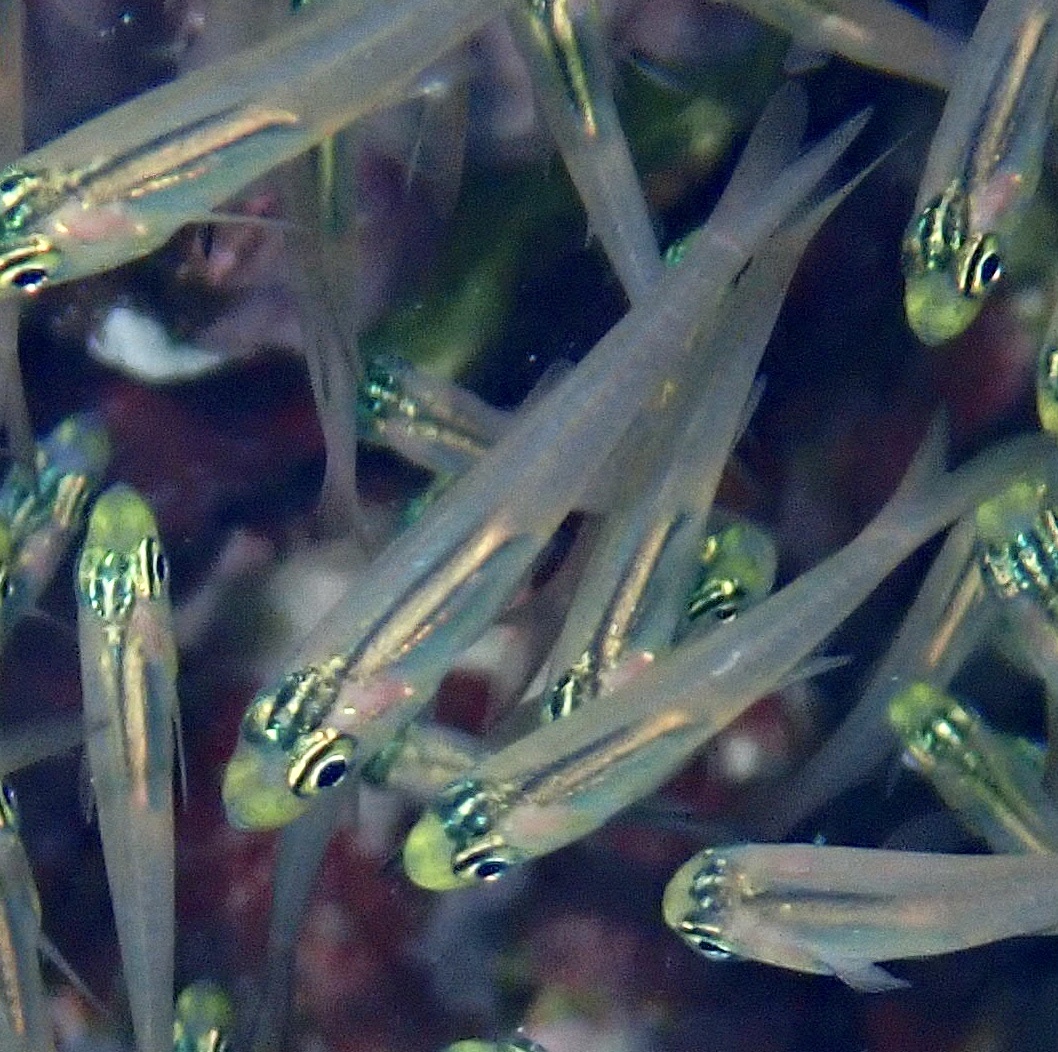
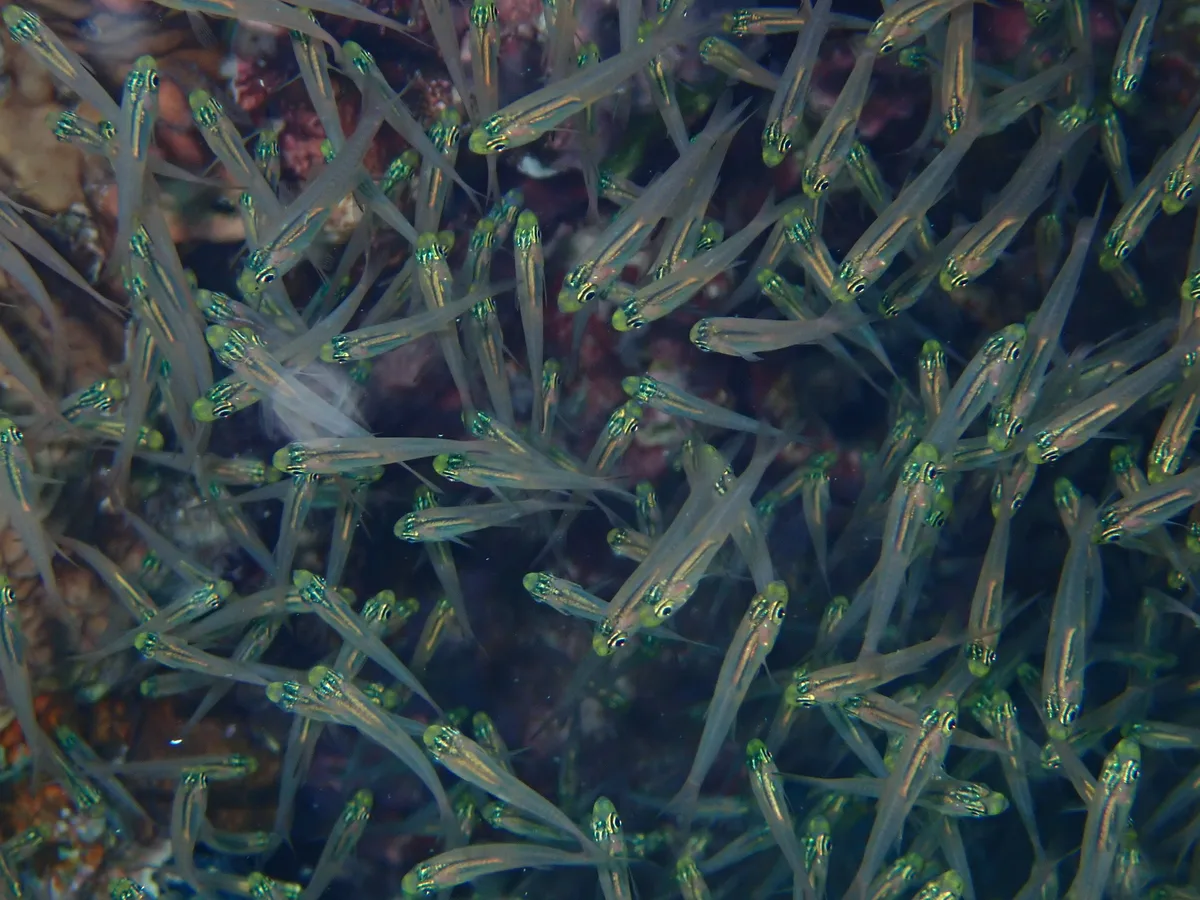
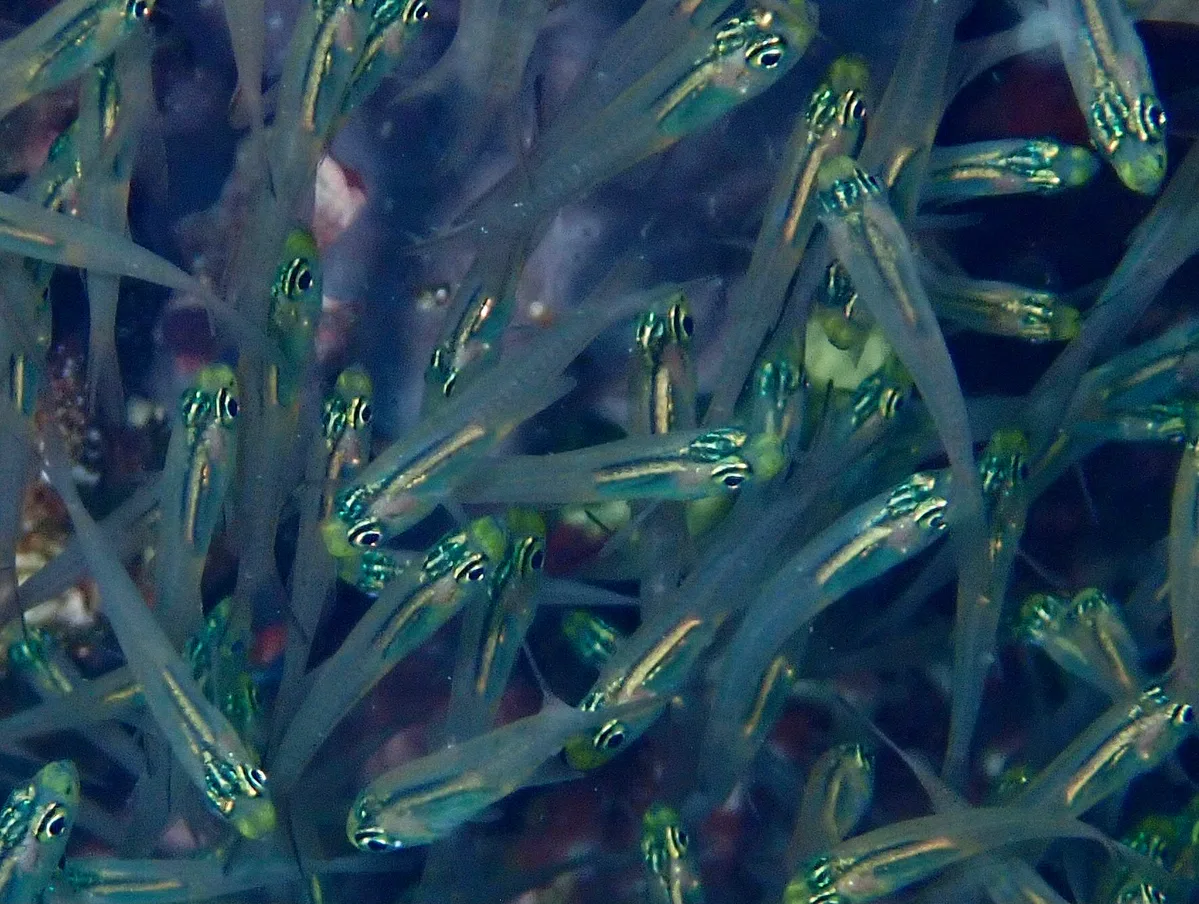
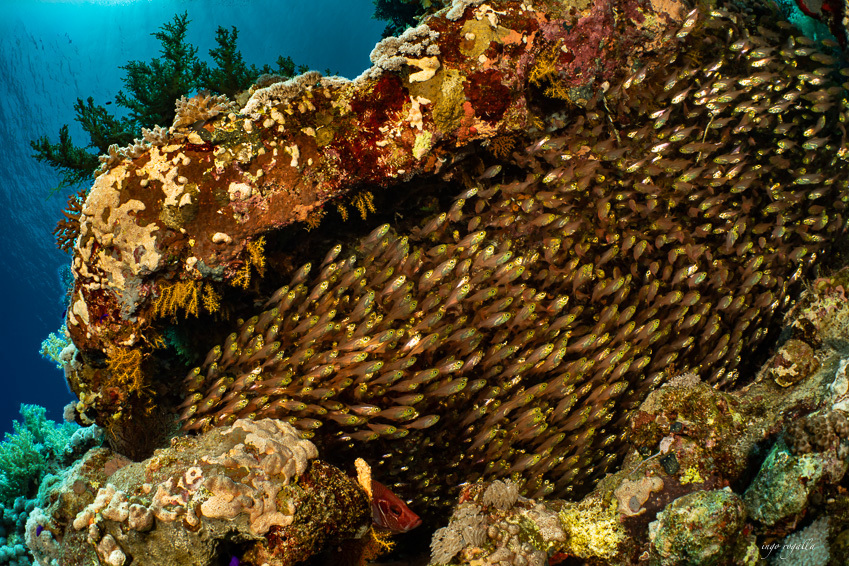
What you see underwater is a small orange gold head on a body so pale it is nearly see-through, packed by the hundred into a cave. Sweepers are built like a hatchet: deep and blunt in front, tapering hard to a narrow tail, with a very short dorsal fin set forward, an anal fin whose base runs along most of the underside, and an eye far too big for the size of the animal. The eye is the point. They spend the day jammed under overhangs and inside wrecks, and come out over the reef at night to pick plankton out of the water.
It is prey for anything quick enough. In the 🌊 Red Sea it has been found in the stomachs of the halfspotted hind and the coral hind, two groupers that hunt exactly the ledges it shelters under.
One honest warning: you cannot identify it from a photograph. The Sharm sweeper, Parapriacanthus sharm, was described from Sharm el Sheikh in 2016 and looks the same, and it was one of five species pulled out of western 🌊 Indian Ocean material that used to carry this one's name. As currently understood this one belongs to the 🌊 Red Sea and nowhere else, at about 6.5 cm.
The genus. Parapriacanthus Steindachner 1870 - para- (near). ETYFish
- Orange gold head on a nearly transparent body
- Hatchet shape: deep in front, tapering hard to a thin tail
- Very large eye, short dorsal fin set well forward
- Anal fin base running along most of the underside
- up to 6.5 cm