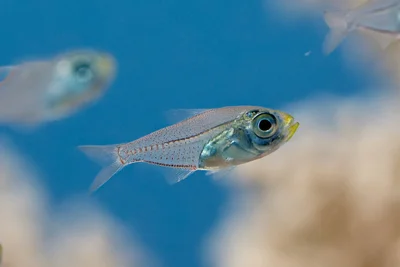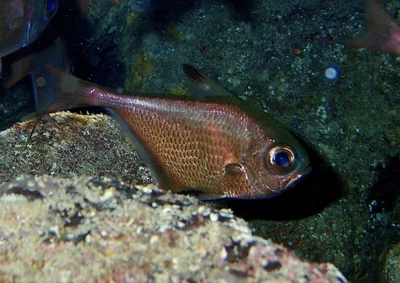


Until 2014 this fish had no name of its own. Silver sweepers across the Indian and Pacific Oceans were all filed as Pempheris schwenkii, and when the material was finally examined properly the 🌊 Indian Ocean population turned out to be a separate species. It was described that year and named for Yoshiaki Tominaga, the Japanese ichthyologist who spent a career on this family. The two are sister species that do not overlap: this one from the 🌊 Red Sea east to northwest 🇦🇺 Australia, schwenkii in the Pacific. Every 🌊 Red Sea photograph of a silver sweeper taken before 2014 carried the wrong label.
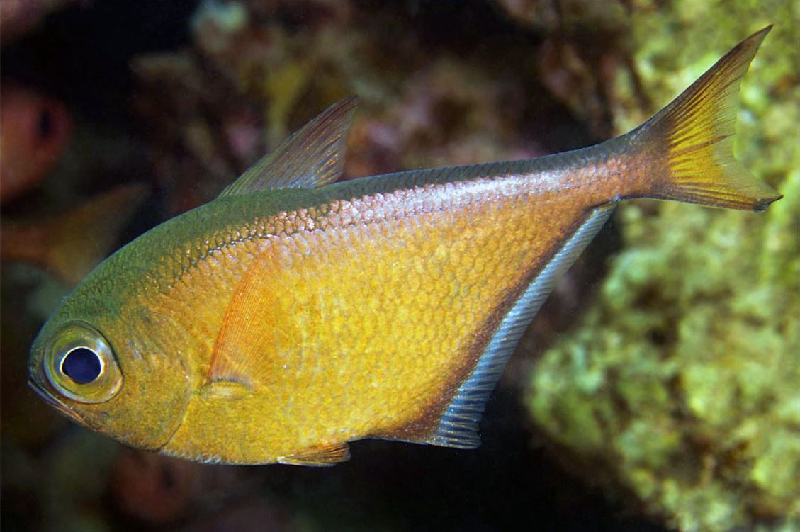
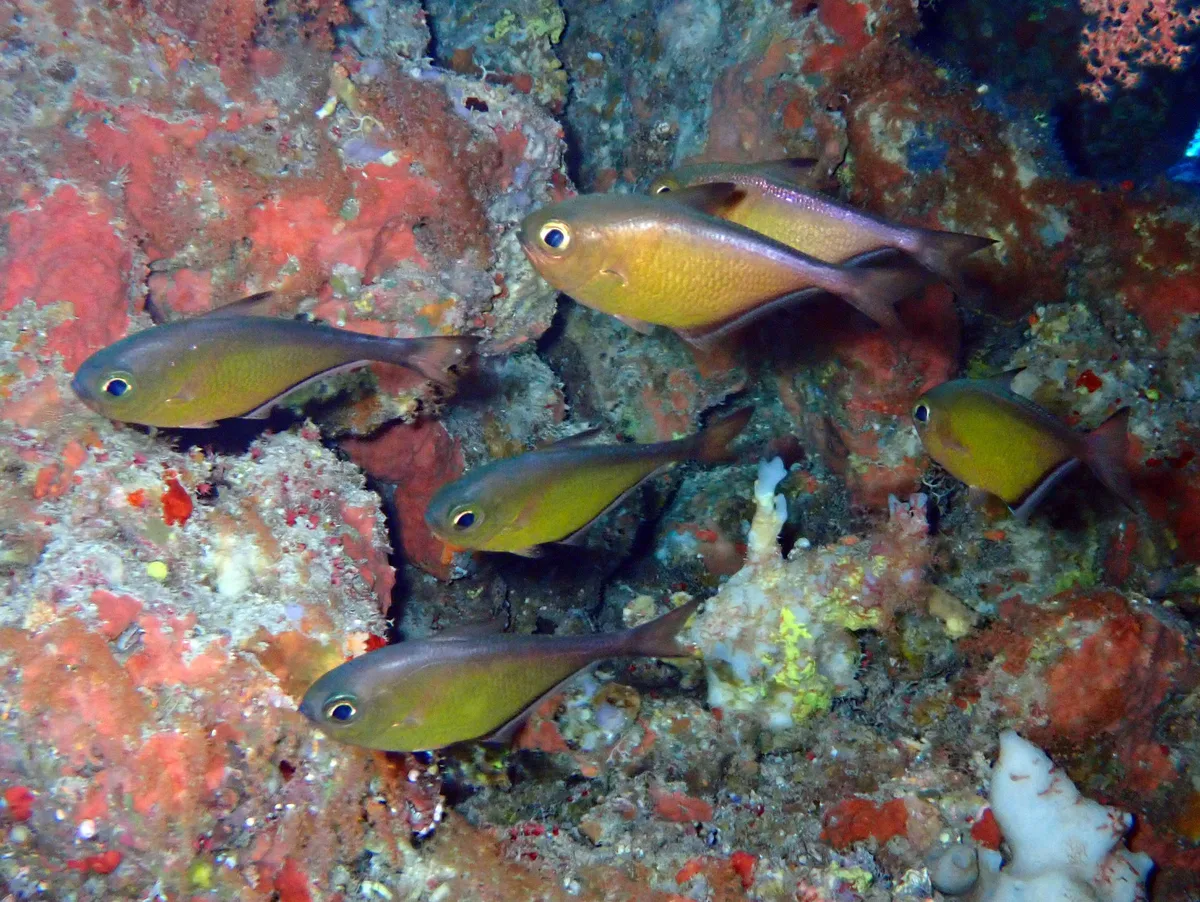
They are still hard. This sea holds several Pempheris that at a glance are one fish, and you separate them on small marks. This one has a black base to the anal fin and a tail that is usually yellowish. The one with a large black spot on the dorsal fin is a different animal, and so is the one with a black dorsal tip and pink paired fins.
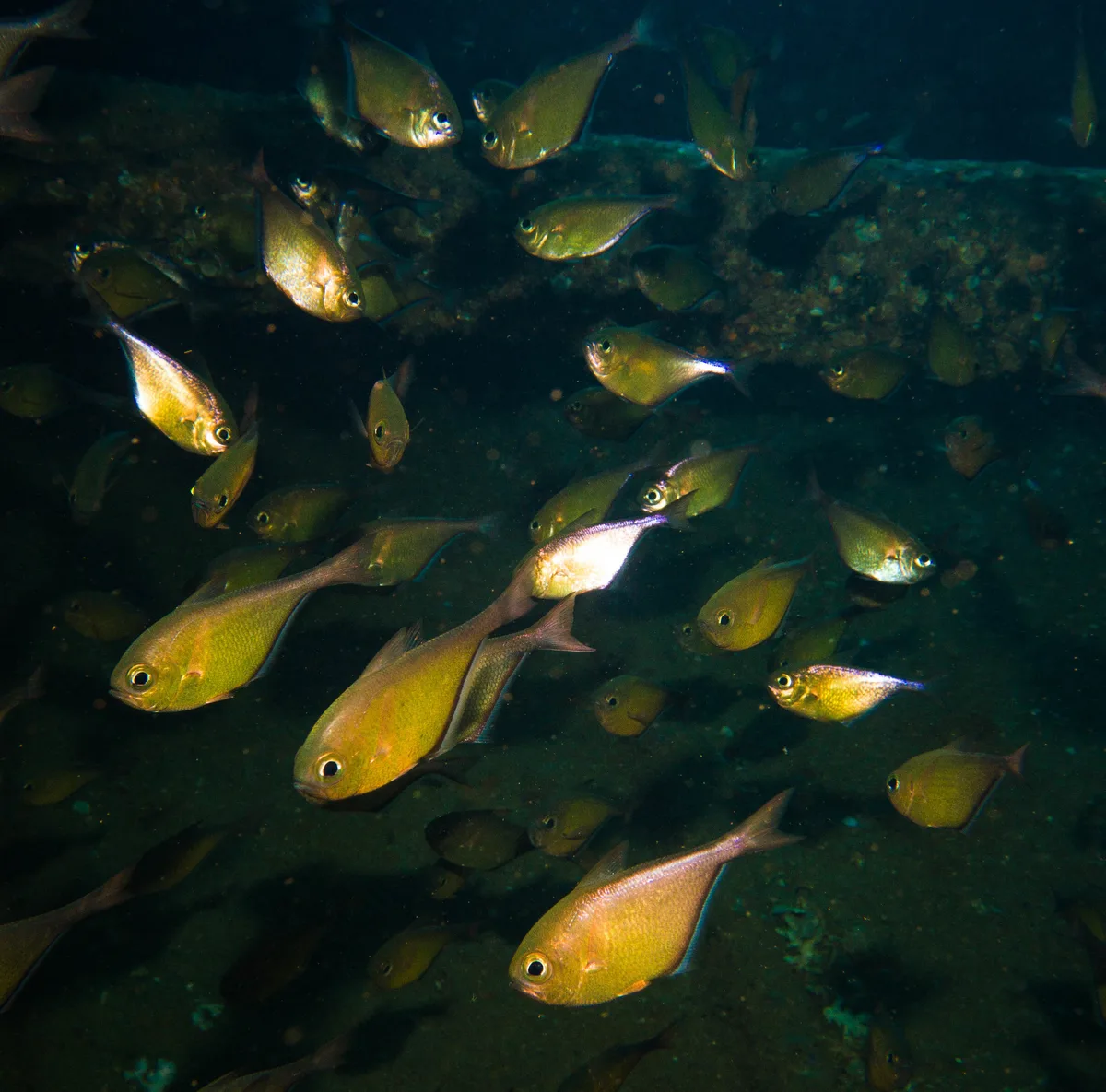
The shape is unmistakable even when the species is not. A sweeper is a wedge: a deep, blunt front end tapering sharply to a thin tail stalk, a keeled belly, a short dorsal fin set well forward, and an anal fin whose base runs along most of the underside. The eye is enormous, which is the whole design brief.
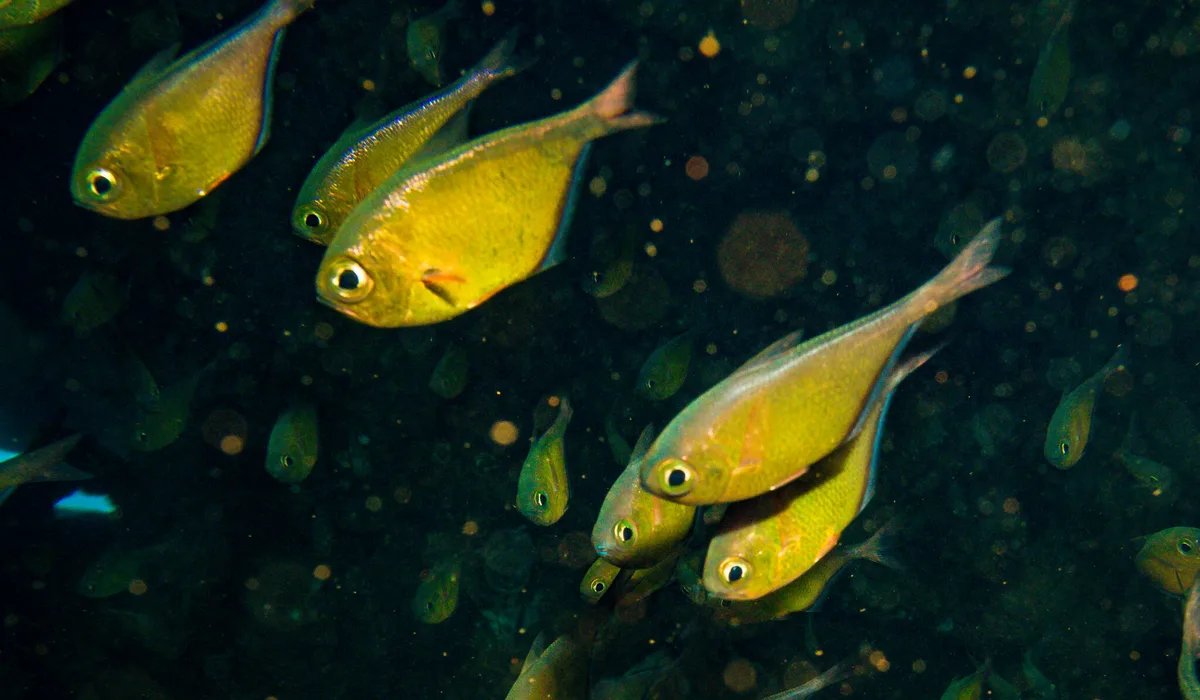
These are night fish. By day they hang in the shade in tight groups under overhangs, in swim-throughs and inside wrecks, facing into the current and shifting as a block when you come close. After dark the school breaks up and spreads over the reef to feed on drifting zooplankton. Shallow water suits them, from about 1 m down to 10 m.
The regional guide gives 13.6 cm for fish from here. FishBase records 11.7 cm, but that is a standard length, measured to the base of the tail rather than its tip, so the two figures agree better than they look.
- Black base to the anal fin
- Tail usually yellowish
- Wedge shape with a keeled belly and a long anal fin base
- Very large eye, short dorsal fin set well forward
- up to 13.6 cm