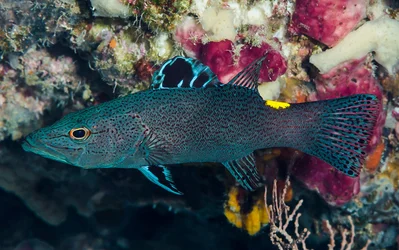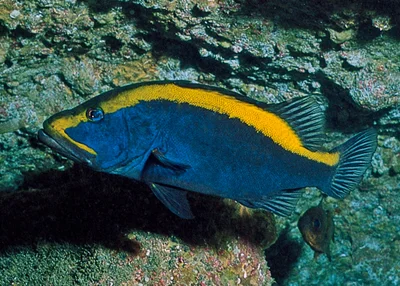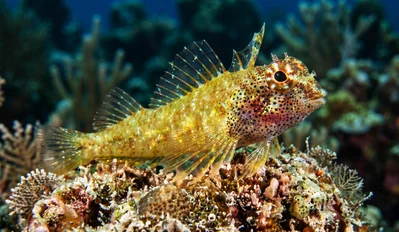
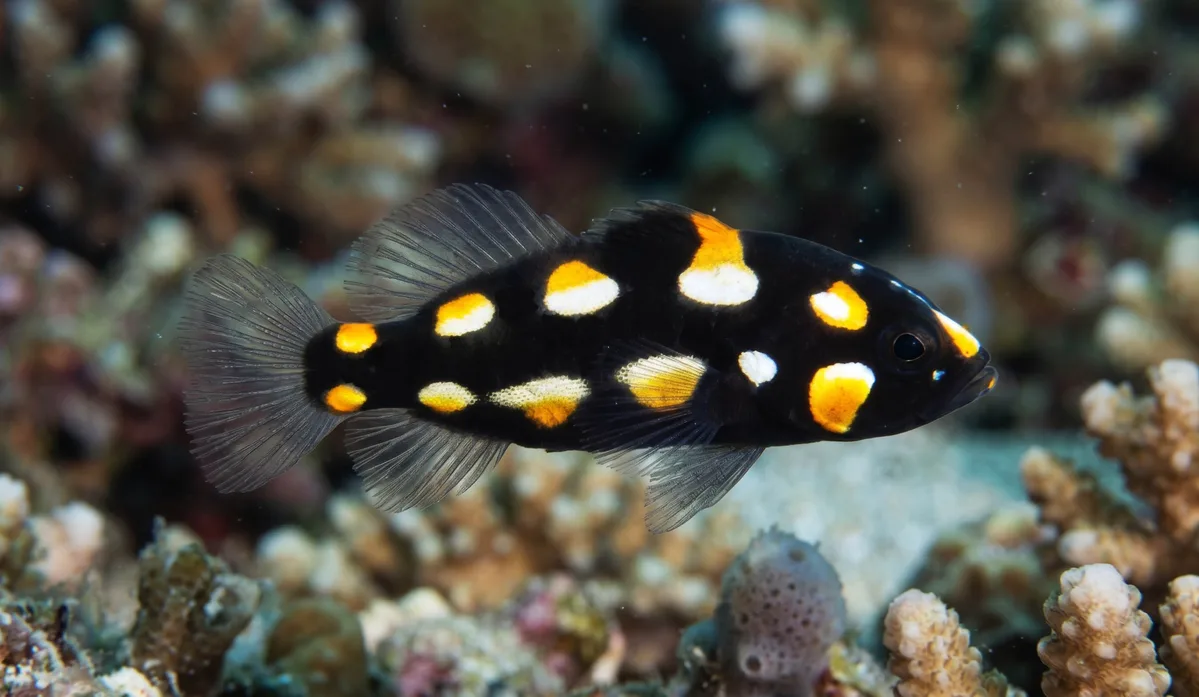
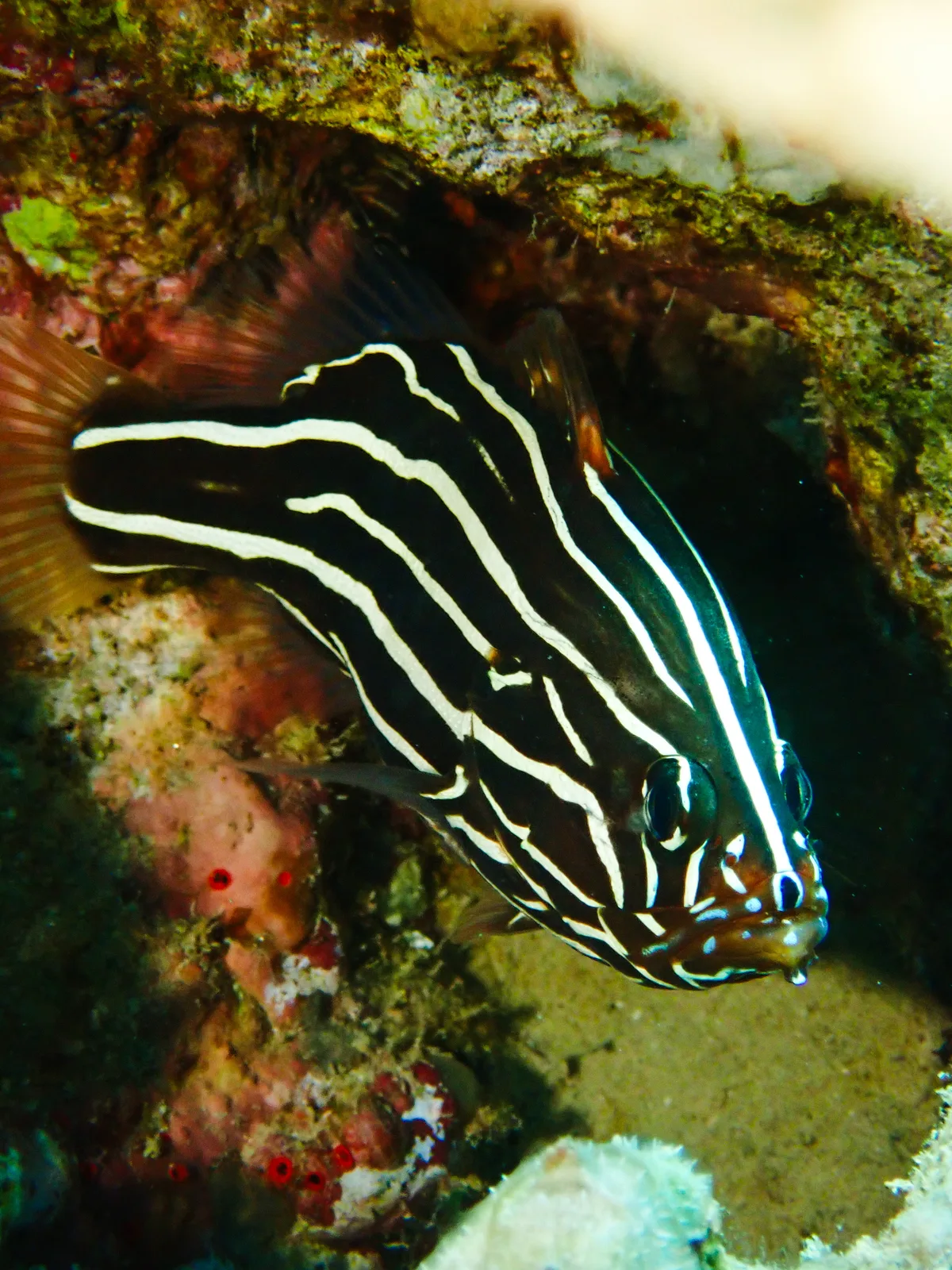
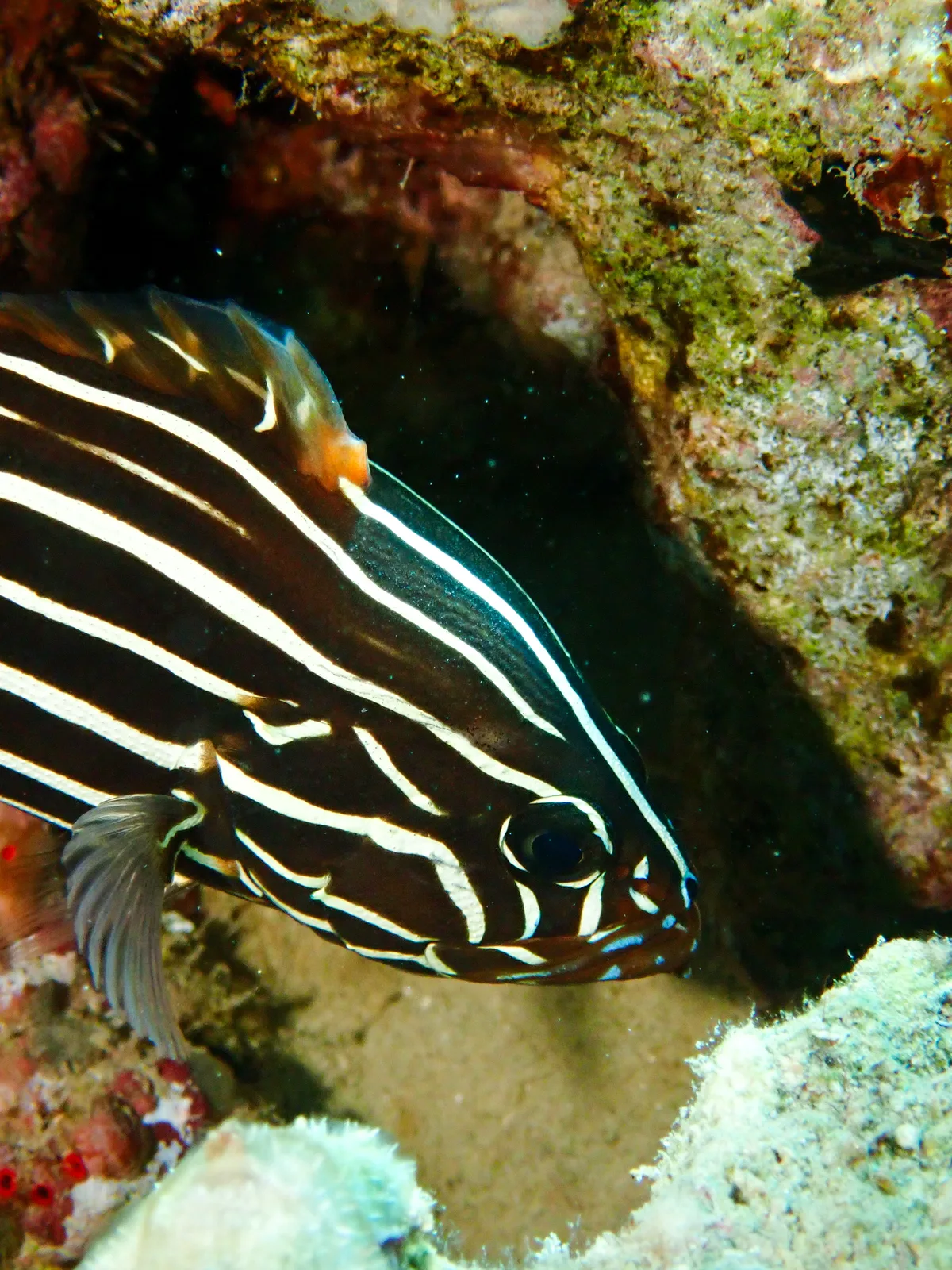
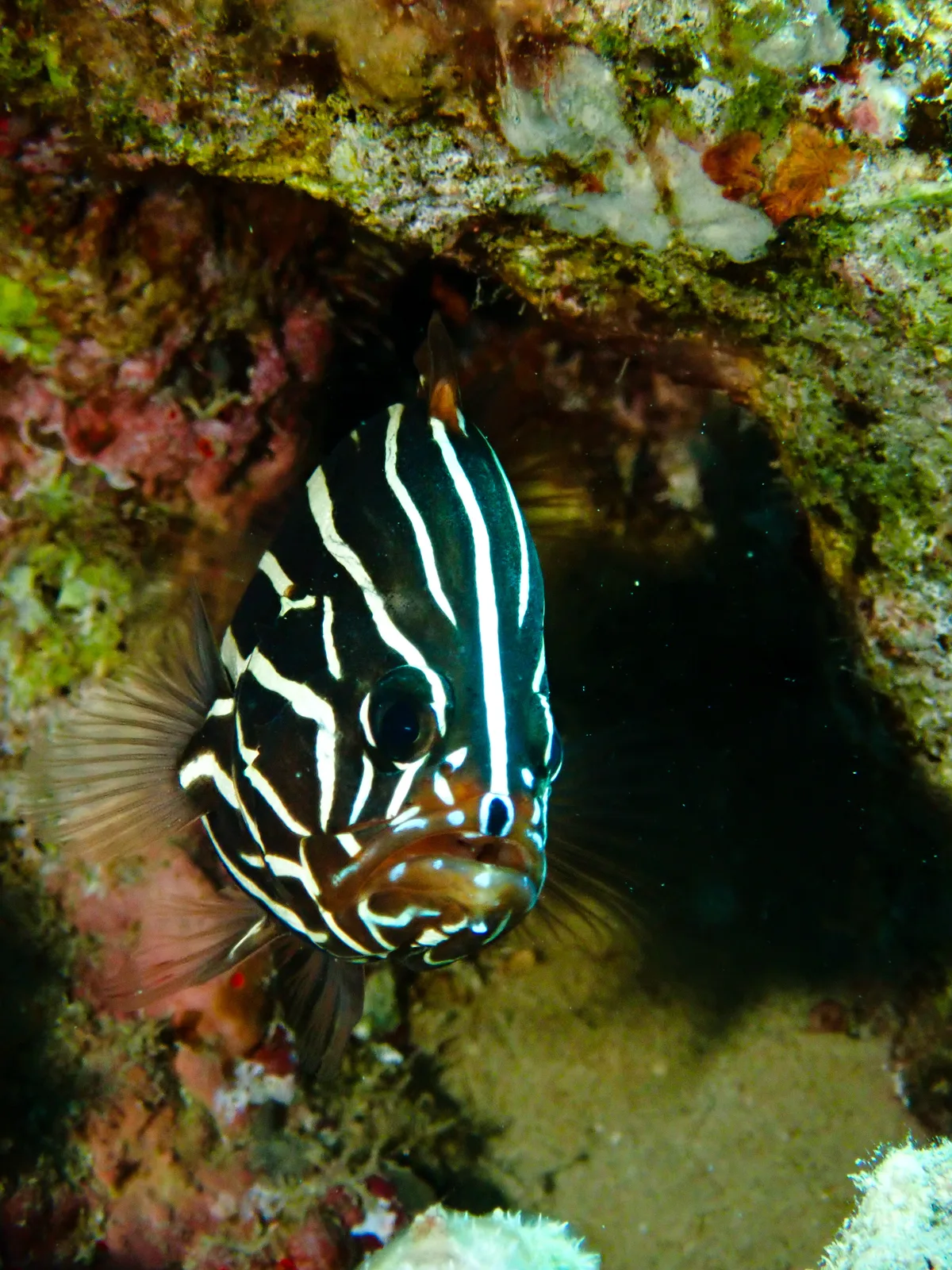
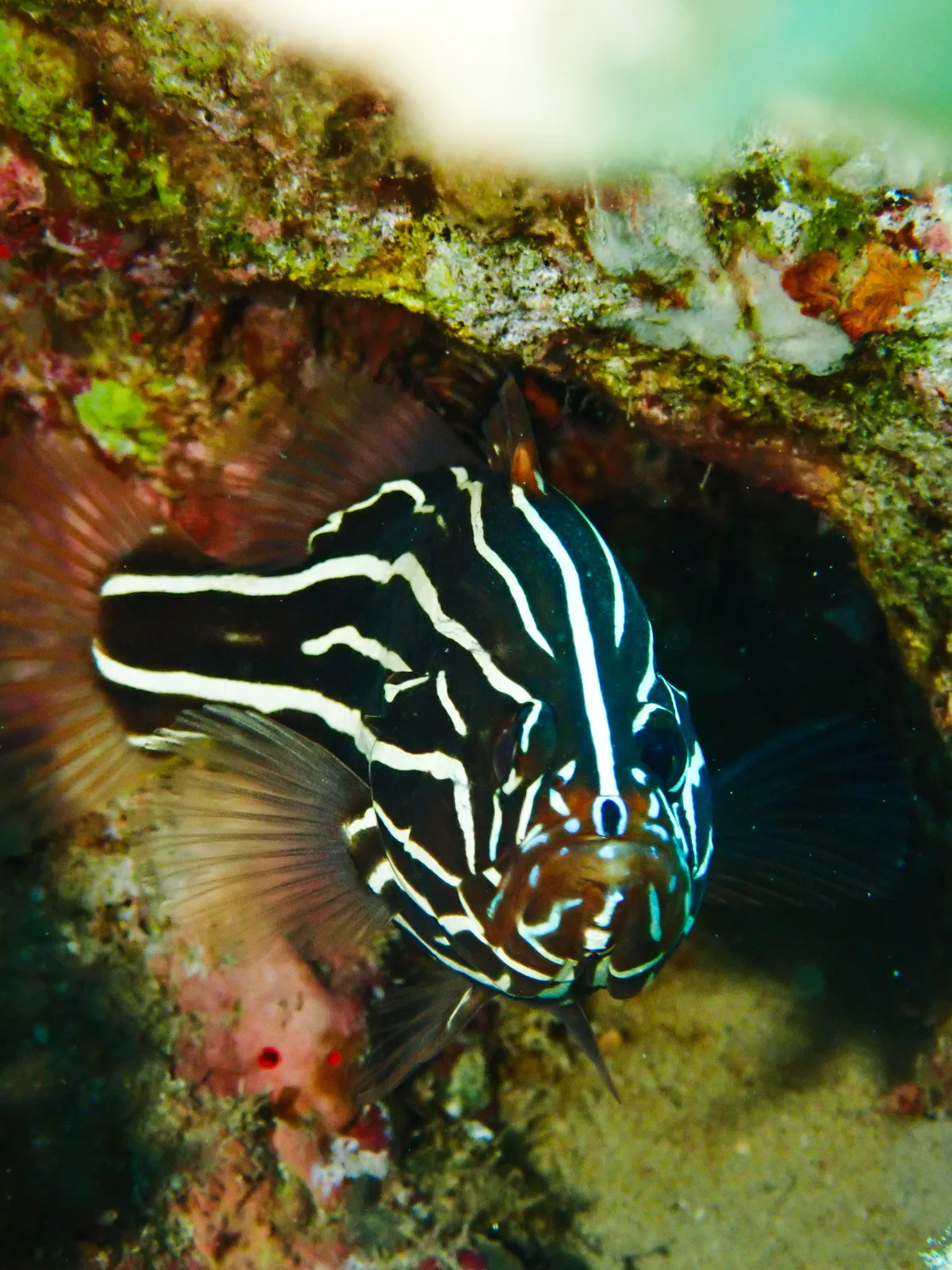
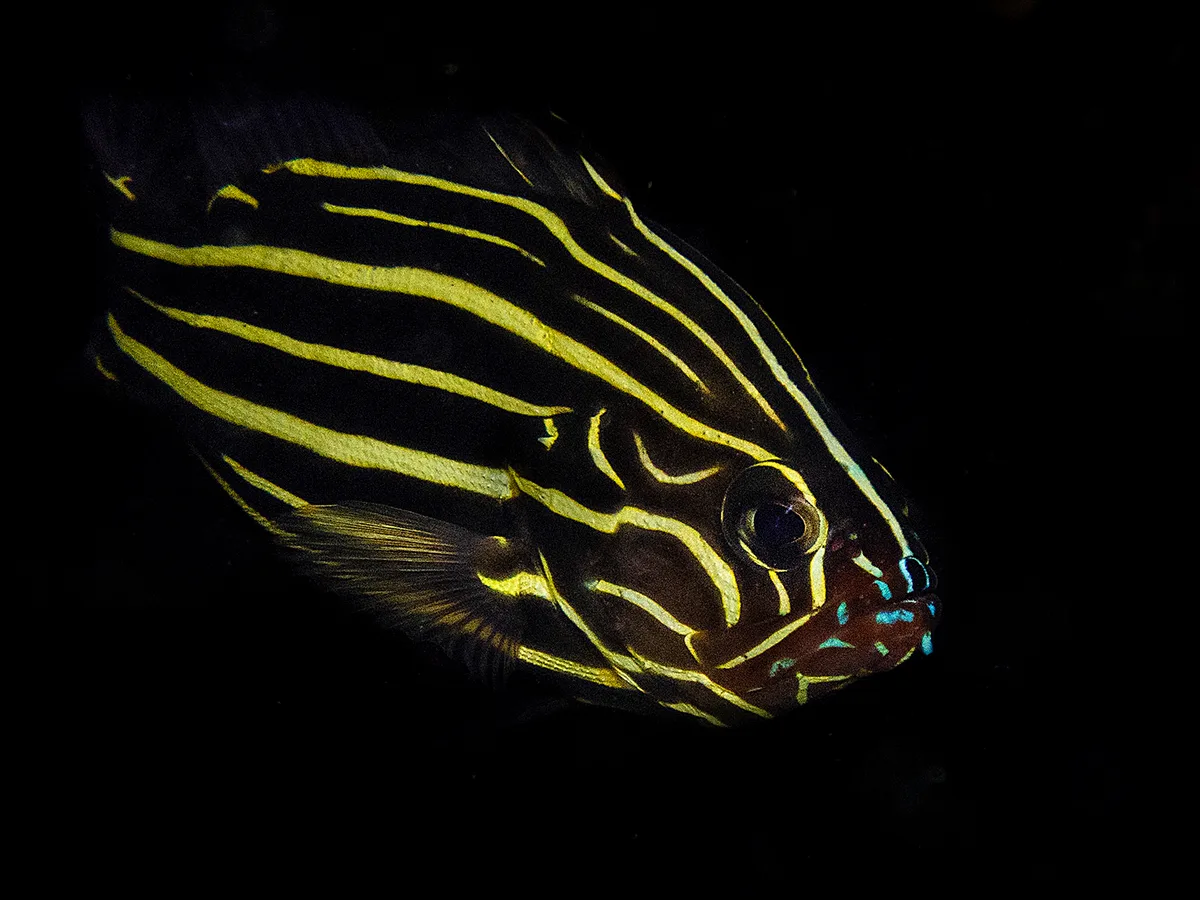
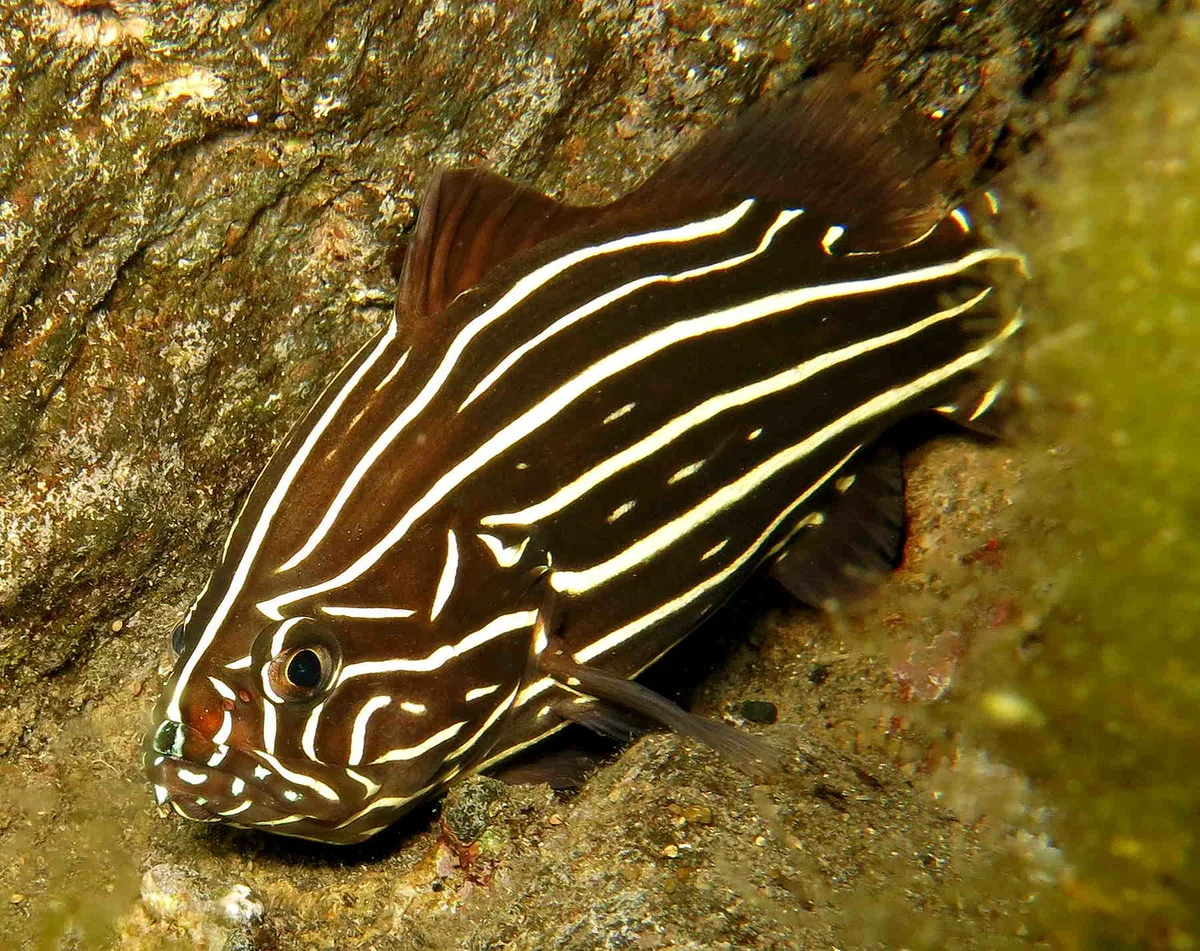
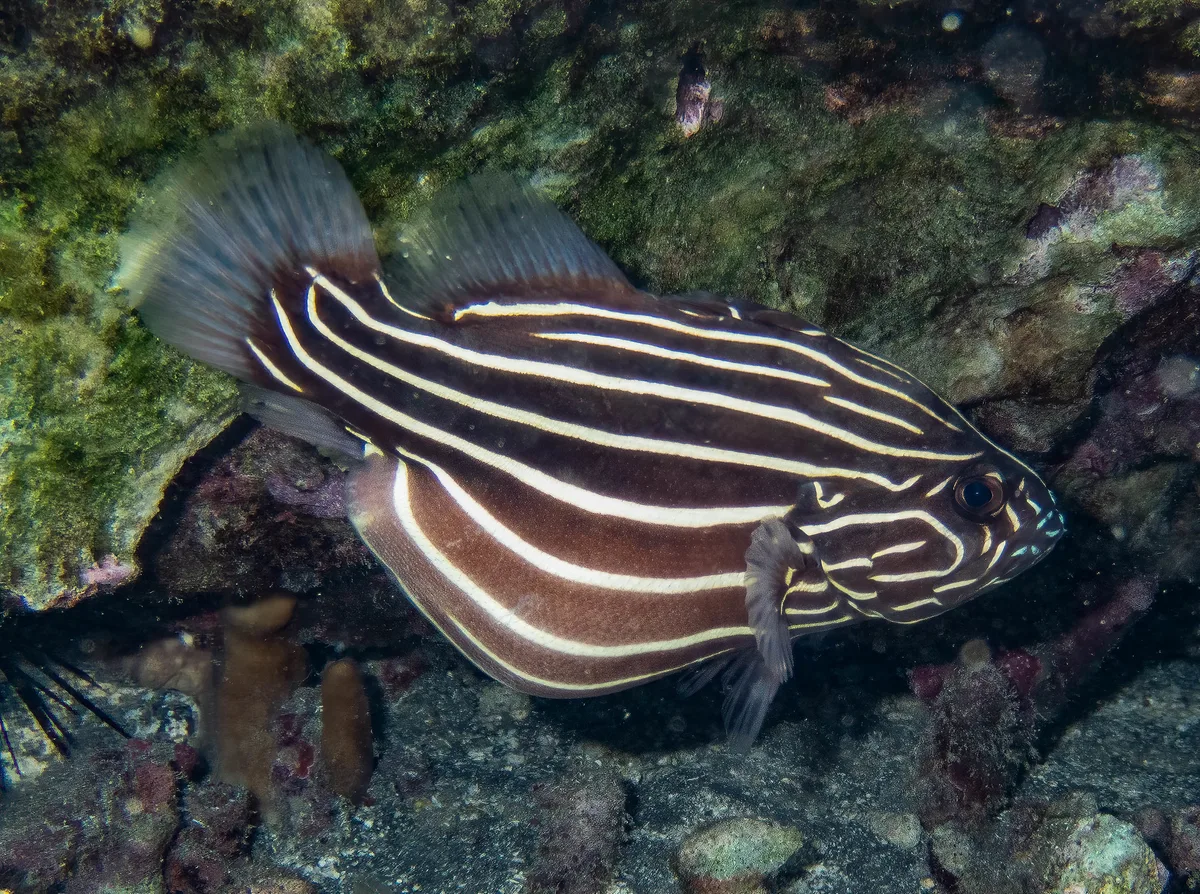
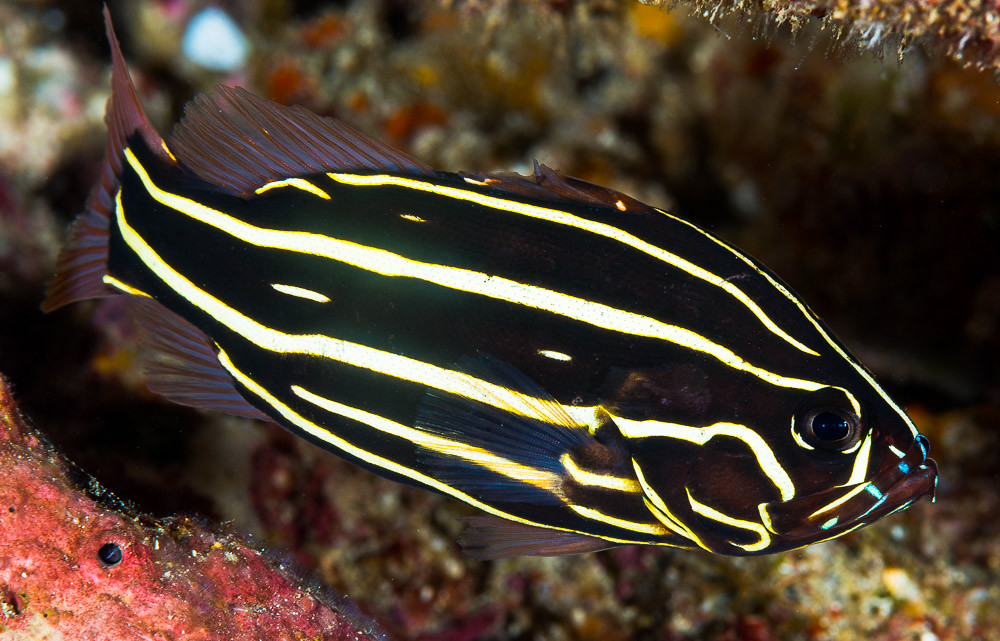
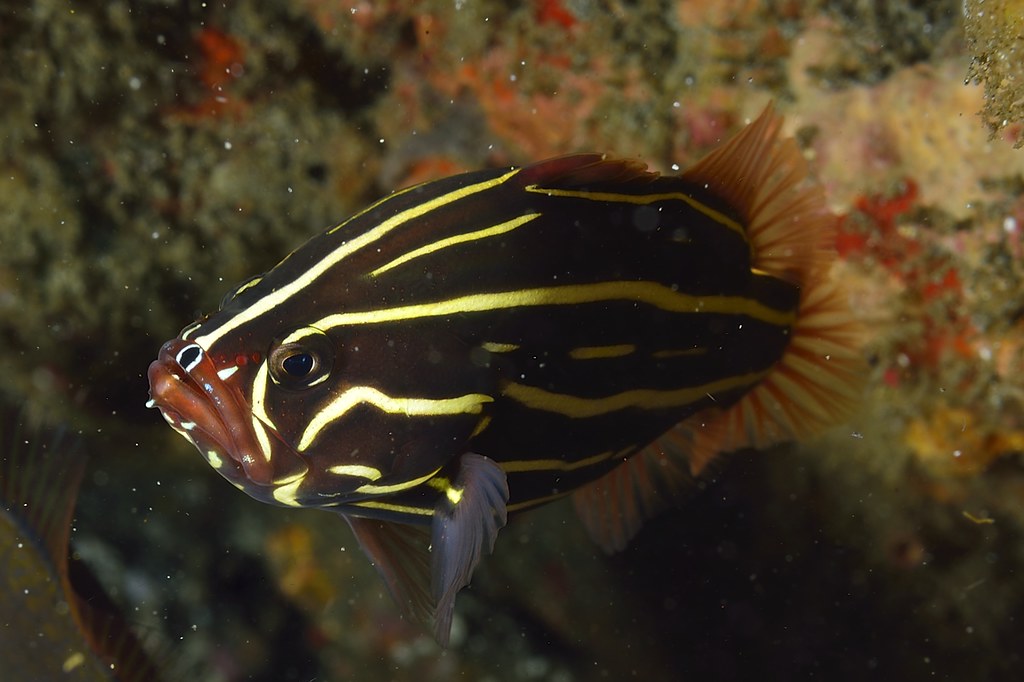
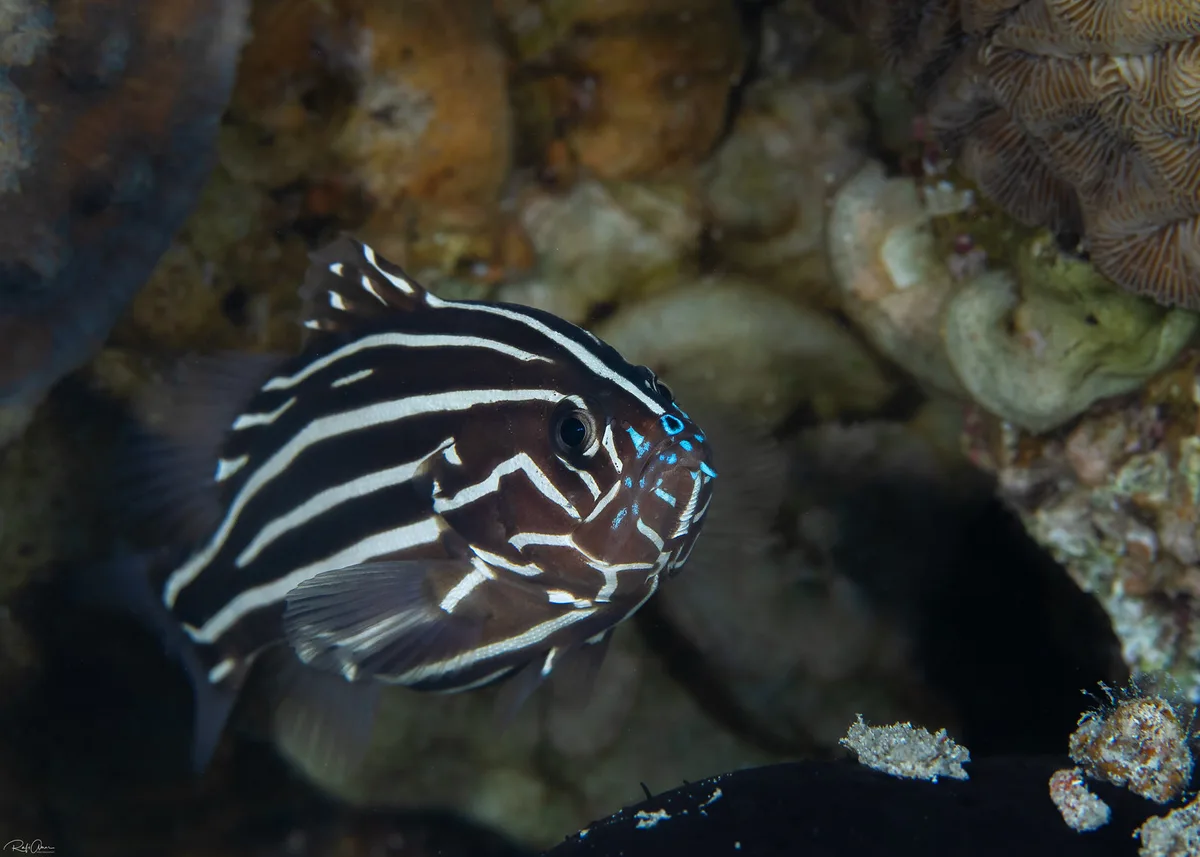
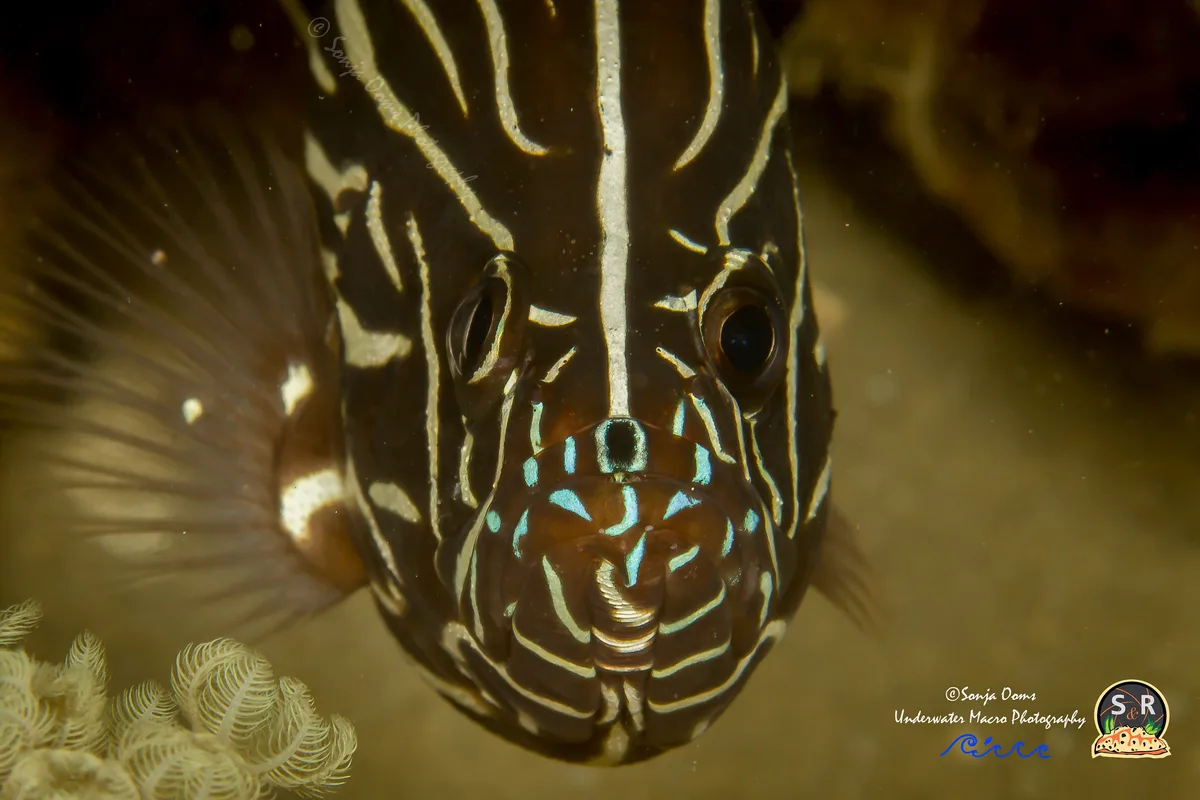
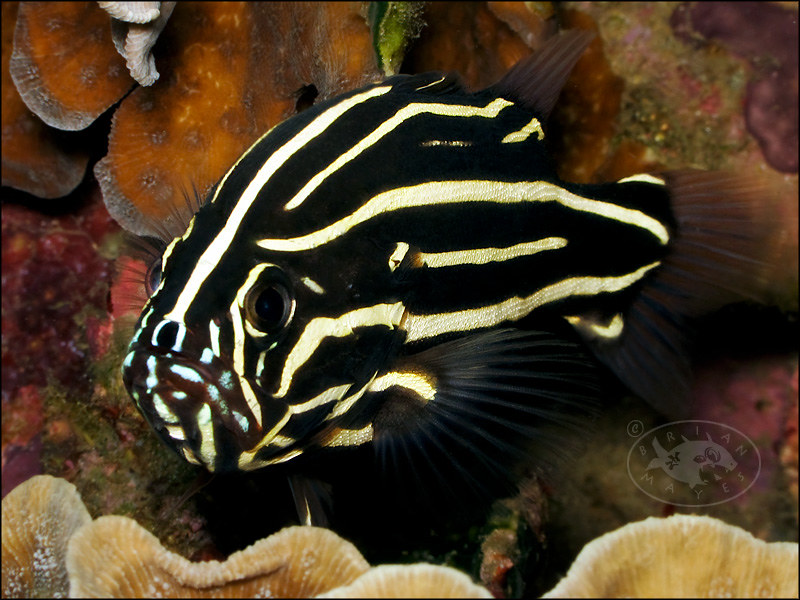
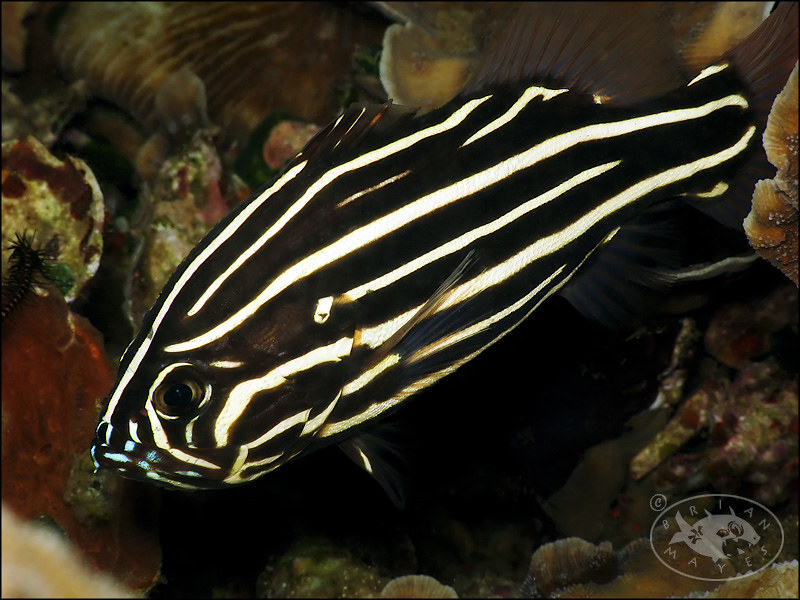
The name is not a metaphor. Handle one and the skin releases a mucus that foams in water like lather, and the substance in it, grammistin, is a bitter toxin that a predator spits out immediately.
What that means in the open sea is a fish nothing wants to eat. What it means in a confined volume is a disaster: a stressed soapfish in a bucket or a small tank releases enough grammistin to kill every other fish in the water, itself included. Aquarium keepers know the species for exactly this, and fishermen who land one usually throw it back, since the flesh tastes of the same bitterness.
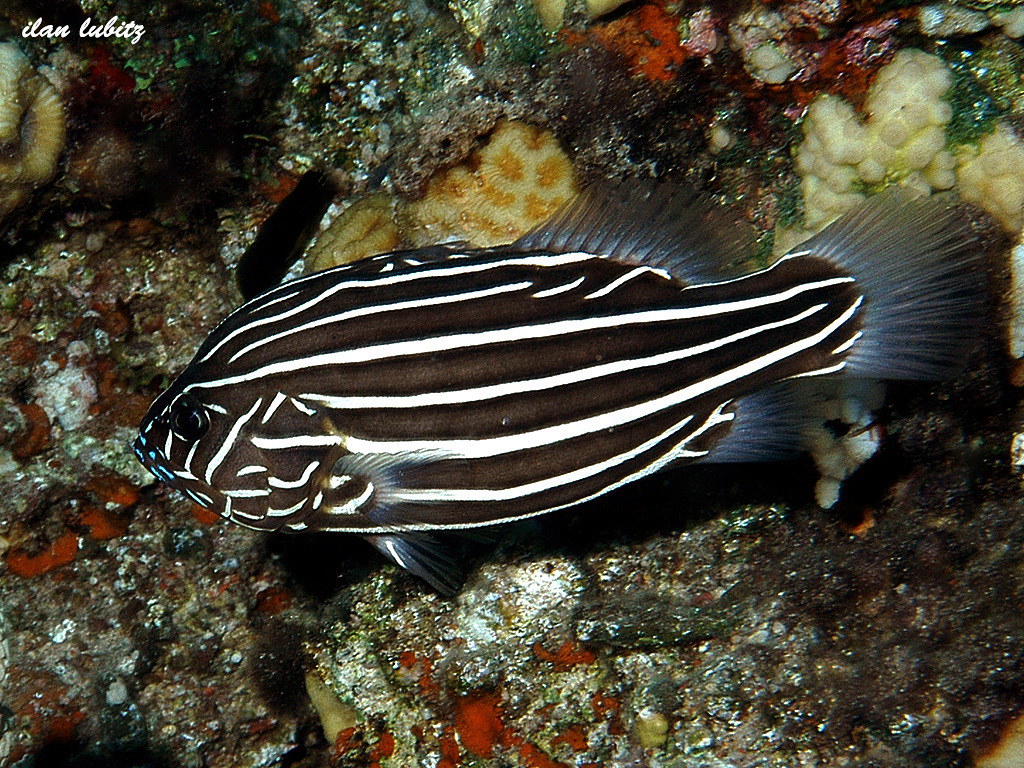
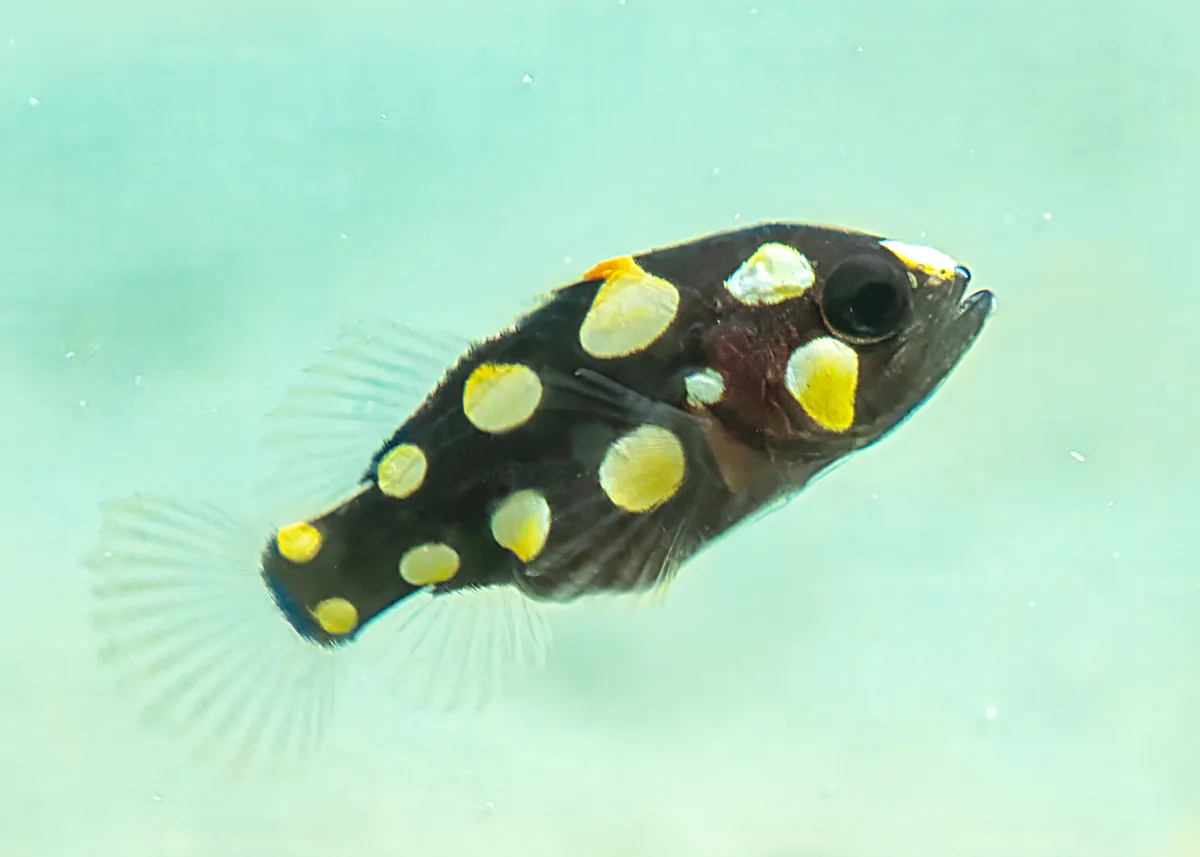
The lines are a clock. A juvenile is dark with white spots. At around two centimeters the spots begin joining into lines, at five centimeters there are three, and by eight centimeters the full six that the name refers to. In an old fish nearing thirty centimeters they break down again into dashes and dots, so a soapfish tells you its rough age from across the water.
It is solitary and nocturnal, wedged into a crevice by day and out over the reef after dark for fish and crustaceans, and it is common on this coast without being often noticed.
The species. Grammistes sexlineatus (Thunberg 1792) - sex (six) + lineatus (lined). ETYFish
- dark brown body with up to six white to yellow horizontal lines
- juveniles spotted rather than lined; lines appear as the fish grows
- the oldest fish break the lines back up into dashes and dots
- solitary, wedged into a crevice by day
- up to 30 cm
Why it's threatened
There are no known major threats to this species.
Threat classification from the IUCN Red List.